There have been a lot of product announcements over the past several days. Nikon and Canon always steal the show because they command so much of the market.…
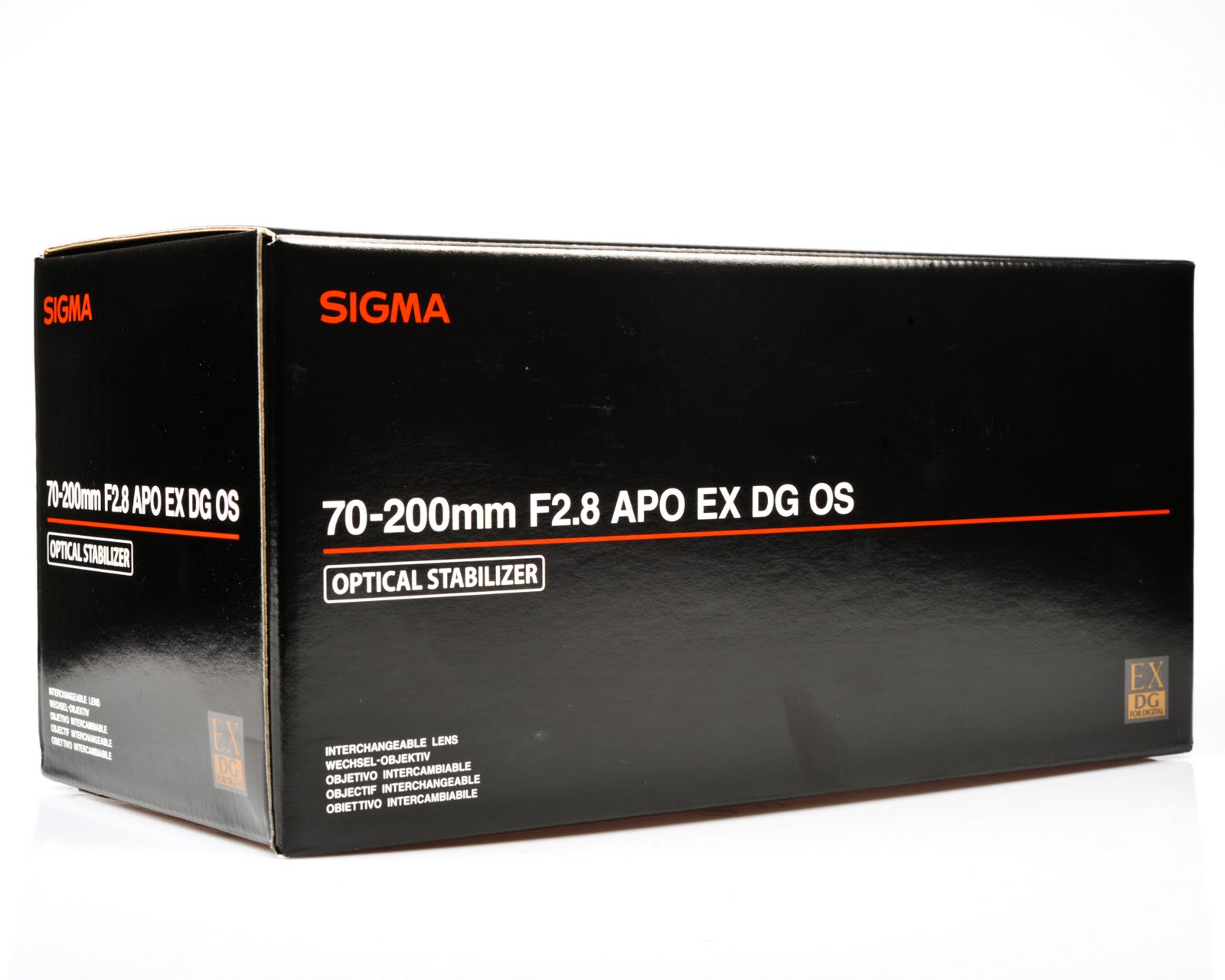
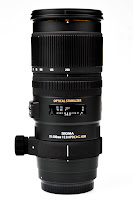 There have been a lot of product announcements over the past several days. Nikon and Canon always steal the show because they command so much of the market. Even Sony jumped in with four new exciting cameras and three new lenses. I am excited about all of this news too, but I also got the chance to be one of the first people to test out the new Sigma 70-200 f/2.8 OS DG HSM. So is an added stabilizer worth double the price of the current Sigma 70-200? Well I hope this post will help you answer that question. In addition to adding stabilization, Sigma also used a different optical design from their original 70-200mm f/2.8 HSM lens.
Where I Tested This Lens Sigma was kind enough to loan me this lens last weekend and I took it to two different events that we had here at Unique Photo. The first was "A Day at the Racetrack". We took a group of photographers and gave them instruction on sports photography and then press passes to photograph several horse races at the Meadowlands Racetrack. The second event was a studio lighting workshop taught by Sigma-Pro Kevin Ames. For more information on future events like these, check out Unique University! The 70-200 Dry Spell For a few months there was a period where you either had the choice of paying $2,500 for the new Canon or Nikon models or around $800 for a third party non stabilized lens. It's great to see Sigma has come up with a nice alternative for $1,700. For those of you who do not want to pay that much, Sigma has still kept their older version in production as well. Some professionals will always stick with Canon or Nikon and I can appreciate that, but for those looking for a high quality, fast, and stabilized telephoto lens, Sigma has created a terrific alternative.
The Stabilization Myth I talk with customers in our store who are frustrated with the images they are getting from their 55-200mm f/4-5.6 DX VR (or similar) zoom lenses. A common phrase is "My pictures are coming out blurry! I thought this lens was stabilized" While the lenses are stabilized, image stabilization only compensates for the vibrations in the lens, not in real life. For example, to freeze motion in a fast moving spot like horse racing, you need a shutter speed of at least 1/500th of a second, 1/1000th is even better. This usually requires shooting at a wider aperture than possible with a standard/kit telephoto lens AND shooting at a higher ISO sensitivity. Image stabilization is important to have in a lens, but it's important to know when to use it and how it works.
 |
|
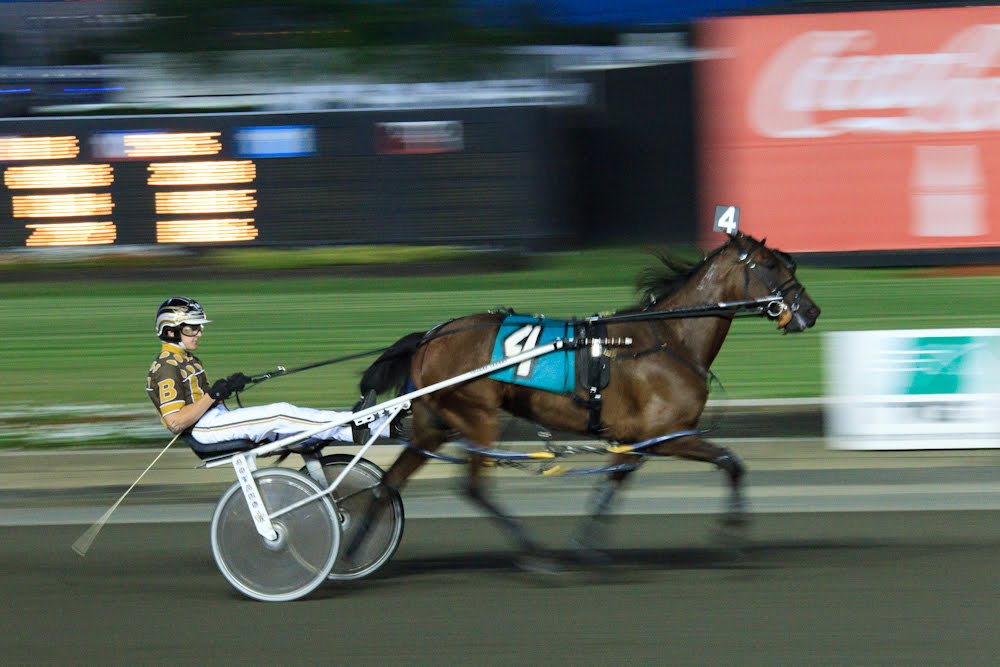
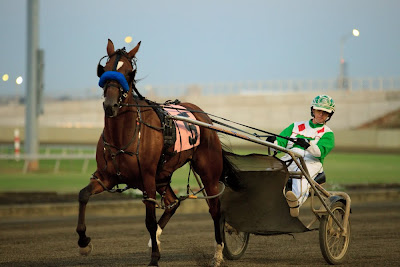
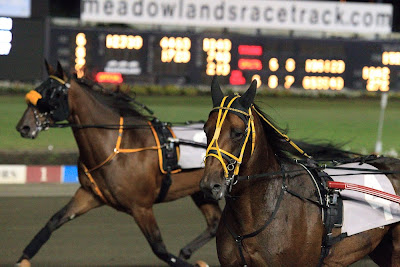
At the Meadowlands Racetrack Canon 1D Mark IV w/ Sigma 70-200 f/2.8 OS DG HSM 157mm f/2.8 1/640s ISO1600 |
Sigma's Alphabet Soup
HSM: Hyper Sonic Motor allows the lens to focus fast while making minimal noise while functioning.
DG: Indicates the lens is designed for use with full frame DSLR and 35mm film cameras.
OS: Optical Stabilizer Sigma offers two modes on this lens, 1 and 2. 1 is for normal use while mode 2 is for horizontal panning shots
APO: Apochromatic. These lenses use Special Low Dispersion (SLD) glass to minimize chromatic aberration and maximize sharpness throughout the entire zoom range
IF: Inner Focus. The lens elements move within the barrel so when zooming, the physical size of the lens does not change.
EX: Sigma's designation that this lens is fancy, it has a different finish than other Sigma lenses, and a magical golden stripe near the filter thread.
Construction: 22 Elements in 17 Groups.
Two elements are made from high quality FLD glass. There are SLD elements which help improve color rendition and reduce aberration.
Effective Focal Length: 70-200mm
The effective focal length does seem to very slightly shift to be "shorter" when focusing the lens on a closer subject. This is normal with telephoto zoom lenses.
Angle of View: 34.3º-12.3º
On a full frame sensor. I used the lens on a Canon EOS-1D Mark IV which has an APS-H sensor (1.3x crop) so the angle of view was a little tighter than "normal"
Maximum Aperture: f/2.8
Optically no lens is as sharp wide open as it would be stopped down one or two stops, but many photographers need to shoot at f/2.8 so the test is to see how a lens performs at it's "worst" aperture.
Minimum Aperture: f/22
Minimum Focusing Distance: 55.1" (about 4.6ft) from the sensor.
The actual front element will be closer to the subject.
Maximum Magnification: 1:8
Aperture Diaphragm: 9 Blades
Filter Thread Size: 77mm
Weight: 3.15lb
Mounts: Available for Canon, Nikon, Sony/Minolta, Pentax, and Sigma mounts.
IN THE BOX
Lens Cap: Standard 77mm Lens Cap. A rear cap is also included and its appearance will vary based on which lens mount you have.
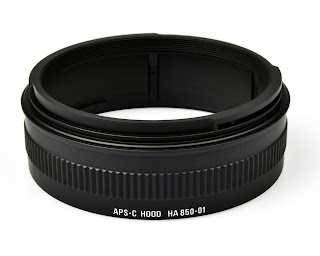
Lens Hood: Included petal shaped shade. An adapter is also included for use with APS-C cameras. I did not use this adapter with the 1D Mark IV because it is an APS-H (1.3x) camera. This is the first lens hood that I have seen with an adapter for an APS-C camera. It is an interesting concept, but very strange!
 |
|
Included "35mm Full Size Hood" |
 |
|
The Strange APS-C Hood Adapter |
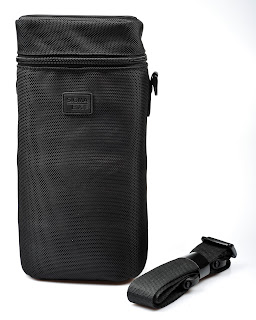
Lens Pouch: Nylon padded zipper case.
 |
|
Included Nylon Case and Strap |
PERFORMANCE
Focusing Speed: Fast. Nothing to complain about here. I put this lens on a very demanding camera and it worked great. I can't count nanoseconds, but the lens seemed to focus just as fast as either the Canon or Nikon alternative. In terms of focus speed, both the new Sigma 70-200 f/2.8 OS DG HSM and the older non OS version make the Tamron 70-200 f/2.8 look like a joke.
Focusing Accuracy: The lens was able to keep up with the blazing 10fps speed of the Canon EOS 1D Mark IV. I guess this is a testament to Canon's redesigned focusing system in the 1D series as well. Occasionally I would pull an out of focus shot out of a burst of 10 or 15 shots, but I estimated that about 90% of my shots in bursts were in focus. The 1D would "hiccup" every now and then to refocus during a burst, but that is ok with me. The old Canon EOS 1D Mark III would stubbornly keep blasting away without tracking focus accurately.
Manual Focusing: I did not use manual focus for any shots, but the ring moves smoothly. For my personal taste I could use a little bit more resistance for precision focusing, but I can't see many people manually focusing this lens like they would with a dedicated macro or fixed focal length lenses.
Stabilization: As I mentioned earlier, stabilization helps compensate for the vibration of the lens when shooting. The longer the lens is, the higher chance there is of vibration. When shooting on a tripod, turn stabilization off! There are two different stabilization modes on this lens.
Falloff/Vignetting: As expected there is some falloff at f/2.8. The amount reminds me of the original Nikon 70-200mm f/2.8G VR lens. Maybe not as much. I was shooting with a Canon EOS 1D Mark IV so there was a 1.3x crop factor. If I had shot the lens on a full frame camera there would be more falloff/vignetting. If Canon made a full-frame camera worthy of using for high speed action, I would have used it instead. You can see this in the top corners of the sharpness example below.
Sharpness: Overall I was highly impressed with the sharpness of this lens. At f/2.8 there is a high level of sharpness that improves as the lens is stopped down. I would say this lens is at least as sharp as the original Nikon/Canon 70-200mm VR/IS variants if not a bit sharper. While I didn't directly compare the Sigma to the Nikon/Canon VRII (most recent) versions, I have used both lenses on separate occasions and I would say the Sigma is worthy of being mentioned in the same breath as those two lenses. The build quality isn't up to par, but the optics seem to be.
f/2.8-f/4 Sharpness slightly improves from f/2.8 to f/4. This is expected as any lens shot wide open is not going to be as sharp as it would be stopped down one stop. However the lens was sharp enough wide open that I didn't even think about this and just kept shooting away at f/2.8 for most of the time.
 |
|
Patricia Canon 1D Mark IV w/ Sigma 70-200 f/2.8 OS DG HSM 200mm f/2.8 1/400s ISO400 |
 |
|
100% Crop from above image (Click to enlarge) |
f/5.6-f/11 This is the "sweet spot" of the lens in terms of sharpness and contrast. If you are working in the studio with lights, f/8 will produce razor sharp images.
 |
|
Patricia Canon 1D Mark IV w/ Sigma 70-200 f/2.8 OS DG HSM 200mm f/8 1/125s ISO800 |
 |
|
100% Crop from above image (Click to enlarge) OS in mode 1 |
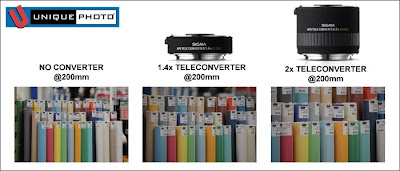
f/16-f/22 As I always preach in my articles, diffraction sets in at these smaller apertures. Contrary to popular belief and widespread myth, shooting at these apertures will not give you the sharpest results. Stopping the lens down this far only gives the perception of greater depth of field, not actual sharpness. Image sharpness and contrast actually decrease at these apertures. it is only for the most rare shots where you absolutely need everything to appear sharp. With a telephoto lens like this, it will often be impossible anyway because of the focal length and typical distance to your subject. I can think of only a few situations where you would need to shoot this lens at f/22. Teleconverters: Sigma's website doesn't indicate if you can use their teleconverters with this lens, but I tried it myself and the verdict is... They work! Both AF and AE functions work properly. You lose about 1 stop of light with the 1.4x Sigma Teleconverter and about 2 stops of light with the 2x Sigma Teleconverter.
 |
|
I didn't get a chance to use the teleconverters in the field, but I did a few quick shots in the store just to show the effect of each. |
If you've read any of my recent reviews, you'll notice I've been poking some fun at the Bokeh fanatics recently. Well the truth is there is some merit to their desires, but my two most recent reviews were on wide angle lenses, so there wasn't much to talk about. I did some more reading on Bokeh and found people using odd terms such as "busy" or "nervous" to describe "bad" Bokeh on certain lenses. I have always judged Bokeh based on if the subject is separated from the background well. If some of you Bokeholics out there want to e-mail me or leave comments on what "busy" or "nervous" Bokeh is, I would be happy to talk about it more in the future. (Or refer you to my psychiatrist.)
Here are some shots that demonstrate how the Sigma 70-200 f/2.8 OS DG HSM renders out of focus background areas. Please remember these are simple photographic examples, not a NASA approved test that measures weather conditions and blood type. Although I found subject distance is in the EXIF data, something I didn't know before. So maybe that will help you judge the Bokeh since subject distance is a factor along with focal length and aperture that determines depth of field, and in turn... magical Bokeh!
 |
|
Canon 1D Mark IV w/ Sigma 70-200 f/2.8 OS DG HSM 157mm f/4 1/1000s ISO12,800 Subject Distance: 69.23ft |
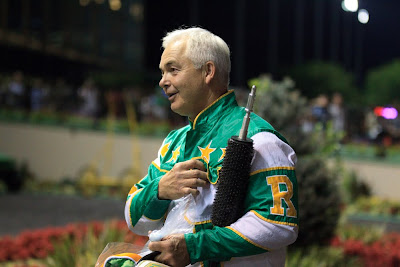 |
|
Canon 1D Mark IV w/ Sigma 70-200 f/2.8 OS DG HSM 97mm f/2.8 1/500s ISO5000 Subject Distance: 12.46ft |
 |
|
Canon 1D Mark IV w/ Sigma 70-200 f/2.8 OS DG HSM 157mm f/2.8 1/500s ISO4000 Subject Distance: 23.622ft |
COMPARED TO
SUMMARY
As you can see from the comparison, the older Sigma actually focuses the closest out of all of these telephoto zooms. Sadly, it has the worst optics and no stabilization, which is a key element of a telephoto zoom lens. However, if you are looking to save a buck and want to have the ability to shoot at f/2.8, by all means buy one today and never look back.
Yet it is the new Sigma 70-200mm f/2.8 OS DG HSM that takes the cake. As I stated before, some professionals just won't budge on the brand of lenses they use. For everyone else looking for excellent optics, Sigma delivers here. I put this lens on a very demanding camera. Meaning that the high resolution 16 Megapixel Canon EOS 1D Mark IV shows more detail than say an older 10 MP 1D Mark III would. Most people know that already, but what a lot of people don't realize is that higher resolution sensors also show more optical "flaws" of lenses. The Sigma stood up to the test. It was sharp, focused fast, and was easy to operate. I highly recommend this lens to anyone looking to save some money on a fast telephoto zoom lens. It is $600 less than the Canon equivalent and that's nothing to shake a stick at. You could buy another lens with that extra chunk of change you just saved.
If you happen to own a Sigma 70-200mm f/2.8 OS DG HSM, I would love to see some of your photos and hear feedback from you. Were your experiences with the lens similar to mine? Feel free to comment here or e-mail me [email protected].
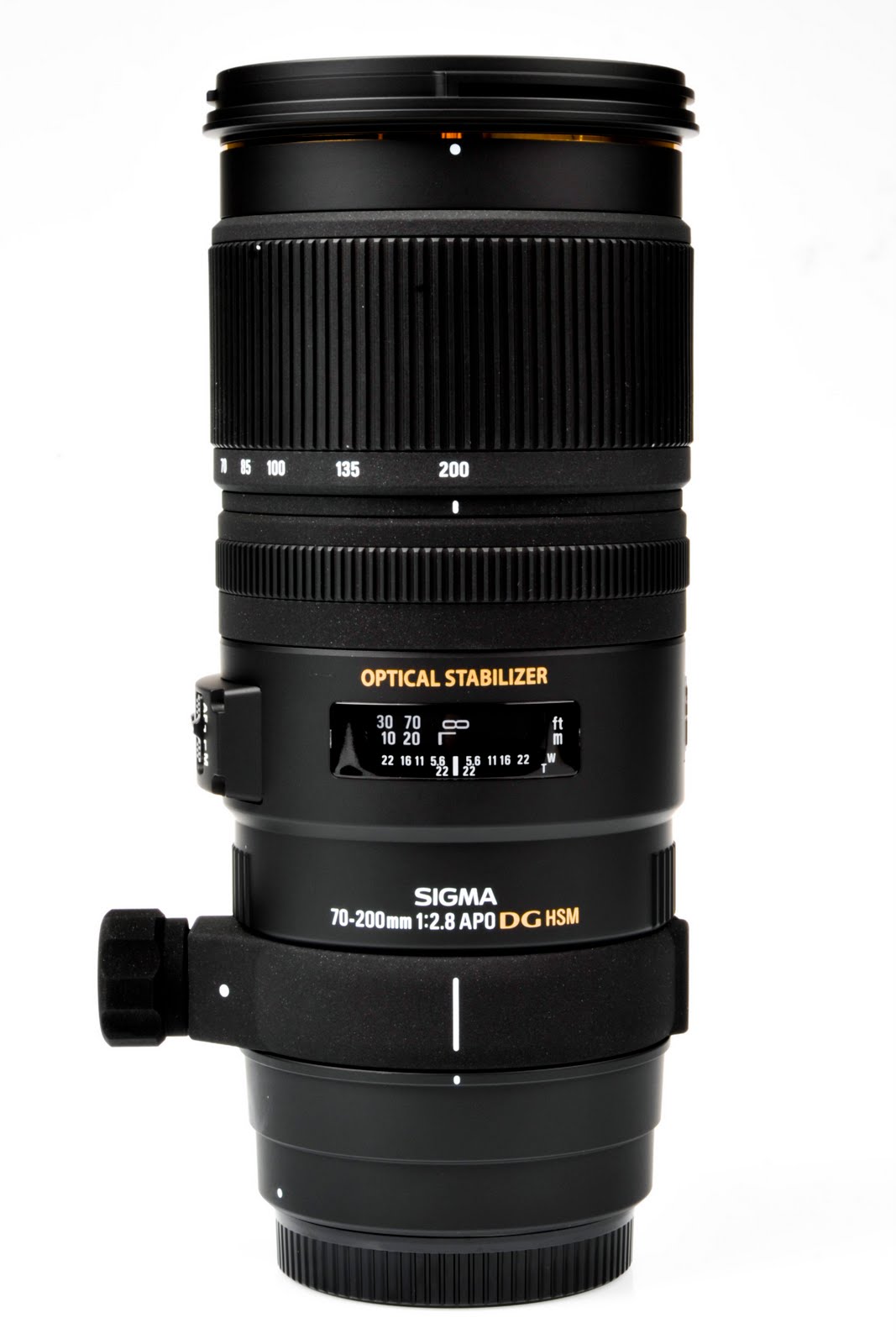 There have been a lot of product announcements over the past several days. Nikon and Canon always steal the show because they command so much of the market. Even Sony jumped in with four new exciting cameras and three new lenses. I am excited about all of this news too, but I also got the chance to be one of the first people to test out the new Sigma 70-200 f/2.8 OS DG HSM. So is an added stabilizer worth double the price of the current Sigma 70-200? Well I hope this post will help you answer that question. In addition to adding stabilization, Sigma also used a different optical design from their original 70-200mm f/2.8 HSM lens.