Fast color negative film has always occupied a special place in photographers’ bags. It is the stock you reach for when the reception hall dims, when window light is all you have, or when a portrait session runs long and the sun drops before the job is done. With Kodak Portra 800, introduced in 1998, Kodak brought the familiar Portra approach to color and skin tone into a higher-speed emulsion made for exactly those moments. For portrait, wedding, and event photographers who wanted Portra color but needed more flexibility after sunset or indoors, Portra 800 arrived as a practical and welcome tool.
This historical profile looks at Portra 800 from the standpoint of its original era: a professional color negative (C-41) film rated at ISO 800, designed to deliver the recognizable Portra rendering of skin while offering substantially more speed than slower portrait films. In short, it promised Portra color when the light runs out.
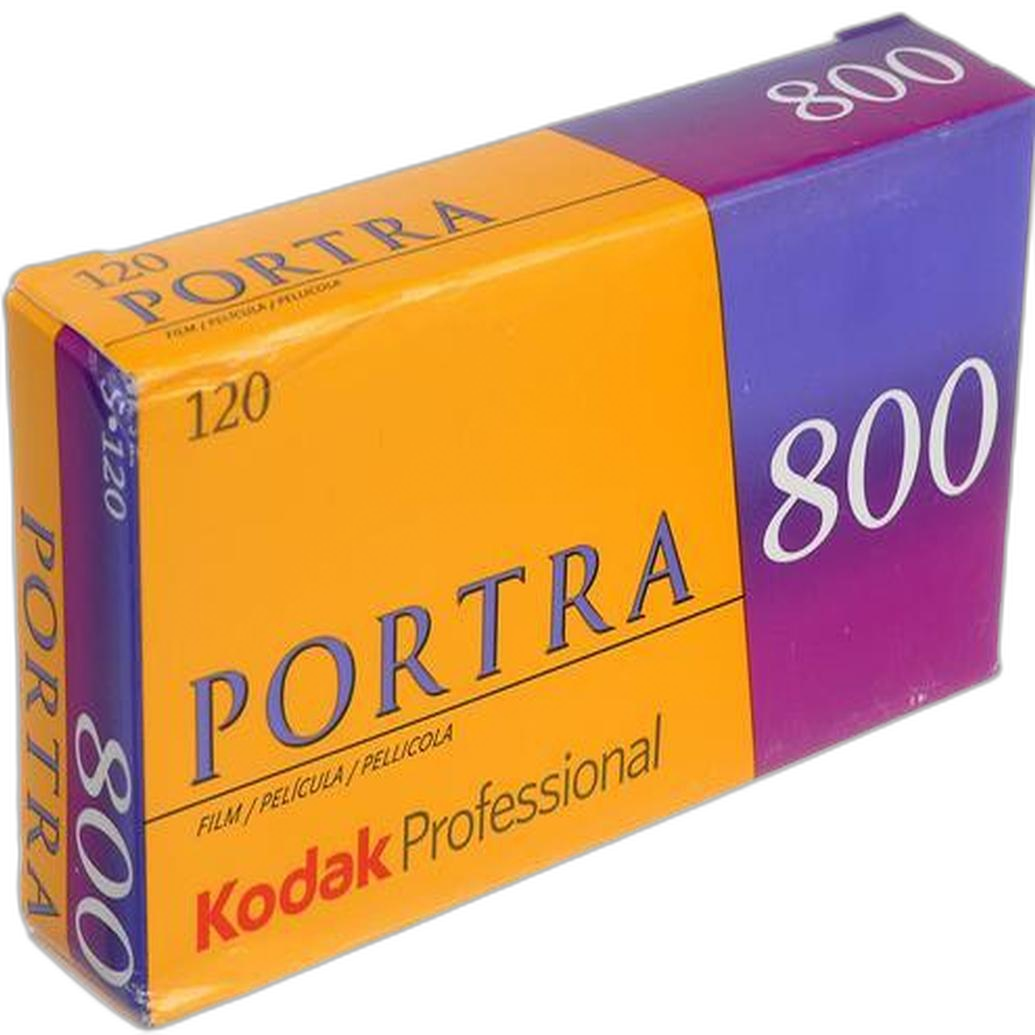
A Fast Member of the Portra Family
By the late 1990s, Kodak’s Portra line had already established itself as a serious option for professional portraiture. The name suggested the intent clearly enough: films made with people photography in mind, particularly where flattering skin tones mattered as much as sharpness or convenience. Portra 800 extended that philosophy into faster territory.
That speed rating is central to understanding the film. At ISO 800, Portra 800 sits in a category that gives photographers room to keep shutter speeds usable under mixed and fading light. It can reduce dependence on direct flash, preserve more of a scene’s ambient mood, and make handheld photography more practical in interiors or evening conditions. For wedding shooters, photojournalists, and portrait photographers working on location, those advantages are not abstract. They translate directly into more keepers and a more natural look.
Unlike slide films, which can be unforgiving in exposure and often less flexible in contrasty situations, a professional color negative film like Portra 800 offers the broad latitude that many working photographers depend on. In the C-41 process, this matters not only for reliability but also for the way the film handles real-world assignments, where lighting is seldom ideal and subjects do not always wait.
What Portra 800 Was Designed to Do
The core promise of Portra 800 is simple: Portra skin tones with more speed. That pairing is exactly why the film has long appealed to professionals who need to photograph people in difficult light without giving up the gentle, believable rendering associated with the Portra name.
In practical use, Portra 800 is especially well suited to:
- Wedding receptions, where available light and mixed lighting conditions can challenge slower films.
- Indoor portraits, especially when photographers want to preserve ambient illumination rather than overpower it with flash.
- Location work at dusk or in shade, where additional speed extends shooting time.
- Event and social photography, where movement, changing light, and limited setup time reward a faster emulsion.
That does not mean Portra 800 is only a low-light emergency film. In the hands of photographers who like a little more flexibility in shutter speed or aperture selection, it can be a creative everyday choice. Fast film allows a portraitist to stop down when needed, to work more freely under natural light, or to maintain a comfortable margin against blur. In the late 1990s, when many professionals still balanced film choice assignment by assignment, those small operational advantages mattered a great deal.
The Portra Look at Higher Speed
Any discussion of Portra 800 has to begin with its look. Kodak positioned it within the Portra family, and that means the visual priorities remain portrait-centered. The film is known for the kind of color rendition that keeps skin tones natural, approachable, and pleasing rather than harsh or overly saturated. That quality is one reason the Portra name became so trusted among photographers whose subjects are people first and scenery second.
At the same time, Portra 800 is not simply a slower portrait film made faster by magic. Higher-speed emulsions inevitably bring a different character. Part of the appeal here is that Kodak aimed to preserve the Portra palette and tonal behavior while giving photographers the practical gains of ISO 800. The result is a film chosen less for spectacle than for usefulness: it serves the image, especially when the image depends on expression, atmosphere, and the look of skin under difficult light.
For many photographers, that usefulness is the real personality of Portra 800. It allows the room to stay looking like the room. It allows evening light to remain evening light. It gives portraits a chance to breathe in existing illumination instead of flattening everything into a flash-lit uniformity.
C-41 Convenience and Professional Workflow
Portra 800 is a C-41 film, and in the era of its release, that was a major practical strength. Professional labs, one-hour mini-labs, and commercial processing services were broadly familiar with the process. For busy photographers, especially event shooters working on deadline, C-41 processing meant speed, accessibility, and a dependable place in established lab workflows.
This convenience helped make fast color negative film a working professional’s medium rather than a specialty choice. If you shot a wedding or evening assignment on Saturday, the path to proofing and printing was straightforward. That kind of operational simplicity should not be underestimated. A film can be admired for its look, but it earns loyalty when it also fits the pace of real assignments.
Exposure Latitude and the Case for Pushing
One of the most important points in Portra 800’s reputation is that it pushes well. For photographers working under pressure, that trait can be every bit as valuable as the box speed itself. A film already rated at ISO 800 gives a useful head start; a film that responds well when additional speed is needed becomes even more adaptable.
In practical terms, strong push performance makes Portra 800 attractive for the kinds of jobs where lighting drops unexpectedly or where flash is undesirable. A dim church interior, a late reception, a documentary-style portrait in available light: these are all scenarios in which a photographer might value the security of a fast emulsion that tolerates being asked for more.
That reputation also says something about the film’s intended audience. Portra 800 was not merely for casual snapshots in poor light. It was a professional stock for photographers who understood exposure compromises and wanted a film that would stay useful when circumstances became demanding. The best fast films are not simply sensitive; they are cooperative. Portra 800 built its standing by being just that.
Who Portra 800 Made Sense For in 1998
Seen from the perspective of its release period, Portra 800 feels purpose-built for several kinds of photographers. Wedding photographers are perhaps the clearest example. They often move rapidly between daylight, shade, tungsten-lit interiors, dance floors, and candlelit receptions, all while photographing faces that need to look good under every condition. A film that maintains a portrait-friendly color signature while offering ISO 800 speed is almost self-justifying in that environment.
Portrait photographers also had reason to pay attention. Natural-light portraiture was hardly new in 1998, but a higher-speed color negative film could make it easier to work indoors, in overcast weather, or later in the day without sacrificing the overall Portra aesthetic. For environmental portraiture in homes, studios with minimal fill, or real locations where photographers wanted to preserve ambient character, Portra 800 answered a practical need.
Event photographers, too, stood to benefit. Social coverage often leaves little time for elaborate setup, and subjects are not always still. In such situations, ISO 800 can be the difference between a usable shutter speed and a blurred frame. That alone would have given Portra 800 a clear professional identity.
Its Place in Kodak’s Film History
Kodak’s late-1990s professional lineup reflected a mature understanding of specialized photographic needs. Portra 800 belongs to that moment in film history when manufacturers still invested heavily in emulsions tailored to distinct assignments. Rather than offering one film for everything, Kodak maintained a family approach: portrait films for portrait priorities, with different speeds to match different working conditions.
That context matters. Portra 800 was not introduced as a novelty. It was a deliberate extension of a trusted professional brand into a speed class that many photographers genuinely needed. Its historical importance lies less in radical reinvention than in refinement: taking the values associated with Portra and making them available in a faster film that could keep working as light levels fell.
Why Portra 800 Endures in Memory
Photographers tend to remember films not just by their specifications, but by the problems they solved. Portra 800 solved a very specific one: how to keep shooting portraits and people-centered work gracefully when the available light is weak, changing, or simply not enough for slower film. Its blend of ISO 800 speed, C-41 practicality, portrait-minded color, and a reputation for being able to handle pushing made it an especially sensible stock for professional use.
That is why the phrase “Portra color when the light runs out” captures the film so well. Portra 800 was, and remains in historical terms, a film defined by reliability under pressure. It lets photographers stay with the look they want even when conditions argue otherwise.
Closing Thoughts
As an archival look back at a major late-1990s professional film release, Kodak Portra 800 stands out as a practical, people-focused emulsion with a clear mission. It is a color negative C-41 film rated at ISO 800, valued for Portra skin tones with more speed and for the fact that it pushes well. For photographers covering weddings, portraits, and events, that combination made excellent sense in 1998 and remains easy to appreciate today as part of Kodak film history.
If you want to explore Kodak film, learn more about classic emulsions, or shop current photographic supplies, Unique Photo is a great place to buy, compare, and continue the conversation.