Among black & white films that reward patience and precision, Ilford Pan F Plus has long held a special place. In an era when many photographers reach first for faster emulsions, Pan F Plus remains a deliberate choice: a black & white negative film rated at ISO 50, known for its extremely fine grain, high sharpness, and contrasty rendering. For photographers working in bright light, in the studio, or anywhere ultimate detail matters more than speed, it has earned a reputation as one of the classic slow films in Ilford’s lineup.
This profile looks at Pan F Plus in its historical context and at the qualities that have made it enduringly appealing. Written in the spirit of the film’s continuing relevance around the mid-2020s, this is an archival overview of a stock that represents a distinctly traditional black & white approach: careful exposure, controlled technique, and negatives that can deliver remarkably crisp results.
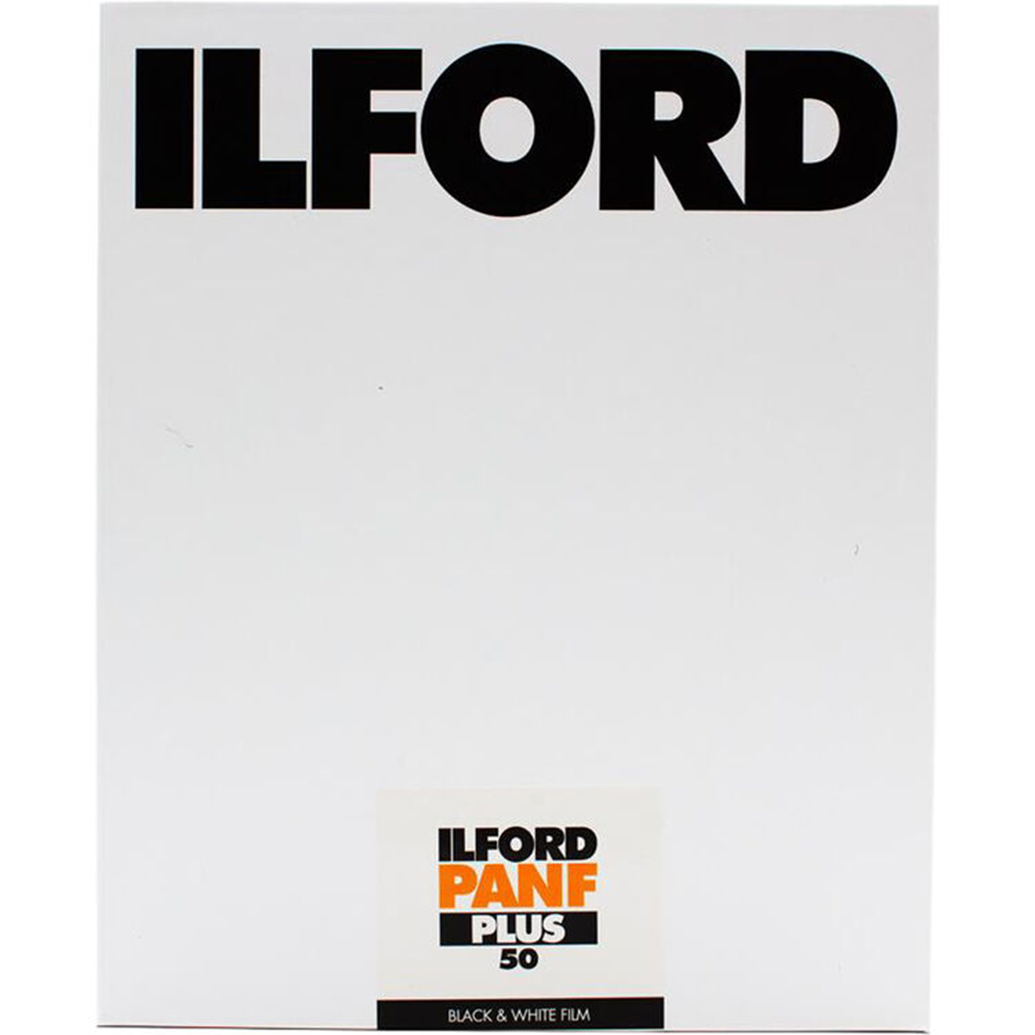
A Classic Low-Speed Black & White Film
Ilford has long been one of the defining names in black & white photography, and Pan F Plus fits squarely within that heritage. It is not a general-purpose, all-conditions film in the way that medium-speed emulsions often are. Instead, it occupies a more specialized and respected niche. With its ISO 50 speed, Pan F Plus is built for situations where the photographer can work with abundant light, a tripod, wider apertures, or some combination of the three.
That low speed is central to its identity. Slow black & white films have historically appealed to landscape photographers, architectural photographers, still-life specialists, and meticulous darkroom printers because they often offer the smoothest tonality and finest grain available in conventional emulsions. Pan F Plus has been associated with exactly that kind of use: images where edge definition, clean detail, and an almost polished negative structure are more important than handheld convenience.
Within Ilford’s range, Pan F Plus has often been viewed as a film for intentional image-making. It asks more from the photographer than a faster stock might, but it gives something distinctive in return. That tradeoff is part of its charm and part of why it has remained relevant even as photographic trends have shifted over decades.
The Signature Look of Pan F Plus
Extremely Fine Grain
The most immediately celebrated trait of Pan F Plus is its extremely fine grain. In practical terms, this means negatives that appear exceptionally clean, especially when compared with faster black & white films. Fine grain matters for several reasons. It supports larger enlargements in the darkroom, preserves subtle textures, and allows small details to remain clear rather than dissolving into a coarse pattern.
For photographers who value a refined black & white image, Pan F Plus can feel almost luxurious. Surfaces such as stone, skin, fabric, foliage, and metal can be rendered with impressive delicacy, provided exposure and processing are handled well. This is one reason the film has remained attractive to workers who want to extract the maximum amount of visible information from a scene.
High Sharpness
Along with its fine grain, Pan F Plus is known for high sharpness. That sharpness is not merely a matter of technical bragging rights; it has a visible effect on the character of the image. Edges appear crisp, outlines are well defined, and textures can take on a tactile presence. Architectural lines, landscape details, and carefully lit product or still-life subjects can all benefit from this quality.
Photographers often describe films in terms of how they draw. Pan F Plus tends to draw with precision. It is not a hazy or forgiving emulsion. Rather, it has a directness that can make the most of a good lens and disciplined technique. Focus accuracy, camera stability, and thoughtful exposure all become more apparent when using a film this exacting.
Contrasty Rendering
The third pillar of the Pan F Plus look is its contrasty rendering. This gives the film a punch and clarity that many photographers find deeply appealing. Blacks can feel rich, whites can appear luminous, and midtones can separate in a way that gives scenes strong visual structure. Used thoughtfully, this can produce dramatic negatives with a classic monochrome energy.
Contrast, of course, is something photographers must manage rather than simply accept. In softer lighting, Pan F Plus can bring welcome definition and snap. In hard sunlight, its naturally contrasty look may call for careful metering and development choices. Historically, that balancing act has been part of the film’s identity. It rewards those who understand light and can anticipate how tonal relationships will translate to black and white.
Where Pan F Plus Excels
Given its speed and rendering characteristics, Pan F Plus has traditionally excelled in a few specific photographic settings. Landscape photography is an obvious one. Fine detail in foliage, rock, water, and distant terrain can be recorded with notable clarity, especially when the film is paired with a sturdy tripod and careful exposure technique.
Architecture is another strong fit. The film’s sharpness and clean grain structure complement geometric subjects, repeating patterns, and textured building surfaces. Black & white architectural photography often depends on tonal separation and edge definition, both of which align naturally with Pan F Plus.
Still life and studio work also suit the film well. In controlled lighting, the low ISO becomes less of a limitation and more of an advantage. The ability to use deliberate setups and stable support allows the emulsion’s fine-grained, highly detailed character to shine.
Even portraiture, though perhaps less commonly associated with Pan F Plus than with softer or faster films, can benefit from its distinctive character. In the right hands, the film can produce striking portraits with crisp detail and strong tonal impact. That said, because of its sharpness and contrast, it tends to be a more intentional portrait choice rather than a universally flattering one.
A Film That Encourages Discipline
One of the reasons Pan F Plus has enjoyed such a loyal following is that it encourages a slower, more disciplined way of working. ISO 50 is not forgiving in dim conditions, and that limitation shapes the photographic experience. Shutter speeds may be slower. Tripod use becomes more common. Metering becomes more important. Exposure decisions are made with care rather than speed.
For many film photographers, this is not a drawback at all. It is part of the appeal. Pan F Plus belongs to a tradition in which the medium itself encourages craft. The film asks the photographer to pay attention to the scene, the light, and the process. In return, it offers negatives that can look impressively refined.
That deliberate rhythm has only become more meaningful in the modern film era. As film photography has increasingly become an intentional practice rather than a default one, stocks like Pan F Plus have found renewed appreciation. They represent a version of photography that is less about volume and more about precision.
Pan F Plus in the Broader Ilford Tradition
Ilford’s standing in black & white photography rests in part on consistency and continuity, and Pan F Plus reflects both. It is one of those films that helps define what photographers mean when they talk about a classic black & white material. Not because it is the fastest or most flexible, but because it so clearly embodies a particular ideal: maximum detail, visible acutance, and strong monochrome tonality.
Over time, different generations of photographers have approached Pan F Plus from different directions. Some came to it through darkroom printing and large enlargements. Others discovered it as a high-resolution option for medium format or 35mm work in bright outdoor conditions. More recently, younger film photographers have sought it out precisely because it does not behave like an all-purpose stock. It has a point of view, and that gives it character.
In that sense, Pan F Plus is more than just an ISO rating or a grain description. It is part of the living history of black & white photography: a film for those moments when the subject, the light, and the photographer’s intent all align around detail and clarity.
Why It Still Matters
By 2025, Pan F Plus remains meaningful not because it tries to be everything, but because it does one thing exceptionally well. Photographers looking for ISO 50 black & white negative film with an extremely fine grain structure, high sharpness, and a contrasty signature continue to find it compelling. It is a film that stands apart through specificity.
For archival-minded photographers and newcomers alike, Pan F Plus offers a direct connection to a longstanding photographic tradition. It reminds us that black & white film is not a single look but a broad vocabulary, and that slow, detailed, high-clarity emulsions still have a real place within that language.
If you are interested in experiencing Ilford Pan F Plus for yourself, or want to explore more classic black & white films and photographic history, Unique Photo is a great place to buy film, build your kit, and learn more.