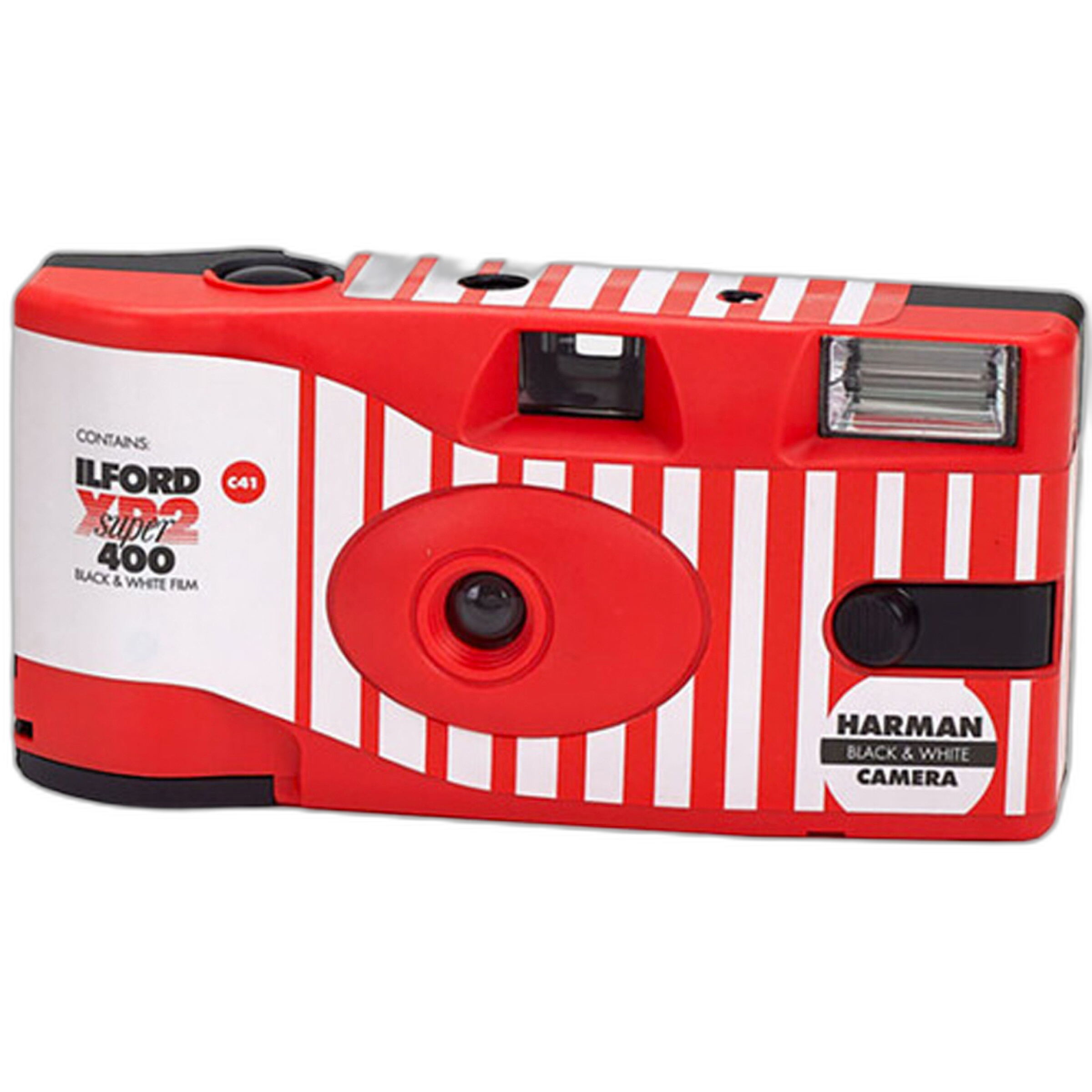
Black-and-white film has never been just one thing. For some photographers, it means classic silver-rich emulsions, darkroom chemistry, and a deliberately hands-on process. For others, it means the tonal language of monochrome without the extra hurdle of specialized processing. Ilford XP2 Super occupies a fascinating place between those worlds. As a chromogenic black-and-white film designed for the standard C-41 process, XP2 Super gives photographers a distinctive monochrome look with the practical convenience of color-negative lab compatibility. Around its release period and through its long life in camera bags, it has stood out as one of the most approachable black-and-white films on the market.
That combination is the reason XP2 Super became such an important stock for everyday shooters, students, travelers, wedding photographers, and anyone who wanted black-and-white images without needing a dedicated black-and-white lab. Rated at ISO 400 and known for a smooth, low-grain rendering with huge exposure latitude, Ilford XP2 Super built a reputation as one of the most forgiving and flexible monochrome films of its era.
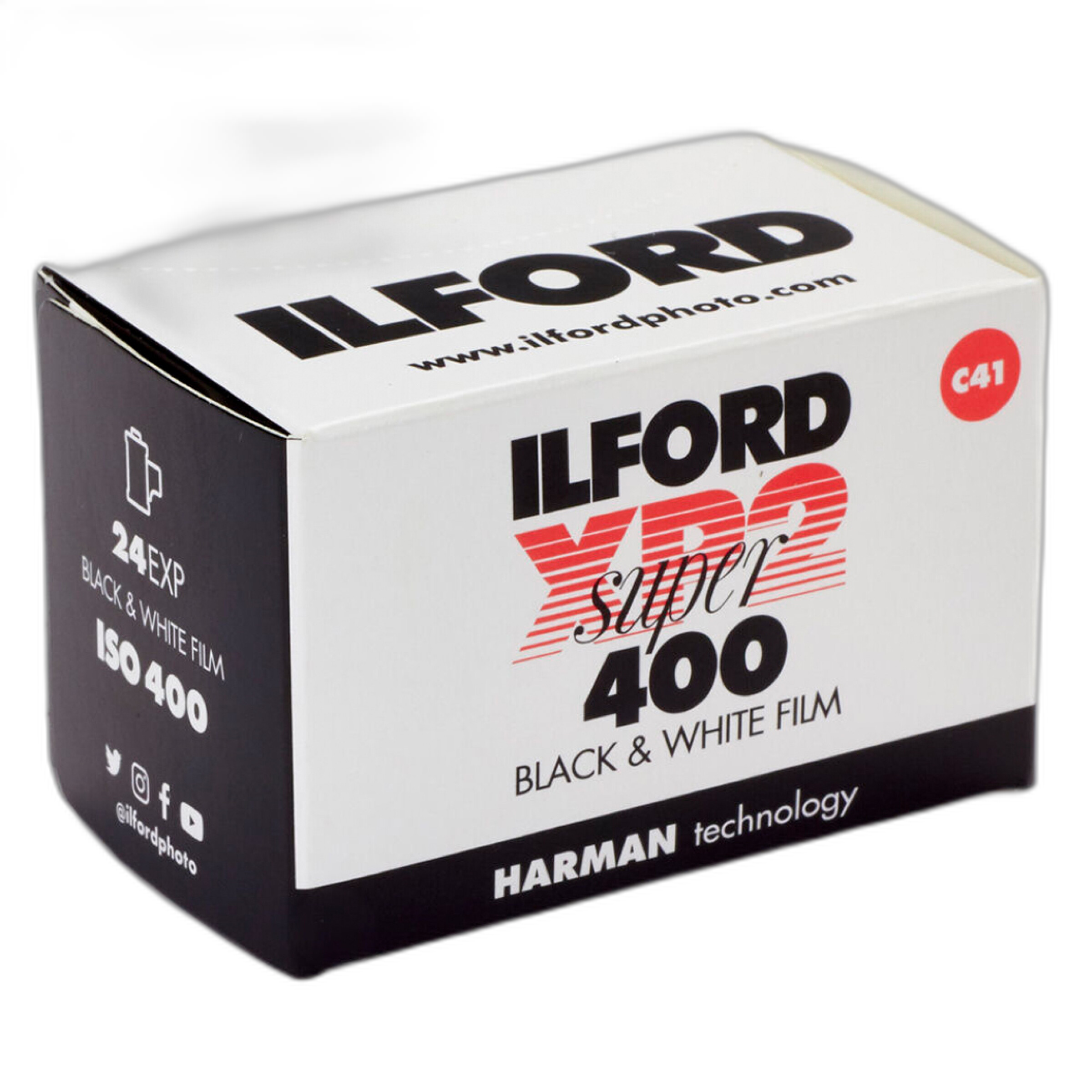
What Makes Ilford XP2 Super Different?
At first glance, XP2 Super seems to promise a contradiction: black-and-white photography processed in C-41, the same chemistry used for mainstream color negative film. But that apparent contradiction is exactly what made it so valuable. XP2 Super is a chromogenic black-and-white film, meaning its image is formed through dye clouds rather than the metallic silver image structure associated with traditional black-and-white films.
In practical use, this gives the film several defining characteristics. The first is convenience. Because it uses the C-41 process, photographers can drop it off at labs equipped for standard color negative development rather than seeking out a specialist black-and-white processor. In the late film era and into subsequent revivals of analog photography, that compatibility has been one of XP2 Super’s biggest selling points.
The second defining trait is its look. Ilford XP2 Super is widely associated with a smooth tonal response, low apparent grain, and very broad latitude. It does not mimic every traditional black-and-white stock, nor does it try to. Instead, it offers its own style of monochrome image-making: clean, forgiving, and especially well suited to photographers who want rich grayscale images with easy handling.
Core Characteristics
ISO 400 Speed
Ilford XP2 Super is rated at ISO 400, a highly practical sensitivity that has long represented a sweet spot in film photography. ISO 400 is fast enough for handheld shooting in a wide range of lighting conditions, from overcast outdoor scenes to indoor available light, while still retaining strong image quality. For many photographers, that means XP2 Super can remain loaded in the camera as an all-purpose film rather than a niche choice reserved for one kind of assignment.
Chromogenic Black-and-White in C-41
The headline feature remains the film’s chromogenic black-and-white design with C-41 processing. Historically, this mattered enormously. During periods when one-hour minilabs were common and dedicated black-and-white services were less available to casual users, XP2 Super offered a way to shoot monochrome without changing one’s processing workflow. That made it attractive not just to enthusiasts, but also to photographers working on tight deadlines or in places where specialist processing was difficult to find.
Smooth, Low-Grain Rendering
Among the most frequently praised qualities of XP2 Super is its smooth, low-grain look. Photographers often describe the film as refined and clean rather than gritty or aggressively textured. In portraits, that can translate to flattering skin tones and delicate transitions. In street and travel photography, it can create an elegant tonal scale that feels polished without becoming sterile.
This does not mean the film lacks character. Rather, its character is subtler than that of many classic silver-based black-and-white films. XP2 Super tends to emphasize tonal fluidity over grainy bite, which is a major part of its enduring identity.
Huge Exposure Latitude
If one quality most clearly explains XP2 Super’s popularity with such a broad range of photographers, it is its huge latitude. Exposure latitude refers to a film’s ability to tolerate overexposure and underexposure while still producing usable, often very attractive results. XP2 Super earned a reputation as a forgiving choice, especially for photographers who valued flexibility or were shooting in changing light.
That tolerance made the film particularly approachable for beginners while also giving experienced users more freedom in difficult or fast-moving situations. Wedding work, candid portraiture, travel, documentary shooting, and casual everyday photography all benefited from a stock that could handle less-than-perfect metering with grace.
Why XP2 Super Mattered in the Film Market
Ilford has long been one of the defining names in black-and-white photography, so a chromogenic C-41 film from the company occupied an interesting position in the catalog. It was not simply a technical curiosity. Instead, XP2 Super became a bridge product: a film for photographers who loved monochrome imagery but wanted modern processing convenience.
That role gave it an importance beyond its spec sheet. For some users, XP2 Super served as a gateway into black-and-white photography. Someone accustomed to dropping off color film at a local lab could begin exploring monochrome without changing labs or chemistry. For others, it became a practical professional tool, especially when turnaround mattered. And for still others, it was a creative choice in its own right, valued not merely because it was convenient but because it looked the way they wanted their photographs to look.
In the broader history of film, XP2 Super also reflects a period when manufacturers sought to make analog photography more adaptable to real-world workflows. Not every photographer had access to a traditional darkroom, and not every lab wanted to run dedicated black-and-white lines. A film that fit the infrastructure already in place had a clear advantage.
How It Looks in Pictures
The visual signature of Ilford XP2 Super is often described with three words: smooth, clean, and forgiving. Highlights tend to roll off gently, and the film’s broad latitude helps preserve tonal information in bright areas that might become harsh on less tolerant stocks. Shadows can remain open and usable, particularly when exposure is handled with care, and the overall effect is frequently one of tonal ease rather than dramatic hardness.
That makes XP2 Super especially attractive for portrait photography, lifestyle imagery, architecture, and general-purpose shooting where tonal nuance matters. It can also serve street photographers and reportage shooters who appreciate a monochrome film that does not punish imperfect exposure. In a medium where every film stock carries a personality, XP2 Super’s personality is cooperative rather than demanding.
Who It Was For
One of the strongest historical arguments for XP2 Super is that it appealed to several kinds of users at once. Beginners appreciated that it was easy to process through common C-41 labs. Advanced photographers appreciated the wide latitude and the polished tonal character. Hybrid shooters, especially those scanning negatives, often found chromogenic black-and-white films attractive because of their smooth grain structure and consistent output.
It was also a logical choice for photographers who wanted one film stock to cover many conditions. With ISO 400 speed and forgiving exposure behavior, XP2 Super fit the category of dependable everyday film. It was the sort of stock one could load before a trip, a family gathering, or a day of walking with the camera and trust to handle whatever turned up.
XP2 Super’s Place in Ilford History
Within Ilford’s broader legacy, XP2 Super stands as an example of the company’s willingness to support black-and-white photography in more than one tradition. Ilford’s reputation is deeply rooted in conventional monochrome materials, yet XP2 Super demonstrated that black-and-white photography could evolve alongside changing lab ecosystems and user expectations. It was both practical and expressive, and that balance is what kept it relevant.
Even viewed as a historical or archival subject, XP2 Super remains notable because it solved a real problem without losing the emotional appeal of film. It gave photographers monochrome negatives they could have developed at virtually any competent C-41 lab, while still delivering a distinct aesthetic built around low grain, smooth tonality, and huge latitude.
Closing Thoughts
Ilford XP2 Super endures as one of the clearest examples of how film technology can meet photographers where they are. It offered the visual language of black-and-white photography in a format compatible with mainstream processing, making monochrome more accessible without reducing it to an afterthought. With its chromogenic C-41 design, ISO 400 versatility, smooth rendering, and famously forgiving latitude, XP2 Super earned its place as a distinctive and highly practical film stock.
If you are looking to buy Ilford film, explore classic and contemporary analog materials, or learn more about the history of photographic gear and media, Unique Photo is an excellent place to shop and to keep learning.