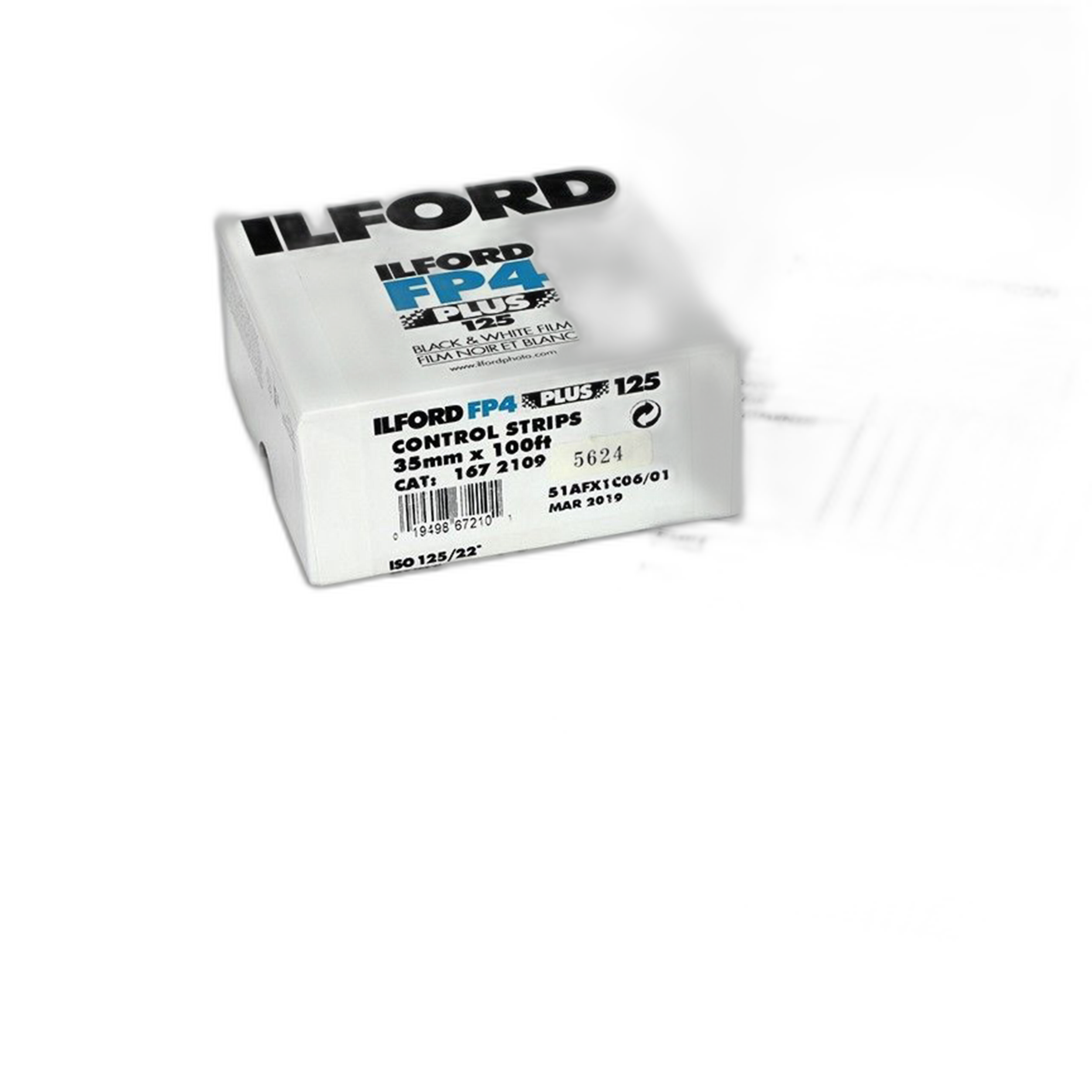
In the long-running Ilford family of black & white films, FP4 has held a distinctive place for photographers who want a classic medium-speed negative with refinement rather than flash. With the arrival of Ilford FP4 Plus in 1990, that reputation continues in updated form: this is a black & white negative film rated at ISO 125, intended for photographers who value fine grain and smooth tonality under daylight and controlled lighting alike. In an era when many photographers are choosing between the speed of faster emulsions and the ultra-fine rendering of slower films, FP4 Plus stands out as a practical middle path—traditional in spirit, but modern in consistency.
A Familiar Name, Refined for a New Decade
Ilford’s FP line has long been associated with moderate speed and elegant tonal separation, making it a favorite for general outdoor photography, portraiture, architecture, and careful darkroom work. The introduction of FP4 Plus in 1990 signals not a break from that legacy, but a continuation of it with the expectations of contemporary photographers in mind. The name itself tells much of the story: FP4 is already known and respected, while the “Plus” designation suggests improvement in performance and reliability without abandoning the essential character users have come to expect.
For black & white workers, these distinctions matter. Some films make their impression through contrast or speed, while others distinguish themselves through subtlety. FP4 Plus belongs firmly in the latter camp. It is the sort of film that invites close looking: skies that grade smoothly instead of breaking apart, faces that retain detail without appearing harsh, and textures that are crisply described without becoming brittle.
What FP4 Plus Is
At its core, Ilford FP4 Plus is a black & white negative film with a nominal speed of ISO 125. That speed places it in a very useful daylight category. It is fast enough for practical hand-held work outdoors, yet slow enough to preserve the fine-grain structure and tonal delicacy that many black & white photographers seek. In real-world terms, FP4 Plus is positioned as a film for the photographer who would rather have a beautifully shaped negative than merely a quick one.
The stated visual character is straightforward and attractive: fine grain and smooth tonality. Those two qualities often define whether a black & white film feels merely serviceable or genuinely expressive. Fine grain helps maintain clarity in enlargements and preserves subtle subject detail. Smooth tonality, meanwhile, affects the emotional quality of the image just as much as its technical appearance. It allows transitions between highlight, midtone, and shadow to feel natural and coherent, which is especially important in portraiture, landscape, and any subject where delicate gradation contributes to realism or mood.
Why ISO 125 Matters
In the current market, ISO 125 is a thoughtful choice rather than a compromise. Faster films provide additional flexibility in poor light, but they often do so at the expense of the very qualities many black & white photographers prize most. Slower films can offer exquisite grain and sharpness, yet may be less convenient for everyday use. FP4 Plus sits at a useful center point. For daylight photography, it offers ample speed while keeping a disciplined, polished image structure.
This makes the film especially appealing for photographers working in open air, from street scenes in good light to landscapes, travel views, and environmental portraiture. Daylight use plays naturally to the strengths of a medium-speed emulsion. The photographer can work at comfortable apertures, preserve depth of field where needed, and still expect negatives that print with nuance rather than abruptness.
Just as importantly, ISO 125 encourages a more deliberate style of picture-making. This is not a film that asks to be rushed. It rewards exposure care, thoughtful framing, and attention to tonal relationships. In return, it offers negatives that can hold together beautifully in the darkroom.
The FP4 Plus Look
Fine Grain Without Sterility
Fine grain is often discussed as a technical trait, but with FP4 Plus it is better understood as part of the film’s aesthetic identity. Grain can lend atmosphere, but too much of it can intrude on the image. The attraction of FP4 Plus is that its grain remains restrained enough to support the subject rather than compete with it. Architectural lines, foliage, skin texture, and studio backdrops all benefit from that restraint.
Yet fine grain here should not be mistaken for a cold or clinical rendering. The classic black & white appeal remains intact. FP4 Plus appears suited to photographers who want polish without losing the organic, silver-based character that makes monochrome photography distinct from other media.
Smooth Tonality and Tonal Separation
If grain is the surface quality of a film, tonality is its voice. Smooth tonality gives FP4 Plus a measured, articulate way of describing the world. For landscapes, this means skies and distant values can be rendered with grace. For portraits, it means skin tones can appear natural and dimensional. For still life and product work, it means the difference between a flat record and a convincing shape.
This tonal smoothness also suggests a film with broad usefulness in the darkroom. Negatives that hold tonal information evenly are generally easier to interpret at the enlarger. They give the printer room to maneuver, whether aiming for delicacy, richness, or a more dramatic final print. FP4 Plus appears designed for photographers who think in terms of the finished print as much as the exposed roll.
Best Uses for FP4 Plus
While any capable photographer can adapt a film to many purposes, FP4 Plus seems particularly well suited to several classic black & white applications:
- Daylight landscape photography, where fine detail and tonal gradation are central to the image.
- Portraiture, especially when the goal is a smooth, flattering rendering rather than gritty emphasis.
- Architecture and urban scenes, where controlled grain helps preserve line and texture.
- General outdoor photography, where ISO 125 offers practical speed without sacrificing image refinement.
- Darkroom-oriented work, where photographers want negatives with elegant tonal structure for printing.
That range helps explain why films of this type remain staples in many camera bags. They are not specialized to the point of limitation. Instead, they offer a dependable visual language that can adapt to many subjects while remaining recognizably consistent.
Where FP4 Plus Fits in Ilford’s Line
Within Ilford’s broader black & white offerings, FP4 Plus occupies a respected middle ground. It is neither the slowest nor the fastest expression of monochrome photography. Instead, it represents balance: enough speed for practical use, enough refinement for serious enlargement, and enough tonal smoothness to satisfy photographers who care deeply about print quality.
That balance has always mattered in black & white materials. Camera equipment may advance, and photographic fashions may shift, but a well-judged medium-speed film remains a foundational tool. FP4 Plus appears to have been introduced with precisely that continuity in mind. It respects the established FP tradition while reaffirming Ilford’s commitment to films that serve both the craftsperson and the artist.
An Early 1990s Black & White Standard
Seen from the vantage point of its 1990 release, Ilford FP4 Plus arrives at a moment when black & white photography still commands loyalty among students, professionals, and dedicated enthusiasts. The continuing demand is not hard to understand. Color may dominate many commercial uses, but black & white remains unmatched when the photographer wants to stress form, light, texture, and atmosphere. A film like FP4 Plus supports exactly that kind of seeing.
Its promise is not novelty for novelty’s sake. Rather, it is the reassurance of a trustworthy material with a cultivated look: fine-grained, smooth in tonal rendering, and comfortable in daylight. That combination should ensure FP4 Plus a strong following among photographers who prefer negatives with poise and printable subtlety.
Final Thoughts
Ilford FP4 Plus presents a compelling case for the enduring value of a medium-speed black & white negative film. With its ISO 125 rating, fine grain, and smooth tonality, it offers the sort of measured, expressive performance that has long defined serious monochrome photography. For daylight workers, portraitists, and darkroom-minded image-makers, FP4 Plus looks poised to become one of the dependable films of the new decade.
For photographers interested in classic film stocks, archival camera history, or adding Ilford black & white film to their kit, Unique Photo is an excellent place to buy, compare options, or learn more.