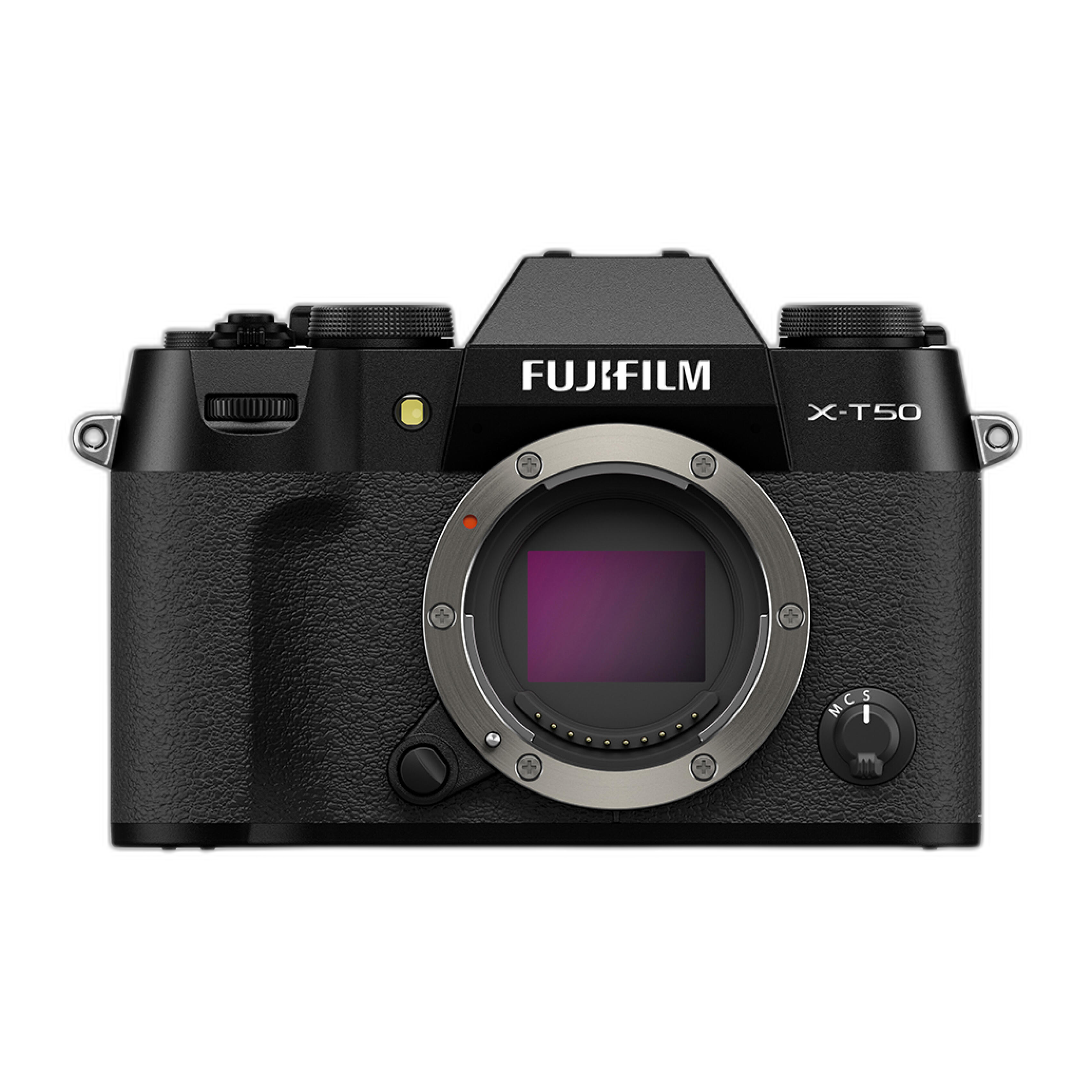
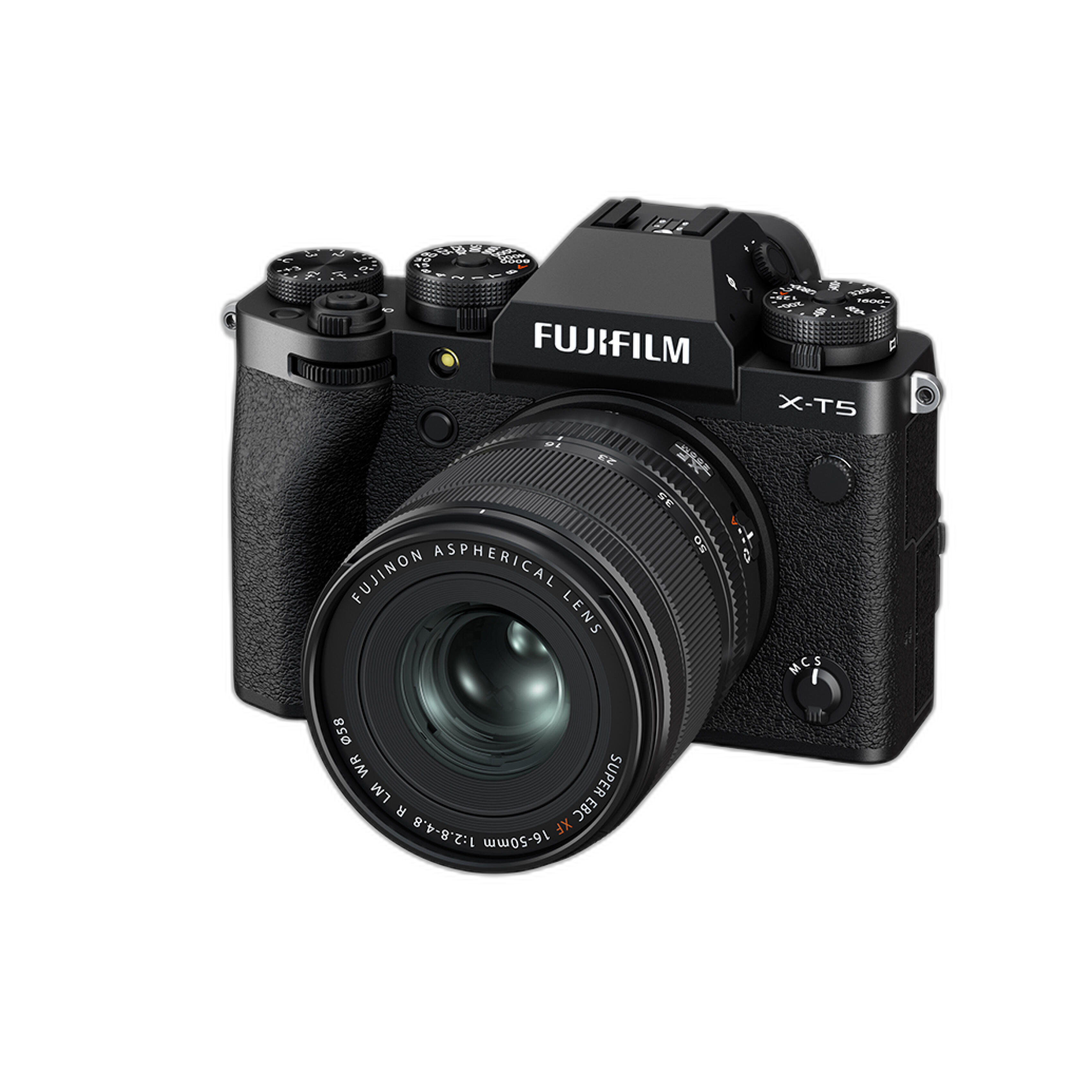
With the announcement of the Fujifilm X-T5 on November 2, 2022, Fujifilm gave its X-series lineup a camera that felt both new and familiar. On paper, the headline features were easy to spot: a new 40.2MP X-Trans 5 HR APS-C sensor, in-body image stabilization rated up to 7 stops, and the continued versatility of the Fujifilm X mount. But beyond the specifications, the X-T5 arrived as a statement about what many photographers still wanted from a modern camera: tactile controls, a compact body, and a design centered first and foremost on still photography.
For longtime followers of the X system, the X-T5 represented an especially interesting moment in the evolution of the X-T line. Earlier X-T models had helped define Fujifilm's appeal among enthusiasts and professionals who appreciated dedicated dials and a classically influenced shooting experience. By 2022, the market had shifted dramatically toward hybrid cameras that emphasized video as much as stills. The X-T5 did not ignore modern performance, but it unmistakably leaned back toward the traditions that made the series so beloved in the first place.
A New Sensor Generation for the X-T Series
The most significant technical leap in the X-T5 was its 40.2-megapixel X-Trans 5 HR APS-C sensor. This was a major resolution increase for the X-T line and a clear sign that Fujifilm was pushing APS-C image quality into territory that had once been associated more closely with larger formats. For landscape photographers, studio users, travel shooters, and anyone who valued cropping flexibility, the new sensor was the core of the announcement.
Fujifilm's X-Trans sensors had long stood apart from many competitors through their distinctive color filter array and the company's sustained emphasis on color science. The X-T5's high-resolution sensor therefore carried meaning beyond the raw megapixel count. It suggested more detail, more room for large prints, and more latitude in post-production while preserving the imaging character that had made Fujifilm cameras so popular among photographers who cared deeply about rendering.
In the context of late 2022, the move to 40.2MP also signaled confidence in the maturity of the X-mount ecosystem. High-resolution sensors demand strong lenses, and by this point Fujifilm's lens lineup had grown into one of the most complete APS-C mirrorless systems on the market. The X-T5 arrived at a time when users could meaningfully pair such a sensor with a wide variety of primes and zooms designed to make the most of its resolving power.
Stabilization Expands the Camera's Flexibility
Another major pillar of the X-T5 announcement was in-body image stabilization up to 7 stops. IBIS had become an increasingly important feature in enthusiast and professional mirrorless cameras, but its inclusion here was especially relevant because of the X-T5's photography-first identity. Stabilization made it easier to handhold the camera in low light, to work more confidently with longer focal lengths, and to get the benefits of the new high-resolution sensor without always needing to reach for a tripod.
For photographers who shoot street scenes at dusk, interiors while traveling, or handheld environmental portraits, that stabilization promise was more than a convenience. It was a practical bridge between portability and image quality. A camera marketed on both compactness and detail needs to support real-world handheld use, and the X-T5's IBIS specification suggested Fujifilm understood exactly that balance.
A Return to Photography-First Design
What made the X-T5 especially notable as an announcement was the feeling that Fujifilm was reaffirming the identity of the X-T line. Even in an era increasingly shaped by content creation and hybrid production, the X-T5's appeal was rooted in the experience of taking photographs. The series had always stood out for externally accessible controls, and that philosophy remained central to the camera's presentation.
That mattered historically. The X-T line helped establish Fujifilm as a company willing to build digital cameras that drew genuine inspiration from classic mechanical still cameras without becoming mere retro novelties. The top-plate dials and direct, tactile handling were not only styling cues; they were part of a working method. With the X-T5, Fujifilm seemed to be saying that there was still a substantial audience for a camera that encourages deliberate image-making even while offering thoroughly contemporary imaging technology underneath.
In this sense, the X-T5 occupied an important place within Fujifilm's broader 2022 lineup. Rather than simply chasing every trend in camera design, it reinforced a division of purpose within the X system. The company could serve video-first or hybrid users elsewhere, while allowing the X-T series to remain an especially compelling home for photographers whose priorities centered on still images, compactness, and physical controls.
The X Mount Advantage
The Fujifilm X mount was another crucial part of the X-T5 story. By late 2022, the strength of a camera body could no longer be discussed in isolation. Buyers were choosing systems, not just cameras, and Fujifilm had spent years building a lens catalog that gave the X-T5 immediate relevance across a wide range of genres.
For landscape work, the high-resolution sensor paired naturally with Fujifilm's wide-angle options. For portraiture, the system offered fast primes capable of delivering both sharpness and the kind of subject isolation APS-C photographers seek from well-designed optics. Travel and documentary shooters benefited from compact zooms and small primes that aligned with the X-T5's portable ethos. The result was a camera that did not feel like a technological experiment, but rather a mature body entering an established ecosystem.
That system maturity also helped justify the X-T5's position in the market. A strong mount can extend the life and value of a camera well beyond its announcement cycle, and the X mount had reached the point where buyers could invest with confidence in both body and glass.
Launch Pricing and Market Position
At a launch price of $1,699 in the United States, the Fujifilm X-T5 entered the market as an enthusiast and advanced-user camera with serious imaging ambitions. That price placed it in a competitive segment, but the camera's value proposition was clear: high resolution, substantial stabilization, and a handling philosophy that stood apart from many rivals.
In 2022, price mattered not only in absolute terms but in relation to format and feature set. The X-T5 was not trying to compete simply on sensor size. Instead, Fujifilm positioned it around a more holistic experience: excellent APS-C image quality, physical engagement, system depth, and a body that kept faith with the spirit of the X-T family. For many photographers, that combination was more persuasive than a simple spec-sheet comparison.
Why the X-T5 Announcement Mattered
Looking back at the X-T5's debut, what stands out is how clearly it expressed Fujifilm's confidence in the continued relevance of enthusiast photography. This was not a stripped-down nostalgia piece, nor was it a generic mirrorless body chasing trends. It was a camera that embraced modern advances where they mattered most for still photographers: more resolution, better stabilization, and continued compatibility with a rich lens ecosystem.
Just as importantly, the X-T5 reminded the industry that design philosophy still matters. Cameras are tools, but they are also instruments of process. The way a camera asks to be used can shape the way photographers see and work. By returning the spotlight to tactile controls and a photography-led experience, Fujifilm made the X-T5 announcement resonate beyond the usual list of features.
The X-T5 in Historical Context
As an archival milestone in Fujifilm's mirrorless history, the X-T5 can be seen as a reaffirmation of the values that helped build the X series in the first place. It carried forward the line's recognizable identity while introducing one of the most significant sensor upgrades the series had seen. In doing so, it strengthened Fujifilm's argument that APS-C remained a serious format for demanding photographers.
The camera's announcement also reflected a broader truth about the mirrorless era: progress does not always mean abandoning familiar ideas. Sometimes it means refining them, supporting them with better technology, and presenting them to a new generation of users. That is what made the X-T5 notable in 2022 and why it remains an important chapter in the history of Fujifilm's X-mount system.
If you'd like to explore the Fujifilm X-T5, compare Fujifilm X-mount cameras, or learn more about the history of the X system, Unique Photo is a great place to buy camera gear and get expert guidance.