Compare the Fujifilm GFX100 II, GFX100 II IR and Sony A1 II for 102MP detail, near-infrared imaging, burst speed and body price.
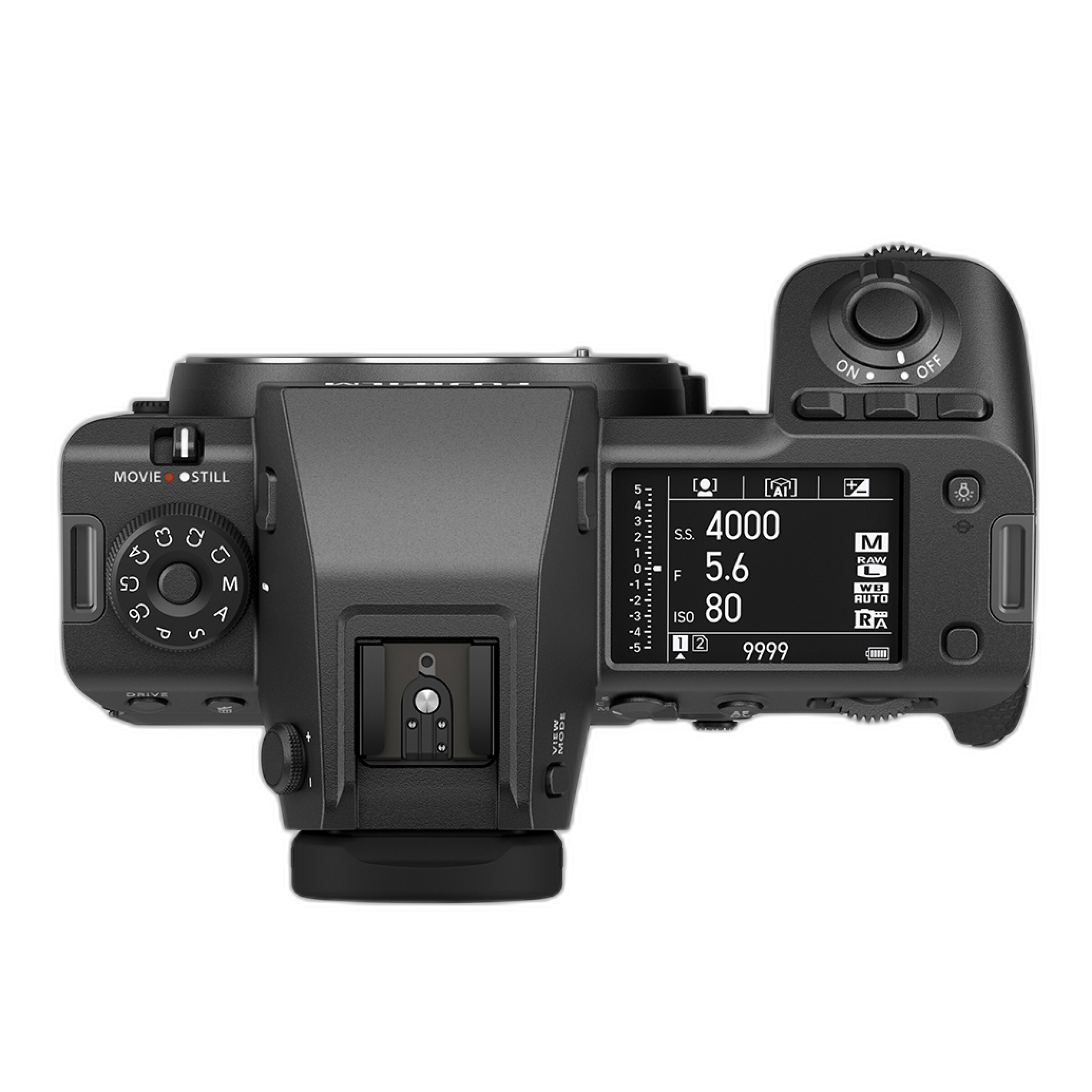
Body prices and lens mounts
The Fujifilm GFX100 II Medium Format Mirrorless Digital Camera (Body Only) is $7,999.95 and in stock. The FUJIFILM GFX100 II IR Digital Camera Body is $10,499.95 and available to preorder. The Sony A1 II Mirrorless Camera Body is $6,799.99 and in stock.
The Fujifilm bodies use the GF mount; the Sony uses E-mount. For an existing kit, lens compatibility belongs alongside the body price. These are body-only listings, so the camera price is not a complete system budget.
Specifications side by side
| Specification | Fujifilm GFX100 II | Fujifilm GFX100 II IR | Sony A1 II |
|---|---|---|---|
| Resolution | 102MP | 102MP | 50.1MP effective |
| Sensor designation | CMOS II HS | CMOS IR | Stacked Exmor RS CMOS |
| Sensor dimensions | 43.8 × 32.9mm | 43.8 × 32.9mm | 35.9 × 24mm |
| Full-resolution continuous shooting | Approximately 8fps, mechanical shutter | Approximately 8fps, mechanical shutter | Up to 30fps, electronic shutter |
| Image stabilization | IBIS, up to 8 stops | IBIS, up to 8 stops | 5-axis sensor-shift |
| Lens mount | Fujifilm GF | Fujifilm GF | Sony E |
| Rear screen | 3.2-inch, three-direction tilting touchscreen | 3.2-inch, three-direction tilting touchscreen | 3.2-inch, 4-axis tilting touchscreen |
| Viewfinder resolution | Approximately 9.44 million dots | Approximately 9.44 million dots | 9,437,184 dots |
| Card slots | CFexpress Type B slot; UHS-II SD slot | CFexpress Type B slot; UHS-II SD slot | Dual slots supporting CFexpress Type A and UHS-II SD |
| Dimensions | 152.4 × 117.4 × 98.6mm | 152.4 × 117.4 × 98.6mm | 136.1 × 96.9 × 82.9mm |
The burst figures are not a mechanical-shutter comparison. Sony's 30fps rate uses its electronic shutter; Fujifilm's full-resolution 8fps rate uses the mechanical shutter. That distinction matters more than simply comparing the two numbers.
102MP detail versus 30fps action
Both Fujifilm bodies put 102 million pixels on a 43.8 × 32.9mm sensor. Sony uses a 50.1MP effective-resolution sensor measuring 35.9 × 24mm. For work involving large output or substantial cropping, the Fujifilm pixel count is a practical reason to accept a larger body.
Sony takes the speed route: up to 30fps at 50.1MP in RAW+JPEG, with 120 AF/AE calculations per second. Sony also lists blackout-free shooting at up to 30fps and Real-time Eye-AF for humans, animals and birds. Those features address keeping a moving subject in view and recording more positions during a short action sequence.
The Fujifilm bodies combine AI autofocus with phase- and contrast-detection AF. They also offer approximately 8.7fps with the electronic shutter in 35mm Format Mode. That is a different mode from the 8fps full-resolution mechanical burst, not a higher-speed equivalent of it. Both GFX models use the X-Processor 5.
The IR model is a specialist choice
Fujifilm describes the GFX100 II IR as a camera for near-infrared imagery, revealing detail beyond the visible spectrum. Its stated applications include conservation and cultural-heritage work. Forensic imaging is another use where that additional image information can have a specific purpose.
The IR model does not add pixels over the standard GFX100 II. Both have 102MP resolution, approximately 8fps full-resolution mechanical shooting and up to 8 stops of IBIS. The higher body price buys a different imaging application, not a higher number in those specifications.
Fujifilm also identifies advanced creative near-infrared photography as a use. That is a reason to consider the IR body when the intended rendering is part of the project, rather than treating it as a general upgrade.
Stabilization, screens and body size
Fujifilm rates both GFX bodies for up to 8 stops of in-body stabilization. Sony lists 5-axis sensor-shift stabilization. Stops describe a correction rating; axes describe the directions of correction. Eight versus five is not a valid performance comparison here.
IBIS helps reduce the effects of camera movement during handheld photography or video. It does not stop a moving subject. That distinction still applies with 102MP, so stabilization and burst speed solve different problems.
The Sony is smaller in all three listed dimensions. Its 4-axis tilting touchscreen also differs from Fujifilm's three-direction tilting design, although all three screens measure 3.2 inches. Screen articulation affects working from awkward camera positions; the nearly matching viewfinder resolutions are less of a dividing line. Both Fujifilm bodies have approximately 9.44-million-dot EVFs, while Sony specifies 9,437,184 dots.
GFX video tools and different card formats
The two GFX bodies share full-sensor-width 4K/60p recording in 4:2:2 and 10-bit Apple ProRes. Their MOV options include ProRes 422 HQ, ProRes 422 and ProRes 422 LT. For an edit built around ProRes, those are shared workflow features, not reasons to pay more for the IR body.
Both also support jam-sync timecode with ATOMOS AirGlu BT, which helps align recordings made on separate devices. Native Frame.io Camera-to-Cloud integration connects capture to a cloud-based workflow. The specialist sensor is the distinction between these Fujifilm bodies, rather than those production tools.
Card purchasing needs attention across brands. Each GFX body has a CFexpress Type B slot and a separate UHS-II SD slot. Sony has dual slots supporting CFexpress Type A and UHS-II SD media. CFexpress Type A and Type B are different card formats; an existing CFexpress card purchase needs to match the intended body.
Who should choose each camera
Choose the GFX100 II for high-resolution work without a near-infrared requirement. Large-print or crop-heavy assignments give its 102MP sensor a practical purpose. It retains the same listed burst rate and video formats as the IR body at the lower Fujifilm body price.
Choose the GFX100 II IR when the deliverable specifically calls for near-infrared imagery. A conservation department or specialist imaging practice has a clearer reason for that purchase than a photographer simply seeking a general-purpose body upgrade. Its preorder availability also belongs in project planning.
Choose the Sony A1 II when timing the moment matters more than maximum pixel count. Its up-to-30fps electronic bursts and subject-specific Eye-AF are the decision-changing features for action work. The smaller dimensions also favor it when camera size affects the kit.
Prices at Unique Photo
- Fujifilm GFX100 II Medium Format Mirrorless Digital Camera (Body Only): $7,999.95
- FUJIFILM GFX100 II IR Digital Camera Body: $10,499.95 (preorder)
- Sony A1 II Mirrorless Camera Body: $6,799.99
Prices as of November 20, 2026. Browse more: Fujifilm, Fujifilm at Unique Photo.
Frequently asked questions
What is the difference between the Fujifilm GFX100 II and GFX100 II IR?
The GFX100 II IR is designed for near-infrared imaging. Both cameras have 102MP resolution, the X-Processor 5 and approximately 8fps full-resolution mechanical shooting.
Is the Sony A1 II faster than the Fujifilm GFX100 II?
Sony lists up to 30fps at full resolution using the electronic shutter. Fujifilm lists approximately 8fps at full resolution using the mechanical shutter.
Can both Fujifilm GFX100 II models record 4K at 60p?
Yes. Both support full-sensor-width 4K/60p in 4:2:2, along with 10-bit Apple ProRes.
How much is the Fujifilm GFX100 II IR, and is it available?
The GFX100 II IR body is $10,499.95 and available to preorder.