The upgrade dilemma: mirrorless vs dedicated camcorder for video
If you’ve been shooting video on a DSLR, a move to mirrorless seems like the obvious next step: better autofocus, cleaner HDMI, improved codecs, and compact bodies. But if your work is primarily video-first—events, sports, corporate, houses of worship, live streams—a dedicated camcorder can be a smarter, more reliable upgrade. To show what you gain versus a hybrid mirrorless rig, we’re comparing two proven, video‑centric options: JVC’s GY‑HC500U and GY‑HM250SP.
Both bring all-in-one ergonomics, long record reliability, servo zoom lenses, and live-output features that hybrids often need to be rigged for. Here’s how they stack up—and which one we recommend for most DSLR shooters moving up.
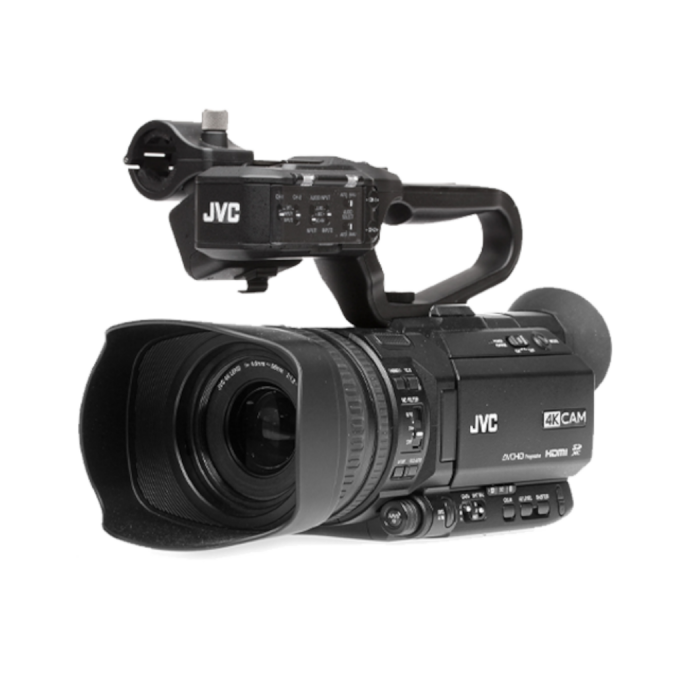
Head-to-head: JVC GY-HC500U vs JVC GY-HM250SP
| Feature | JVC GY-HC500U | JVC GY-HM250SP |
|---|---|---|
| Product image | 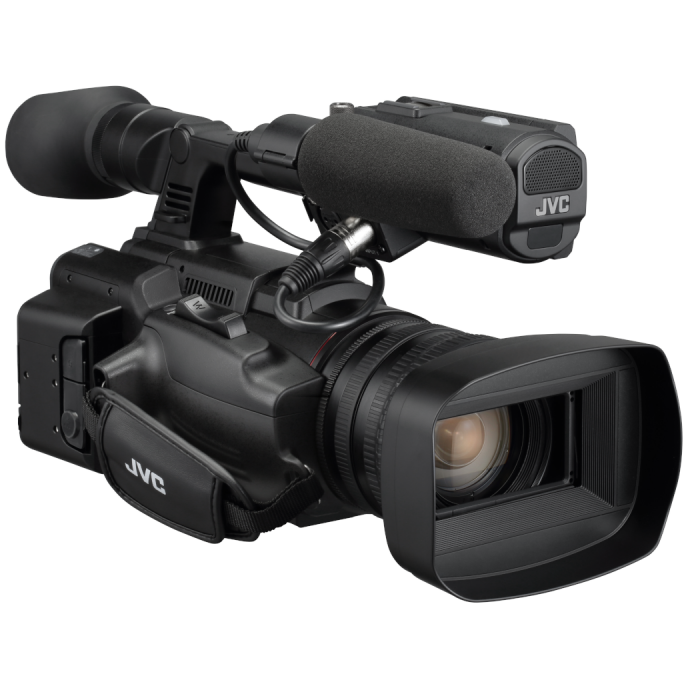 | 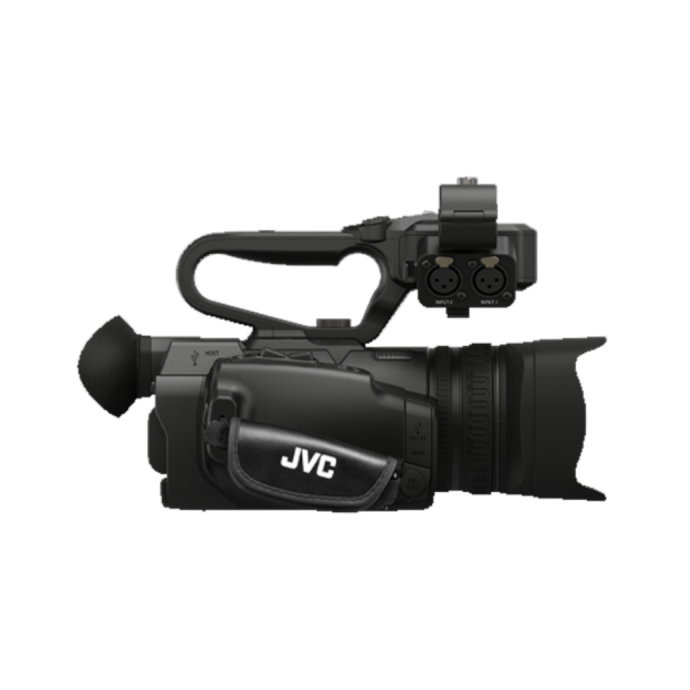 |
| Imaging format | 1-inch class 4K professional camcorder | 4K compact handheld camcorder |
| Optical zoom lens | 20x integrated servo zoom | 12x integrated servo zoom |
| Video resolution | 4K UHD recording | 4K UHD recording |
| Live graphics | External graphics/production workflow recommended | Built-in sports score/graphic overlays |
| Live/remote workflows | Connected Cam IP/streaming workflows | Live streaming capable |
| Form factor | Professional handheld camcorder | Compact handheld camcorder |
| Best for | Event, documentary, ENG, corporate | School/rec sports, simple live shows, budget productions |
Image quality and sensor performance
Coming from a DSLR, you’ll notice the GY‑HC500U’s larger 1‑inch imaging platform delivers a more cinematic look than many small‑sensor camcorders—clean detail in 4K, better low‑light handling, and greater control over depth of field. The GY‑HM250SP still captures sharp 4K for web and broadcast delivery, but emphasizes simplicity and portability over maximum sensor real estate.
Lenses and zoom range
One of the biggest advantages of a camcorder over mirrorless for live/event work is the integrated, parfocal servo zoom. The GY‑HC500U’s 20x reach covers wide to long without lens swaps, maintaining focus throughout the zoom—ideal for ceremonies and press events. The GY‑HM250SP’s 12x zoom is plenty for small venues and sideline coverage when you’re working close to the action.
Autofocus, stabilization, and handling
Both models give you continuous AF tuned for video and rocker‑controlled servo zoom—exactly what mirrorless rigs try to emulate with cages, follow-focus, and power zoom adapters. Their shoulder‑friendly balance, physical controls, and long, uninterrupted record reliability make them excellent for all‑day shoots where hybrids can struggle with thermal limits or heavy rigging.
Audio and connectivity
Dedicated camcorders are built for pro audio and live output. Expect practical on‑body audio controls and connectivity designed for field and live use, reducing the need for add‑on audio interfaces that mirrorless bodies often require. For multicam and streaming, both units integrate clean video outputs and control options suited to production switchers and encoders.
Streaming and live graphics
If you plan to stream, both fit neatly into modern live workflows. The GY‑HC500U is part of JVC’s Connected Cam family, making it a strong choice when you’ll integrate with switchers and external graphics tools. The GY‑HM250SP stands out for smaller teams: its built‑in sports overlay system (score/clock) saves you from running a separate graphics computer—a big win for schools and community leagues.
Workflow and media
For long-form recording, both camcorders are engineered to run continuously with robust file handling—no guesswork about clip limits or overheating. That reliability is a core reason many DSLR shooters who are serious about video choose a camcorder over a mirrorless body.
Portability and rigging
These JVCs are ready-to-shoot out of the box. Compared to mirrorless kits that often need cages, dummy batteries, and XLR adapters, a camcorder’s all‑in‑one design keeps your rig compact and predictable—especially critical when you’re traveling light or working with volunteers.
Value and who should choose which
- Choose the JVC GY‑HC500U if you want a video‑first upgrade with a larger sensor, longer zoom, and a workflow that plugs into professional live/event environments.
- Choose the JVC GY‑HM250SP if your priority is turnkey sports coverage with in‑camera score/clock overlays and a super‑compact package for small crews.
Bottom line
Mirrorless cameras are excellent hybrids, but if video is your primary focus, a purpose‑built camcorder can simplify your life and elevate your results. The JVC GY‑HC500U is our top recommendation for most DSLR shooters moving up; the GY‑HM250SP is a smart alternative when built‑in sports graphics and maximum portability matter most.
Have questions or want hands‑on time? Visit Unique Photo—our experts can help you compare options, build a complete workflow, and get you shooting fast.