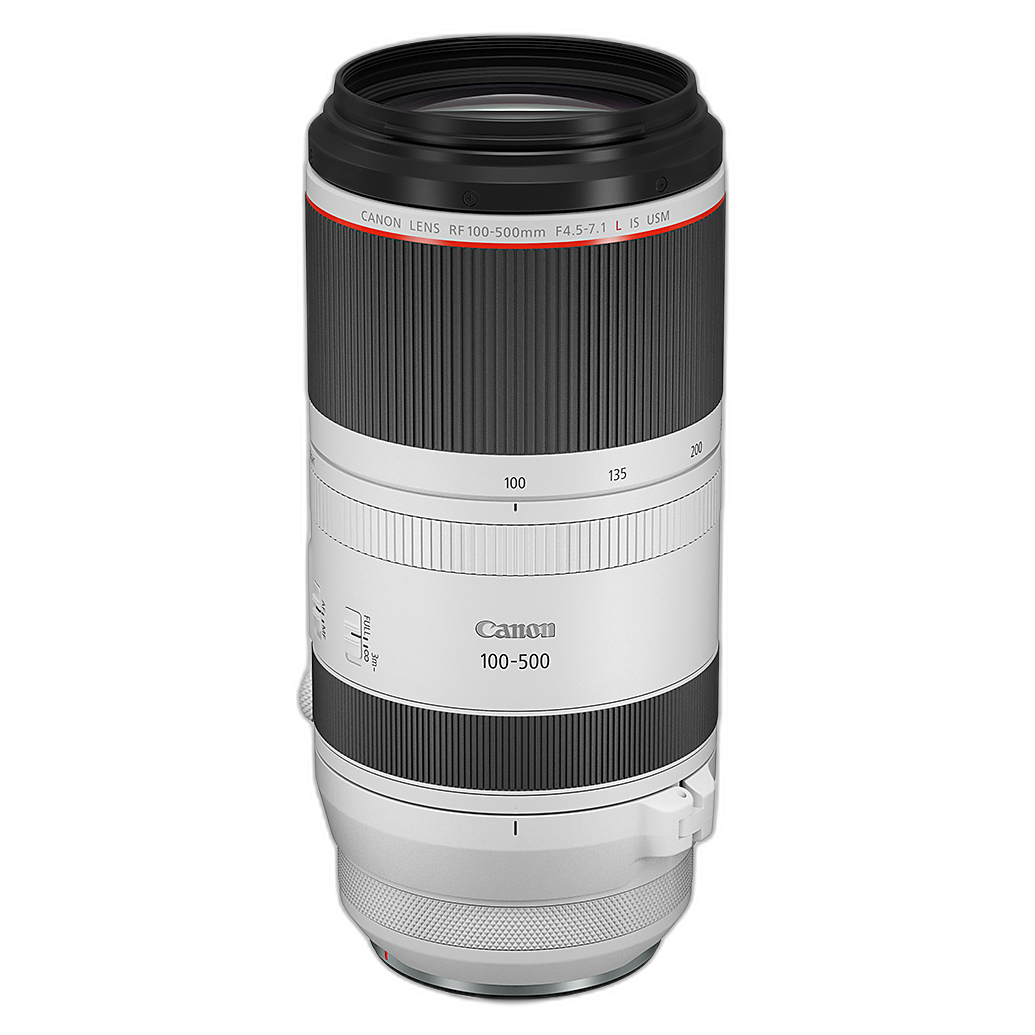
When Canon introduced the RF 100-500mm f/4.5-7.1L IS USM in July 2020, it quickly stood out as one of the most important telephoto zooms of the young RF era. For photographers moving into Canon’s full-frame mirrorless system, this lens represented something more than another long zoom: it was a clear statement that the RF mount was ready for serious wildlife, bird, aviation, and field sports work. In one weather-resistant L-series package, Canon offered a versatile 100-500mm range, built-in image stabilization, and the reach that many outdoor photographers rely on every day.
Historically, that timing matters. In the DSLR years, Canon users had long depended on EF telephoto zooms such as the 100-400mm class for portability and flexibility. The RF 100-500mm f/4.5-7.1L IS USM did not simply replicate that formula for mirrorless users; it extended it. By pushing the long end to 500mm while maintaining a relatively travel-friendly design philosophy, Canon created a lens that felt directly aimed at photographers who needed more reach without stepping immediately into the size, weight, and cost category of a large super-telephoto prime.
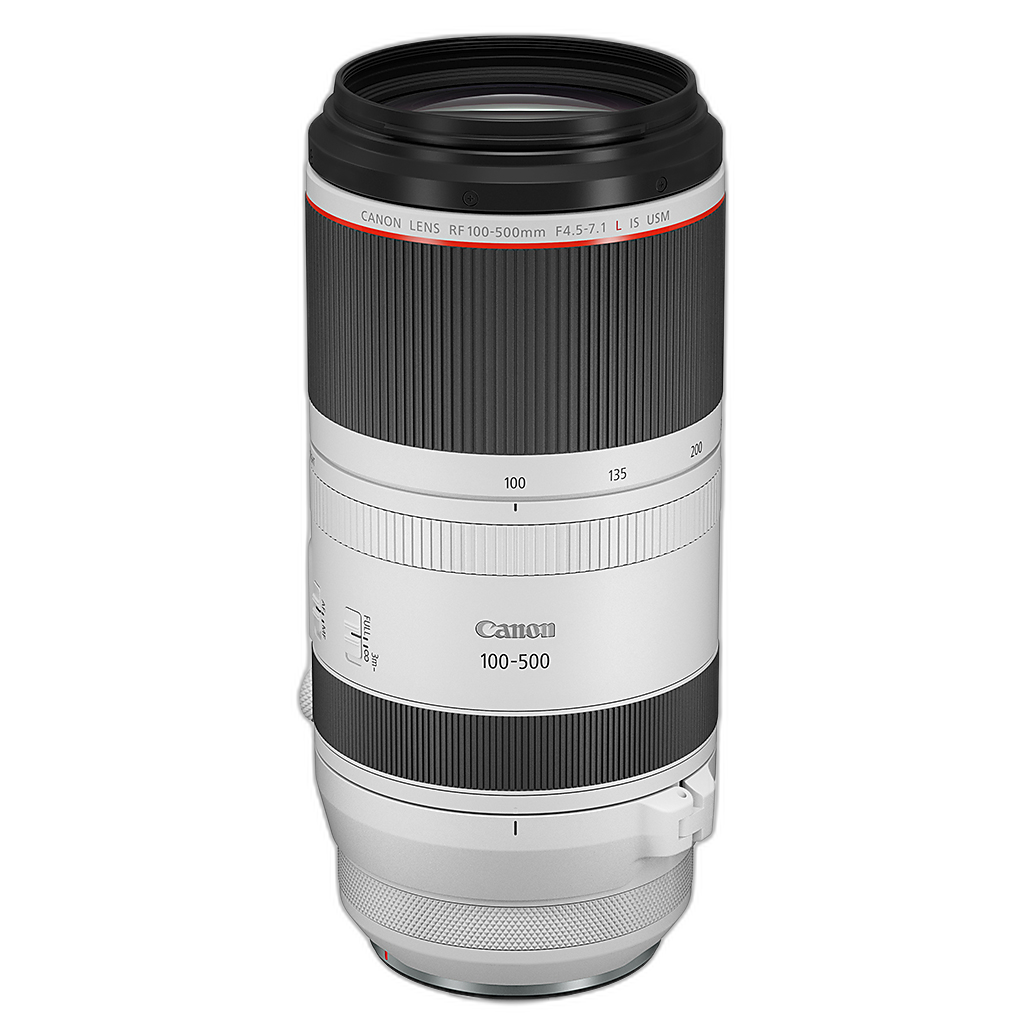
A Defining Early Telephoto for the RF Mount
The Canon RF 100-500mm f/4.5-7.1L IS USM arrived at a pivotal moment for Canon mirrorless. By 2020, Canon had already shown that the RF mount could support ambitious optics, from fast professional zooms to distinctive portrait and general-purpose lenses. What the system still needed, in practical day-to-day terms, was a native long telephoto zoom that outdoor and action photographers could treat as a main working tool. This lens filled that role.
Its basic specification told the story immediately: a 100-500mm focal range, a variable maximum aperture of f/4.5-7.1, optical image stabilization, and Canon RF mount compatibility. At launch, its U.S. price of $2,699 placed it firmly in premium enthusiast and professional territory, but still well below the cost of exotic super-telephoto primes. That pricing positioned it as aspirational yet realistic for a large segment of dedicated shooters.
Why 100-500mm Was Such an Important Range
The genius of this lens was not only that it reached 500mm, but that it began at 100mm. That may sound simple, yet in actual field use it is a major advantage. Wildlife and sports photographers often work in changing conditions where the subject distance is never fixed. A deer may emerge closer than expected, a raptor may suddenly bank overhead, or a player may drive toward the sideline. Starting at 100mm gives the photographer space to frame larger subjects or nearby action, while 500mm supplies the narrow angle of view needed for distant details.
That broad range made the lens especially appealing for birding, safari work, motorsports, outdoor events, and travel where packing multiple telephoto options was not ideal. It is easy to understand why the RF 100-500mm became one of the most discussed long lenses in Canon’s mirrorless lineup: it addressed real shooting needs with a practical, highly usable zoom span.
L-Series Positioning and Canon’s Build Philosophy
Canon’s L-series designation has long carried specific expectations. Photographers associate it with pro-oriented construction, dependable handling, and optics designed for demanding work. The RF 100-500mm f/4.5-7.1L IS USM clearly belonged in that lineage. Even around its release period, the lens was understood not as a casual consumer zoom, but as a serious field lens built for photographers who spend long days outdoors following unpredictable subjects.
That distinction matters historically because the lens helped establish confidence in Canon’s RF telephoto roadmap. Users considering a switch from EF DSLRs to RF mirrorless bodies were looking closely at whether Canon would provide native glass that felt fully professional. A lens like this answered that question decisively. It brought the handling expectations of Canon’s long-established telephoto heritage into the newer mirrorless system.
Image Stabilization for Real-World Telephoto Use
Any discussion of a lens in this class has to include stabilization. At focal lengths from 100mm to 500mm, even small movements can affect sharpness, especially in handheld shooting. Canon’s inclusion of image stabilization was central to the lens’s identity. For wildlife, sports, and nature photographers, stabilization expands what is realistically possible in the field, whether tracking subjects at dusk, shooting from uneven terrain, or working from vehicles and blinds where support options are limited.
Just as importantly, image stabilization aligned with the broader promise of mirrorless shooting: mobility. The RF system encouraged photographers to build capable but more agile kits, and a stabilized telephoto zoom fit that philosophy perfectly. It supported the idea that one could carry meaningful reach into the field without always depending on a tripod or monopod.
The Variable Aperture Tradeoff
The RF 100-500mm’s f/4.5-7.1 maximum aperture was one of its defining characteristics, and it is best understood as a deliberate design tradeoff. In telephoto lens design, adding reach while keeping the lens practical in size and cost almost always involves compromise. Canon’s choice here favored versatility and portability over the larger, heavier, and more expensive construction that a brighter long-end aperture would likely have required.
For many photographers, especially those working in daylight or with modern high-performance camera bodies, that was a very reasonable balance. Wildlife and sports shooters often prioritize reach, autofocus reliability, and manageable carry weight over raw aperture speed, particularly when they spend hours in the field. In this context, f/4.5-7.1 was not simply a limitation; it was part of the lens’s mission. It made a 100-500mm L-series zoom feasible as an everyday long-lens option for the RF system.
A Lens Shaped by Modern Mirrorless Needs
Seen from the perspective of 2020, the Canon RF 100-500mm f/4.5-7.1L IS USM also reflected changing expectations among serious photographers. Mirrorless users increasingly wanted lenses that preserved professional results while taking advantage of newer camera-body capabilities. Faster burst rates, advanced autofocus tracking, and improved electronic viewfinders made long zooms even more useful than before, because photographers could more easily follow motion, evaluate framing, and react in real time.
The 100-500mm fit naturally into that environment. It was the kind of lens that let Canon RF shooters take full advantage of modern camera features while preserving the practical flexibility that had made telephoto zooms indispensable for decades. In that sense, it was both traditional and forward-looking: traditional in purpose, but very much a product of the mirrorless transition.
Who This Lens Was For at Launch
At its introduction, the target user was easy to identify. This was a lens for committed enthusiasts and professionals who needed reach but also needed to stay mobile. Bird photographers, wildlife observers, sideline sports shooters, aviation enthusiasts, and outdoor travel photographers all fell squarely within its audience. It was also likely attractive to existing Canon users who knew the value of a telephoto zoom in the 100-400mm class and saw 500mm as a welcome extension.
The launch price of $2,699 underscored its serious intent. This was an investment lens, but one positioned to do a great deal of work across multiple genres. That broad usefulness is a big part of why it holds such an important place in the early history of Canon RF lenses.
Historical Significance in the Canon RF Lineup
Looking back, the Canon RF 100-500mm f/4.5-7.1L IS USM stands as one of the foundational long lenses of the RF mount. It showed that Canon was not treating telephoto development as an afterthought. Instead, the company delivered a native super-telephoto zoom that addressed exactly the kinds of assignments and passions that keep photographers outdoors and engaged: birds in flight, distant wildlife, action on the field, and compressed landscapes lit by changing weather.
As an archival piece of Canon’s 2020 lens strategy, the RF 100-500mm remains notable for how clearly it defined the ambitions of the system. It paired premium L-series positioning with a highly practical focal range and the stabilization needed for real-world use. For many photographers evaluating the RF ecosystem at the time, this was the lens that proved Canon mirrorless could be taken seriously at the long end.
Final Thoughts
The Canon RF 100-500mm f/4.5-7.1L IS USM was, and remains, a landmark telephoto zoom for Canon RF users. Introduced on July 9, 2020, with a launch price of $2,699, it delivered a compelling blend of reach, versatility, image stabilization, and L-series intent. In the history of Canon’s mirrorless transition, it deserves recognition as one of the lenses that helped make the RF system feel complete for wildlife and sports photographers.
If you want to explore the Canon RF 100-500mm f/4.5-7.1L IS USM or learn more about Canon RF lenses past and present, Unique Photo is a great place to shop, compare gear, and connect with knowledgeable staff who understand the needs of serious photographers.