Compare the Canon EOS R8 Mark II vs Canon EOS R8 and Nikon Z fc on stabilization, video, controls and what each body or kit includes.
Body-only pricing versus lens kits
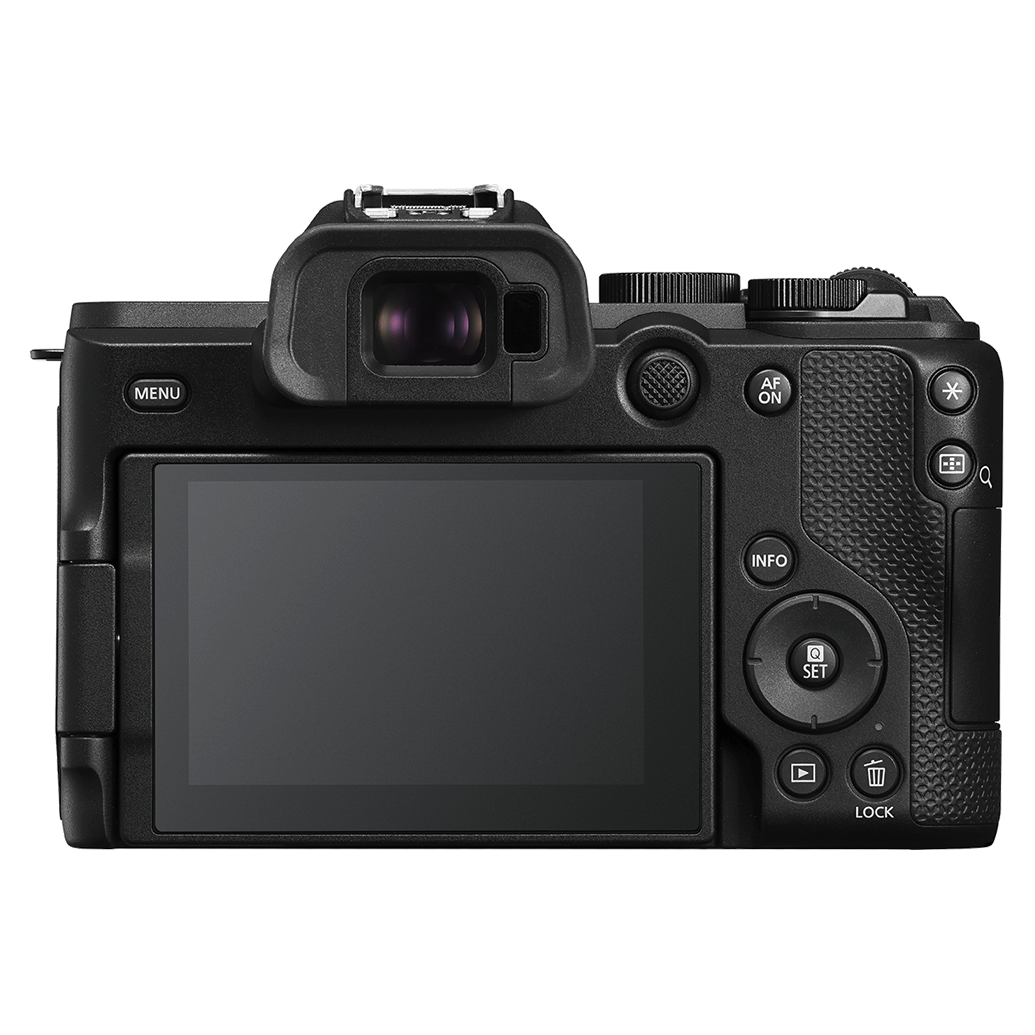
The Canon EOS R8 Mark II Camera - Body Only costs $1,899. Its sensor-shift stabilization is a reason to consider it, but this price does not include a lens. The competing packages here do.
The Canon EOS R8 Content Creator Kit is $1,849 and includes a 24-50mm f/4.5-6.3 IS STM zoom, tripod grip and stereo microphone. The Nikon Z fc Mirrorless Digital Camera with 28mm Lens costs $1,246.95 and includes a 28mm f/2.8 lens.
For a lens-inclusive Canon comparison, the Canon R8 Mark II with 24-50mm F/4.5-6.3 IS STM Kit costs $2,099. All four options are in stock at Unique Photo. Compare the packages before deciding how much of the budget remains for other equipment.
Sensor, video and storage specifications
These specifications apply to the camera bodies, regardless of the accessories bundled with them.
| Specification | Canon EOS R8 Mark II | Canon EOS R8 | Nikon Z fc |
|---|---|---|---|
| Sensor format | Full-frame CMOS | Full-frame CMOS | DX / APS-C CMOS, 1.5x crop factor |
| Resolution | 24.2 megapixels | Approximately 24.2 megapixels | 20.9 effective megapixels |
| Lens mount | Canon RF | Canon RF | Nikon Z |
| Maximum UHD 4K frame rate | 60p | 60p | 30p |
| Maximum Full HD frame rate | 180p | 180p | 119.88p |
| Maximum recording duration | 6 hours in 4K; 2 hours in 4K HFR | 2 hours | 29 minutes, 59 seconds |
| Memory card support | Single SD/SDHC/SDXC slot, UHS-II | Single SD/SDHC/SDXC slot, UHS-II | Single SD/SDHC/SDXC slot, UHS-I |
| Battery type | LP-E17 | LP-E17 | EN-EL25 |
The two Canons match on sensor format and pixel count. Resolution alone therefore gives little reason to choose the Mark II over the R8. The Nikon's smaller DX format changes framing: its 1.5x crop factor means the included 28mm lens frames more tightly than 28mm on either full-frame Canon.
Stabilization, body weight and physical controls
The EOS R8 Mark II has sensor-shift in-body image stabilization. Canon rates coordinated IS correction at up to 7.5 stops at the image center. That qualification matters: it is a coordinated-system rating, not a blanket promise for every photograph. Stabilization counters camera shake; it does not stop a moving subject.
For stationary subjects indoors, that can make handheld work more practical. The Mark II weighs 499 g body-only, or 546 g with battery and recording media. Its new multi-controller joystick provides a physical control for autofocus selection.
The Nikon Z fc weighs 390 g body-only. It also provides mechanical controls for shutter speed, ISO and exposure compensation. Those dials are a concrete reason to choose its handling approach, not merely a styling detail. Lens weight still needs to be included in any carrying-weight comparison.
Subject detection and action shooting
Both Canons use Dual Pixel CMOS AF II with detection for people, animals and vehicles. The Mark II also offers Register People Priority Autofocus, which gives a registered person priority. That is relevant when a particular person matters more than the others in the frame.
Nikon lists 209 phase-detection autofocus points and full-time Eye-Detection AF for 4K video. Point counts and subject-detection functions describe different parts of autofocus; neither number alone establishes tracking performance.
For bursts, the Mark II reaches up to 40 fps at maximum resolution, with limits of up to 73 Raw frames or 190 JPEG frames. The Nikon reaches up to 11 fps at 20.9 megapixels. The Mark II offers more frames within a brief action sequence, but its burst limits still make timing important.
4K recording, slow motion and webcam use
Both Canons offer UHD 4K at up to 60p, Full HD at up to 180p and Canon Log 3. Canon specifies uncropped, 6K-oversampled 4K for the R8. The Mark II lists internal XF-HEVC S recording with 4:2:2 10-bit color, useful for workflows involving color adjustment.
The Nikon records uncropped, full-pixel-readout 4K at 30p, 25p or 24p. For footage slowed on a lower-frame-rate timeline, the Canons' higher maximum frame rates are a meaningful difference.
Recording duration also separates them. The Mark II lists a six-hour maximum in 4K and two hours in 4K HFR, compared with two hours for the R8 and 29 minutes, 59 seconds for the Nikon. These are recording limits, not battery-life ratings.
The R8 additionally supports UVC/UAC for webcam and streaming use. Its included tripod grip and stereo microphone make that package relevant to desk-based presentations without selecting those accessories separately.
A 24-50mm zoom versus a 28mm prime
The Canon kits include a 24-50mm zoom with an f/4.5-6.3 maximum aperture. Zooming changes framing without moving the camera, useful when the camera is positioned on a table or space is restricted.
The Nikon kit's 28mm f/2.8 lens has a fixed focal length. Its wider maximum aperture can help maintain faster shutter speeds in lower light, but it does not provide the zoom's framing flexibility. Existing lenses also matter: both Canons use the RF mount, while the Nikon uses the Z mount. This purchase chooses a lens system as well as a body.
Who should choose each camera
Choose the EOS R8 Mark II if sensor-shift stabilization is a requirement for handheld work. Its up-to-40 fps bursts also make it the stronger choice over the Nikon for short action sequences. Buy body-only if suitable RF lenses are already covered; otherwise, consider the 24-50mm kit.
Choose the EOS R8 Content Creator Kit for a full-frame 4K 60p setup that includes a zoom and presentation accessories. A camera-on-a-table recording setup is a sensible use for this bundle, particularly if webcam support matters more than the Mark II's longer listed 4K recording limit.
Choose the Nikon Z fc kit to keep the lens-inclusive purchase price lower and work with dedicated exposure dials. It suits a buyer comfortable with a fixed-focal-length lens and a 4K ceiling of 30p. For long continuous recordings, its 29-minute, 59-second limit deserves attention before purchase.
Prices at Unique Photo
- Canon EOS R8 Mark II Camera - Body Only: $1,899.00
- Canon R8 Mark II with 24-50mm F/4.5-6.3 IS STM Kit: $2,099.00
- Canon EOS R8 Content Creator Kit: $1,849.00
- Nikon Z fc Mirrorless Digital Camera with 28mm Lens: $1,246.95
Prices as of October 18, 2026. Browse more: Mirrorless Cameras, Canon at Unique Photo.
Related reading: Canon EOS R8 Mark II: Specs, Price and What's New.
Frequently asked questions
Does the Canon EOS R8 Mark II have IBIS?
Yes. It has sensor-shift in-body image stabilization, with Canon rating coordinated IS correction at up to 7.5 stops at the image center.
What comes in the Canon EOS R8 Content Creator Kit?
It includes the EOS R8, a 24-50mm f/4.5-6.3 IS STM lens, a tripod grip and a stereo microphone. It costs $1,849 and is in stock.
Can the Nikon Z fc record 4K at 60p?
Its listed 4K frame rates are 30p, 25p and 24p. Both the Canon EOS R8 and EOS R8 Mark II offer 4K at up to 60p.
Do the Canon EOS R8 and EOS R8 Mark II use the same battery?
Both use an LP-E17 battery. Both also have a single SD/SDHC/SDXC memory card slot supporting UHS-II.