Compare the Fujifilm FUJINON GF 30mm f/5.6 T/S Lens with the GF 30mm f/3.5 R WR and Canon CN-R 14mm T3.1 for GFX stills and RF cinema.
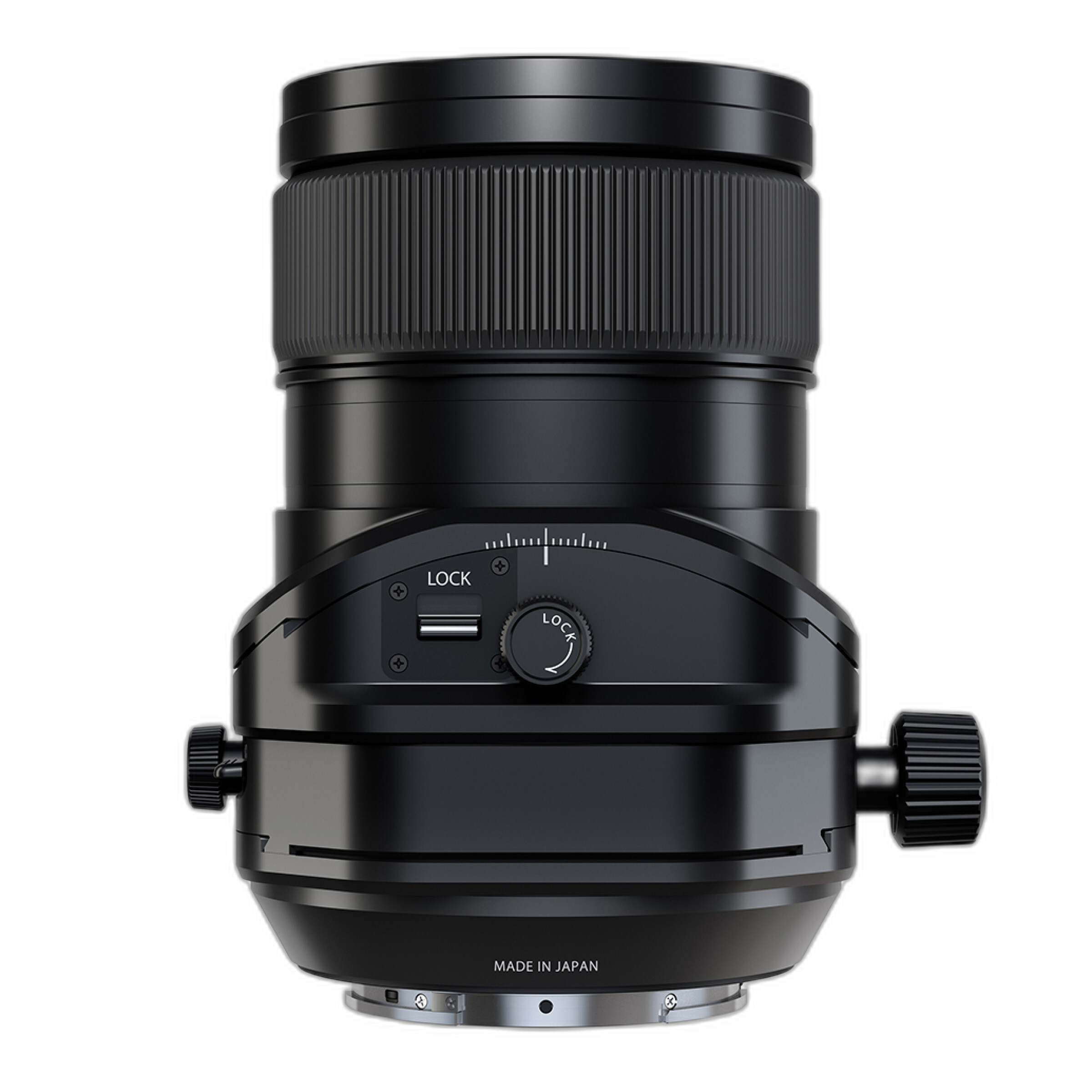
Two GFX lenses and a separate RF cinema option
The Fujifilm FUJINON GF 30mm f/5.6 T/S Lens and Fujifilm FUJINON GF 30mm f/3.5 R WR Lens give GFX cameras the same 24mm-equivalent field of view. The buying decision is about lens movements versus a brighter maximum aperture and less weight, not getting a wider view. The T/S costs $4,499.95; the f/3.5 R WR costs $1,949.95.
The Canon CN-R 14mm T3.1 L F Cinema Prime Lens (Canon RF) costs $4,270. It belongs to a different camera system and is designed around full-frame cinema production. Its manual cinema controls make it a separate kind of purchase, rather than a direct substitute for either GF lens.
All three are in stock at Unique Photo.
Specifications shared across all three listings
| Specification | GF 30mm f/5.6 T/S | GF 30mm f/3.5 R WR | Canon CN-R 14mm T3.1 |
|---|---|---|---|
| Mount | Fujifilm GF | FUJIFILM G | Canon RF |
| Focal length | 30mm | 30mm | 14mm |
| Maximum aperture designation | f/5.6 | f/3.5 | T3.1 |
| Minimum focus distance | 30cm | 32cm | 20cm |
| Listed filter size | 105mm | 58mm | 114mm |
| Diaphragm blades | 9, rounded | 9, rounded | 11 |
| Weight | 1,340g | 510g | 1.3kg |
The aperture row needs a qualification. Fujifilm uses f-numbers; Canon uses a T-stop, which accounts for light transmission. T3.1 should not be read as an identical measurement to f/3.1 or used as a straight numerical comparison with the Fujifilm apertures.
Format matters, too. Both GF lenses have an 84.7° diagonal angle of view and a 24mm-equivalent focal length. Their actual 30mm focal length is not the right number to compare directly with a 14mm lens designed for full-frame coverage.
What ±15mm shift and ±8.5° tilt change
The T/S provides up to ±15mm of shift and ±8.5° of tilt, plus up to ±90° of lens rotation. Those movements are the reason to pay for this lens. They change how framing and focus can be controlled while the camera stays in position.
Shift lets the photographer adjust framing while keeping the camera level. For architecture, that means including more of a building without first pointing the camera upward and making vertical lines converge. It is a different solution from simply fitting a wider lens and accepting extra foreground.
Tilt changes the orientation of the plane of focus. With a receding surface, it can help align focus with the subject rather than relying only on a smaller aperture. It does not increase depth of field equally throughout the scene. This is a control that rewards deliberate setup, not a general improvement to every photograph.
Fujifilm also includes an integrated tripod mount designed to keep the lens's optical axis in place as tilt and shift adjustments are made. An integrated sensor tracks shift and rotation adjustments for post-production. These features support a measured workflow in which small changes between frames matter. The tripod itself is sold separately.
The f/3.5 R WR reduces the carrying burden
The f/3.5 R WR weighs 510g against the T/S lens's 1,340g. That difference follows the photographer between every location, even when no lens movements are needed. Its 58mm filter size also calls for a different filter setup from the T/S lens's 105mm size. Check existing filters before treating the two as interchangeable kit choices.
The f/3.5 maximum aperture admits more light than f/5.6, allowing a faster shutter speed at the same ISO under the same lighting. Both Fujifilm lenses stop down to f/32. The R WR's wider maximum aperture is useful when light falls, but it does not replace the T/S lens's ability to reorient the focus plane.
Fujifilm lists autofocus for the R WR, useful as subjects and compositions change. It also specifies dust- and weather-resistant construction for damp or humid conditions, with operation down to 14°F (-10°C).
Close-focus capability gives the T/S a separate advantage: it reaches 0.21x maximum magnification at a 30cm minimum focus distance, versus 0.15x and 32cm for the R WR. The magnification figures are more informative than the small difference in focusing distance when judging how large a detail can appear in the frame.
The Canon is built around manual cinema operation
The Canon CN-R 14mm is fully manual despite its native RF communication. Its 300° focus rotation gives the operator a long adjustment range for controlled focus changes. Phosphorescent markings help make the scales visible in low light. Those details matter on a planned focus pull in a way they may not on a walking photography outing.
Canon lists advanced lens metadata support and Dual Pixel Focus Guide. The latter assists manual focusing; it does not turn this into an autofocus lens. Canon also lists peripheral illumination, chromatic aberration and distortion correction.
Canon describes the optics as intended for 8K and HDR production. That is a cinema design target, not a basis for declaring it sharper than either Fujifilm lens. Start with the camera mount and operating method: this is a native RF lens with full-frame coverage, not a native GFX option.
Choose by the adjustments the job requires
Choose the GF 30mm f/5.6 T/S for deliberate GFX perspective work. It makes sense when a level camera still needs different framing, or when the focus plane needs to follow a receding subject. A tripod-based architectural workflow gives its movements a clear job to do.
Choose the GF 30mm f/3.5 R WR for a GFX kit that moves between locations. Its 510g weight and autofocus suit changing compositions without making perspective movements the center of the process. It keeps the same 24mm-equivalent view at a lower price.
Choose the Canon CN-R 14mm T3.1 for a native RF cinema setup. Its purchase case is controlled manual operation with RF communication. The 300° focus rotation is relevant when the shot calls for carefully managed focus changes, rather than quick autofocus acquisition.
Prices at Unique Photo
- Fujifilm FUJINON GF 30mm f/5.6 T/S Lens: $4,499.95
- Fujifilm FUJINON GF 30mm f/3.5 R WR Lens: $1,949.95
- Canon CN-R 14mm T3.1 L F Cinema Prime Lens (Canon RF): $4,270.00
Prices as of October 17, 2026. Browse more: Medium Format Cameras, Fujifilm at Unique Photo.
Frequently asked questions
Do the two Fujifilm GF 30mm lenses have the same field of view?
Yes. Both list a 24mm-equivalent focal length and an 84.7° diagonal angle of view.
How much tilt and shift does the Fujifilm GF 30mm f/5.6 T/S provide?
It provides up to ±8.5° of tilt and ±15mm of shift. Fujifilm also lists up to ±90° of lens rotation.
Does the Fujifilm GF 30mm f/3.5 R WR have autofocus and weather resistance?
Yes. Fujifilm lists autofocus and dust- and weather-resistant construction, with operation in temperatures down to 14°F (-10°C).
Is the Canon CN-R 14mm T3.1 an autofocus lens?
No. It is a fully manual cinema lens with native RF communication, Dual Pixel Focus Guide and 300° focus rotation.