Can Sony Lens Compare Beta Pick the Best Low‑Light Lens? Real-World Insights and Top E‑mount Picks
Members in our community have been asking whether Sony’s Lens Compare Beta can meaningfully guide low‑light lens choices—and how closely it mirrors what happens after sunset, in dim event halls, or under city lights. As a camera retailer that helps creators gear up every day, Unique Photo took a practical look at how to use the tool, where it shines, where it falls short, and which lenses consistently win in real conditions.
What Is Sony Lens Compare Beta—and How Do You Use It for Low Light?
Sony Lens Compare Beta is an online tool designed to help you evaluate Sony lenses side‑by‑side. For low‑light planning, it’s best used to:
- Compare fields of view and depth of field at wide apertures
- Review optical characteristics like vignetting and sharpness behavior at different f‑stops
- Assess how a lens’ maximum aperture impacts subject isolation and framing
Think of it as a scouting scope. It’s great for narrowing choices before you rent or buy from Unique Photo—but it isn’t a substitute for real-world tests.
Does Sony Lens Compare Beta Simulate Real Low‑Light Conditions Accurately?
Short answer: it’s helpful, but not a complete proxy for real scenes. Here’s what the tool typically does well—and what you should still verify in the field.
Strengths you can trust:
- Angle of view, framing, and depth‑of‑field trends at wide apertures
- Relative sharpness behavior across the frame (referencing published charts)
- Aperture impacts on vignetting and overall light gathering
Things the tool can’t perfectly emulate:
- Autofocus reliability in near darkness (subject contrast, AF assist behavior, lens drive speed)
- Real transmission (T‑stop) versus stated f‑number and how your camera’s sensor handles high ISO
- Flare/ghosting from point light sources, sagittal coma for astro, and “cat‑eye” bokeh at the frame edges
- IBIS/OSS effectiveness, handholding technique, and motion blur from moving subjects
Use the tool to shortlist lenses, then validate AF performance, coma control, and flare resistance with quick night tests or a rental trial from Unique Photo before committing.
Best Sony Low‑Light Lenses: Tool Insights + User Experience
When we overlay the tool’s guidance with user feedback, a pattern emerges: fast glass wins for people and action, while stabilized zooms can still shine for static subjects.
Ultra‑Wide: Astro, Nightscapes, and Interiors
Sony’s pro ultra‑wide brings in a lot of light for stars, cityscapes, and dark interiors, while keeping distortion well controlled.
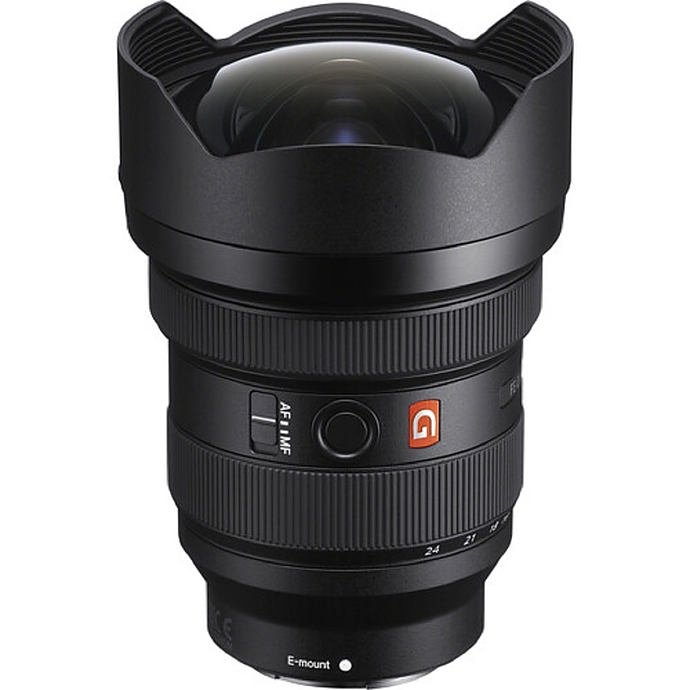
Sony FE 12–24mm f/2.8 GM — A favorite for night skies and architectural interiors where every stop matters. At 12–14mm, f/2.8 balances exposure and corner performance; stop down a notch if you need extra edge crispness. Pair with a sturdy tripod and test for coma in your typical sky conditions.
Tip: If you’re working with Sony’s FE 14mm f/1.8 GM, a dedicated square filter holder like the NiSi 100mm Filter Holder for Sony FE 14mm f/1.8 GM Lens can enable longer night exposures with NDs—handy for smoothing water or traffic trails.
Walk‑Around Low Light: Events, Travel, and Documentary
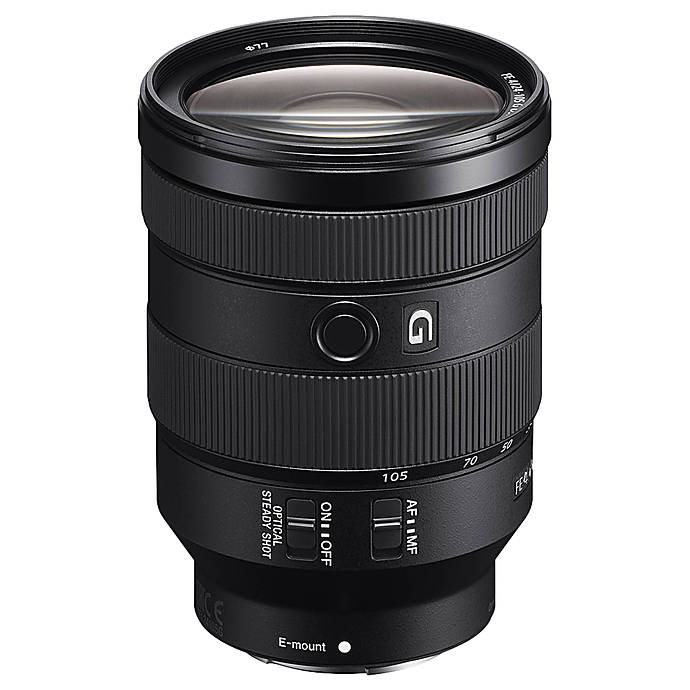
Sony FE 24–105mm f/4 G OSS — While f/4 isn’t “fast,” its OSS and flexible range make it excellent for dim museums, street scenes, and documentary work where subjects are relatively static. The Lens Compare tool makes it easy to confirm framing at 24–105mm; in the field, lean on OSS and your camera’s IBIS for lower shutter speeds. For moving subjects, switch to a faster prime.
Fast Primes: People and Action After Dark
The tool helps visualize depth of field at f/1.8–f/1.4, but only your camera can tell you how snappy AF will be under mercury vapor streetlights or candlelight. In general, modern Sony FE primes (35mm, 50mm, 85mm f/1.8–f/1.4) deliver the AF confidence needed for events and portraits in rough light. If you want a reference point for peak wide‑open rendering, consider how high‑end manual options behave:
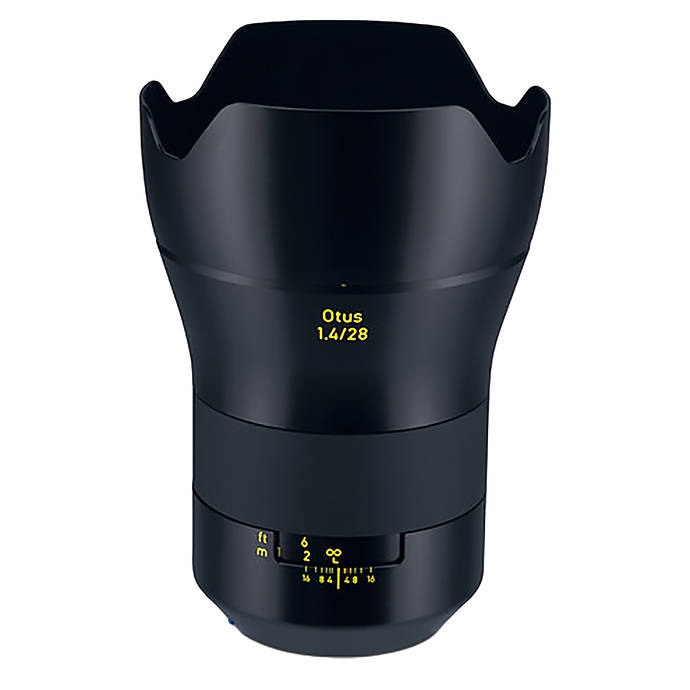
Zeiss 28mm f/1.4 Otus (Nikon ZF.2 mount) — Not a Sony E‑mount lens, but a benchmark for f/1.4 micro‑contrast and coma control. Adapted workflows may be manual‑only, but it demonstrates the image quality ceiling fast glass can reach. If the Lens Compare Beta suggests a fast 28–35mm for your look, field‑test a modern AF E‑mount prime and compare real‑world files.
Budget‑Friendly Low Light via Adapting
Vintage or used lenses can be an affordable entry into low‑light creativity. Expect manual focus and varying optical quirks (flare, lower transmission), but also unique character.
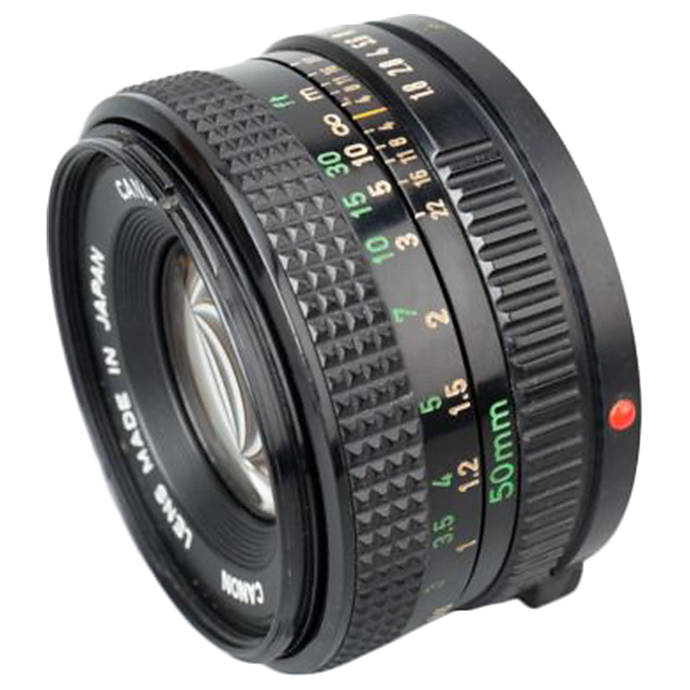
Used Canon FD 50mm f/1.8 — A lightweight classic that adapts to Sony mirrorless with the right FD‑to‑E adapter. Great for learning manual focus in dim scenes and exploring characterful bokeh. Use magnified focus and peaking; stop down slightly if you want a bit more contrast.
Zoom vs. Prime for Low Light on Sony E‑Mount
- Primes (f/1.4–f/1.8): Best for people, action, and subject isolation; stronger AF performance in near‑dark conditions; shallower depth of field
- Zooms (f/2.8): Excellent for events and astro at the wide end; more versatile framing; may need higher ISO or slower shutter
- Zooms (f/4 with OSS): Great for static subjects and travel; rely on stabilization for slower shutter speeds; less ideal for motion
Use the tool to pre‑visualize framing, then decide if your use case requires speed (primes) or flexibility (zooms).
How to Validate the Tool’s Picks in the Field
- AF reality check: Test in the darkest venue you shoot. Evaluate acquisition speed and accuracy on real faces or low‑contrast subjects.
- Point‑light torture test: Shoot street lamps and stars wide open; examine coma, astigmatism, and onion‑ring bokeh.
- Flare control: Include bright bulbs just outside the frame and check ghosting/veiling flare.
- Stabilization vs motion: With OSS/IBIS, test how slow you can go handheld, then confirm how moving subjects look at those shutter speeds.
- Color and transmission: Compare exposure at fixed settings across lenses to sense real T‑stop differences.
Low‑Light Lens Picks by Scenario
- Astrophotography and nightscapes: Sony FE 12–24mm f/2.8 GM; consider dedicated ultra‑fast primes; test for coma
- Street and travel at dusk: Sony FE 24–105mm f/4 G OSS for flexibility; add a fast 35/50 prime for people
- Events and weddings: Fast AF primes (35/1.4, 50/1.4–1.8, 85/1.8–1.4) for reception lighting; keep a 24–70/2.8 or 12–24/2.8 for dance floor coverage
- Creative budget builds: Used primes like the Canon FD 50/1.8 with adapter; expect manual focus and character
FAQ: Sony Lens Compare Beta for Low Light
Q: Can the tool tell me how my camera will handle noise at high ISO?
A: No. It’s lens‑focused. ISO performance depends on your camera’s sensor and processing.
Q: Will it predict autofocus reliability in near‑dark rooms?
A: Not precisely. Use it to pick candidate lenses, then test or rent from Unique Photo to confirm AF behavior.
Q: Does it reflect transmission (T‑stop) differences?
A: It’s based on f‑numbers and optical data. Real‑world transmission can vary slightly—verify with exposure tests.
Conclusion: Use the Tool to Narrow, Then Prove It at Night
Sony Lens Compare Beta is an excellent first pass for low‑light lens choices: it clarifies framing, depth‑of‑field, and optical tendencies. For final decisions, pair those insights with a quick field test or rental. Lenses like the Sony FE 12–24mm f/2.8 GM excel for astro and dramatic interiors, while the Sony FE 24–105mm f/4 G OSS remains a versatile low‑light travel and documentary option—especially for static scenes. Fast primes still rule for people and action in the dark.
Shopping or testing next steps with Unique Photo:
- Suggested internal links: Sony Lenses (E‑mount), Sony G Master lenses, and Mirrorless Lenses
- Suggested internal links: Used & Trades for value primes like the Canon FD 50mm f/1.8
- Suggested internal links: Lens Hoods & Shades and Filters (consider holders for specialty wide lenses)
- Suggested internal links: Rentals to test a lens at your venue at night
- Suggested internal links: Classes & Workshops for night, astro, and event photography