Introduction
Buying your first prime lens can feel simple when you are choosing a single focal length, but this comparison is a little different: these Sigma cinema prime kits are designed for filmmakers who want a matched set of fast, full-frame primes rather than one still-photo lens. If you are stepping into narrative filmmaking, commercial production, music videos, or higher-end video work, a prime lens kit can be your first serious investment in image quality and consistency.
Here, we are comparing Sigma’s FF High-Speed Prime Lens Kits across different mounts, metric versions, and kit configurations. For a first-time buyer, the biggest questions are usually straightforward: how many focal lengths do you get, which mount fits your camera, and whether a smaller specialty kit or a broader 5-lens set makes more sense.
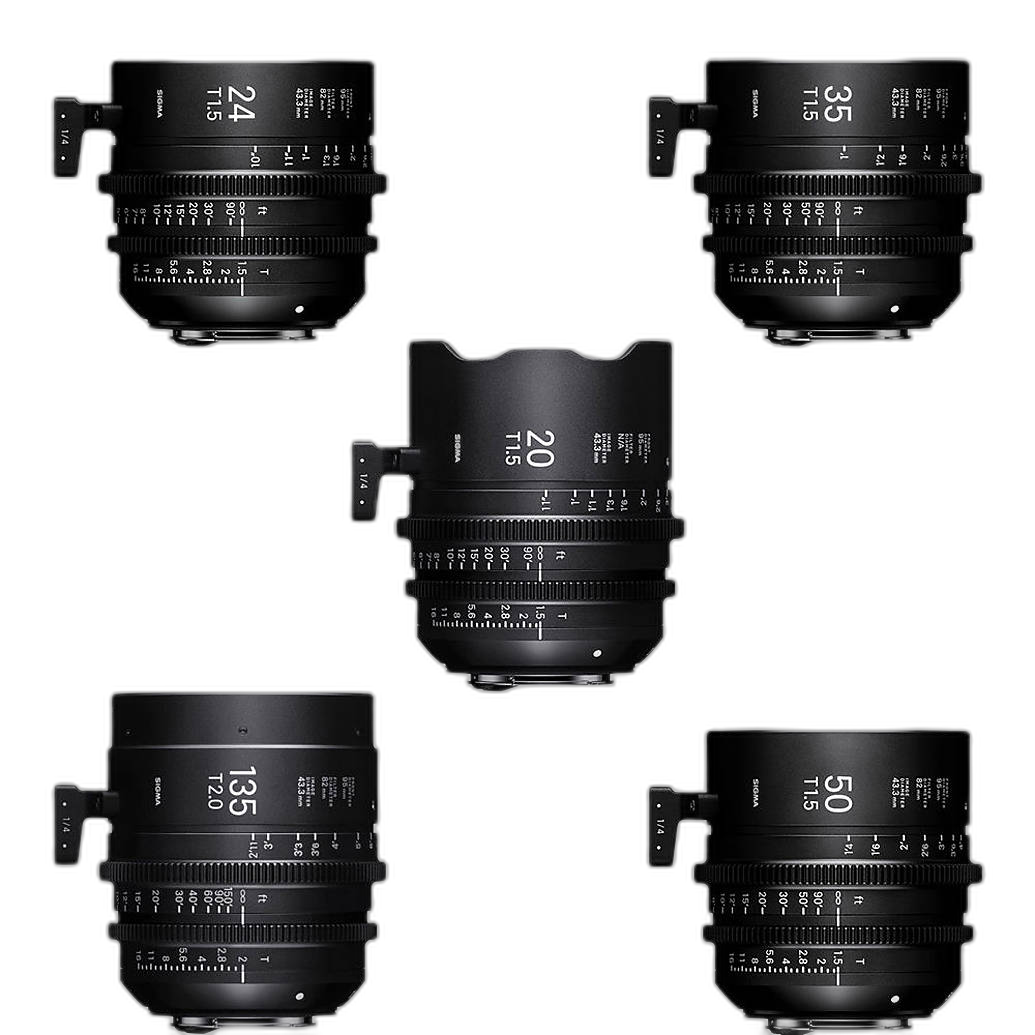
Side-by-Side Specs
| Product | SKU | Mount | Configuration | Max Aperture | Format | Best For |
|---|---|---|---|---|---|---|
| Sigma 14mm T2 and 135mm T2 FF High-Speed Prime Lens Kit (Canon EF, Metric) | SGC176 | Canon EF | 2-lens kit | T2 | Full Frame | Specialty wide + tele coverage |
| Sigma T1.5 FF High-Speed 5 Fully Luminous Prime Lens Kit w/ Case (Canon EF) | SGC214 | Canon EF | 5-lens kit with case | T1.5 | Full Frame | Complete starter cinema set |
| Sigma T1.5 FF High-Speed 5 Fully Luminous Prime Lens Kit (PL, Metric) | SGC257 | PL | 5-lens kit | T1.5 | Full Frame | Professional PL-mount cinema rigs |
| Sigma T1.5 FF High-Speed 5 Fully Luminous Prime Lens Kit (Canon EF, Metric) | SGC255 | Canon EF | 5-lens kit | T1.5 | Full Frame | EF-mount cinema shooters |
| Sigma T1.5 FF High-Speed 5 Fully Luminous Prime Lens Kit (Sony E, Metric) | SGC256 | Sony E | 5-lens kit | T1.5 | Full Frame | Sony full-frame cinema and hybrid users |
| Sigma T1.5 FF High-Speed 5 Prime Lens Kit with Case (Canon EF, Metric) | SGC173 | Canon EF | 5-lens kit with case | T1.5 | Full Frame | EF buyers who want transport protection |
| Sigma 14mm/135mm T2 FF High-Speed Fully Lum. Prime Lens Kit (Canon EF) | SGC217 | Canon EF | 2-lens kit | T2 | Full Frame | Stylized wide and compressed shots |
| Sigma 14/135mm T2 FF High-Speed Fully Lum. Prime Lens Kit (Canon EF, Metric) | SGC258 | Canon EF | 2-lens kit | T2 | Full Frame | Metric-focus EF specialty kit |
Which Type of First Prime Buyer Is This For?
Although the topic is "buying your first prime lens," these products are really first cinema prime kit options. That means they are ideal for buyers who already know they want consistent cine housing, matched optical behavior, geared focus and iris control, and full-frame coverage across multiple focal lengths.
If you are a beginner filmmaker, the 5-lens kits are the most practical starting point because they give you a much wider creative range than a 2-lens specialty package. The 14mm/135mm kits are more niche: excellent for dramatic establishing shots, architecture, interiors, action coverage, portraits, or compressed cinematic closeups, but less versatile as an only set.
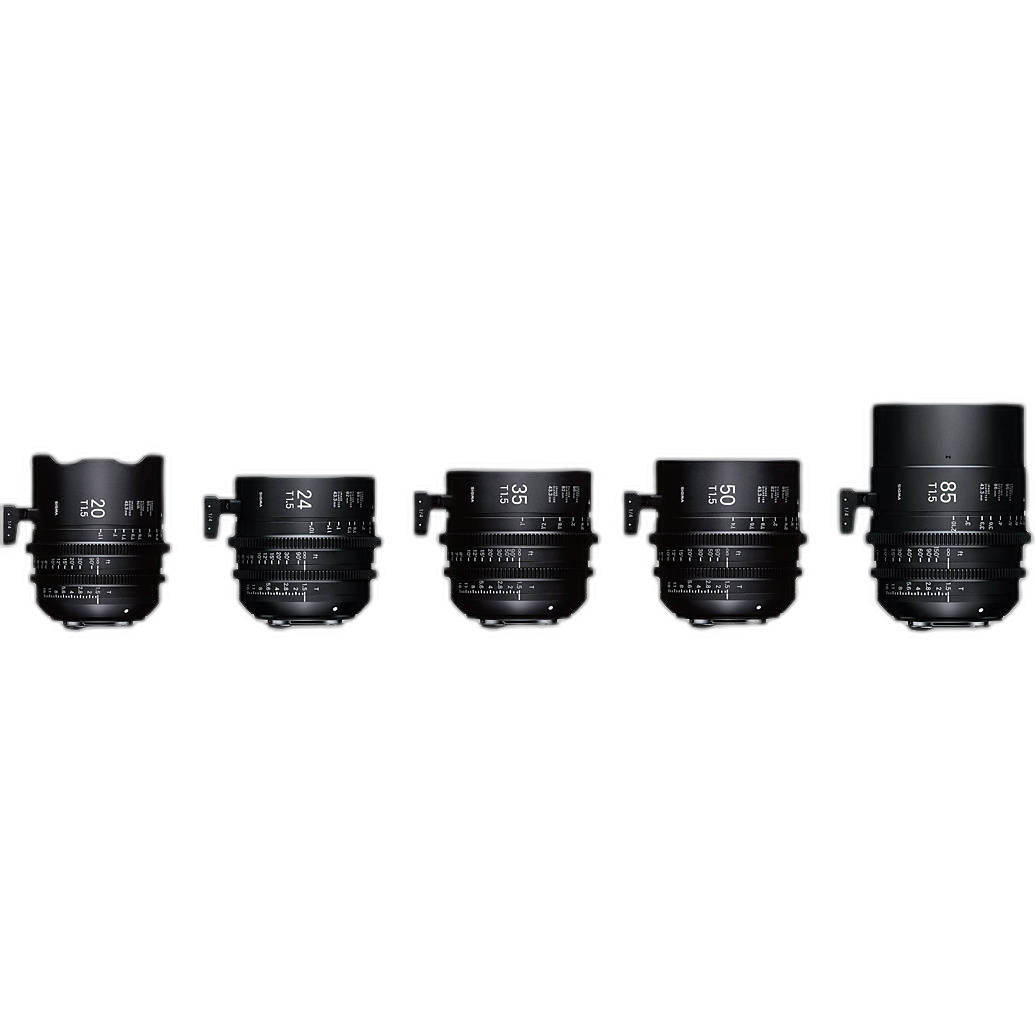
Mount Compatibility
For many first-time buyers, mount choice is the single most important factor.
Canon EF options dominate this comparison, making them a natural fit for users with compatible Canon cinema bodies, EF-based rigs, or adapted systems. If you want broad compatibility and already shoot EF, models like the SGC214, SGC255, and SGC173 are the most straightforward picks.
Sony E shooters should focus on the SGC256. This is the easiest recommendation for filmmakers using Sony cinema or mirrorless full-frame bodies who want native convenience without building around an EF or PL workflow.
PL mount is represented by the SGC257, best suited to dedicated cinema productions and users with professional PL-mount camera systems. For a true beginner, PL is usually less accessible unless your workflow is already built around high-end cinema gear.
2-Lens Kits vs 5-Lens Kits
This is the biggest practical divide in the lineup.
The 2-lens kits—SGC176, SGC217, and SGC258—focus on 14mm and 135mm coverage. These focal lengths are powerful, but they skip the classic middle range that most beginners rely on most often. In real-world shooting, that means you would be missing the more everyday storytelling perspectives typically used for interviews, medium shots, and general-purpose coverage.
The 5-lens kits—SGC214, SGC257, SGC255, SGC256, and SGC173—are much better balanced for learning composition and scene coverage. A 5-prime set lets you experiment with environmental wides, natural-perspective shots, portrait framing, and tighter closeups while keeping a matched look across the whole project.
For a first purchase, a 5-lens kit is simply easier to grow into.
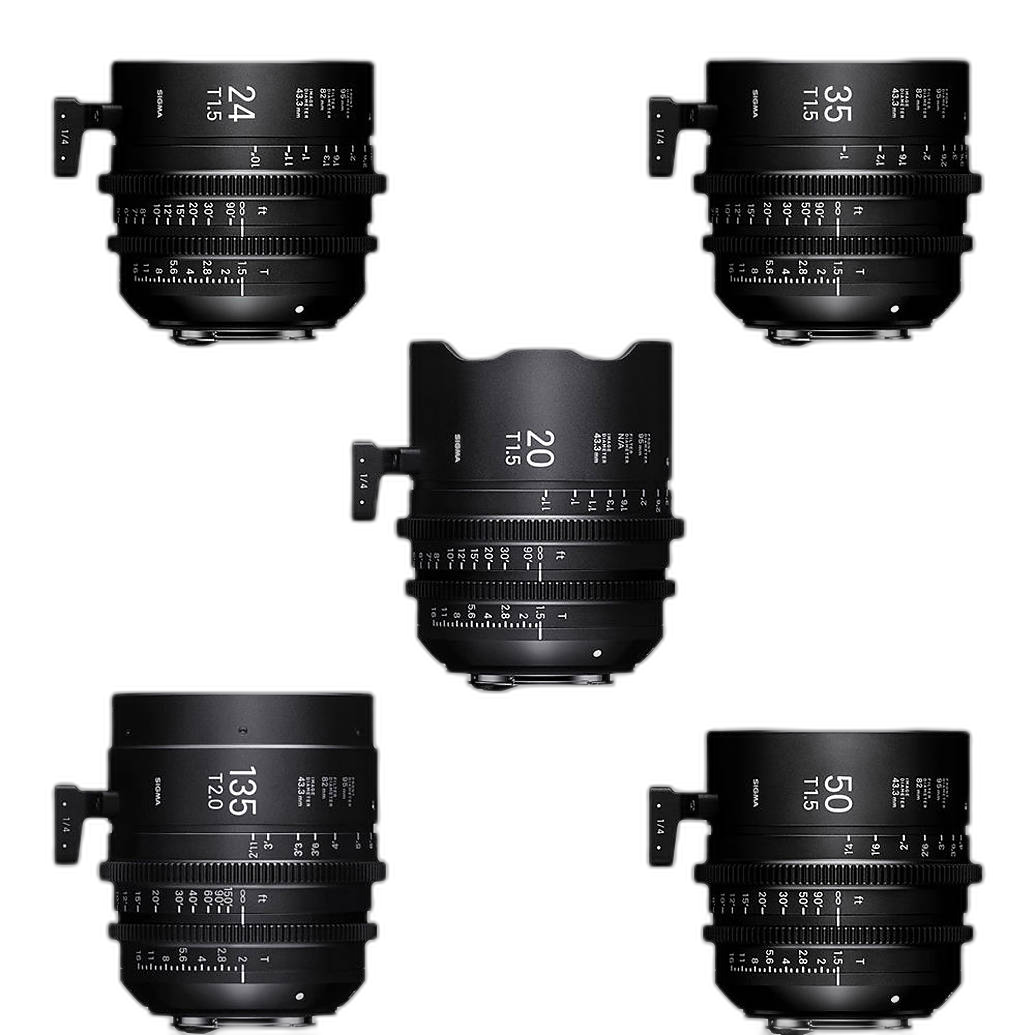
Speed and Low-Light Performance
The 5-lens kits carry a fast T1.5 maximum aperture, while the 14mm/135mm kits are rated at T2. In cinema terms, both are fast, but T1.5 gives you a little more flexibility for low-light environments and shallower depth of field.
For beginners, that extra speed can help in several ways:
- Lower ISO in dim conditions
- Cleaner night or interior footage
- More pronounced subject separation
- Greater creative control over focus pulls
That makes the T1.5 kits the stronger choice for learning how aperture affects cinematic image style.
Case vs No Case
Some kits include a case, including the SGC214 and SGC173. If this is your first major lens investment, that matters more than it might seem. A case improves storage, transport, and on-set organization, especially if you are moving between locations or collaborating with a small crew.
If pricing is close, many first-time buyers will appreciate the convenience of a bundled case. It is one less accessory to buy and one more way to protect a substantial investment.
Metric Versions: Does It Matter?
Several listings specify Metric. For cinema shooters, metric focus markings can be important depending on your crew, follow-focus habits, and production standard. If you are a solo creator and do not have a strong preference yet, this may not be the first feature that decides your purchase. Still, if your team works in metric or you want consistency with other cine gear, it is worth paying attention to.
Photo and Video Tips for Your First Prime Lens Kit
Even though these are cine primes, the same core composition lessons apply when learning how focal length changes your image.
Start With One Scene, Then Change Only the Lens
Set up a simple subject and shoot the same composition with each focal length in your kit. This is one of the fastest ways to understand perspective, working distance, and background compression. Beginners often learn more from this exercise than from reading spec sheets.
Use Wider Lenses for Story Context
A lens like 14mm is great when you want to show environment, scale, or energy. It works well for interiors, establishing shots, gimbal moves, and dramatic spatial perspective. Just be careful with subject placement near the frame edges, where distortion can become part of the look.
Use Longer Lenses for Emotion
A lens like 135mm creates a more compressed, isolated look. It is excellent for portraits, details, cutaways, and cinematic closeups where you want the subject to stand apart from the background.
Practice at Wider Apertures Carefully
Fast primes are exciting, but T1.5 also means your depth of field can become very thin. When learning, do not feel like you always need to shoot wide open. Stop down slightly when you want easier focus and more forgiving results.
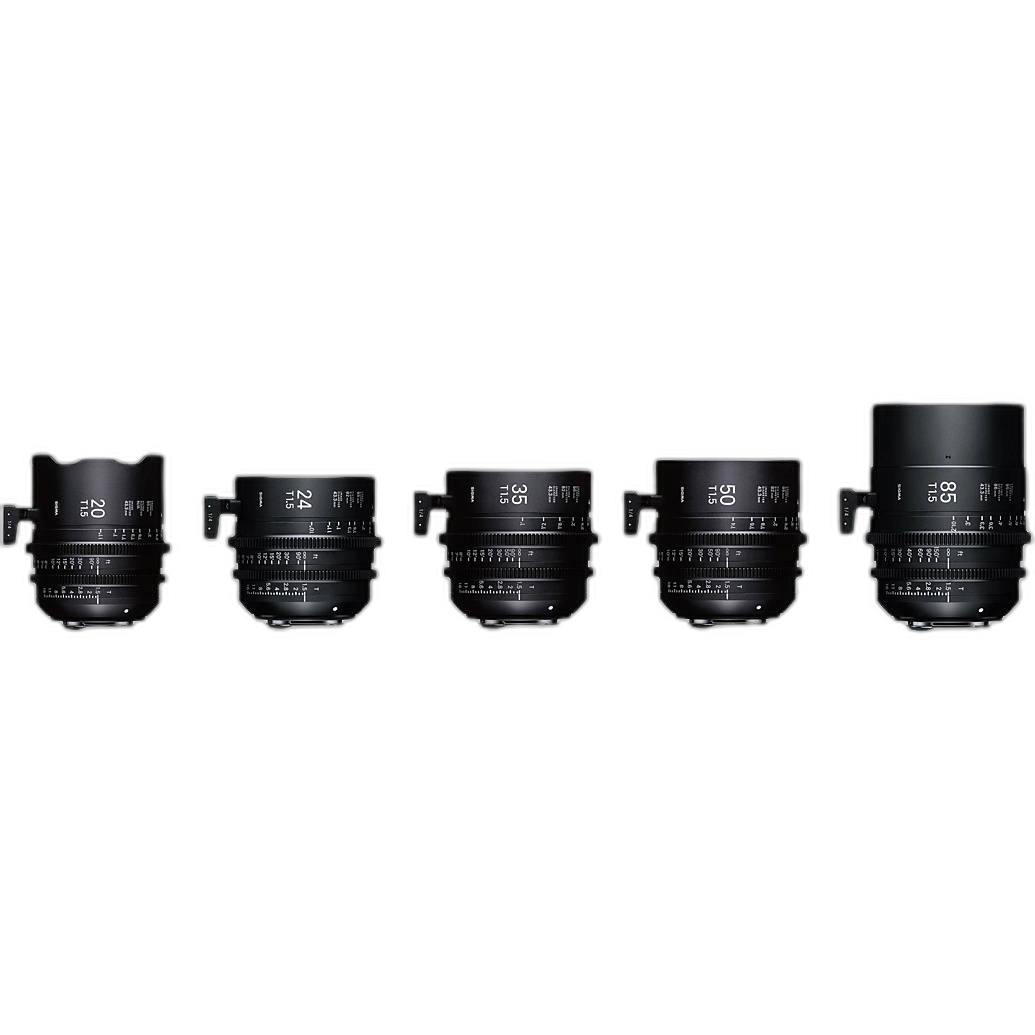
Our Pick
Our Pick: Sigma T1.5 FF High-Speed 5 Fully Luminous Prime Lens Kit (Sony E, Metric) – SGC256 for Sony users, or Sigma T1.5 FF High-Speed 5 Fully Luminous Prime Lens Kit (Canon EF, Metric) – SGC255 for EF users.
Why these two? Because for a first prime kit, the best choice is usually the most versatile 5-lens T1.5 set in the mount that directly fits your camera system. They offer the strongest balance of speed, full-frame coverage, and creative flexibility. Compared to the 2-lens 14mm/135mm kits, they are far more practical for everyday learning and production work.
If you specifically want included storage, the SGC214 or SGC173 are especially appealing because the bundled case adds real value for first-time buyers.
Best Match by Buyer Type
Choose a 5-Lens T1.5 Kit if...
- You want a true starter cinema prime set
- You need more than just specialty focal lengths
- You shoot interviews, short films, branded content, or music videos
- You want more room to learn focal length choices
Choose a 14mm/135mm T2 Kit if...
- You already have standard focal lengths covered
- You want dramatic ultra-wide and telephoto looks
- You are building out a larger cine lens package
- You shoot stylized projects that benefit from visual extremes
Conclusion
For most first-time buyers looking at Sigma cine primes, the 5-lens T1.5 kits are the clear recommendation because they provide the most complete learning experience and the widest day-to-day usefulness. The 14mm/135mm kits are compelling, but they make more sense as specialty additions than as a first all-around prime purchase.
If you are ready to invest in your first serious cinema lens kit, Unique Photo is a great place to compare mount options, kit variations, and professional filmmaking gear that can grow with your workflow.