
Best Travel Cameras Under $1500: Your FAQs Answered by Unique Photo
Looking for a travel camera that stays light, performs brilliantly, and doesn’t blow past $1500? Our experts at Unique Photo help customers navigate this sweet spot every day. Below, we break down the features that matter most and how to build a smarter, smaller kit that’s ready for everyday adventures and globe-trotting alike.
Which cameras offer the best size-to-performance ratio under $1500?
For most travelers, modern APS-C and Micro Four Thirds mirrorless bodies deliver the best balance of image quality, speed, and portability. Expect fast autofocus, 4K video on many models, and excellent stills from sensors in the 20–26MP range. APS-C systems (Canon RF-S, Nikon Z DX, Sony E, Fujifilm X) are terrific generalists, while Micro Four Thirds (OM SYSTEM/OLYMPUS, Panasonic) shines for ultra-compact lenses and stabilized bodies. If you value a small kit and hand-held video, Micro Four Thirds often punches above its weight; if you want a bit more low-light flexibility and shallow depth of field, APS-C is a great pick.
Full-frame cameras can be found near this budget for bodies alone, but once you add lenses, size and cost climb. If a single-lens travel solution is your priority, APS-C and Micro Four Thirds typically keep weight and spend in check without sacrificing quality for web, social, and prints up to moderate sizes.
How important is in-body image stabilization (IBIS) for travel?
IBIS helps you shoot sharper photos at slower shutter speeds and smoother handheld video—huge when you’re in museums, at dusk, or exploring cities at night without a tripod. If you expect low-light scenes, telephoto walkabouts, or a lot of video, prioritize IBIS. If you mostly shoot in daylight or use stabilized lenses, you can live without it and allocate more of your budget to lenses or accessories. Remember, stabilization (in-body or in-lens) doesn’t freeze moving subjects—shutter speed still matters for action.
New vs. used: What’s the smarter buy for this budget?
Both can be smart. New gets you a full manufacturer warranty and the latest features; used stretches your dollars—sometimes enough to upgrade your lens or add a prime. If buying used, check shutter count, sensor cleanliness, lens mount condition, and that all core functions (AF, IBIS, ports, card slots) work as expected. At Unique Photo, our used department carefully inspects and grades gear so you can shop with confidence and put savings toward what matters most: glass and time in the field.
Is weather sealing worth it for travel? Any compact, sealed options?
Weather sealing (often marketed as “dust- and splash-resistant”) adds peace of mind in drizzle, dusty trails, or on a windy pier. It’s not a license to shoot in a downpour or submerge your camera, but it buys reliability when conditions turn. Many midrange APS-C and Micro Four Thirds bodies pair sealing with similarly sealed lenses; just remember that protection is only as good as the least-protected component. If you expect unpredictable weather, treat sealing as a tie-breaker feature—especially for travel where you can’t easily replace gear mid-trip.
APS-C vs. Micro Four Thirds vs. full-frame: Which format makes the most sense?
- APS-C: Excellent all-rounder for travel. Strong image quality, broad lens selection, and manageable kit sizes. Great for street, food, landscapes, and family travel.
- Micro Four Thirds: The smallest lenses and often the best stabilization for the size. Ideal for hikers and vloggers who value compact telephoto reach and hand-held video.
- Full-frame: Best low-light and dynamic range, but larger and pricier lenses. You can find bodies near $1500, but complete travel kits often exceed the budget or weight goals.
If portability and value are your top concerns, APS-C and Micro Four Thirds typically win for travel under $1500.
What’s the most versatile lens setup for a travel kit under $1500?
Start with a compact standard zoom. On APS-C, an 18–55mm or 16–50mm kit zoom covers most everyday scenes and keeps cost low. If you can step up, a travel zoom like an 18–135mm or 18–140mm (or a 12–100mm equivalent on Micro Four Thirds) reduces lens swaps while you explore. Add a small prime—something like a 35mm or 50mm equivalent—for low-light street scenes and portraits with nicer subject separation. If you love interiors and cityscapes, consider an ultrawide zoom around 10–20mm APS-C (or 7–14mm Micro Four Thirds) once budget allows.
What accessories make the biggest difference for travel and everyday shooting?
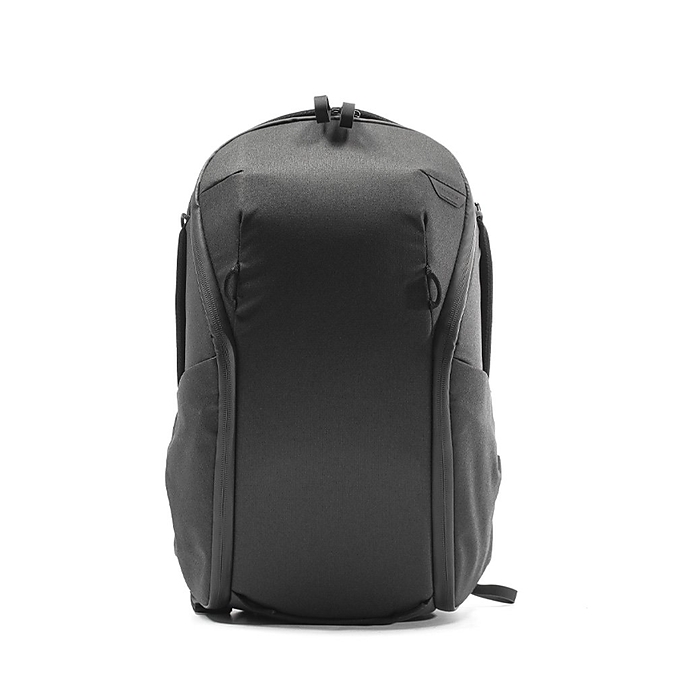
- A comfortable, secure carry: A streamlined daypack protects your gear and keeps you agile. The Peak Design Everyday Backpack 20L Zip is a traveler favorite for its slim profile, internal organization, and quick access. Available at Unique Photo.
- A quick-adjust strap: A lightweight, cross-body strap like the PGYTECH Camera Strap Slim helps reduce fatigue and keeps your camera at the ready—a small upgrade that keeps you shooting longer.
- A lightweight support: Even a compact table-top support or mini tripod is handy for night scenes, long exposures, and self-portraits.
- Backup power and cards: Two batteries and multiple memory cards are travel musts; don’t let a dead battery cost you the best light of the day.
I want polished travel product shots and flat-lays at home. Any simple setup tips?
Create a clean, portable mini-studio with a smooth background and window light. A graduated background adds depth without heavy gear—great for souvenirs, small food setups, or travel gear reviews. The Flotone 43x67in Rainbow Graduated Background lays flat and blends beautifully behind small subjects, making colors pop without harsh transitions.

How can I level up quickly once I pick a camera?
Gear only gets you halfway—skills unlock the rest. Join a hands-on class to sharpen composition, exposure, and field technique before your next trip. Our Macro and Landscape Photography at Duke Farms workshop with Michael Downey is a favorite for learning to work with light, backgrounds, and detail—skills that translate directly to travel photography.

Ready to build your travel kit? Visit Unique Photo in-store or online for expert guidance, curated camera and lens recommendations under $1500, and accessories that keep you shooting wherever the road takes you.