Start Here: Getting That Portrait Look Without the Guesswork
If you’re just getting into portrait photography and want that creamy background blur, flattering perspective, and sharp eyes, this guide is for you. We’ll explain what makes a great beginner portrait lens, how focal length works on APS-C cameras, and which affordable primes to consider first. We’ll also spotlight a few beginner-friendly camera kits that make an excellent foundation for portrait shooting—plus a creative film option—so you can grow your skills with confidence.
What Makes a Great Beginner Portrait Lens
- Focal length that flatters faces: On APS-C cameras like Canon RF-S bodies, a 50mm full-frame lens gives you an ~80mm equivalent field of view, a classic portrait perspective. An 85mm full-frame lens gives you ~136mm equivalent for tighter headshots.
- Wide aperture (f/1.8–f/2.8): Lets in more light and creates smooth background blur (bokeh). The wider the aperture, the easier it is to separate your subject.
- Reliable autofocus: Eye-detection AF is a huge help for portraits—look for lenses that focus quickly and quietly.
- Stabilization and close focus: In-lens IS and close-focusing ability are bonuses for handheld portraits and detail shots.
Bottom line: A fast 50mm prime is the easiest, most affordable way to elevate your portrait look on APS-C. If you prefer tighter headshots or more compression, step up to an 85mm prime.
Beginner-Friendly Bodies to Build Around (and the Portrait Primes to Add)
Canon EOS R50 Mirrorless Camera (Black) with RF-S 18-45mm and 55-210mm Lenses
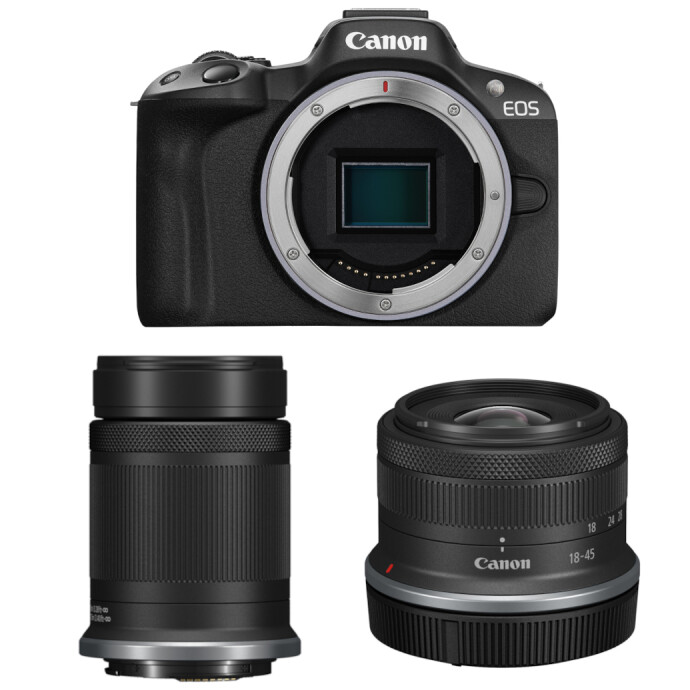
Why it’s a great portrait starting point: The R50 is a compact, approachable RF-S body with modern autofocus and helpful automation, making it easy to concentrate on posing and expression. The included zooms are excellent for everyday use and learning composition; add a fast prime and you’ll unlock the classic portrait aesthetic.
Best beginner portrait lens to add:
- Canon RF 50mm f/1.8 STM: On the R50’s APS-C sensor, it feels like an ~80mm portrait lens—versatile for waist-up to head-and-shoulders portraits with pleasing blur.
- Canon RF 85mm f/2 Macro IS STM: A tighter, more refined look for headshots; bonus close-up capability for details like eyes, jewelry, or hands.
Real-world note: Swapping from the kit zoom to a fast 50mm prime instantly smooths the background and makes subjects pop, even in busy locations. The R50’s user-friendly interface helps you stay focused on your subject, not the settings.
- Pros: Beginner-friendly body; strong autofocus for portraits; compact; great platform for RF/RF-S primes.
- Considerations: Kit zooms are sharp but not as creamy as a fast prime—budget for at least one portrait prime.
Who it’s for: New portrait shooters who want a small, tech-forward camera that grows with them as they add lenses.
Canon EOS R100 Mirrorless Camera with RF-S 18-45mm and RF-S 55-210mm Lenses
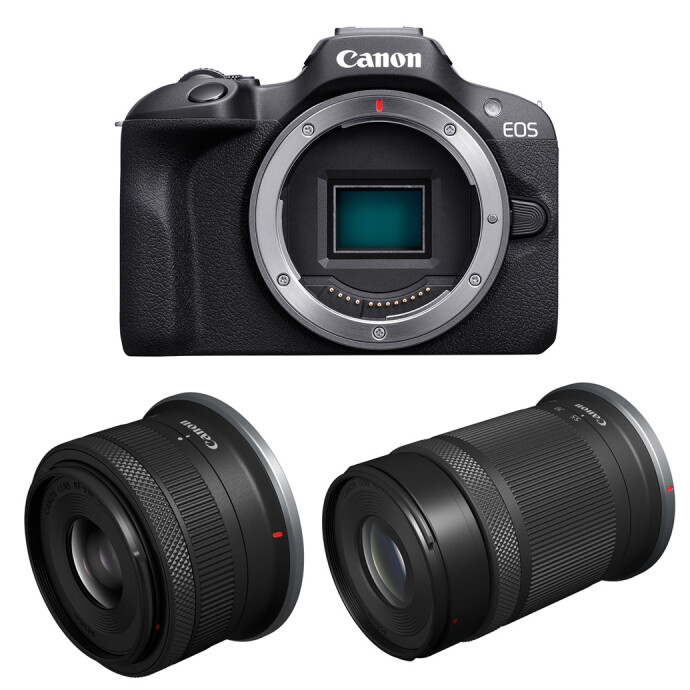
Why it’s a great portrait starting point: The R100 is Canon’s most accessible entry into RF mount. It’s lightweight and budget-friendly, so you can put more of your investment into a prime lens that delivers the portrait look.
Best beginner portrait lens to add:
- Canon RF 50mm f/1.8 STM: Affordable, compact, and ideal for natural-looking portraits on APS-C.
- Canon RF 35mm f/1.8 Macro IS STM: For environmental portraits in tight spaces; ~56mm equivalent view keeps context while still giving subject isolation.
Real-world note: Even with simple settings, a fast prime at f/1.8–f/2.2 on the R100 delivers a professional-looking background blur in natural light, perfect for family portraits and candid lifestyle shots.
- Pros: Very approachable; keeps the focus on learning composition and light; RF mount gives you room to grow.
- Considerations: Fewer advanced bells and whistles—be sure to pair it with a fast prime for best portrait results.
Who it’s for: Budget-minded beginners who want an easy start and a clear upgrade path with RF/RF-S lenses.
Reto 3D Film camera with three lenses and built-in flash
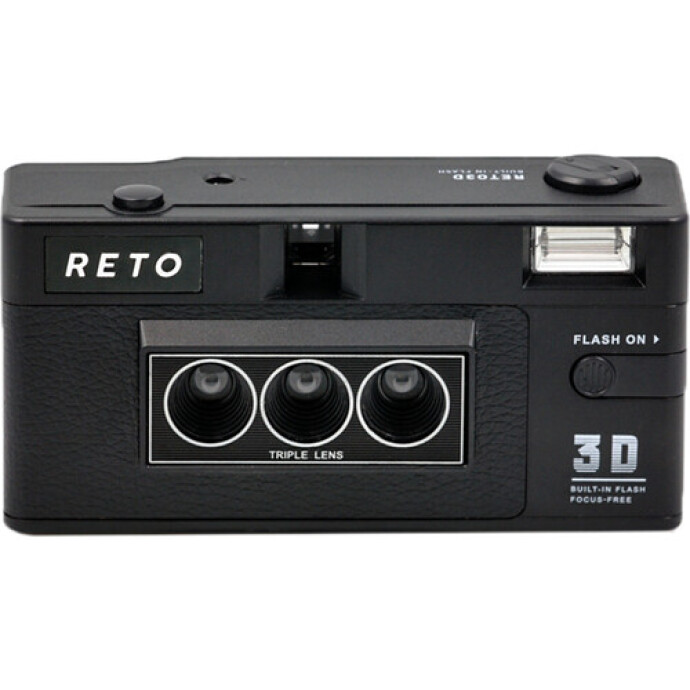
Why it’s a fun portrait option: This quirky 35mm film camera uses three lenses to capture slightly different perspectives on one frame, creating a 3D/animated effect when scanned. It’s not a traditional portrait look, but it’s a playful, creative way to make portraits that stand out on social feeds.
- Pros: Creative, analog aesthetic; built-in flash; great conversation starter for casual portraits.
- Considerations: Fixed lens and film workflow; not intended for shallow-depth classic portraits.
Who it’s for: Creatives who love a nostalgic, experimental portrait style and a hands-on shooting experience.
How to Choose Your First Portrait Prime
- If you like head-and-shoulders shots and background blur: Start with a 50mm f/1.8 on APS-C.
- If you shoot tight headshots outdoors: Consider an 85mm prime for more compression and gentle features.
- If you work in small rooms or include environment: Try a 35mm or 40mm prime; mind your subject-to-background distance to maintain blur.
- Stabilization: Handy for low-light portraits; not essential if your shutter speed is fast and your subject stays still.
Settings That Make a Difference (Quick Wins)
- Aperture: f/1.8–f/2.8 for most portraits; stop down to f/2.8–f/4 for small groups to keep everyone sharp.
- Shutter speed: Aim for 1/(2 × focal length) or faster; e.g., 1/160 sec for a 50mm portrait on APS-C.
- Focus: Use eye-detection AF when available, single point on the nearer eye when not.
- Light: Place your subject in open shade or backlight with a reflector for flattering skin tones.
Side-by-Side: Which Beginner Platform Fits You?
| Product | Best For | Learning Focus | Portrait Prime Pairing | Video-Friendly |
|---|---|---|---|---|
| Canon EOS R50 Kit | Beginner to enthusiast portraits | Eye AF, subject tracking, creative modes | RF 50mm f/1.8 (everyday), RF 85mm f/2 (headshots) | Great for content creation |
| Canon EOS R100 Kit | Budget-first portrait starter | Composition basics, natural light | RF 50mm f/1.8 (first buy), RF 35mm f/1.8 (tight spaces) | Simple, casual clips |
| Reto 3D Film Camera | Creative/experimental portraits | Expression, timing, analog workflow | Fixed lens (3D effect) | Film only |
Real-World Takeaways
- A fast 50mm prime is the single biggest upgrade for beginner portraits on APS-C—clean subject isolation, flattering perspective, and great low-light ability.
- Practice distance: Step back and zoom with your feet to find the most flattering perspective; about 4–8 feet works well for head-and-shoulders with a 50mm on APS-C.
- Background matters as much as lens choice—choose simple, distant backgrounds to maximize bokeh.
Final Word: Start Simple, Grow Confident
If you’re just starting out, pick a compact body like the Canon EOS R50 or R100 and add a fast 50mm prime for effortless, professional-looking portraits. Prefer a tighter look? Move up to an 85mm prime as your second lens. Want to experiment? The Reto 3D offers a creative analog twist.
Need help choosing the right lens for your style and budget? Visit Unique Photo online or in-store—our team can help you try options and find the perfect portrait prime to grow with your craft.