Professional interviews live and die by details: clean audio, flattering light, steady framing, and reliable power. Whether you’re building your first kit or refining a studio-ready setup, this guide from Unique Photo covers the must-have accessories that elevate your interviews from good to broadcast-ready—plus pro tips and product examples to help you choose wisely.
Best Microphones for Interviews: Lavalier vs. Shotgun
If your audience can’t hear your subject clearly, nothing else matters. Start here.
- Lavalier microphones (wired or wireless): Discreet and consistent when properly placed at the sternum. Ideal for sit-downs and mobile subjects.
- Shotgun microphone on a boom: Natural tone and less clothing noise; excel in controlled, quiet rooms with a skilled boom operator.
- Field mixers and recorders: Provide clean preamps, limiters, and dual-record safety tracks. Pair with on-camera XLR inputs when available.
- Monitoring: Closed-back headphones are non-negotiable for detecting hums, rustle, or HVAC noise.
- Backup plan: When possible, record both a lav and a boom. Redundancy saves interviews.
Pro tip: Position lavs 6–8 inches below the mouth and avoid necklace chains or noisy fabrics. If the room is reflective, lean into the boom mic and add absorption.
Many pro camcorders include XLR inputs and robust audio controls, simplifying interview sound. A solid option is a connected 1-inch sensor camcorder like the JVC GY-HC500U—great for pairing with professional mics and mixers.
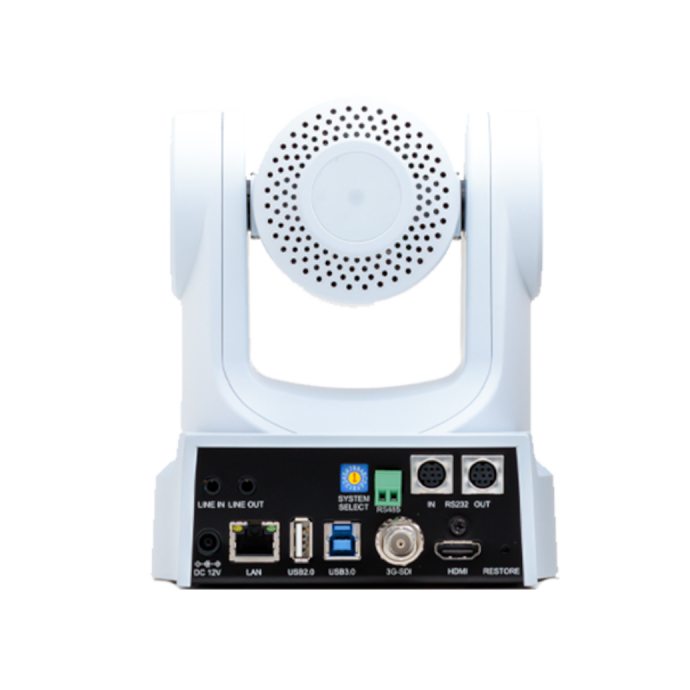
Interview Lighting Setup: Soft, Clean, and Consistent
Lighting shapes your story and subject. For most interviews, soft, wraparound light with controlled contrast is the goal.
- Key light: A soft LED panel or COB light with a softbox or umbrella diffuser placed ~45° off-axis and slightly above eye level.
- Fill light or reflector: Raises shadow detail without flattening. A white bounce or low-intensity LED works well.
- Back/hair light: Separates the subject from the background; keep it subtle to avoid hot spots.
- Background accents: Small practicals or colored LED accents add depth without distraction.
- Light control: Flags, grids, and negative fill maintain contrast and fight spill.
Pro tip: Match color temperature across all sources and white balance with a gray card. Consistency reduces post-production fixes.
Tripods and Camera Support for Interviews
Unshakable stability is essential. Choose support that matches your camera’s weight and your framing style.
- Fluid head tripod: Smooth pans/tilts for B-roll and reliable lock-off for A-cam interviews.
- Spreaders and sandbags: Increase stability on set; always bag your stands.
- Sliders or small dollies: Add slow, subtle motion to a secondary camera for visual interest.
Multi-Cam and PTZ Cameras for Interviews
Two cameras are standard for polished interviews: an A-cam medium shot and a B-cam tighter angle. When space or staffing is limited, PTZ cameras shine—remote pan/tilt/zoom with repeatable presets and minimal footprint.
- Use PTZ presets for consistent A/B/C angles across takes.
- Leverage NDI HX or IP control for streamlined cabling and remote operation.
- Mix PTZ with a locked-off camcorder for an easy, efficient two-camera setup.
For flexible, operator-free angles, consider a PTZ with 20x optical zoom and NDI HX for networked control.
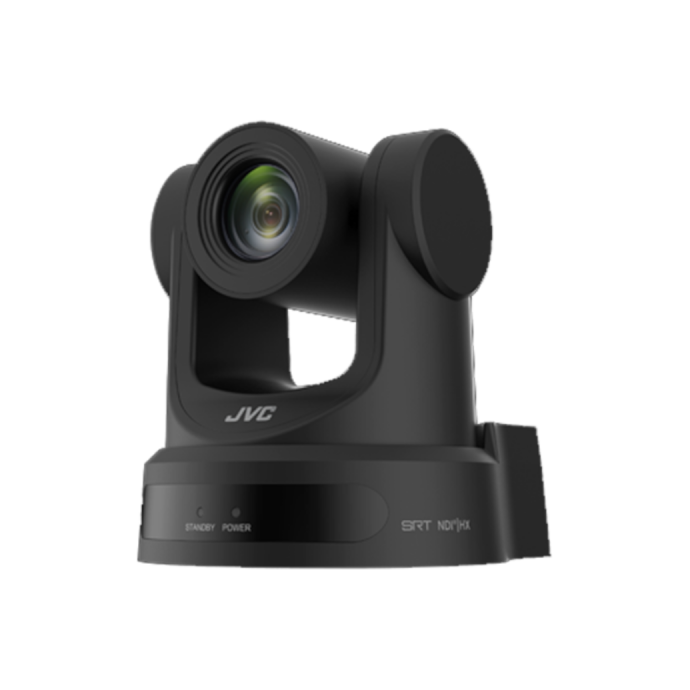
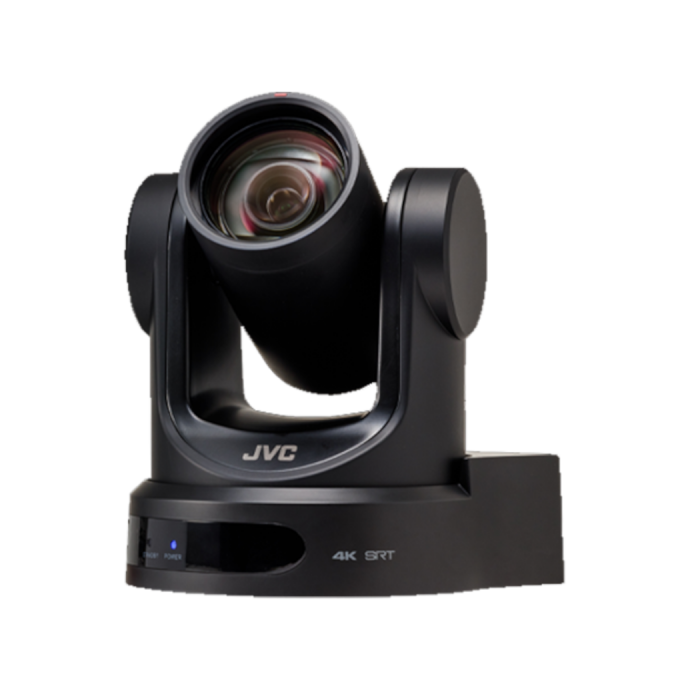
If you’re future-proofing for 4K delivery while keeping files manageable, a 4K PTZ with network connectivity offers crisp detail and simple integration.
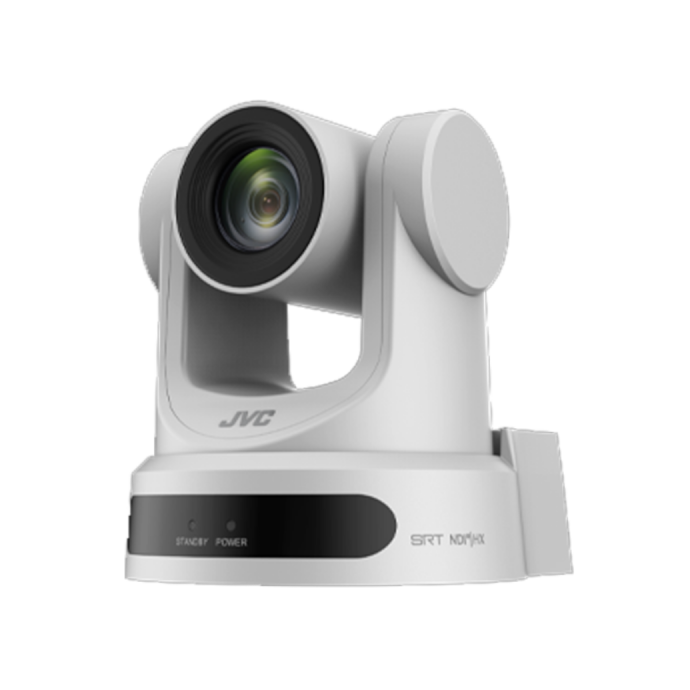
White-finish PTZ cameras blend into bright interiors and corporate sets while maintaining the same pro control.
Monitoring, Teleprompters, and Remote Workflows
- On-camera or 5–7 inch monitors: Check focus peaking, waveform, and false color to nail exposure.
- Teleprompters: Keep eye-line natural for scripted segments.
- Tally/record indicators: Prevent false starts and missed takes.
- Remote producer preview: IP-connected cameras simplify remote direction and confidence feeds.
Connected camcorders make hybrid in-person/remote interviews easier. For instance, the JVC GY-HC500MC is designed for connected workflows and adaptable 4K capture.
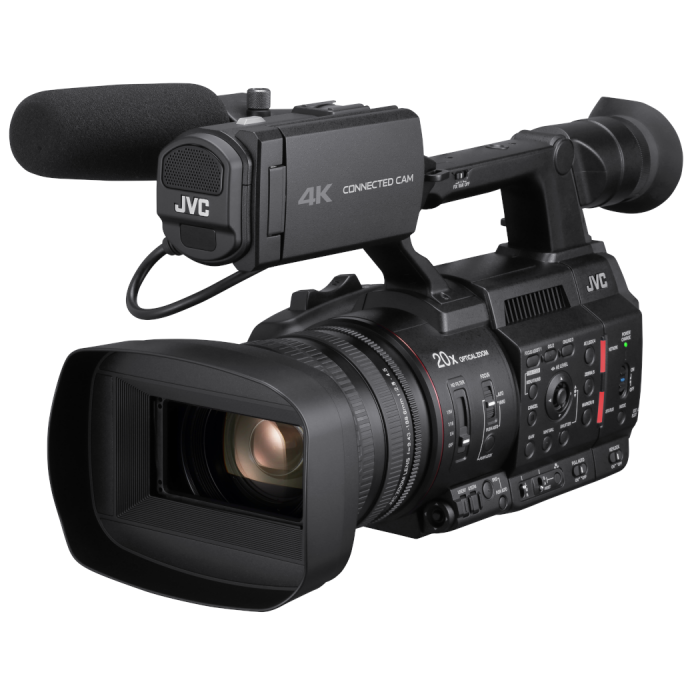
Compact camcorders with integrated lenses are great for travel interviews or tight spaces without sacrificing essential pro controls.
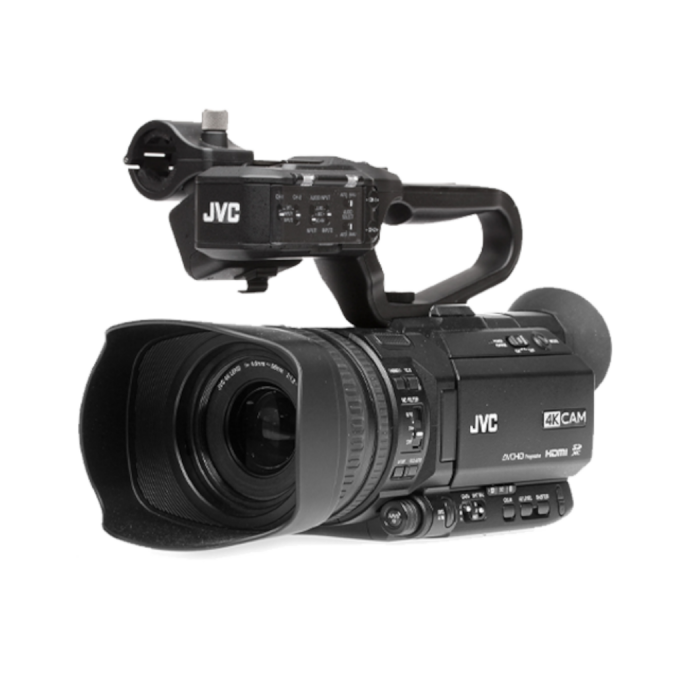
Power, Media, and Backup for Interview Shoots
- Batteries and AC adapters: Bring extras plus a reliable AC solution for long interviews.
- High-speed media: Use manufacturer-recommended SD cards and keep spares labeled and tested.
- Redundancy: Enable dual-slot recording when available and capture separate audio to a field recorder.
- Data management: Offload with checksum verification, maintain verified on-site copies, and label takes clearly.
For extended productions, a connected camcorder like the JVC GY-HC500SPCU adds pro features while pairing well with robust power and media workflows.
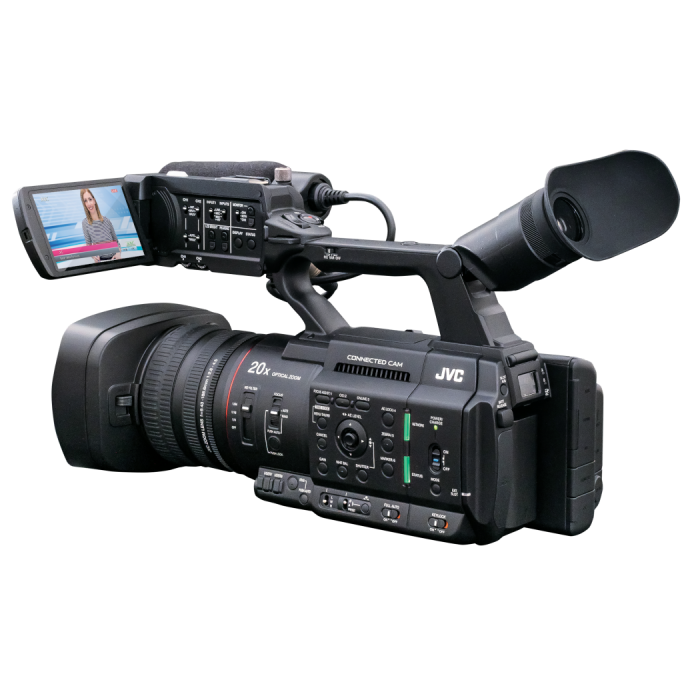
Location Kit Essentials (The Often-Forgotten Heroes)
- Gaffer tape, cable ties, and velcro wraps
- C-stands, grip arms, clamps, and sandbags
- Extension cords, power strips, and cable ramps
- Apple boxes, wedges, and furniture sliders
- Lint roller, blotting papers, and basic touch-up kit
- Room treatment: Portable sound blankets or foam for echoey spaces
Interview Gear Checklist
- 2 microphones (lav + shotgun) + wind protection
- Field mixer/recorder + monitoring headphones
- 3-point lighting + diffusion/flags/reflector
- Primary camera on fluid-head tripod (e.g., a connected camcorder)
- Secondary camera or PTZ for alternate angle
- Teleprompter or cue cards (if scripted)
- Batteries, AC adapters, high-speed media, and chargers
- Cables (XLR, HDMI/SDI, power), adapters, and backups
- Slate or sync tool, timecode (optional), gray/color chart
- Grip gear, tape, sandbags, and set comfort items
Example Interview Kits by Scenario
- Solo creator kit: Compact camcorder with XLR inputs, 2-light kit with softbox, wireless lav, on-camera monitor, sturdy tripod.
- Corporate two-camera kit: A-cam connected camcorder, B-cam PTZ with presets, 3-point LED lighting, dual audio (lav + boom), field mixer, teleprompter.
- Remote/Hybrid kit: PTZ camera with NDI HX for remote control, connected camcorder for local recording, USB/NDI monitoring, intercom for off-site producer.
FAQ
Do I need 4K for interviews? 4K gives you flexibility to crop and reframe in post, even if your delivery is HD. It’s helpful for single-camera shoots where you need multiple framings.
Lavalier or shotgun for interviews? Use both when you can. In noisy or live environments, lavs often win. In controlled rooms with good acoustics, a boomed shotgun sounds natural and avoids clothing noise.
How many lights do I need? A soft key and subtle fill often suffice. Add a gentle back light and background accents for polish.
What’s the easiest way to add a second angle? A discreet PTZ camera on presets is operator-friendly and consistent across takes.
Conclusion and Internal Linking Suggestions
When you combine clean audio, flattering light, stable support, smart monitoring, and rock-solid power/media, your interviews will look and sound truly professional. Unique Photo stocks the microphones, lighting, tripods, PTZ solutions, and connected camcorders to build your perfect kit—whether you’re in a studio, an office, or on location.
Suggested internal links to add on Unique Photo:
- Shop Microphones for Interviews (Lavalier, Shotgun, Wireless Systems)
- Audio Mixers, Recorders, and Headphones
- LED Video Lights, Softboxes, and Light Control
- Tripods, Fluid Heads, Sliders, and Stands
- Teleprompters and On-Camera Monitors
- PTZ Cameras and Controllers (highlight JVC PTZ models)
- Professional Camcorders (highlight JVC Connected Cam series)
- Memory Cards, Readers, and Media Management
- Batteries, Chargers, and AC Power Solutions
- Cables, Adapters, and Grip Essentials
Need tailored guidance? Visit Unique Photo in-store or chat with our team online—we’ll help you configure an interview kit that fits your workflow and budget.