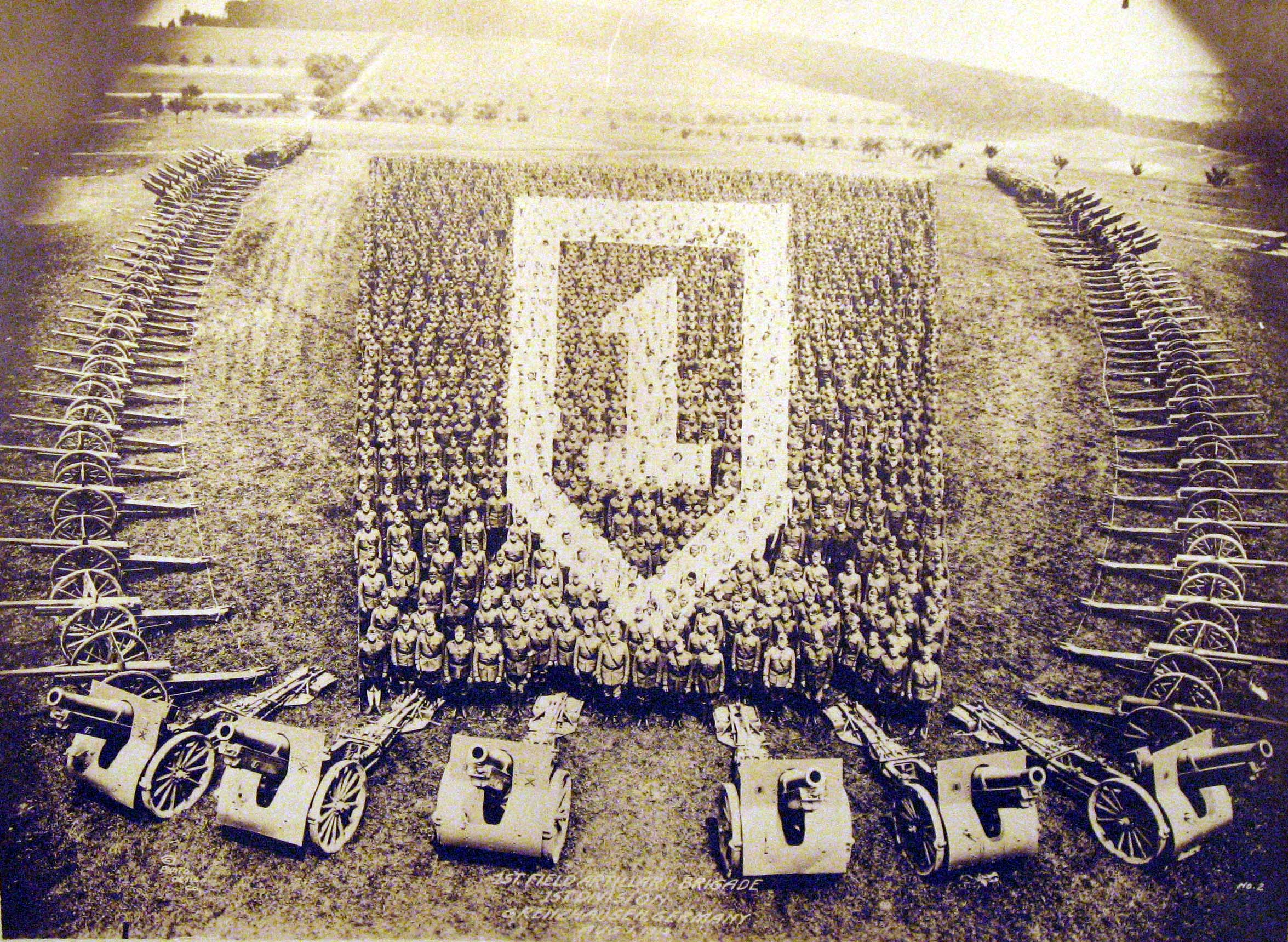
Around 1917, during the fervor of the First World War and the general availability of photography, military commanders (or photographers, perhaps) decided to capitalize on the discipline of soldiers by turning them into a human puzzle. These puzzles often made for some incredible shapes, and consequently, amazing photographs. The trend fizzled pretty quickly along with the signing of the Treaty of Versailles, but what remains is a visual collection of what has to be some of the most uniquely choreographed photographs of the twentieth century. Examples of this photographic style have emerged in recent times, however, including The US Navy's message to Japan, and the Space Shuttle crew forming a picture of the Shuttle before its retirement. See below for some more amazing examples of what human patience and skill can achieve. [caption id="attachment_18916" align="aligncenter" width="423"]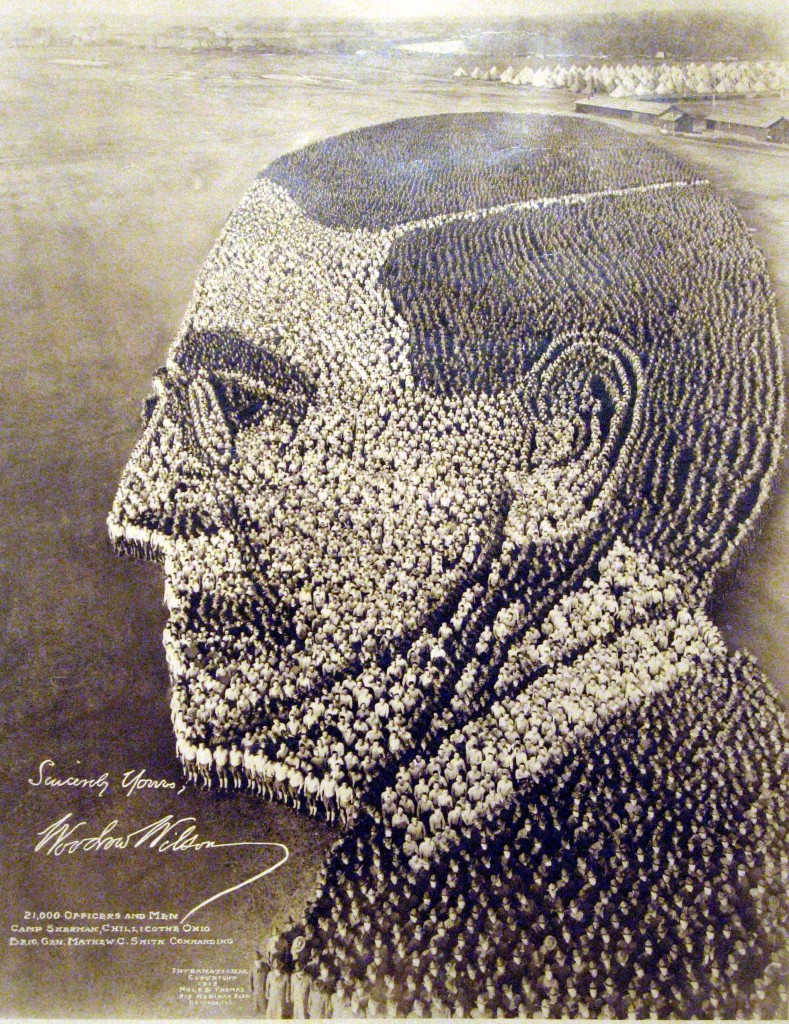 21,000 enlisted officers comprise this living portrait of Woodrow Wilson (Mole & Thomas, 1918)[/caption] [caption id="attachment_18917" align="aligncenter" width="423"]
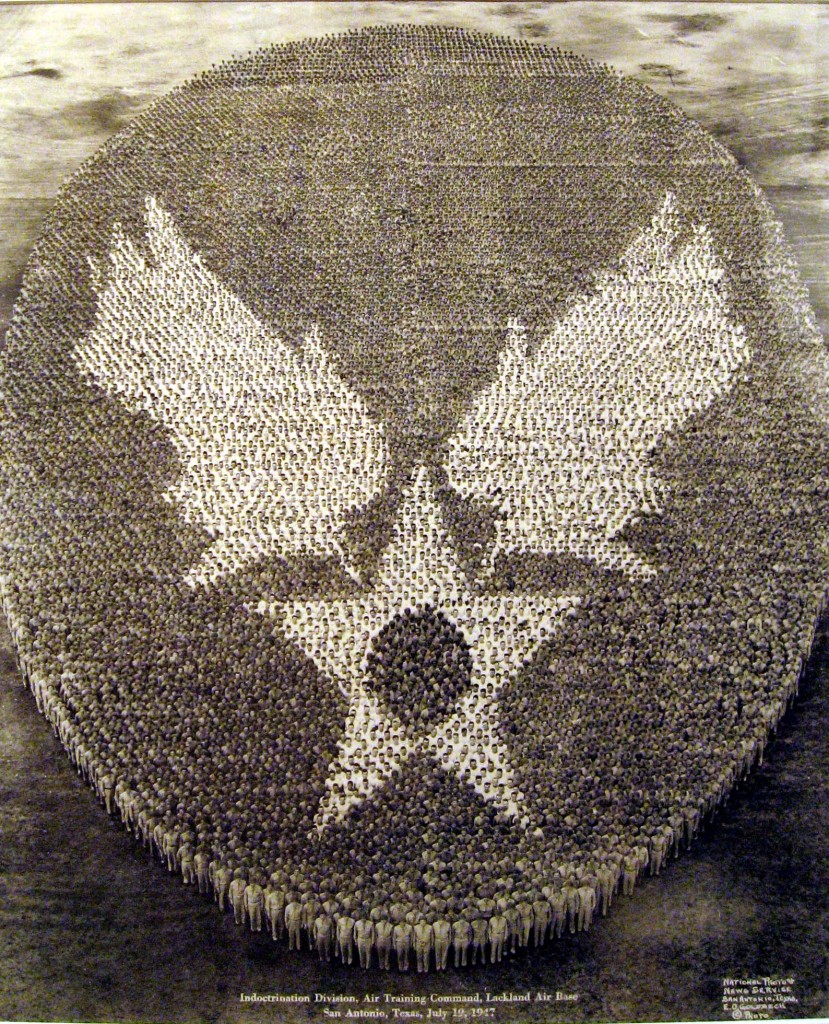 The indoctrination division at Lackland Air Base (Eugene Omar Goldbeck, 1947)[/caption] [caption id="attachment_18918" align="aligncenter" width="423"]
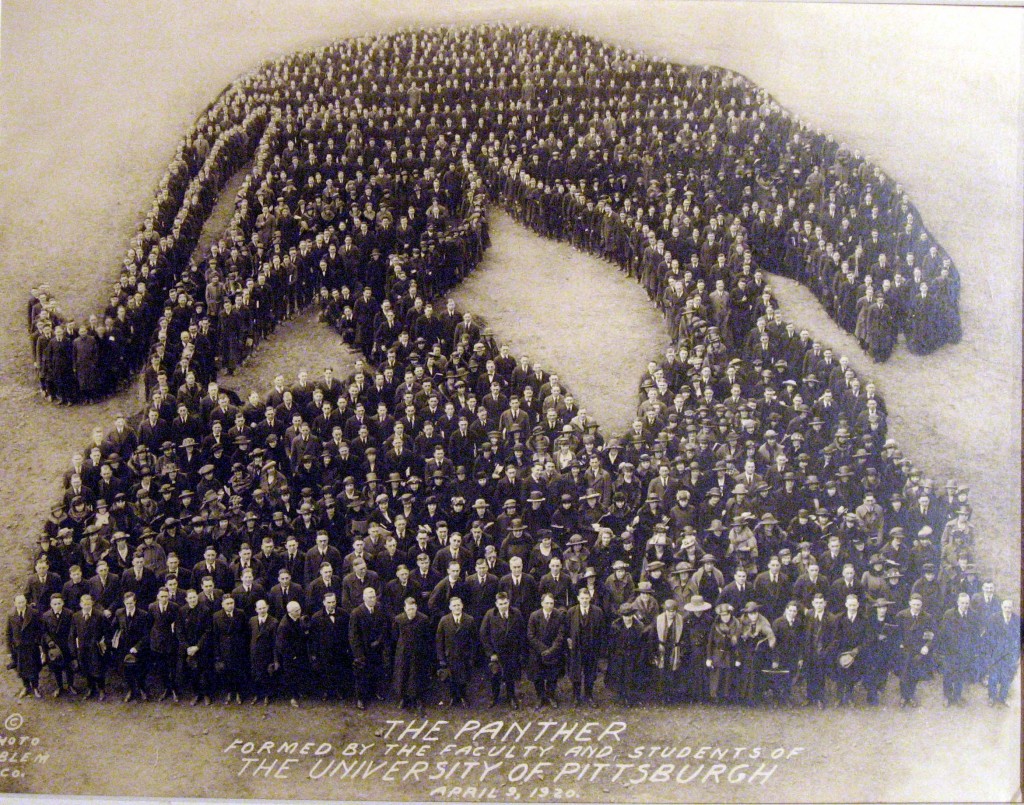 Students and faculty at U Pittsburgh form "the Panther" (Photo Emblem Company, 1920)[/caption] [caption id="attachment_18923" align="aligncenter" width="423"]
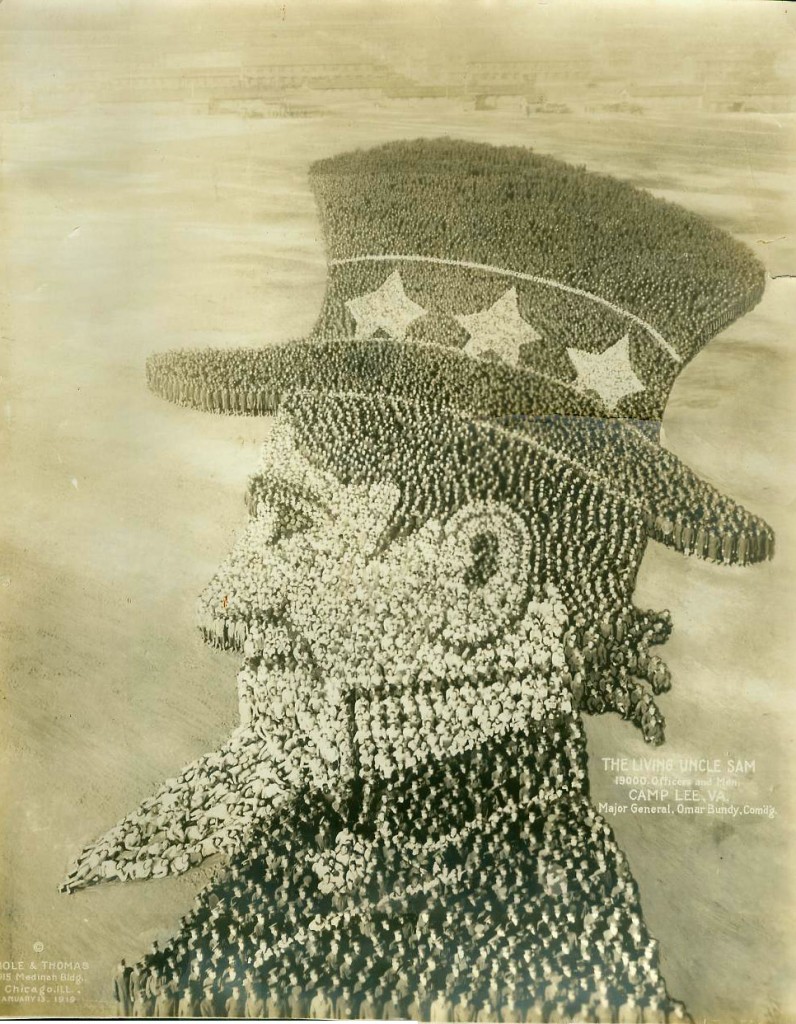 The "Living Uncle Sam" at Camp Lee, Virigina (Arthur Mole, 1919)[/caption]
Vintage Technique: The Living Photograph
Around 1917, during the fervor of the First World War and the general availability of photography, military commanders (or photographers, perhaps) decided to…
TI