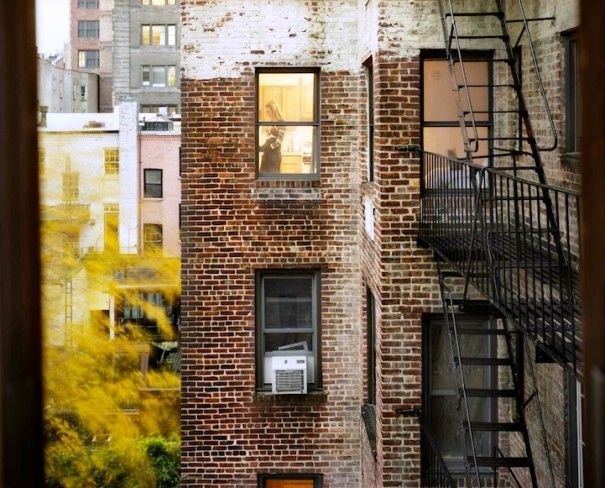
The word "landscape" is generally associated with wide-open vistas or towering mountains. We tend to ignore the fact that cities can be as just as dramatic and dynamic as the natural environment. In addition to the lights and the changing seasons, the constant flow of people also give the city a serious buzz.
Every city in the world has great potential to be an amazing subject, with constantly evolving skylines, tall buildings, bridges, landscape gardens, night lights, and of course the people living in them.
Mid-level city view during twilight
Get in to the heart of the city and find a point high up, but not very high. A building with about 20 floors, or even the open top of a parking garage should be a good starting point. Evening twilight is a great time to do this when the there is enough light to still see the city but the buildings glow with their own light. Google Maps is a great resource for finding places like this or ask a friend who knows the city well.

Photo Credits - Mark B. Bauschke
Get a distant view of the city
To really capture the skyline sometimes it is best to be out and away from it. Take a boat trip that leaves the city behind and exposes you to the skyline on the horizon. Try to include some real life action and the picture gets a new dimension. Sometimes, simplicity makes the difference.

Photo Credits - Aaron Chang
Look inside for landscapes
A cityscape can happen inside an iconic building, railway stations, and a shopping hub to name a few. As cities are extremely dynamic places, an interesting challenge is shooting them and giving the photos a sense of movement. To put that city bustle in the picture, try using a long (one second, in this case) shutter speed and let the flood of activity blur through the image.

Photo Credits - Brenden McDermid/Reuters
Look out for intersection of people and landscape
A beautiful coexistence of people, nature and cityscape can lead to a great theme for a picture. People can be vital elements in landscape photos. A person in the picture gives the photograph some focus and depth as well as scale, especially when photographing large structures.

Photo Credits - Gabriele Croppi
New take on the Old
Try to capture the city’s most iconic spots from a different perspective. A little homework on what other photographers have already done will help you steer clear from those subjects.

Photo Credits - Paul Gamble
Reverse your view
When shooting urban landscapes, a photographer should often shoot from an interesting location. Shooting raw format with the current generation of digital cameras lets the picture hold subtle detail in the shadows while exposing properly for the sky.

Photo Credits - Simon Cross
Use low light to your advantage
Try to capture the city structure during low light. This is a more modern style of shooting cityscapes. It creates rich textures of the same hue. The current generation of DSLRs work great at high ISO and bracing the camera against a steady surface gives great results at surprisingly slow shutter speeds.

Photo Credits - Juan Harris