
[caption id="attachment_7426" align="alignright" width="280" caption="There is a lot of confusing photography information on the internet. Don't beat yourself up if you don't get it right away."] [/caption]
As I've mentioned several times in the past, there is a lot of good photography information available on the internet. At the same time, much of it can be confusing or way too technical for beginners. Sometimes much of the information is just plain wrong. The relation of sensor size, focal length, and angle of view is one of the topics that I think could be covered better and cleared up for beginners. It is an issue that comes packaged with many technical terms, complex equations, and when people try to explain it, mass confusion. I don't blame the other bloggers or publications that have tried to tackle this subject, it isn't an easy subject to tackle without getting too in-depth. I have spent a lot of time thinking about sensor sizes, focal lengths, and the overall misunderstanding of how images are impacted by both. So here is my best attempt at explaining this in layman's terms.
The Image Circle
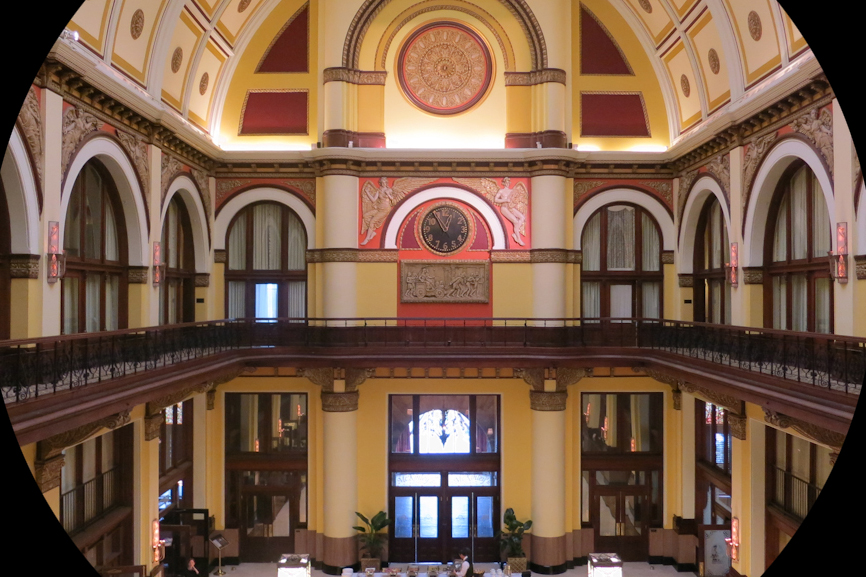
Understanding that lenses project a circular image onto your camera's sensor is the most important part of understanding the relationship between sensor size and the resulting angle of view achieved by using a particular lens. Even though your resulting images are indeed rectangles, your lenses aren't big rectangles are they? So it makes sense that a circle images is projected through the cylinders that we call lenses. Here is a nice sample that shows how a lens projects an image onto a digital sensor. I am going to use this sample image (that actually came from my Canon S100 point and shoot) as a simulation/reference for the majority of this post. Using the same image with added overlays will help you understand all of the technical mumbo jumbo.
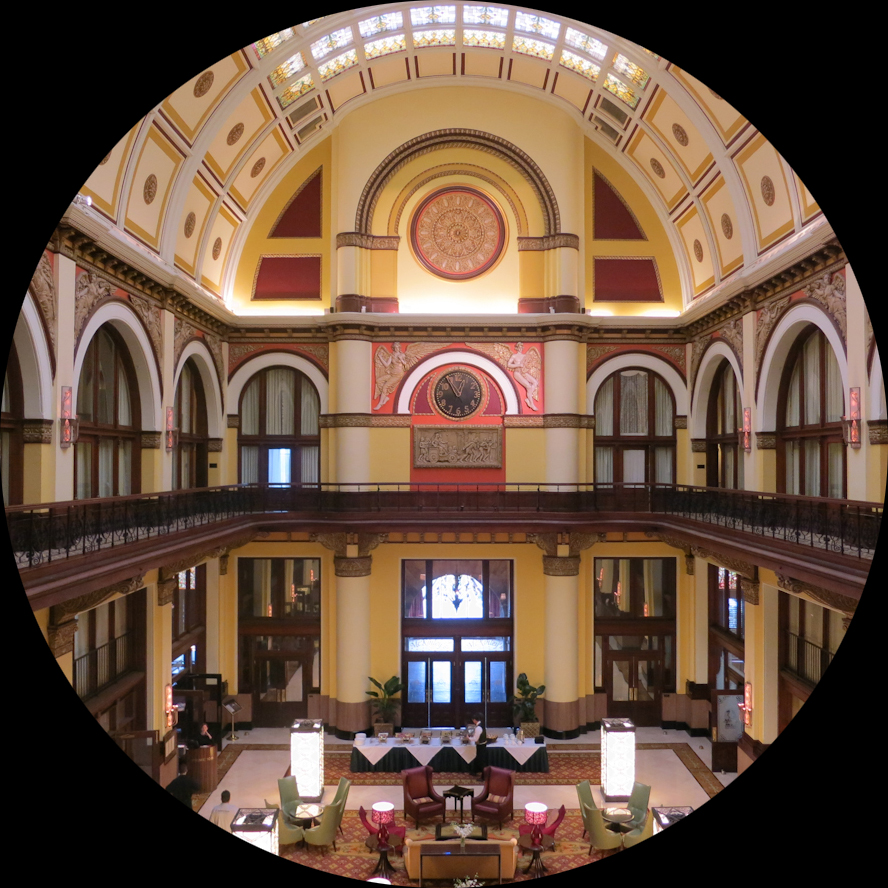
- I just took a photo of mine and cut a circle out of it, but let's pretend that it is a circular image being projected by a lens!
Sensor Size and Crop Factor
Now that we understand that lenses project circular images, let's talk about how they "become" rectangles. This is rather simple, but often gets overcomplicated. The image sensor in your camera is a rectangle. As you saw in the example above, the projected circle from your lens is larger than the rectangle surface it is being projected onto. Smaller rectangles (sensors) require smaller overall circles to "cover" the required area, while larger rectangles (sensors) need a bigger circle to cover their area. This means less glass is required and explains why DX/EF-S (crop) lenses are smaller and less expensive than their full-frame counterparts.
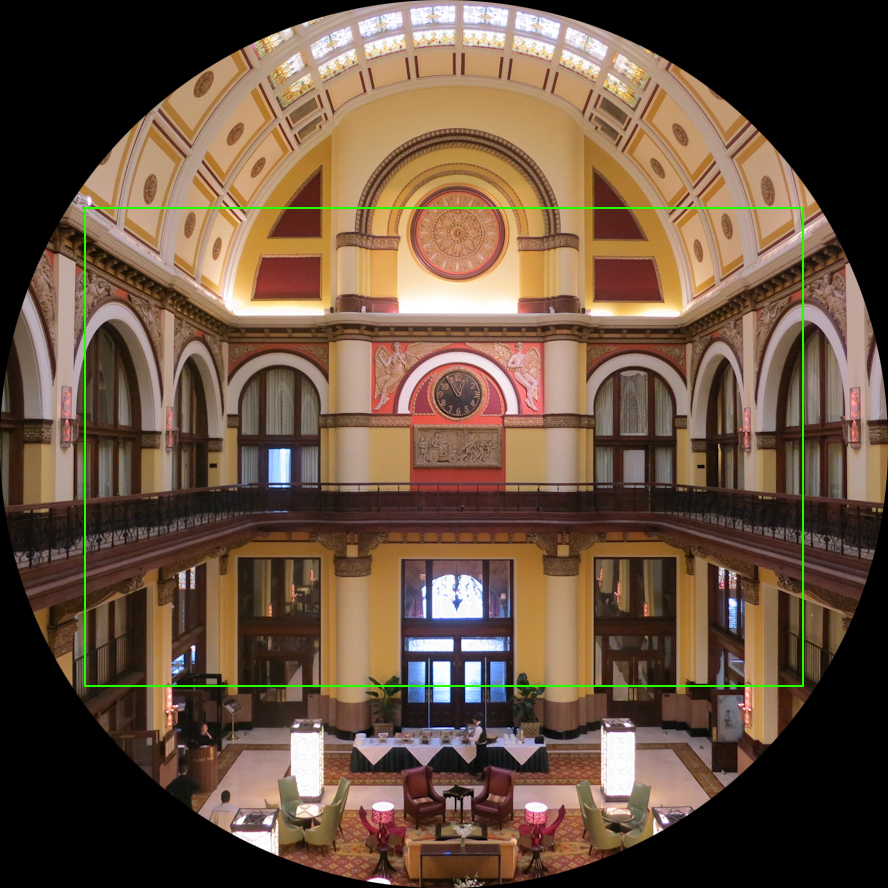
- Image the green outline is your camera's sensor. The rectangular image you end up with is the result of the sensor "cutting out" a portion of the image circle.
If this isn't sinking in, think of how small a lens on a point and shoot camera is. Even the crazy 30x zoom cameras have small lenses in comparison to DSLR lenses. Point and shoot cameras use very small sensors, so they require a very small circle to cover the required area. Therefore even LESS glass is required, which is why most point and shoot cameras are less expensive than most DSLR lenses. So what happens When you use the same lens on a camera with a different sized sensor? Logically you will have a different resulting image.
[caption id="attachment_7428" align="aligncenter" width="600" caption="100% Crop Factor"]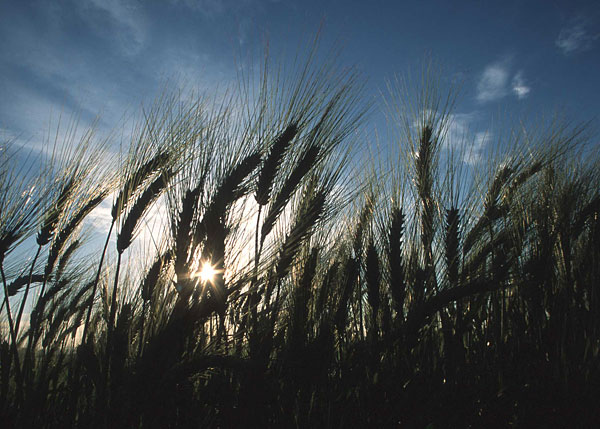 [/caption]
You have probably heard the term "crop factor" several times before. No it isn't about how much corn was grown in Iowa vs Illinois last year... Again this is actually very simple and shouldn't intimidate you. Full frame cameras have a sensor that is the same size as a 35mm frame of film. That is why they are called "full frame." Most digital SLR cameras have sensors that are smaller than full frame, so the crop factor is actually just a measurement of how much smaller a particular camera's sensor is in relation to a 35mm film frame. This also helps you figure out what angle of view a particular lens will give you on a specific camera. Let's use a few real world scenarios to explain how this works.
Scenario 1: You have a full frame camera and you attempt to use a lens on it that was designed for smaller sensor cameras. The image circle being projected by the smaller format lens is not big enough to cover the area of the full frame sensor. Your resulting image will show heavy vignetting.
- Here is a simulation of what it will look like (the vignetting will be more gradual in real life) if you use a lens that does not cover the entire area of your camera's sensor.
Scenario 2: You are using the same full frame camera, but this time you have a proper full frame lens to match it. Now let's take the lens off of the full frame camera and attach it to a camera with a smaller sensor. The result is an image that is "cropped" into the circle. As we can see, the focal length of the lens you are using does not change, but the "angle of view" of your resulting image does. As you can see in the overlay below, I used 1.5x as the common crop factor for Nikon, Sony, and Pentax DSLRs. Canon DSLRs have a 1.6x crop factor, but the difference is negligible so I just used 1.5x to avoid adding further clutter to my example. So what? Well you just visually explained crop factor to yourself! When you use a lens on a smaller sensor camera the "angle of view" is cropped by an amount of 1.5x.
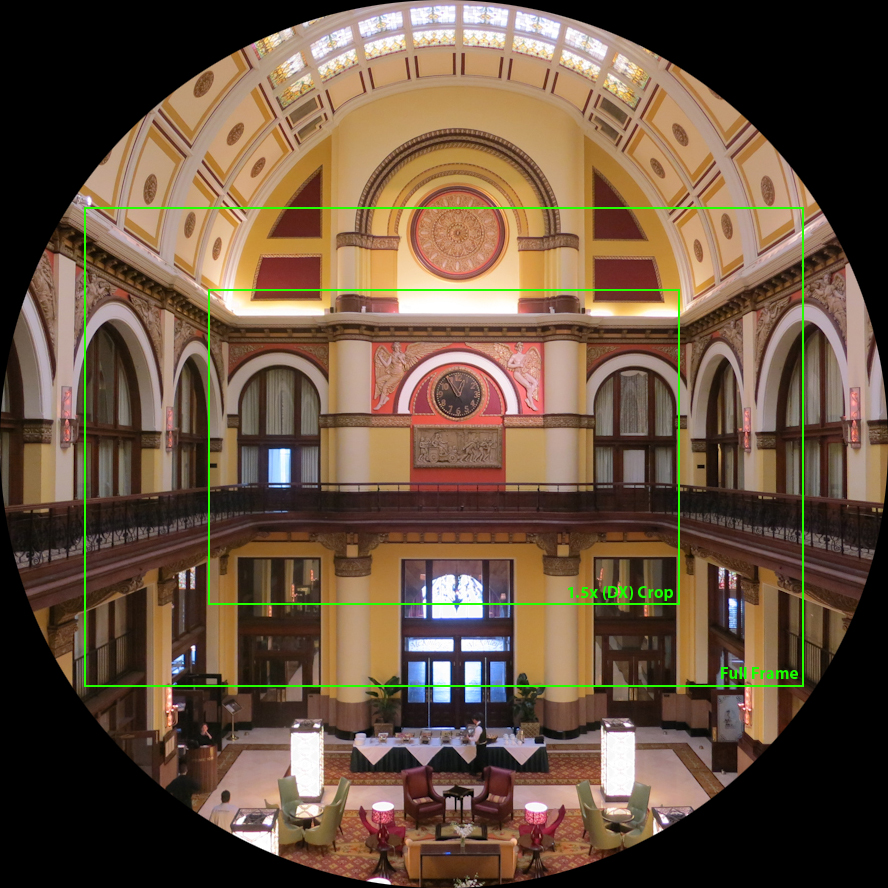
- This little overlay I threw together should help you understand crop factor pretty easily
Scenario 3: Now that you understand how crop factor works, let's take it one step further. Let's say you want to take your lens and attach it to your new Olympus or Panasonic mirrorless camera via use of an adapter. Olympus and Panasonic cameras use the same sized micro 4/3rds sensor which is even smaller than most DSLRs. They are twice as small as full frame sensors, so the common annotation is "2.0x" Here is an overlay that simulates using the same lens across three different sensor sizes. I also included another example that shows what each resulting image would look like as a stand-alone. Sometimes overlays can be confusing once you throw too much information on an image.
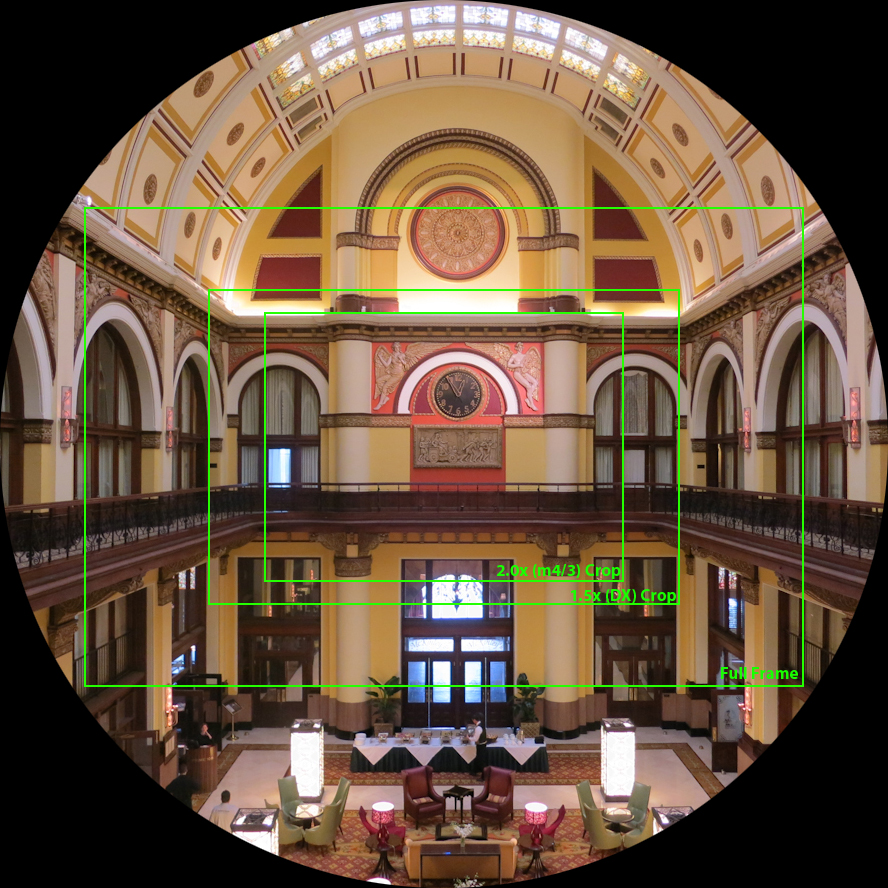
- No this isn't a scene from some lame crime drama.
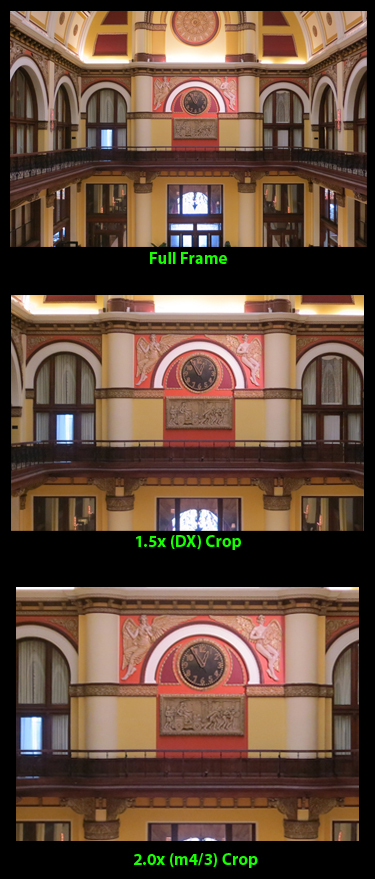
- Here are what all three images will look like when using the same lens on different sized sensors.
Angle of View
Now that you totally understand how crop factor works in a visual sense, let's take a look at what exactly changes. I've made the claim that focal length DOESN'T change, but obviously something is if we are ending up with different images. It is the resulting "angle of view" that is changing. Angle of view (or the more generic term "field of view") is a measurement in degrees of how much of your scene you will capture in an image . Think about it a little bit and jog your memory back to high school geometry class. Ok that may be a little too scary for some of you, but hang in there. A smaller angle of view such as 20° will represent a more narrow perspective while a larger number like 120° will have a much wider perspective. Camera manufacturers try to simplify this for you, so you will see many point and shoot cameras bragging about their wide angle capabilities in "35mm equivalents" instead of angle of view. It would actually be quite a bit easier to understand if all lenses and point and shoot cameras were described by their angle of view, but as often happens, manufacturers have avoided the logical solution for decades. So what's the difference between angle of view and focal length? Am I just bitching about semantics? If terminology was the only difference here, I could summarize all of this in a paragraph, but there is much more to it. Things like depth of field, compression, and distortion will vary. Tomorrow I will go more in-depth to show how sensor size and focal length impact your images beyond how they are cropped/framed in camera.