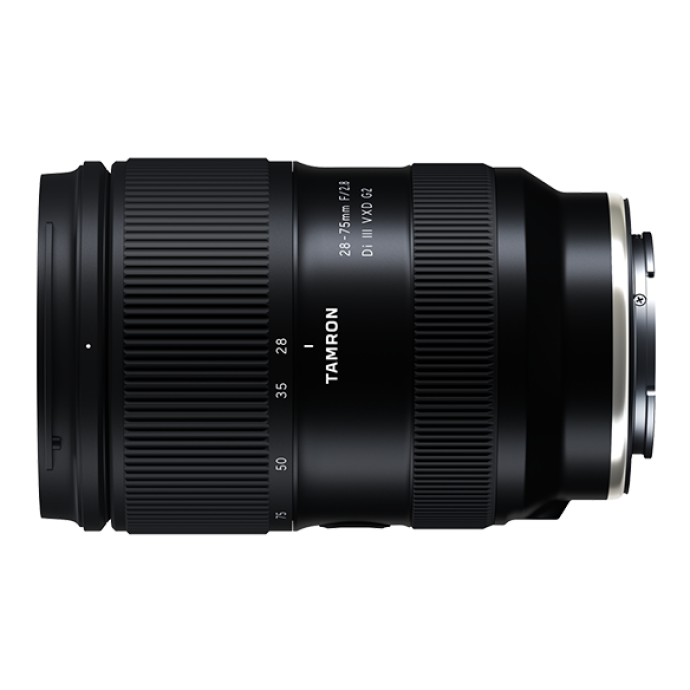
When Tamron introduced the original 28-75mm f/2.8 for full-frame mirrorless cameras, it quickly earned a reputation as one of the smartest standard zoom alternatives in the Sony E ecosystem. It delivered the constant f/2.8 aperture photographers wanted, practical everyday focal lengths, and a price that undercut many first-party options. With the arrival of the Tamron 28-75mm f/2.8 Di III VXD G2 (Model A063) in late 2021, Tamron did not abandon that winning formula. Instead, it refined it.
The second-generation lens arrived as a meaningful update rather than a cosmetic refresh. Tamron positioned the G2 as a more responsive, more polished, and optically improved standard zoom while keeping the approachable value proposition that made its predecessor so popular. At a launch price of $899, the A063 stood out as a serious option for enthusiasts, hybrid shooters, and working photographers who needed performance without pushing into premium-brand pricing.
A Familiar Range That Still Makes Sense
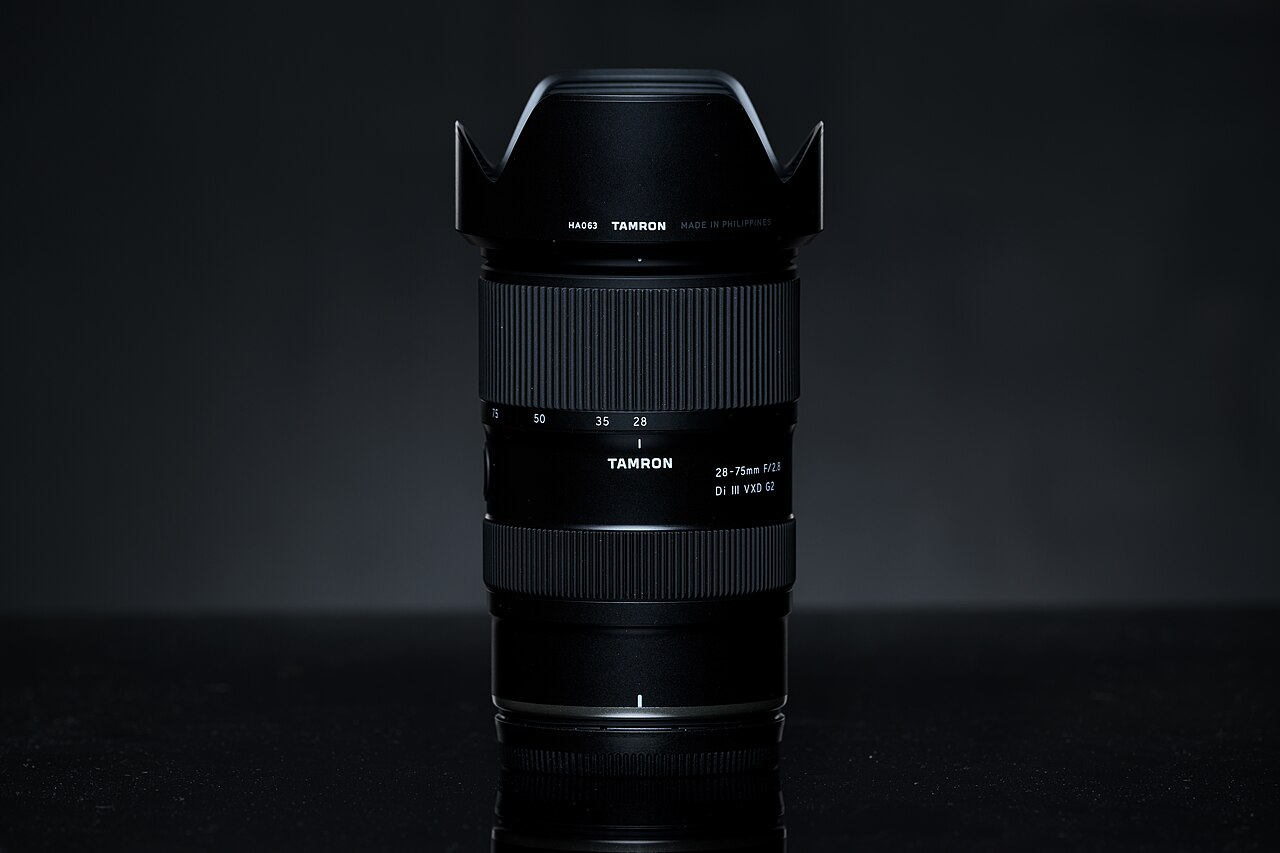
The 28-75mm zoom range remains central to the lens’s identity. In historical terms, Tamron’s choice here was always a little different from the classic 24-70mm professional standard zoom. That difference mattered. By starting at 28mm rather than 24mm, Tamron could pursue a smaller, lighter, and more affordable design while still covering the focal lengths many photographers use most often.
For event coverage, portraiture, travel, documentary work, and general-purpose everyday photography, 28-75mm is highly practical. The wide end is broad enough for environmental portraits, interiors, and street scenes, while the long end reaches into flattering short-telephoto territory. Paired with a constant f/2.8 aperture, the lens remains flexible across changing light and useful for subject isolation.
By the time of the G2 launch, the 28-75mm concept was already proven. What made the A063 noteworthy was Tamron’s effort to keep the range photographers liked while addressing the areas where users increasingly expected modern mirrorless lenses to improve: autofocus speed, optical refinement, and overall handling.
What “G2” Meant for Tamron
Tamron’s “G2” designation had already begun to signal a second generation of lenses with meaningful operational and design improvements. In the case of the 28-75mm f/2.8 Di III VXD G2, the update represented Tamron’s continued maturation as a mirrorless lens maker.
The original lens had succeeded because it understood the market. The G2 arrived because that market had evolved. Sony mirrorless bodies had become faster and more sophisticated, with stronger tracking autofocus, improved video features, and higher-resolution sensors. A standard zoom released in 2021 needed to keep up with that ecosystem.
The A063 was therefore not just a replacement. It was a sign that third-party mirrorless lenses were no longer merely affordable alternatives. They were becoming highly credible first-choice tools in their own right.
VXD Autofocus: A Major Part of the Story
One of the headline features of the lens is its VXD linear motor autofocus system. Tamron used VXD—its Voice-coil eXtreme-torque Drive technology—to deliver faster and more decisive focusing performance than earlier designs. Around the release period, this was especially important because users increasingly expected standard zooms to handle demanding stills and video tasks with equal confidence.
For still photographers, better autofocus meant more reliable tracking for portraits, weddings, family moments, and candid work. For video shooters, linear motor systems were increasingly associated with smooth, quiet, and precise focus transitions. On modern mirrorless cameras, lens motors had become part of the broader shooting experience, not just a hidden mechanism.
The inclusion of VXD in the G2 also reflected Tamron’s intent to position the lens as a thoroughly contemporary optic. In the mirrorless era, autofocus performance is deeply tied to the appeal of a lens, and the A063’s updated drive system helped it feel aligned with the pace of current Sony cameras and, later, Nikon Z users as well.
Optical Refinement Without Losing the Point
Although the 28-75mm G2 remained fundamentally a value-conscious lens, Tamron clearly aimed to improve image quality. Historical discussion around the A063 often centered on sharper results and a more refined rendering than its predecessor. That mattered because by 2021, users were putting standard zooms in front of increasingly demanding sensors.
A standard zoom has one of the hardest jobs in photography. It must perform across wide, normal, and short telephoto focal lengths, maintain a bright aperture, focus quickly, and remain portable enough for daily use. Every design involves compromise. Tamron’s success with the G2 came from making compromises that still felt intelligent rather than restrictive.
The result was a lens that appealed to photographers who wanted a practical workhorse without stepping up to bulkier or significantly more expensive alternatives. The phrase “same great value” was not empty marketing language in this context; it described the continuity of Tamron’s strategy. The company sought to make a lens that improved where users would notice it most while preserving the cost-benefit balance that made the line so compelling.
Designed for the Mirrorless Mainstream
By 2021, the full-frame mirrorless market had matured enough that standard zoom lenses were no longer niche accessories for early adopters. They were foundational tools for a large and growing audience. The Tamron 28-75mm f/2.8 Di III VXD G2 fit squarely into that moment.
Its primary identity was tied to Sony E-mount, where Tamron had already built a strong following, but the broader relevance of the design was clear. The lens concept aligned with what many mirrorless users actually wanted: a compact, bright, all-purpose zoom that balanced price, speed, and portability. The later availability in Nikon Z mount broadened that appeal and underscored how transferable Tamron’s mirrorless strategy had become.
This cross-system relevance is part of what makes the A063 interesting as a historical product. It sits at the intersection of several important trends: the normalization of third-party autofocus lenses in mirrorless systems, the growing demand for hybrid-friendly optics, and the expectation that value-oriented gear could still deliver serious performance.
Who the A063 Was For
Enthusiasts Moving Beyond the Kit Lens
For photographers upgrading from slower variable-aperture zooms, the constant f/2.8 aperture alone made the G2 attractive. It offered more low-light flexibility and more control over depth of field without entering luxury-lens pricing.
Event and Portrait Shooters
The 28-75mm range and fast aperture made the lens naturally suited to portraits, small events, and general people photography. At 75mm, it could deliver pleasing perspective for tighter framing, while the wider settings supported environmental context.
Travel and Everyday Creators
Not every photographer wants to carry a larger 24-70mm class lens. Tamron’s approach had long appealed to users who valued mobility, and the G2 continued that tradition. As an everyday lens, it hit an especially useful balance between versatility and manageable size.
Hybrid Shooters
By the release period, it was increasingly common for one lens to serve both stills and video work. The updated autofocus system made the A063 especially relevant for creators working across both mediums.
A Notable Chapter in Tamron’s Mirrorless Rise
Looking back, the Tamron 28-75mm f/2.8 Di III VXD G2 represents more than a simple product update. It marks an era when Tamron was solidifying its place as one of the most important third-party lens makers in the mirrorless market. The company had already shown it could disrupt expectations on price. With the G2, it showed it could refine, modernize, and compete on responsiveness and image quality as well.
That combination is what gave the A063 its importance. It was accessible, but not basic. It was affordable, but clearly ambitious. And it built on a lens that had already helped define a category for many mirrorless shooters.
Final Thoughts
The Tamron 28-75mm f/2.8 Di III VXD G2 (A063) arrived in 2021 as a thoughtful second-generation standard zoom: same practical 28-75mm range, same useful f/2.8 aperture, faster and more modern VXD linear motor autofocus, and a strong value proposition at $899. In the context of its release, it felt like exactly the kind of update photographers hoped for—substantive where it mattered, familiar where it counted.
For photographers revisiting this lens as part of Tamron’s history, the G2 stands as a reminder of how quickly the mirrorless market matured and how effectively Tamron responded. To explore Tamron lenses in person, compare current options, or learn more about the system history behind standout optics like the A063, visit Unique Photo.