
- One of my shots taken with the Tamron 18-200 NEX (E-Mount)
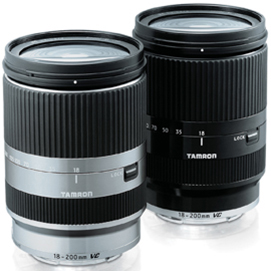
Yesterday I wrote about the physical aspects of the new Tamron 18-200 f/3.5-6.3 VC lens for Sony NEX cameras. (E-Mount) Overall I was very impressed and truly had only good things to say about the size, construction, and ergonomics of this new lens from Tamron. In these categories, I decided that the Tamron was actually superior to Sony's own 18-200 f/3.5-5.6 OSS NEX lens. Still I would like to point out that the Sony 18-200 is also a very well built lens, but in the end, the Tamron version gets the nod for being smaller. Today we'll take a look at the actual performance of the lens. The last Tamron lens I tested was the 70-300mm f/4-5.6 VC and I gave it a rave review, so I am expecting a lot out of the 18-200 NEX lens as well. Let's take a look to see how it did.
Background Info
I decided to take the Tamron 18-200mm f/3.5-63 VC on a walk through downtown Montclair, NJ on a late Sunday afternoon. While not a tourist destination by any means, the small shops, restaurants, and colorful buildings make downtown Montclair a nice place to test a lens. There was ample light when I first started so I could provide samples in optimal lighting. Most people will be using this lens during the day, so it is important to show those samples. However I also like to test cameras and lenses in low-light as well. Even with a slower aperture range, a truly great super-zoom lens will be able to focus accurately (and relatively quickly) in low light. Additionally the stabilization (VC in Tamron's case) must work very well because the slower maximum aperture on the lens will limit you to slower shutter speeds in low light.
- Downtown Montclair is one of my favorite places to test a new lens/camera ISO 3200 f/6.3 1/40s at 33mm
Sharpness
I was pleased with the sharpness from the Tamron 18-200 f/3.5-6.3 VC lens. I never expect 24-70 f/2.8 quality from any super-zoom lens. Overall image quality is just one of the sacrifices you have to make when deciding to use any super-zoom lens. I would say the Tamron is in the same class as any other super-zoom. Here are a couple crops at various focal lengths to give you an idea of how the lens performs. Any softness I noticed was at higher ISO settings and I blame that on Sony's aggressive in-camera JPEG noise reduction that can't be turned off. At any focal length, there is some slight falloff in corner sharpness. You will only notice this at 1:1 crops which are a ridiculous way to measure lenses, but I have included them to be fair. Even the best printers will have a hard time reproducing what you see on your screen at a 1:2 (50%) crop, so 100% pixel peepers are jut asking for trouble. Here it is. In my opinion the Tamron 18-200 NEX does well in the corners for a super-zoom, but I'll let you decide.
- 85mm f/6.3 1/160s ISO250 Brick walls are boring to photograph to test lenses, but I actually like the composition of this shot and the character of the building
- Center Crop 1:1
- Corner Crop 1:1
Focusing
For a super-zoom the Tamron 18-200 f/3.5-6.3 VC focuses quickly. I noticed some missed shots when shooting on AF-C, but I blame the user (myself) and camera for that. Even in low light the lens was able to lock focus on relatively low contrast subjects. This also has a lot to do with the focusing system in camera, so let's give some props to the NEX-5n. The good news and short verdict is that the lens is indeed able to keep pace with the 5n. It should be noted that the Panasonic Lumix cameras have set the bar very high for focusing speed/accuracy on MILCs. So while not the fastest focusing lens on the market, the Tamron 18-200 manages to hold its own. I would say it is even slightly faster than the Sony 18-200mm lens. The contrast detect AF system in Sony NEX (and other similar) cameras seem to "breathe" back and forth very quickly
- Even as the sun faded and day became night, the Tamron 18-200 and NEX-5n kept chugging along as long as I had some sort of contrast in frame to focus on
Stabilization
Like all other recent Tamron lenses I have used, the VC (Vibration Compensation) stabilization system works excellent. It is hard to judge if it works better than the OSS (Optical Steady Shot) in the Sony 18-200mm f/3.5-6.3, but size becomes a factor here yet again. The Tamron is lighter and easier to hold steady than its Sony counterpart. This won't be a huge factor for everyone, but I look at it as an added benefit. Unlike most stabilized lenses, Sony NEX lens stabilization has to be turned off in-camera. It can't be done on the lens for some strange reason. The OSS is indeed in lens and not sensor based like other Sony/Olympus cameras, so I found this to be a little peculiar.
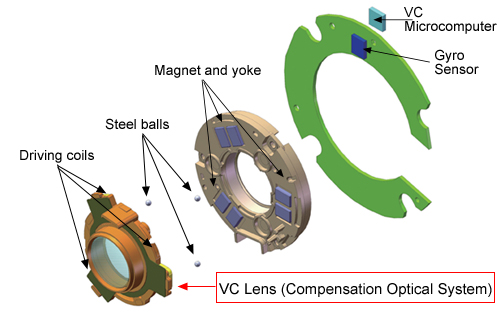
- Diagram showing how Tamron's advanced VC system works.
Distortion, Chromatic Aberration, Color/Contrast, and other "Scary Things"
Tamron claims to have distortion-free lenses, but this is obviously impossible. Any 11x super-zoom lens is going to show tell-tale signs of distortion, especially at the wider end. The Tamron is no different at 18mm there is some noticeable, but easily fixable barrel distortion. In comparison to older super-zoom lenses (like the original Tamron 18-200) it isn't horrendous. There is some pincushion distortion around the mid-range. Again there isn't enough distortion at any focal length to "ruin" this lens for me. Here is an example of a shot at 18mm straight out of camera (WB adjusted) and another shot of it fixed after a simple correction in Adobe Lightroom 3.
- Distortion at 18mm
- Distortion corrected in Adobe Lightroom using the profile from the Nikon 18-200mm VR lens. (Since no profile exists for the Tamron yet)
I didn't see a lot of Chromatic aberration or other odd fringing, even when looking closely at 1:1. Obviously when you shoot highly reflective objects in bright/high contrast situations, you are bound to see a little fringing with any lens. I noticed this somewhat at the telephoto end of the lens, but nothing Lightroom couldn't fix. Compared to the Sony, the Tamron performs the same, if not better in this area. I noticed that the contrast of the Sony lens was slightly better, but only marginally so. Here is an idea of how some colors look straight out of the camera with the Tamron lens. I am satisfied, but personally I would add some more contrast/saturation. Nothing I couldn't fix by shooting on a different color mode such as "Vivid" Beyond the expected distortion, there isn't a whole lot that will go "wrong" with this lens. I have included another image that was shot directly into several bright light sources so you can get an idea on how this lens handles flare and

- Color settings on camera set to "Standard" ISO 250 f/5.6 1/80s at 52mm

- Shooting into several bright light sources, the Tamron 18-200 seems to maintain good contrast and avoid flaring ISO 3200 f/6.3 1/50s at 47mm
Final Thoughts
Ultimately the Tamron 18-200 f/3.5-6.3 VC NEX lens is an excellent choice. While the Sony 18-200 works quite nicely on the VG-10/20 camcorders, it is just far too big to practically use on any of the small NEX cameras such as the 3C or 5n. We haven't gotten a NEX-7 in yet, but to me that is irrelevant. The Sony 18-200 is just too damn heavy to walk around with all day and is awkward to hold. When you sit the camera down, it doesn't rest flat. That's how big the Sony 18-200 is. That being said it is a very high quality lens, so I don't want anyone to think I hate the thing. It just isn't practical for the customer it is targeted towards. On the other hand, the new Tamron 18-200 NEX lens is a joy to walk around with and use. It isn't "small" by any measure, but the size and weight difference from the Sony make it a viable option. You won't be sacrificing anything in terms of image quality either. I didn't bother mentioning the bokeh characteristics of either lens because these lenses just aren't meant to create spectacular out of focus backgrounds. If you get close enough to your subject and shoot wide open towards the telephoto-end, you will get some separation, but you will be better off using Sony's new 50mm f/1.8 NEX lens for portraits. I am happy to say that the Tamron 18-200 is in the same class as its fatter Sony counterpart. While I personally don't use a super-zoom lens myself, I would highly recommend this lens for the NEX shooter who wants a high quality compact "all-in-one" lens.