Intro: Why Use Sony's Lens Compare Beta?
Sony's Lens Compare Beta is a handy way for beginners to visualize how different lenses behave before buying. To make the most of it, we put two popular full-frame E-mount zooms head-to-head: the ultra-wide Sony FE 12–24mm f/2.8 GM and the all-around Sony FE 24–105mm f/4 G OSS. You'll learn what to look for in the tool and which lens fits your shooting style.
Side-by-Side Specs
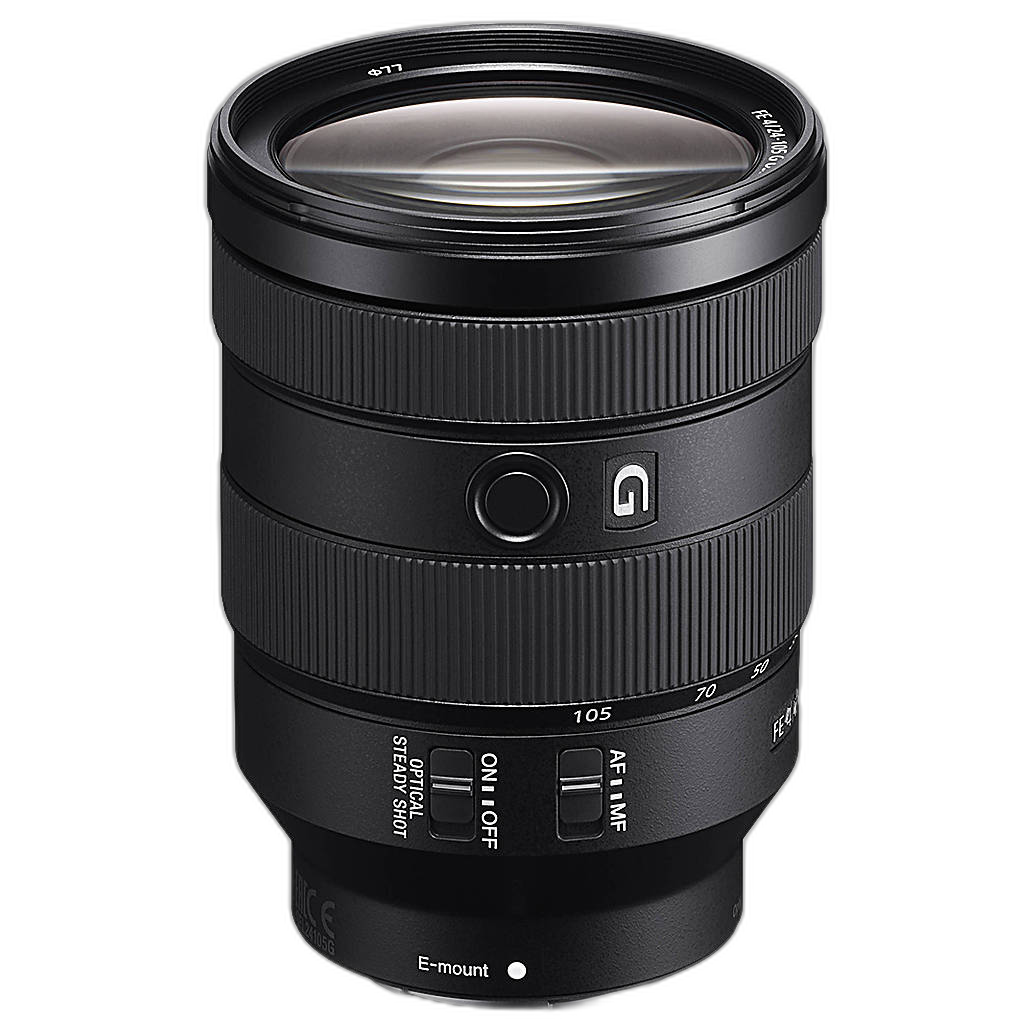
| Spec | Sony FE 12–24mm f/2.8 GM | Sony FE 24–105mm f/4 G OSS |
|---|---|---|
| Mount / Format | Sony E (Full-Frame) | Sony E (Full-Frame) |
| Focal Length | 12–24mm ultra-wide zoom | 24–105mm standard zoom |
| Max Aperture | Constant f/2.8 | Constant f/4 |
| Optical Stabilization | No OSS | Yes, OSS |
| Minimum Focus Distance | Approx. 0.28 m | Approx. 0.38 m |
| Max Magnification | Approx. 0.14× | Approx. 0.31× |
| Filter | Rear gel slot (no front thread) | 77 mm front thread |
| Weight | Approx. 847 g | Approx. 663 g |
| Weather Resistance | Dust- and moisture-resistant design | Dust- and moisture-resistant design |
| Best For | Interiors, architecture, landscapes, astro | Travel, portraits, everyday, events |
How to Use Lens Compare Beta: Quick Beginner Workflow
- Choose your camera in the tool so field of view and stabilization assumptions match your body.
- Add both lenses to compare. Start wide open (f/2.8 vs f/4) and at shared focal lengths (e.g., 24mm) for apples-to-apples results.
- Toggle center vs edge performance to see how corner sharpness changes across the zoom range.
- Check distortion and vignetting previews; ultra-wides will show more, especially at the widest end.
- Review bokeh/background blur at medium distances to understand subject separation at your typical framing.
- If available, preview focus breathing and video stabilization behavior.
- Repeat at common landscape apertures (f/5.6–f/8) and indoor apertures (f/2.8–f/4) to see how stopping down affects results.
Category-by-Category Analysis
Field of View and Versatility
The 12–24mm GM gives an expansive perspective that makes small rooms look bigger and skies feel dramatic. The trade-off is range—24mm is as tight as it gets. The 24–105mm G covers everything from environmental wide shots to tight portraits at 105mm, which is far more flexible for beginners learning what they like to shoot.
Sharpness and Rendering (What to Look For in the Tool)
In Lens Compare Beta, set both lenses to 24mm and view sharpness at f/4 and f/5.6. You’ll likely see the 12–24mm GM deliver excellent corner integrity for an ultra-wide, while the 24–105mm G is strong and very consistent through the frame at typical shooting apertures. Also compare micro-contrast and color; GM glass tends to emphasize crisp, clean rendering, while the 24–105mm G offers balanced, natural contrast.
Low Light and Astro
At f/2.8, the 12–24mm GM lets in a full stop more light than f/4, helpful for indoor handheld work and astrophotography. In the tool, preview vignetting and coma at the widest settings—these matter for star fields and night cityscapes. If you mostly shoot evenings indoors, the extra light from f/2.8 is noticeable; for general travel, f/4 with stabilization is usually sufficient.
Video and Stabilization
The 24–105mm G includes OSS, which, combined with in-body stabilization, can look smoother in the Lens Compare Beta’s motion previews. The 12–24mm GM lacks OSS, but ultra-wide focal lengths naturally minimize shake. If you film walk-and-talks or handheld B-roll at mid-tele focal lengths, the 24–105mm G has the steadier edge.
Close-Up and Detail
Use the tool’s close-focus view to compare subject size at minimum focus. The 24–105mm G reaches roughly 0.31× magnification—handy for food, crafts, and details—while the 12–24mm GM’s 0.14× is more for immersive context rather than tight close-ups.
Size, Handling, and Filters
Both are well-built and weather-resistant. The 24–105mm G is lighter and accepts common 77mm filters (great for ND/polarizers). The 12–24mm GM uses a rear gel slot and a fixed hood, so plan accordingly if you need front ND systems.
Value for Beginners
Lens Compare Beta makes it clear: the 24–105mm’s range and stabilization cover the widest variety of real-world scenarios. The 12–24mm GM is a phenomenal specialist lens—perfect if you know you love ultra-wide landscapes, interiors, or astro.
Our Pick
Recommendation for most beginners: Sony FE 24–105mm f/4 G OSS. Its huge focal range, optical stabilization, close-up capability, and lighter carry make it the easiest single-lens solution to learn on. Choose the Sony FE 12–24mm f/2.8 GM if your priority is dramatic ultra-wide imagery, low-light interiors, or astrophotography.
Conclusion
Use Sony's Lens Compare Beta to explore how aperture, focal length, and edge performance change your images—then match what you see to how you shoot. When you’re ready, shop both lenses and get personalized advice at Unique Photo, where our experts can help you pick the right glass for your Sony kit.