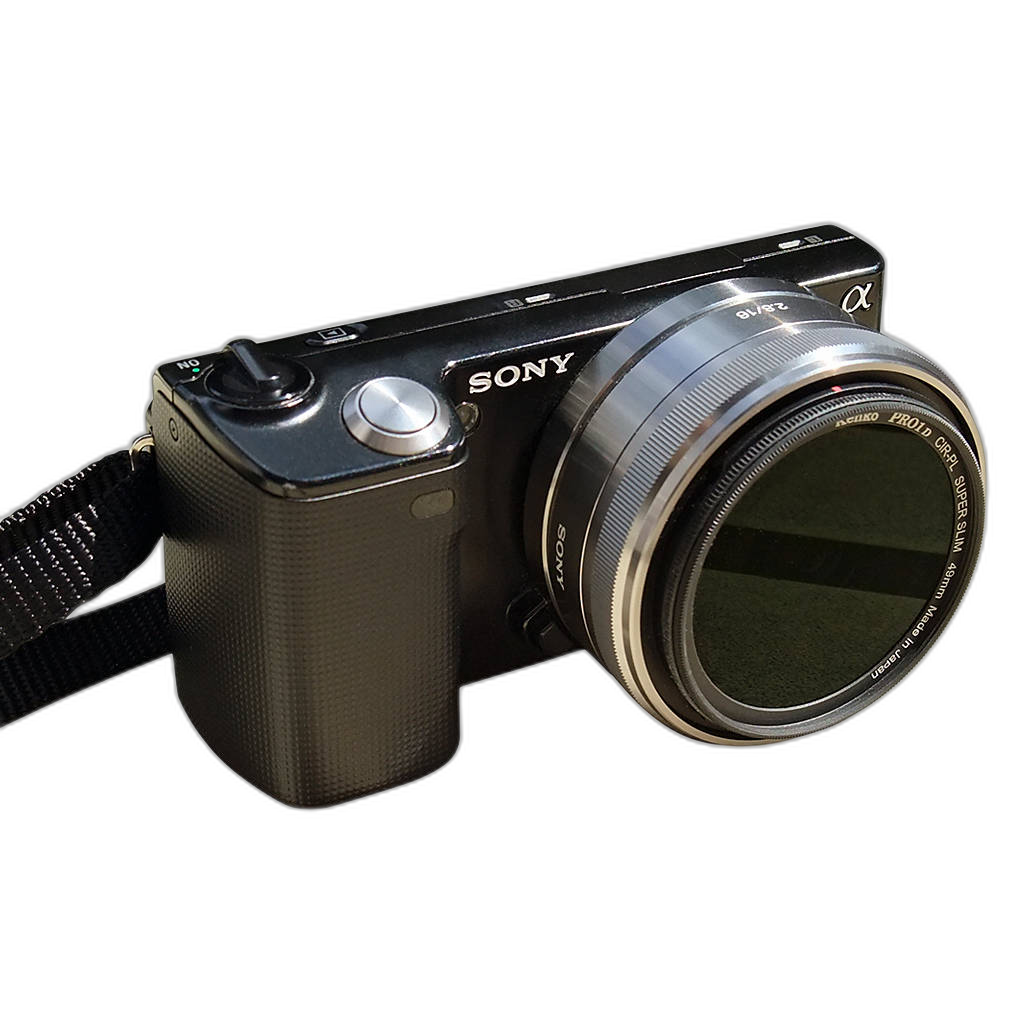
When Sony introduced its first APS-C E-mount mirrorless cameras in 2010, it was doing more than launching a new product line. It was making a serious bet on a different kind of interchangeable-lens camera: compact, sensor-forward, and built around a short flange distance that could support both native lenses and a wide range of adapted optics. What began with the NEX-5 and NEX-3 would grow into one of the most important APS-C mirrorless families in the industry, eventually encompassing enthusiast stills bodies, rangefinder-style designs, vlogging-oriented models, and even a dedicated cinema camera in the form of the FX30.
This historical hub traces the Sony APS-C mirrorless release history from the original NEX era through the Alpha-branded generations and into the modern A6700 period. The goal is not simply to list products, but to explain how the lineup evolved: how handling changed, how autofocus matured, how video became central, and how Sony gradually transformed E-mount APS-C from an experimental concept into a broad system with real staying power.
The Beginning: Why Sony APS-C E-Mount Mattered in 2010
The official starting point for Sony APS-C mirrorless is 2010, with the release of the NEX-5 and NEX-3. These cameras established several ideas that would define the system for years to come. First, they used the Sony E mount, a new mirrorless mount designed around a short registration distance. Second, they paired that mount with an APS-C sensor, giving users image quality associated with larger interchangeable-lens cameras while pursuing a much smaller body than a conventional DSLR.
That combination was important historically. At the time, mirrorless was still a young category. Sony’s approach with NEX emphasized compactness and image quality over traditional handling conventions. These early bodies did not look or operate like mini DSLRs. Instead, they leaned into a new industrial design language, one that sometimes prioritized sleekness over external controls. That made the first NEX cameras feel fresh, if occasionally polarizing.
Even so, the premise was strong: a large sensor in a compact body, interchangeable lenses, and a mount with room to grow. In hindsight, the first NEX models were foundational not only for Sony APS-C, but for Sony’s broader mirrorless strategy.
The First Generation: NEX-3 and NEX-5
NEX-5 / NEX-3 (2010)
The NEX-5 and NEX-3 were the first Sony APS-C mirrorless bodies, and they immediately set the line apart. Their compact form was one of the story’s central selling points. Sony was clearly positioning E-mount APS-C as a modern alternative to bulkier DSLR systems.
The earliest NEX cameras helped establish several long-running themes in Sony’s APS-C range:
- Portability as a core system value
- APS-C image quality in a small body
- Interchangeable lenses via the new E mount
- Adaptability, thanks to the mount’s short flange distance
From a historical perspective, the first generation is best understood as proof of concept. Sony had not yet settled every ergonomic question, and the native APS-C E-mount lens lineup was still in its infancy. But the cameras were significant because they established the platform. Once the mount existed and the sensor strategy was in place, Sony could iterate rapidly.
Building Out the NEX Identity
After the original release, Sony expanded the NEX family in multiple directions. The company’s APS-C mirrorless line did not proceed as a simple one-model update path. Instead, it branched into different body styles and user categories, including compact consumer models, more advanced enthusiast cameras, and eventually rangefinder-inspired designs with built-in electronic viewfinders.
This period is essential to understanding Sony’s release history because it shows the company searching for the right formula. Rather than locking itself into a single body concept, Sony experimented. Some cameras emphasized sleekness and simplicity. Others moved toward more direct control. Over time, the market made clear that photographers wanted not just compactness, but also strong autofocus, a built-in viewfinder in higher-end models, better grip design, and increasingly serious video capability.
NEX-C3 and the Consumer-Compact Direction
One branch of the NEX line emphasized accessibility and portability. Cameras in this class kept the spirit of the original launch: small bodies meant to attract users moving up from compacts or looking for a travel-friendly interchangeable-lens system. These models reinforced Sony’s message that APS-C image quality did not require DSLR size.
Historically, this segment matters because it helped normalize mirrorless as a mainstream category rather than just an enthusiast curiosity. Sony was not simply serving experts; it was trying to broaden the appeal of large-sensor photography.
NEX-5 Series Refinement
As the NEX-5 line evolved, Sony refined performance and features while retaining the compact ethos that had made the original model notable. The NEX-5 series became one of the line’s central pillars, often serving users who wanted a balance between size and capability. In these updates, Sony showed a pattern that would continue for years: preserving a successful physical concept while steadily improving sensor performance, autofocus behavior, interface design, and video implementation.
During the NEX period, one of Sony’s greatest advantages was speed of iteration. The company was willing to update cameras quickly, responding to user expectations and a changing market. That rapid development cycle helped E-mount mature faster than many early mirrorless observers might have expected.
NEX-7 and the Enthusiast Turning Point
If the first NEX models introduced the concept, the NEX-7 helped prove that Sony APS-C mirrorless could be taken seriously by advanced users. Historically, the NEX-7 stands as one of the most important cameras in the lineage because it pointed toward a more fully realized enthusiast mirrorless experience.
What made that moment important was not just specification escalation, but philosophy. Sony was beginning to show that APS-C E-mount did not have to be defined solely by compactness. It could also be a platform for ambitious photographers who wanted stronger controls, a more confidence-inspiring shooting experience, and a camera that felt less like an experiment and more like a mature system tool.
For many users, the NEX-7 was the first clear sign that Sony mirrorless could challenge assumptions about what a serious interchangeable-lens camera should look like.
The Transition from NEX to Alpha
One of the most important chapters in Sony APS-C history is the branding transition from NEX to Alpha. This was more than a cosmetic rename. It reflected Sony’s effort to unify its interchangeable-lens camera strategy under a broader Alpha identity. As Sony’s mirrorless ambitions expanded, especially across both APS-C and full-frame E-mount, a single family name made strategic sense.
In historical terms, this transition helped simplify the story. NEX had introduced the mirrorless APS-C concept, but Alpha gave Sony a clearer long-term brand architecture. It also signaled that mirrorless was no longer a side path or separate experiment; it was increasingly central to Sony’s camera future.
A3000 and the DSLR-Style Experiment
Before settling fully into what most people now think of as the Sony APS-C mirrorless look, Sony explored different body concepts. The A3000 represented one such experiment, using a more DSLR-like silhouette around the APS-C E-mount concept. Historically, it is a reminder that the market was still adjusting to mirrorless ergonomics and that manufacturers were testing which forms users would accept most readily.
The A3000 is notable less for defining the future than for showing Sony’s willingness to try alternate approaches as it expanded APS-C E-mount into different price tiers and user expectations.
A5000 and A5100: Small Cameras, Bigger Appeal
With the A5000 and A5100, Sony continued its compact APS-C strategy under the Alpha name. These models carried forward the idea that a very small body could still be a highly capable interchangeable-lens camera. They were especially important in the period when mirrorless cameras began attracting a broader audience interested in travel, family photography, and later social-content creation.
The significance of these cameras lies in continuity. Sony did not abandon the original NEX ideal when it moved to Alpha branding. Instead, it refined that compact formula and kept it available for users who valued portability first.
The A6000 Era: Sony Finds Its Defining APS-C Formula
A6000 (2014)
In the history of Sony APS-C mirrorless, the A6000 is arguably the key mass-market breakthrough. While earlier NEX and Alpha APS-C models had established Sony as a serious player, the A6000 became the camera that truly defined the line for a generation of photographers.
Why does the A6000 matter so much historically? Because it combined several things the market wanted in one place: a relatively compact body, an integrated viewfinder, interchangeable-lens flexibility, and autofocus performance that helped make mirrorless feel practical for everyday serious shooting. It hit a balance point that many users found compelling.
The A6000’s success also gave Sony a durable platform. In many ways, the company’s later APS-C bodies can be understood as extensions, refinements, or specializations of the path the A6000 made mainstream. If the original NEX cameras created the system, the A6000 era gave it a widely recognized identity.
A6300 and A6500: Performance and Video Gain Importance
Following the A6000, Sony moved the line upward with cameras such as the A6300 and A6500. These bodies represented an important stage in the evolution of APS-C E-mount because they showed Sony prioritizing more advanced performance, especially in autofocus and video capability.
This period matters because it reflects a broader shift in the camera market. By the mid-2010s, hybrid shooting had become increasingly important. Enthusiasts and professionals alike were expecting stills cameras to serve video needs with greater seriousness. Sony was particularly well positioned here, and its APS-C line benefited from technologies and priorities visible across the wider Alpha ecosystem.
The A6300 and A6500 era reinforced several ideas:
- APS-C E-mount was not just for entry-level users
- Autofocus performance had become one of Sony’s strongest competitive arguments
- Video was no longer secondary; it was central to how many users evaluated a camera
- Sony could position APS-C as a high-performance format, not merely a lower-cost alternative to full frame
These cameras helped deepen the line’s appeal among action shooters, creators, and enthusiasts who wanted a smaller system without giving up too much capability.
Refinement and Specialization in the Late 2010s
A6400: A Mature Midline APS-C Camera
The A6400 marked another important step in Sony’s APS-C release history. By this stage, the company had years of mirrorless development behind it, and the line felt more mature. Sony had a clearer understanding of how to differentiate models and how to serve a user base increasingly divided between traditional photographers, hybrid creators, and video-first customers.
Historically, the A6400 represents refinement rather than reinvention. It sits in the lineage as a sign of a platform settling into confidence. Sony was no longer proving that APS-C mirrorless could work; it was optimizing a system that had already established itself. Autofocus sophistication, usability, and creator-friendly features had all become more prominent parts of the story.
A6100: Keeping the System Accessible
The A6100 played a vital role in maintaining APS-C E-mount’s accessibility. Sony’s line had moved significantly upmarket in capability, but the company still needed an entry path for users coming into interchangeable-lens photography. This has been a recurring strength of the APS-C system: there are historically points of entry that allow beginners to join the E-mount ecosystem and potentially grow within it.
That ecosystem logic is one of the most important parts of Sony APS-C history. A buyer might begin with a relatively compact APS-C body and later move to a more advanced APS-C model, or even to full-frame Alpha, while remaining within the same mount family. The continuity of the Sony E mount helped make that progression unusually attractive.
A6600: High-End APS-C Consolidation
With the A6600, Sony pushed APS-C further into premium territory. By this point, the company had long demonstrated that APS-C mirrorless was viable; the question was how far upward the format could stretch. The A6600 answered by presenting APS-C as a serious high-end option within the Alpha system.
As a historical waypoint, the A6600 is significant because it consolidated many of the line’s mature strengths: advanced autofocus, hybrid capability, and a body concept descended from the A6000 template but refined over time. It also showed Sony continuing to believe in APS-C even as full-frame mirrorless drew much of the industry’s attention.
The Creator Era: Vlogging, Content Production, and New Buyers
As the market evolved, Sony’s APS-C mirrorless family increasingly intersected with a new class of user: the content creator. This shift altered not only marketing language, but camera design priorities. Front-facing screens, subject-tracking improvements, compact form factors, and video-focused features became even more central.
ZV-E10: APS-C E-Mount for the Creator Generation
The ZV-E10 is historically important because it illustrates Sony’s recognition that many buyers were entering the camera market primarily through video, vlogging, streaming, and social content. It retained the core logic of APS-C E-mount—interchangeable lenses, large sensor, compact system size—but repackaged it for a generation whose priorities were not identical to those of the traditional stills enthusiast.
In release-history terms, the ZV-E10 is less a departure from Sony APS-C than a specialization of it. The line had always adapted to different audiences, and this model simply made the creator focus explicit. That adaptability is part of why the APS-C E-mount family has remained relevant over such a long span.
The Modern Flagship Stage
A6700: The Contemporary APS-C Flagship
The A6700 represents the modern flagship phase of Sony APS-C mirrorless. Historically, it stands at the far end of a line that began with the NEX-3 and NEX-5 in 2010. Looking across that span, the contrast is striking. Early NEX cameras sold the idea of compact APS-C mirrorless. The A6700 arrives in a world where that idea has already been fully validated, and the emphasis is now on sophistication, integration, and advanced subject-aware performance.
What the A6700 symbolizes in the lineage is maturity. Sony no longer needs to explain why APS-C mirrorless matters. Instead, it can focus on what a top-tier APS-C body should be in an era shaped by hybrid workflows, advanced autofocus expectations, and increasingly fluid boundaries between stills and video shooting.
The A6700 also confirms that Sony APS-C remains strategically important. Rather than allowing the line to become merely an entry rung below full frame, Sony has continued to develop it as a meaningful format in its own right.
FX30: APS-C Cinema Comes into the Family
If the A6700 represents the mature stills-and-hybrid flagship, the FX30 represents another major milestone: the extension of Sony APS-C E-mount into the dedicated cinema world. The FX30 is historically significant because it shows just how far the platform has traveled since 2010.
At launch, Sony APS-C mirrorless began as a compact photographic alternative to the DSLR. With the FX30, the same broad lineage now encompasses a camera positioned in Sony’s cinema-oriented FX family. That is a remarkable expansion of identity. It underscores how thoroughly E-mount APS-C has evolved from an experiment in compact system design into a flexible platform for multiple image-making disciplines.
The FX30 also reflects a larger truth about Sony’s ecosystem strategy: APS-C is not just a sensor size in isolation. Within E-mount, it is part of a wider lens and workflow universe that includes stills, hybrid production, and cinema-oriented creation.
How Each Generation Advanced the System
Looking back across the full chronology, Sony APS-C mirrorless advanced along several clear axes.
1. Body Design and Ergonomics
The earliest NEX bodies were bold and compact, but they could feel minimalist in ways that did not satisfy every advanced user. Over time, Sony refined grip design, external controls, and viewfinder integration. The line gradually moved from “small first” toward a more balanced approach that combined portability with greater shooting confidence.
2. Autofocus
Autofocus is one of the defining themes of Sony’s APS-C history. While the earliest cameras were compelling for image quality and size, later generations increasingly distinguished themselves through autofocus speed, coverage, and subject-tracking sophistication. This became one of Sony’s most visible strengths and a major reason the A6000 line was so influential.
3. Video Capability
In 2010, video was important but not yet the dominant identity marker it would later become. As the line developed, video moved from useful extra to core criterion. By the time creator-focused and cinema-adjacent models arrived, video was inseparable from the Sony APS-C story.
4. Audience Expansion
The lineage broadened from early adopters and enthusiasts to include travelers, beginners, vloggers, creators, and filmmakers. Sony succeeded not by making one camera for everyone, but by building a family of APS-C E-mount bodies that addressed different needs while remaining part of one mount ecosystem.
5. System Legitimacy
Perhaps the biggest historical advance was intangible: legitimacy. In 2010, Sony APS-C mirrorless was a new proposition. Over time, it became a mature, credible system with a recognized place in the camera market. That transition is the real story of the release history.
The Importance of the Sony E Mount
No history of Sony APS-C mirrorless is complete without emphasizing the role of the Sony E mount. From the first NEX-5 / NEX-3 release onward, the mount has been the system’s central continuity. Bodies changed names, shapes, and audiences, but the mount remained the anchor.
This continuity gave Sony APS-C users a path forward. Lenses could remain relevant across multiple camera generations. The same mount also linked APS-C and full-frame branches of Sony mirrorless in a way that made the overall Alpha ecosystem feel coherent. For many photographers and creators, that made buying into Sony APS-C feel less like a dead-end purchase and more like an entry into a broader system.
From NEX Experiment to Lasting System
The long arc of Sony APS-C mirrorless is one of the clearest success stories in the modern camera market. Starting with the NEX-5 and NEX-3 in 2010, Sony introduced a bold new APS-C interchangeable-lens concept built on the E mount. In the years that followed, it refined that idea through the NEX era, consolidated it under the Alpha brand, found a mass-market sweet spot with the A6000 generation, and expanded the line outward toward creators and cinema with cameras like the A6700 and FX30.
Seen as a whole, this release history is not just a catalog of models. It is the story of Sony learning, iterating, and gradually defining what APS-C mirrorless could be. Compactness began the conversation, but autofocus, video, ergonomics, and ecosystem depth helped sustain it. Today, the lineage stands as proof that APS-C remains an important and fully modern format within the Alpha world.
If you want to explore Sony APS-C cameras, lenses, and the broader Alpha system, Unique Photo is a great place to buy current gear or learn more about the history behind it.