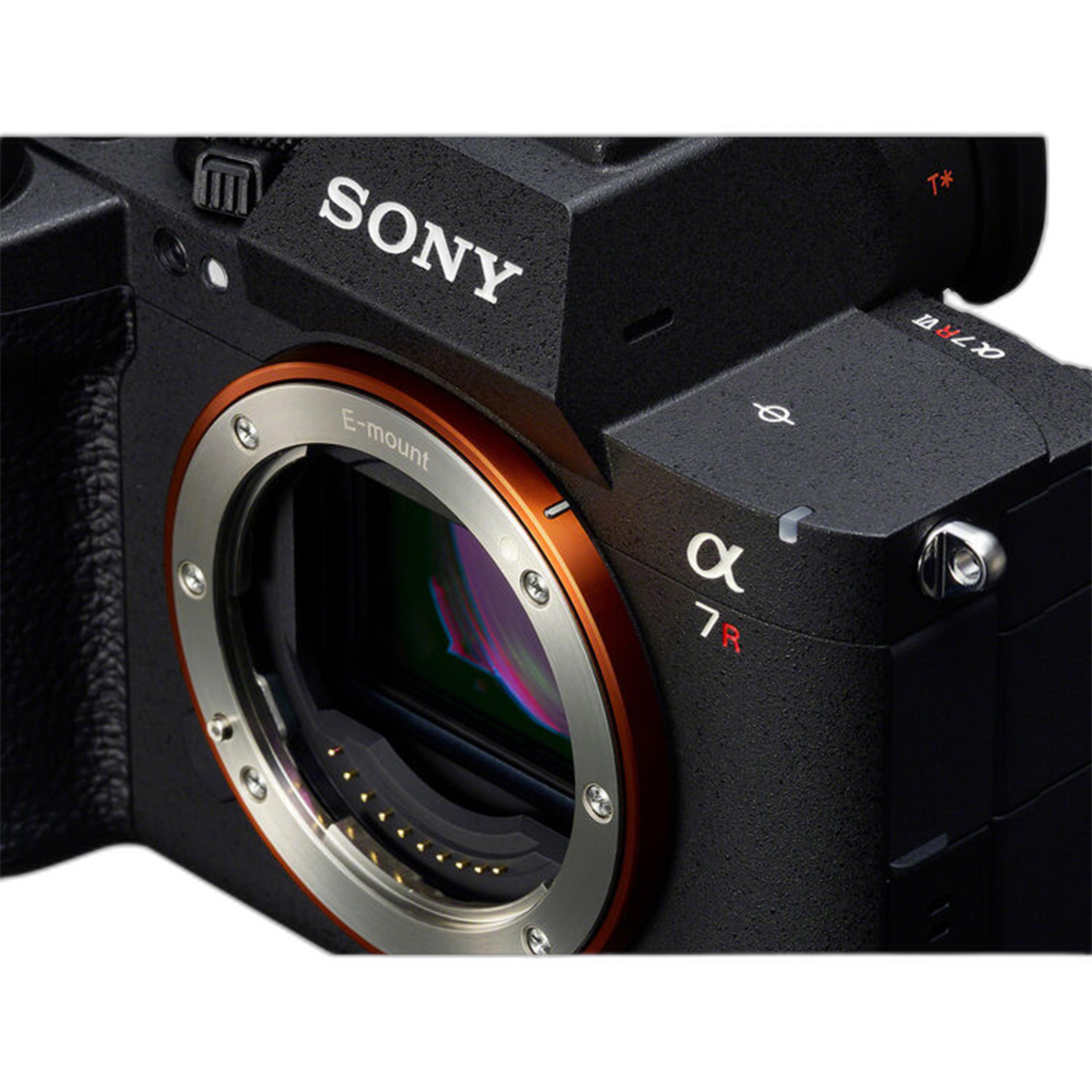
Sony has officially announced the a7R, a new full-frame mirrorless camera that signals a major step in the evolution of compact interchangeable-lens systems. Introduced alongside the a7 in October 2013, the Sony a7R immediately stands out for one headline reason: a 36.4-megapixel full-frame sensor in a relatively small Sony E-mount body. Just as notable, Sony has designed the a7R without an optical low-pass filter, clearly positioning it toward photographers who want to extract maximum detail from the sensor.
At launch, the Sony a7R enters the market at $2,299 body-only. That price, paired with its resolution and full-frame format, places it in an especially interesting position for landscape, studio, architectural, and fine-art photographers who have traditionally looked toward larger and often heavier DSLR systems for this kind of image quality.
A Landmark Moment for Full-Frame Mirrorless
By late 2013, mirrorless cameras had already proven that smaller camera bodies could deliver serious performance, but full-frame mirrorless remained a much more ambitious proposition. Sony’s announcement of the a7R helps redefine what photographers can expect from a compact system camera. Rather than treating mirrorless as only a lightweight alternative to DSLRs, Sony is presenting it here as a platform capable of top-tier image quality.
The a7R’s 36.4MP full-frame sensor is the central story. In practical terms, that resolution promises expansive detail for large prints, generous cropping flexibility, and the kind of file quality that working professionals and demanding enthusiasts are likely to notice immediately. The decision to remove the low-pass filter further underscores Sony’s intent: this is a camera aimed squarely at photographers who prioritize resolving power and micro-detail.
What Makes the Sony a7R Different?
36.4MP Full-Frame Sensor
The a7R’s 36.4-megapixel full-frame sensor is, without question, its defining feature. Full-frame sensors are already prized for their image quality, tonal richness, and control over depth of field. Pairing that format with such high resolution makes the a7R one of the most compelling cameras of its moment for detail-oriented work.
This combination should be especially attractive to photographers working in landscape and commercial settings, where every bit of texture matters. Fine foliage, architectural lines, product surfaces, and subtle tonal transitions are all the kinds of subjects that stand to benefit from this sensor’s capabilities.
No Optical Low-Pass Filter
Sony’s choice to omit the optical low-pass filter is a major talking point. Traditionally, these filters have been used to reduce moiré and false color artifacts, but they can also slightly soften image detail. By removing the filter, Sony is chasing the sharpest possible output from the sensor.
That move aligns the a7R with a growing trend in high-resolution digital cameras: giving photographers the maximum amount of captured detail and trusting that, for the intended audience, the benefits outweigh the tradeoffs. For many photographers making large prints or shooting highly detailed subjects, this is likely to be welcome news.
Sony E Mount, Now in Full Frame
The a7R uses the Sony E mount, and that is historically significant in its own right. Sony’s E-mount system had already been associated with compact mirrorless cameras, but the arrival of a full-frame model gives the mount a much broader identity. It suggests that Sony sees E mount not just as a consumer-friendly mirrorless standard, but as a foundation for serious photographic tools across formats and use cases.
That has implications well beyond this single camera. A full-frame E-mount body opens the door to a more ambitious lens strategy and to a broader professional conversation around mirrorless systems. In hindsight, this announcement represents one of those moments when a mount begins to change from promising to foundational.
Design Philosophy: Big Sensor, Smaller System
One of the most intriguing aspects of the a7R is not merely what Sony put into it, but where Sony put it. Full-frame image quality has often come with substantial size and weight penalties. The a7R challenges that expectation by bringing a high-resolution full-frame sensor to a notably compact mirrorless body.
For photographers who travel, hike, or simply prefer a smaller kit, that matters. A camera like the a7R promises the possibility of carrying professional-grade image quality in a package that is more approachable day to day. In 2013, that feels like a meaningful shift, especially for users who may have admired full-frame quality but hesitated at the bulk of traditional systems.
At the same time, the camera’s ambitions are clearly serious. This is not a casual point-and-shoot approach to full frame. The a7R’s spec sheet makes clear that Sony intends it as a credible tool for demanding photography.
Positioning Within Sony’s New Full-Frame Mirrorless Family
The a7R arrives as part of a broader launch that introduces Sony’s full-frame mirrorless direction to the market. Within that context, the a7R appears to be the higher-resolution, detail-first option. Its identity is easy to understand: where some cameras aim for balance, the a7R is more singularly focused on extracting the most possible detail from its sensor.
That clarity of purpose is part of what makes the announcement so compelling. Sony is not simply releasing another interchangeable-lens camera; it is defining categories within a new full-frame mirrorless lineup. For photographers who know exactly what they want from a camera—namely resolution and maximum image fidelity—the a7R makes a strong first impression.
Why This Announcement Matters Historically
From a historical standpoint, the Sony a7R announcement stands as one of the important milestones in the broader shift from DSLR dominance toward mirrorless maturity. While the transition would take years to fully play out, cameras like the a7R helped demonstrate that mirrorless systems could be about more than convenience. They could also be about uncompromising image quality.
That is a significant change in perception. A high-resolution full-frame mirrorless camera with no low-pass filter sends a message to the market: the mirrorless form factor is no longer just an emerging alternative. It is becoming a serious destination for advanced photographers.
It also reflects Sony’s growing confidence and ambition in the camera space during this period. The company was not merely responding to established categories; it was actively trying to reshape them. The a7R, with its blend of compact design, full-frame coverage, and 36.4MP resolution, is one of the clearest examples of that strategy.
Launch Price and Market Impact
With a launch price of $2,299, the Sony a7R enters the market as a premium body, but not an unreachable one given its sensor format and resolution. That pricing places it in a conversation with much larger and more traditional cameras, which is exactly why the announcement carries so much weight. Sony is effectively asking photographers to reconsider what a high-end full-frame camera can look like.
For some buyers, the appeal will be immediate: a smaller body, a full-frame sensor, very high resolution, and a design tuned for detail. For others, the a7R may represent the beginning of a broader reevaluation of mirrorless systems altogether.
Early Takeaway
Seen from the release period, the Sony a7R feels bold, strategic, and likely to be influential. It combines a 36.4MP full-frame sensor, Sony E mount, and a no-low-pass-filter design in a camera that challenges long-standing assumptions about the relationship between size and image quality. At $2,299, it arrives not as a niche experiment but as a serious statement.
For photographers watching the industry in 2013, the a7R looks like more than just a new model. It looks like the start of a new chapter for full-frame photography.
For those interested in Sony camera history, current Sony gear, or learning more about how landmark models like the a7R fit into the evolution of digital photography, Unique Photo is a great place to buy, compare, and explore.