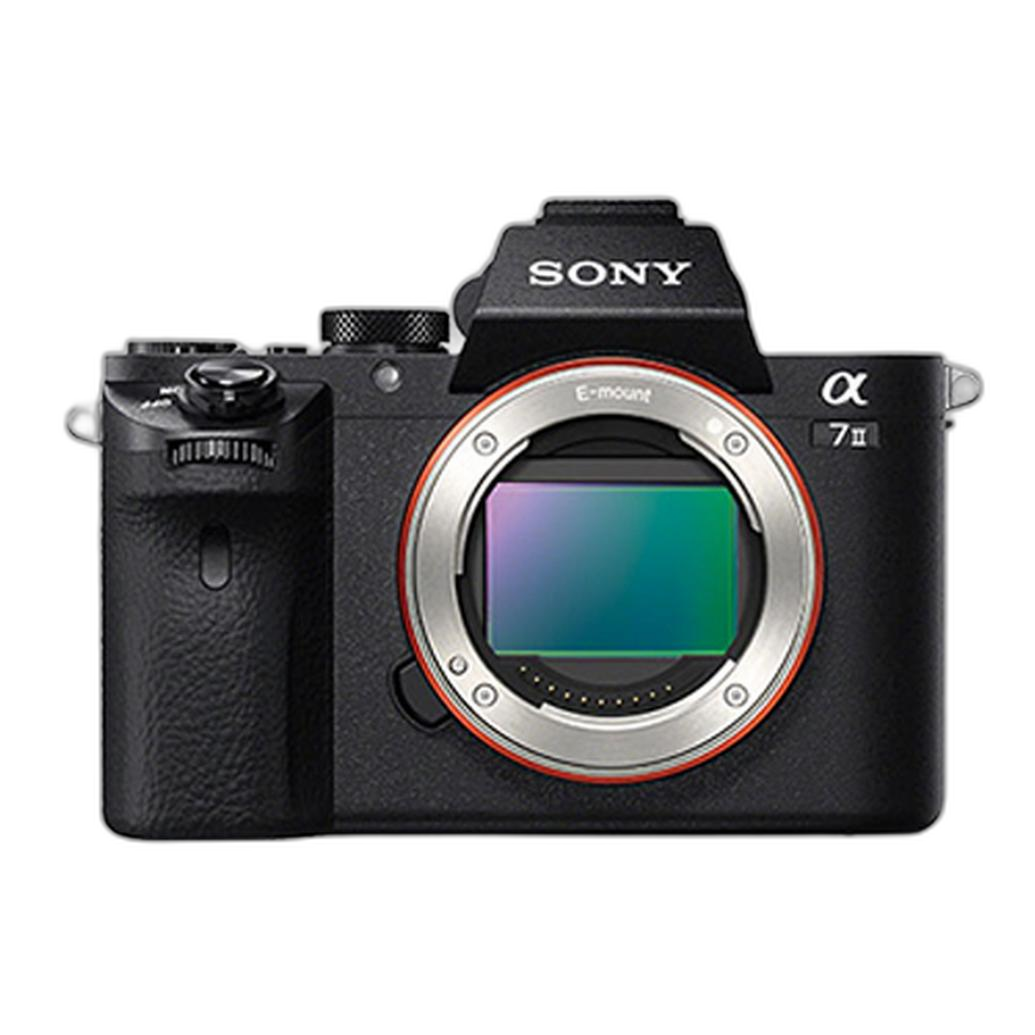
Sony has announced the a7 II, a 24.3MP full-frame mirrorless camera that marks an important first for the category: 5-axis in-body image stabilization in a full-frame interchangeable-lens camera. Introduced on November 20, 2014, the a7 II builds on the promise of the original Alpha 7 line while addressing one of the most practical concerns for everyday photographers—steady handheld shooting across a wide range of lenses.
At launch, the Sony a7 II arrives at $1,699, positioning it as a serious enthusiast and working photographer’s tool in the rapidly evolving full-frame mirrorless market. For photographers following Sony’s momentum in the FE system, this is more than a routine refresh; it is a statement about where the company sees the future of compact full-frame cameras.
A Landmark Update to the Alpha 7 Concept
When Sony introduced the original a7 series, it helped redefine expectations for full-frame cameras by bringing a 35mm sensor into a notably compact mirrorless body. The a7 II keeps that core idea intact but adds a feature long associated with smaller-sensor systems and select DSLRs: sensor-shift stabilization built directly into the camera body.
That headline feature matters because it expands stabilization benefits beyond any one lens design. With the a7 II, photographers using Sony E-mount full-frame lenses gain the advantages of in-body compensation without relying solely on optical stabilization in the lens itself. Just as importantly, the body-based approach broadens the appeal of adapted lenses, a significant point for many early Sony mirrorless users who were already pairing the system with rangefinder, SLR, and legacy glass from other mounts.
In 2014, this makes the a7 II one of the most noteworthy announcements in the mirrorless space—not simply because it is another full-frame camera, but because it moves stabilization into the body in a way that could influence how photographers think about system flexibility.
The First Full-Frame Camera with 5-Axis In-Body Stabilization
The defining technology in the Sony a7 II is its 5-axis in-body image stabilization, described at launch as the first such implementation in a full-frame camera. In practical terms, this system is designed to compensate for several kinds of camera movement that can soften images during handheld use.
For photographers, the significance is straightforward. A stabilized body can improve confidence in lower-light conditions, at slower shutter speeds, and in general handheld shooting where a little extra steadiness can make the difference between a keeper and a missed frame. This is especially relevant for the kind of travel, documentary, portrait, and walkaround photography that compact full-frame mirrorless cameras naturally encourage.
It also reinforces one of the strongest arguments for mirrorless systems in this era: versatility. Sony’s E mount was already becoming known as a flexible platform for adapters, and the addition of body-based stabilization gives that adaptability even more value. For photographers with existing lenses from other systems, the a7 II presents an especially intriguing proposition.
24.3MP Full-Frame Sensor and Sony E Mount
At the heart of the camera is a 24.3-megapixel full-frame sensor, a resolution point that continues to strike a practical balance between detail, file size, and broad photographic usability. For many shooters, 24 megapixels on a 35mm-format sensor is enough for serious editorial, commercial, portrait, and landscape work while remaining manageable in day-to-day production.
The camera uses the Sony E mount, specifically within Sony’s full-frame FE ecosystem. By late 2014, the strength of the mount is not just its native lens roadmap, but the way it invites experimentation. A short flange distance has made E mount particularly attractive for photographers adapting older lenses, and the a7 II’s stabilization feature only heightens that appeal.
This combination—full-frame imaging, a compact mirrorless form, and a mount known for flexibility—helps explain why the a7 series has attracted attention far beyond Sony’s traditional user base. DSLR shooters looking for a lighter system, enthusiasts seeking image quality without oversized bodies, and collectors of manual-focus lenses all have reasons to pay attention here.
A Camera Aimed at Real-World Shooting
What makes the a7 II especially compelling at announcement is that its improvements feel grounded in photographic practice rather than novelty alone. Full-frame image quality is already a strong selling point, but stabilization is the kind of feature photographers tend to appreciate more over time, as it quietly improves consistency across many situations.
That matters because the early full-frame mirrorless conversation was often dominated by size comparisons and sensor headlines. With the a7 II, Sony is also talking about usability—about making a full-frame camera more forgiving and more adaptable in the hand. That has implications for handheld available-light shooting, for travel photographers trying to pack lighter, and for anyone who wants full-frame output without feeling tied to tripod-heavy workflows.
In this way, the a7 II can be seen as a maturing of the original Alpha 7 idea. It is not merely about putting a large sensor in a small body; it is about making that body more capable as an everyday photographic tool.
Why the a7 II Matters in 2014
Seen in the context of 2014, the Sony a7 II stands out as one of the more consequential camera announcements of the year. The mirrorless market is still evolving quickly, and full-frame mirrorless remains a relatively new frontier. Sony’s willingness to move aggressively—especially with features that challenge assumptions about what full-frame systems should offer—has helped set the pace for the segment.
The a7 II’s announcement also underscores a broader industry shift. For years, high-end photography was largely defined by the DSLR, with mirrorless systems often framed as smaller alternatives for enthusiasts or travel users. The Alpha 7 series has been steadily changing that conversation, and the addition of 5-axis stabilization in a full-frame body makes that shift even harder to ignore.
For Sony, this is a strategic release. It strengthens the FE mount platform, gives existing Alpha users a meaningful upgrade path, and provides a powerful talking point against competing systems. For the industry at large, it suggests that mirrorless cameras are not only catching up to established formats, but beginning to lead in certain areas of innovation.
Launch Price and Market Position
At a launch price of $1,699, the Sony a7 II enters the market at a point that reflects its advanced positioning while remaining within reach of many serious enthusiasts. That pricing places considerable emphasis on value: a full-frame sensor, a compact mirrorless body, Sony E-mount compatibility, and a first-in-class stabilization system.
For buyers comparing systems in late 2014, the a7 II offers an unusually strong blend of headline innovation and practical benefit. It is the kind of release that may appeal not only to photographers already invested in Sony, but also to those considering their first step into full-frame.
An Archival Look Back
From today’s perspective, the Sony a7 II is easy to recognize as a pivotal camera in the evolution of the Alpha system. But even at the moment of its release, its importance was clear. Sony was not simply updating a successful model; it was expanding the capabilities expected from a full-frame camera body and strengthening the case for mirrorless as a professional and enthusiast format.
The Sony a7 II brought together a 24.3MP full-frame sensor, the adaptable Sony E mount, and a 5-axis in-body stabilization system that was genuinely historic for its class. In doing so, it signaled a more ambitious future for the Alpha line and for full-frame mirrorless photography as a whole.
To learn more about landmark cameras like the Sony a7 II, or to shop Sony gear and other leading imaging tools, visit Unique Photo.