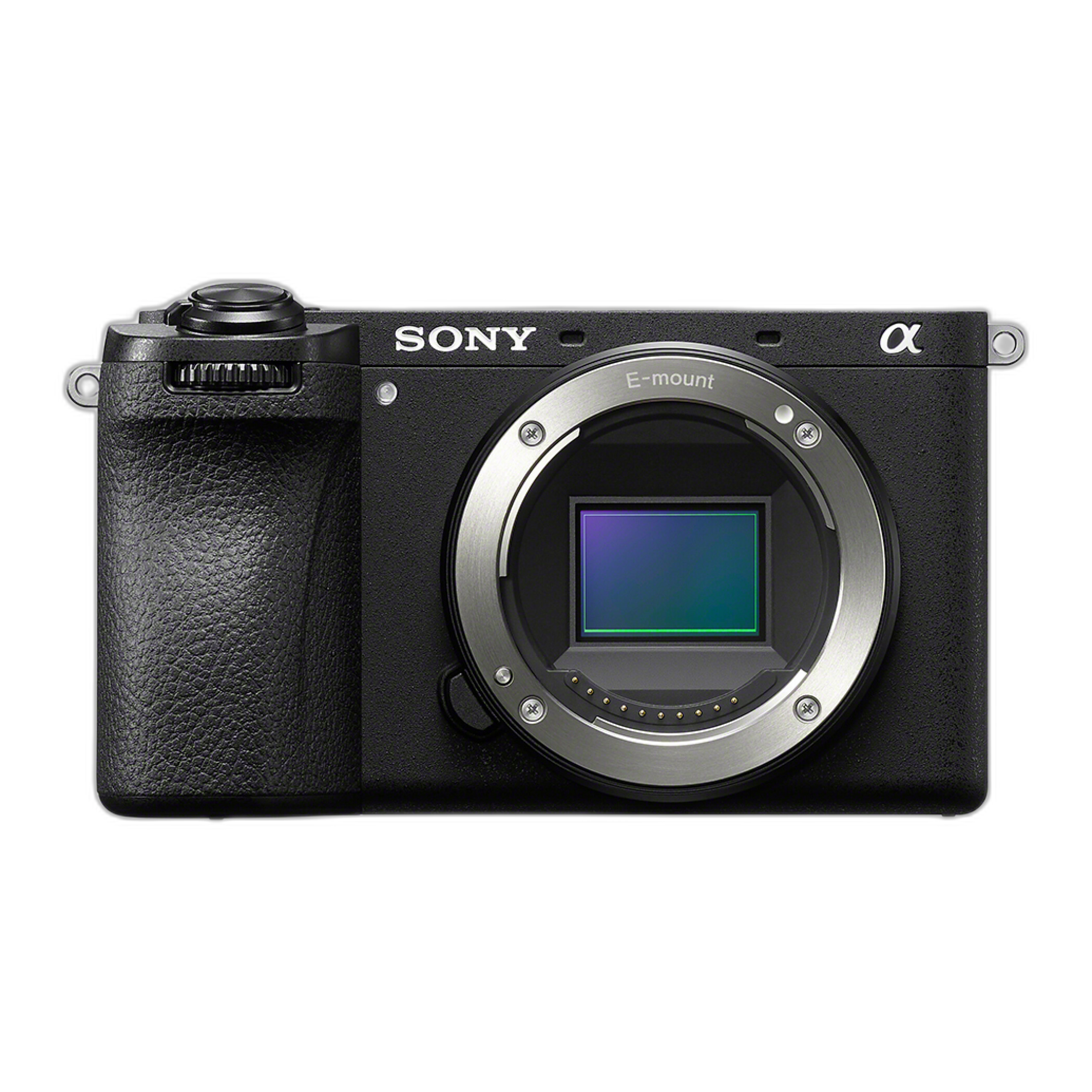
Sony’s APS-C mirrorless line took a major step forward in July 2023 with the announcement of the Sony a6700, a new flagship model for the company’s Alpha E-mount APS-C system. Positioned above earlier enthusiast favorites and aimed at hybrid shooters, the a6700 arrived with a compelling mix of speed, modern autofocus technology, and advanced video capability. With a 26MP APS-C sensor, 4K120 recording, Sony E-mount compatibility, and a launch price of $1,399, the camera immediately stood out as one of the most ambitious APS-C bodies Sony had produced.
At launch, the a6700 felt like a statement piece. Sony was not merely refreshing an existing model; it was reinforcing the idea that APS-C remained an important part of the Alpha ecosystem. For photographers and content creators who wanted high-end performance without moving to a larger full-frame body, the a6700 promised a balance of portability and capability that was highly attractive in the 2023 market.
A New Flagship for Sony APS-C
By the time of the a6700’s release on 2023-07-12, Sony’s APS-C line had already built a strong reputation among travel photographers, street shooters, vloggers, and filmmakers. Cameras such as the a6000 series had become well known for their compact form and strong autofocus, but many users had been waiting for a model that fully reflected Sony’s latest imaging and subject-recognition technologies.
The a6700 answered that demand. Sony presented it as the top APS-C Alpha body of its era, bringing many features associated with newer-generation Alpha cameras into a smaller format. This was especially significant for users invested in the Sony E mount, since the camera could work within the broad E-mount lens ecosystem while also taking advantage of the field-of-view characteristics and size benefits of the APS-C format.
26MP APS-C Sensor: Resolution with Practical Speed
At the heart of the a6700 is a 26MP APS-C sensor. That resolution put the camera in a sweet spot for a wide range of uses. It offered enough detail for serious still photography, including landscape, portrait, documentary, and commercial-oriented work, while avoiding the burden of unnecessarily large files for everyday shooting and hybrid production.
In practical terms, a 26MP APS-C sensor gave the a6700 broad appeal. For still photographers, it meant ample resolution for cropping and printing. For creators working across both photo and video, it suggested a camera built for flexibility rather than specialization alone. Sony’s APS-C sensor strategy had long emphasized balancing image quality, readout performance, and portability, and the a6700 continued that tradition in a notably modern form.
AI Autofocus as a Defining Launch Feature
One of the most talked-about aspects of the a6700 announcement was its AI-driven autofocus. By mid-2023, autofocus performance had become one of the key battlegrounds in mirrorless camera development, and Sony had already established itself as a leader in this category. The a6700 carried that momentum into the APS-C space in a meaningful way.
For release-period observers, this feature was especially important because it signaled that Sony was no longer reserving its most sophisticated subject-recognition tools only for larger or more expensive bodies. The inclusion of AI AF in the a6700 suggested that APS-C users—whether photographing people, movement, or fast-changing scenes—could expect a more intelligent and responsive shooting experience than had previously been common in the class.
This emphasis on autofocus also aligned neatly with the hybrid creator market. A camera that can reliably identify and track subjects is valuable not just for stills, but for solo video production, gimbal work, event coverage, and everyday content creation. In that sense, the a6700’s autofocus capabilities were central to its identity, not merely an added specification.
4K120 and Sony’s Hybrid-Creator Strategy
If the autofocus system made headlines, the a6700’s video specifications cemented its status as a serious hybrid tool. The camera offered 4K120 recording, a specification that immediately placed it in a more advanced category than many casual APS-C models. This feature made the a6700 especially relevant to filmmakers, social content creators, and multimedia shooters who wanted slow-motion possibilities while maintaining 4K resolution.
In 2023, 4K120 was not just a bullet point—it was a strong signal of intent. Sony clearly understood that many buyers no longer separated photo and video into entirely different workflows. A single compact body that could handle high-quality stills and advanced video was increasingly the ideal. The a6700 fit that expectation well, and its announcement reinforced Sony’s confidence in the hybrid market.
For existing Sony users, this also meant another attractive option within the E-mount system. Someone could build a kit around lightweight APS-C lenses for travel and everyday shooting, or pair the a6700 with select E-mount glass for a more ambitious production setup. That versatility has always been one of the E-mount system’s defining strengths.
Sony E Mount and System Value
The Sony E mount was already one of the camera industry’s most established mirrorless lens mounts by 2023, and the a6700 benefitted enormously from that maturity. A new camera body matters, but system depth often determines long-term value. By launching the a6700 within an ecosystem that included a wide range of Sony and third-party lenses, Sony made the camera more compelling from day one.
That mattered particularly for APS-C buyers. Instead of treating the format as an isolated tier, Sony positioned the a6700 as part of a larger Alpha universe. Users could start with compact APS-C lenses for mobility, then expand into broader creative options over time. Historically, this has been one of Sony’s strongest strategic advantages: a body launch can gain momentum quickly when buyers know the mount already offers broad support.
Launch Price and Market Position
With a launch price of $1,399, the Sony a6700 entered the market as a premium APS-C camera rather than a budget-oriented body. That pricing reflected both its ambitions and its target user. This was not designed as an entry point for casual upgraders alone; it was a camera meant for enthusiasts, serious hobbyists, and working creators who wanted flagship APS-C performance in a compact form.
Seen in historical context, that price positioned the a6700 as an investment in capability. Buyers were paying for a modern sensor, advanced autofocus, robust video specification, and access to the Sony E-mount ecosystem. In other words, Sony was asking customers to view APS-C not as a compromise, but as a deliberate format choice with genuine professional and creative advantages.
Why the a6700 Announcement Mattered
Announcements like this matter not only because of the product itself, but because of what they reveal about a company’s priorities. The a6700 showed that Sony continued to see strong value in APS-C mirrorless development even as full-frame cameras dominated much of the industry conversation. It suggested that smaller-format bodies could still serve as flagships in their own right when paired with cutting-edge features.
That message resonated with a broad audience in 2023. Travel shooters wanted a lighter camera without giving up sophisticated autofocus. Video creators wanted strong 4K capabilities in a compact package. Longtime Alpha users wanted an APS-C body that felt truly current. The a6700’s launch addressed all of those constituencies at once, which helps explain why it drew such immediate attention upon announcement.
Archival Perspective
Looking back at the release period, the Sony a6700 stands as an important entry in the Alpha lineup: a camera that reinforced Sony’s commitment to APS-C while bringing high-end autofocus and video features to a smaller body. Its combination of a 26MP APS-C sensor, AI AF, 4K120 video, and $1,399 launch pricing made it one of the standout APS-C announcements of 2023.
For photographers and creators following the market at the time, the a6700 felt less like a routine update and more like a reassertion of what Sony’s APS-C system could be. It represented a mature, modern interpretation of the format—fast, flexible, system-friendly, and clearly designed for hybrid image-making.
If you want to explore the Sony a6700, compare Alpha cameras, or learn more about Sony E-mount gear, Unique Photo is a great place to shop, research, and connect with knowledgeable camera experts.