If you shoot weddings, parties, corporate functions, live performances, or fast-moving social events, a bright standard zoom is usually the first lens you reach for. The challenge is deciding whether you need the widest possible range and premium build of a 24-70mm f/2.8-style lens, or the lighter, more compact value of a 28-75mm f/2.8. In this guide, we compare the Sigma 24-70mm f/2.8 Art concept versus the Tamron 28-75mm f/2.8 G2 for event photography, with a focus on what matters most in the real world: speed, flexibility, comfort over long shoots, and value.
While the exact Sigma 24-70mm f/2.8 Art product is not among the currently provided items, the comparison still makes sense for shoppers deciding between the traditional 24-70mm f/2.8 event-lens class and Tamron's highly practical 28-75mm f/2.8 G2. For photographers shopping at Unique Photo today, the Tamron 28-75mm f/2.8 G2 is the lens we can directly recommend from the available selection.
Why Event Photographers Compare These Two Lens Types
Event coverage is demanding. You may go from wide room shots to candid portraits in seconds, often in low light, and usually without the luxury of changing lenses. That's why both the 24-70mm f/2.8 and 28-75mm f/2.8 categories are so popular.
- 24-70mm f/2.8 lenses are known for maximum versatility, especially at the wide end.
- 28-75mm f/2.8 lenses often trade a little width for lower weight, lower cost, and easier all-day handling.
For event work, that tradeoff is more important than it sounds. Four millimeters at the wide end can matter on crowded dance floors or in tight prep rooms, but reduced size and weight can matter just as much after 8 to 10 hours on your feet.
Quick Comparison: 24-70mm f/2.8 Art vs. Tamron 28-75mm f/2.8 G2
| Feature | Sigma 24-70mm f/2.8 Art Class | Tamron 28-75mm f/2.8 G2 |
|---|---|---|
| Wide-end coverage | Advantage at 24mm for cramped interiors and large groups | Starts at 28mm, still useful but less spacious in tight venues |
| Tele-end reach | Typically 70mm | 75mm for a little extra portrait-friendly reach |
| Portability | Usually heavier and larger | Usually lighter and easier for long event days |
| Low-light capability | f/2.8 | f/2.8 |
| Event comfort | Strong for full coverage, but more fatiguing | Excellent balance for handheld, all-day shooting |
| Value | Often more premium-priced | Commonly stronger value proposition |
What Matters Most for Real Event Work
Choose the 24-70mm class if: you regularly photograph large groups in tight spaces, need maximum environmental coverage, or want the most traditional event focal range.
Choose the 28-75mm class if: you prioritize lighter carry weight, strong autofocus, flattering portrait framing, and a better price-to-performance ratio.
For many photographers, especially mirrorless users, the Tamron 28-75mm f/2.8 G2 hits the sweet spot. You lose some width compared to 24mm, but you gain a more travel-friendly and event-friendly package that is easier to live with over a full day of shooting.
Our Pick
Our Pick: Tamron 28-75mm f/2.8 G2
For most event photographers, the Tamron 28-75mm f/2.8 G2 is the smarter buy. It delivers the fast f/2.8 aperture professionals want, useful portrait reach at 75mm, and a more manageable size for long assignments. If you rarely feel limited by 28mm, the Tamron is an excellent workhorse lens for weddings, receptions, school events, private parties, and corporate coverage.
Recommended Lenses Available Now
Tamron A063 28-75mm f/2.8 Di III VXD G2 Lens (Sony E)
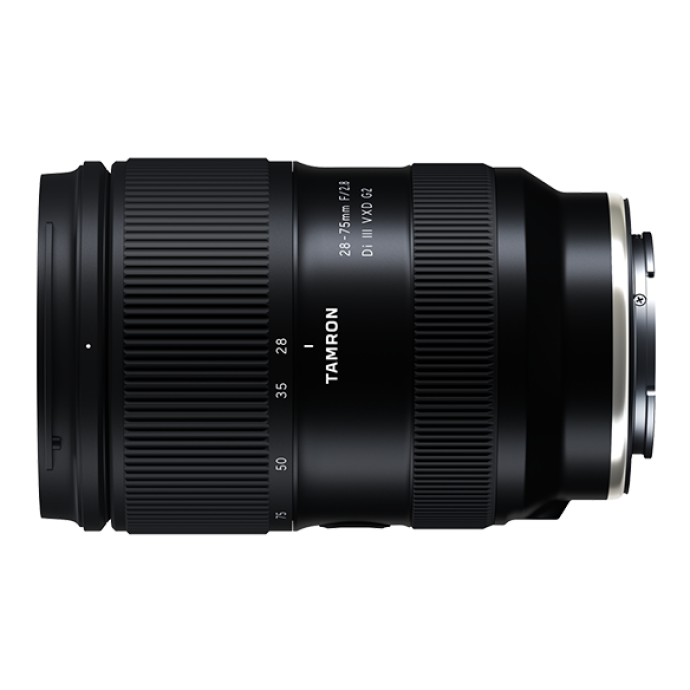
This is the most direct recommendation for Sony event photographers. The 28-75mm range covers key event moments well, from mid-wide candids to tighter portraits and detail shots. Tamron's G2 design is especially appealing if you want a standard zoom that stays fast at f/2.8 without becoming overly bulky.
- Ideal for Sony full-frame mirrorless event shooters
- Constant f/2.8 aperture for low light and subject separation
- 75mm reach is useful for candid reactions and portrait coverage
- Strong choice when you want to reduce fatigue during long weddings or events
Tamron A063 28-75mm f/2.8 Di III VXD G2 Lens (Nikon Z)
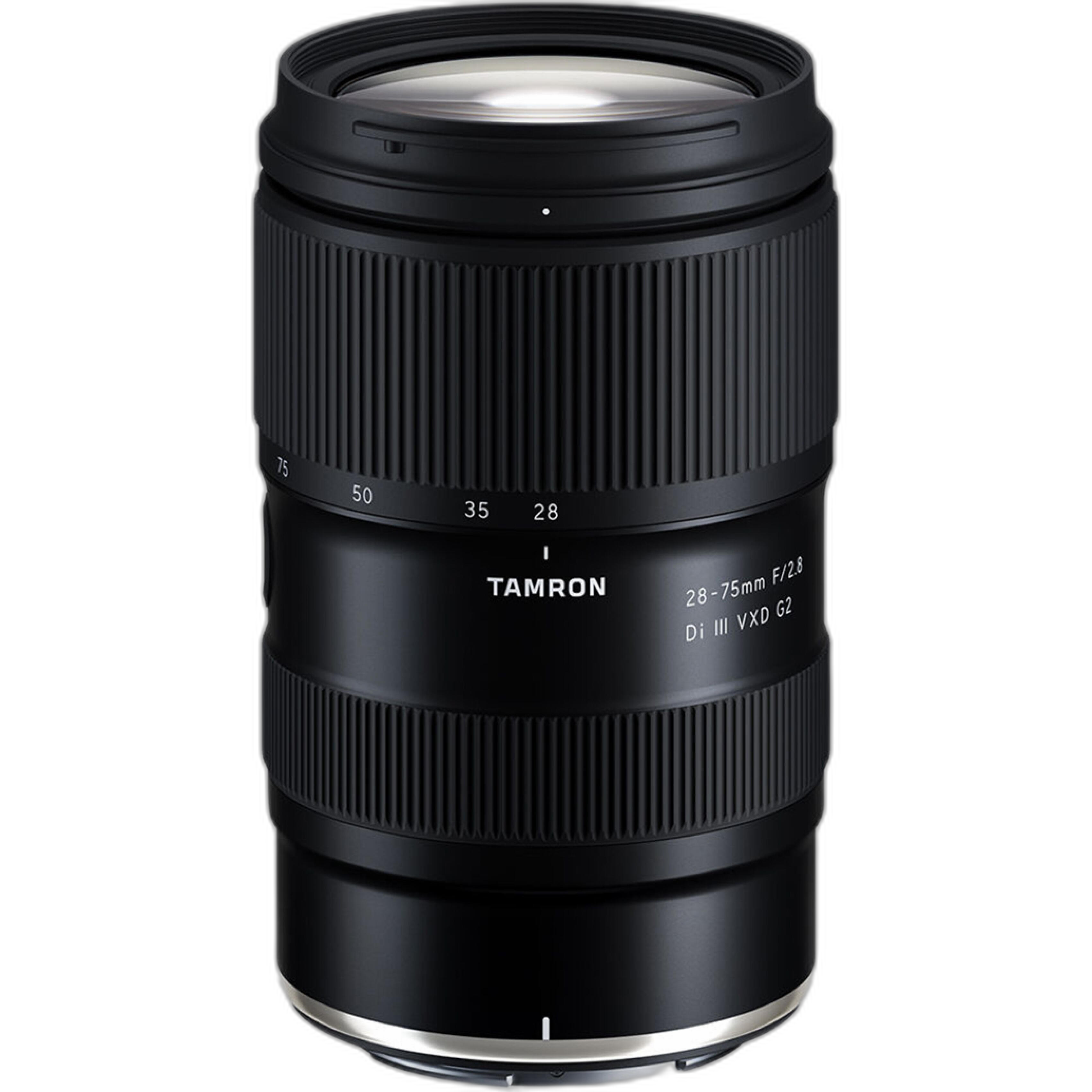
Nikon Z event photographers looking for a versatile standard zoom should take a close look at this version. It brings the same practical event-friendly formula to Nikon mirrorless users: bright f/2.8 performance, flexible framing, and a more compact alternative to heavier pro zoom options.
- Great fit for Nikon Z shooters covering weddings and live events
- Useful all-purpose range for candids, details, and portraits
- Compact design helps when moving constantly through crowded venues
- Excellent value for photographers building a capable event kit
Used Tamron A063 28-75mm f/2.8 Di III VXD G2 Lens for Sony E - Excellent

If you want the Tamron G2 experience while stretching your budget further, a used excellent-condition copy is a smart event-photography buy. This is especially attractive for second shooters, part-time professionals, and hybrid creators who want dependable fast glass without paying new-lens pricing.
- Excellent value for Sony E users
- Strong option for backup or second-body event setup
- Lets newer event photographers step into a professional aperture range affordably
Used Tamron 28-75mm f/2.8 Di III VXD G2 Lens (Nikon Z) - Excellent
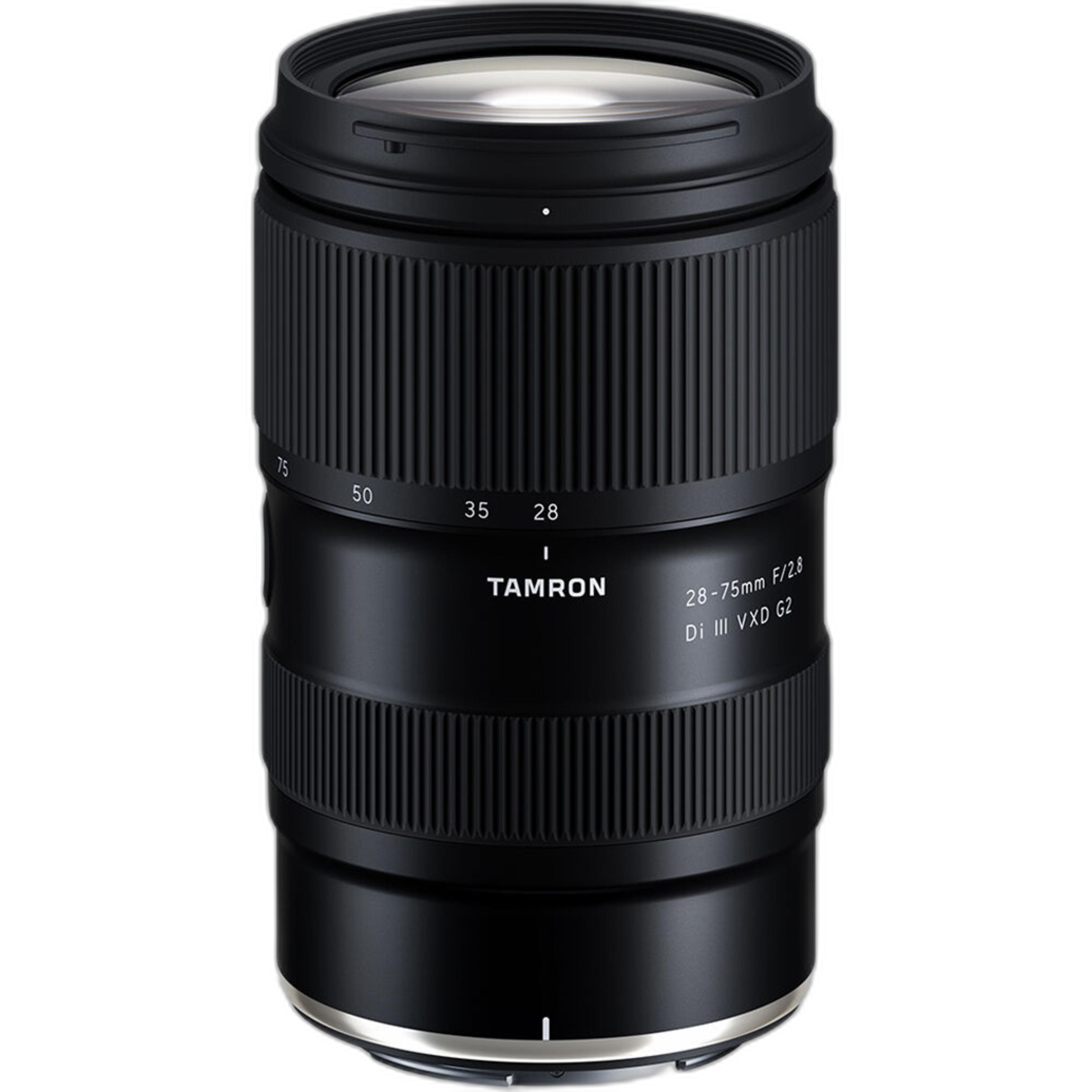
For Nikon Z photographers who want performance and savings, this used excellent-condition option deserves attention. Event gear takes real-world abuse, so buying quality used equipment from a trusted retailer can be one of the best ways to expand your setup responsibly.
- Smart value for Nikon Z event shooters
- Ideal as a primary standard zoom or backup body lens
- Great fit for photographers balancing cost and capability
Best Use Cases for the Tamron 28-75mm f/2.8 G2
The Tamron 28-75mm f/2.8 G2 is especially well suited to:
- Wedding coverage: prep, ceremony candids, reception details, and dance floor moments
- Corporate events: speakers, attendees, branding shots, and networking candids
- Private parties: portraits, table details, and room atmosphere
- School and community events: stage coverage, crowd interaction, and documentary-style shooting
Its biggest strength is balance. It may not be the widest standard zoom option, but for photographers who move constantly and shoot handheld for hours, that balance can be more valuable than a slightly wider field of view.
Should You Worry About Starting at 28mm Instead of 24mm?
Sometimes yes, but often less than you think. If you regularly work in very small hotel rooms, narrow prep spaces, packed receptions, or large group-photo scenarios, 24mm is undeniably useful. But many event shooters find that 28mm is plenty for most real assignments, especially when they pair the lens with good positioning or carry a separate ultra-wide only when needed.
In exchange, a 28-75mm lens often gives you a more comfortable carrying experience and a more approachable price point. For many buyers, that's a worthwhile compromise.
Who Should Buy Which?
Pick a Sigma 24-70mm f/2.8 Art-style lens if:
- You absolutely need 24mm coverage often
- You shoot cramped venues every week
- You want the classic pro event zoom range above all else
Pick the Tamron 28-75mm f/2.8 G2 if:
- You want a lighter, easier lens for long jobs
- You care about value without giving up f/2.8 speed
- You shoot a mix of portraits, candids, and general event coverage
- You want a strong everyday standard zoom that also excels at events
Conclusion
If your event photography depends on the widest possible standard zoom framing, the 24-70mm f/2.8 category still earns its reputation. But for many modern mirrorless shooters, the Tamron 28-75mm f/2.8 G2 is the more practical and cost-effective choice. It delivers the fast aperture, flexible range, and all-day usability that event photographers need, while keeping size and budget under better control.
For most shoppers deciding between these two styles of event lens, the Tamron comes out ahead on value and comfort. If you're ready to upgrade your event kit, Unique Photo is a great place to shop for the Tamron 28-75mm f/2.8 G2 in both new and used options for Sony E and Nikon Z.