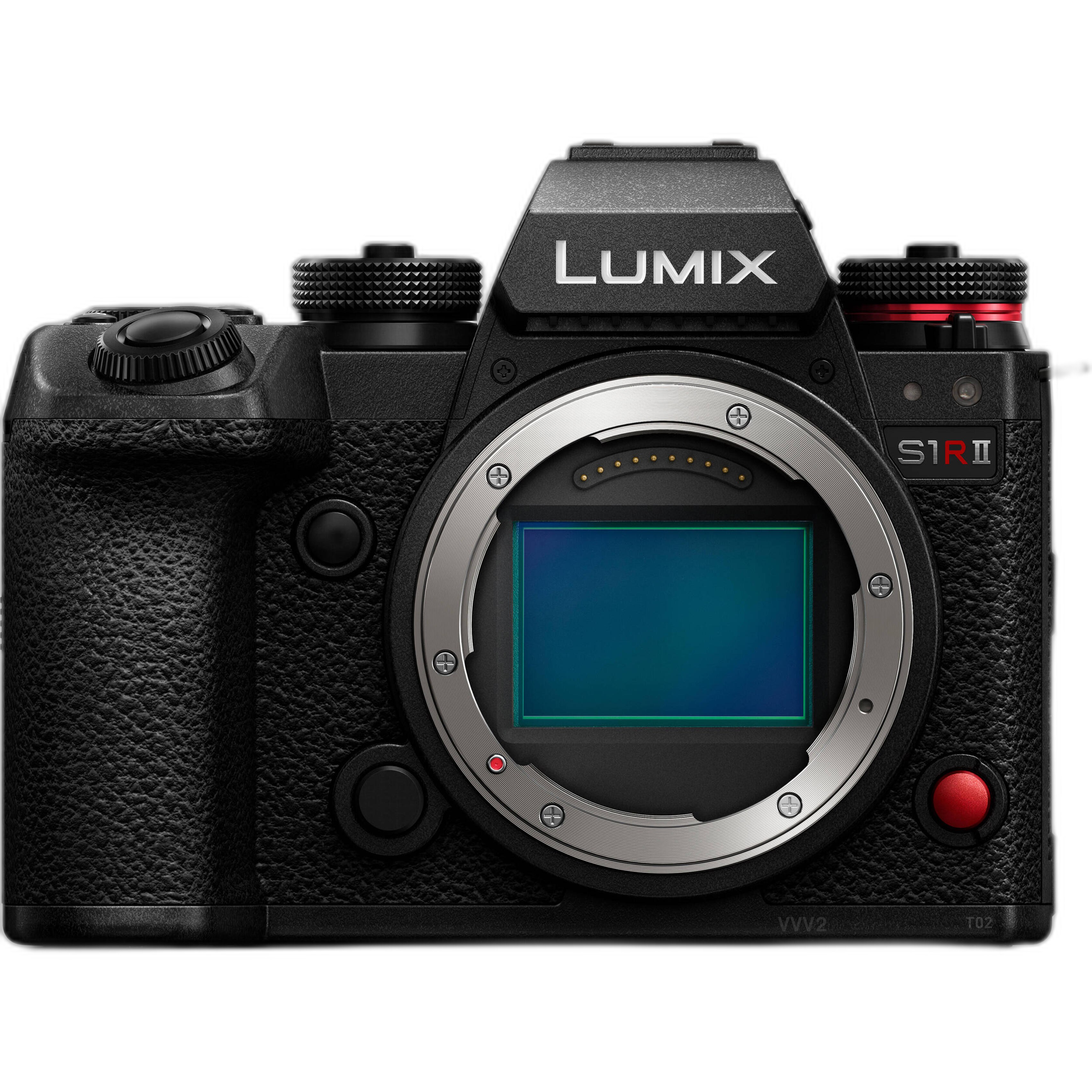
When Panasonic entered the full-frame mirrorless market in 2019, it did so with unusual ambition. Rather than treating its first 35mm-format system as a cautious side project, the company launched an entirely new line—the Lumix S series—built around the L-mount and aimed squarely at advanced enthusiasts, working photographers, and hybrid shooters who demanded robust video tools alongside high-end still performance. The debut of the Lumix S1 and Lumix S1R marked more than a product release: it was the formal beginning of Panasonic’s full-frame era.
Seen from today’s perspective, the Lumix S line has become one of the most interesting mirrorless families of the modern period. It is a system defined by deliberate evolution rather than rapid churn, with Panasonic steadily refining autofocus, video capability, body design, workflow features, and audience segmentation across multiple generations. For photographers and filmmakers trying to understand where each model fits, the history matters. This release-history hub looks at the Lumix S line chronologically, tracing how Panasonic established its place on the L-mount and how the system has developed from 2019 to the present.
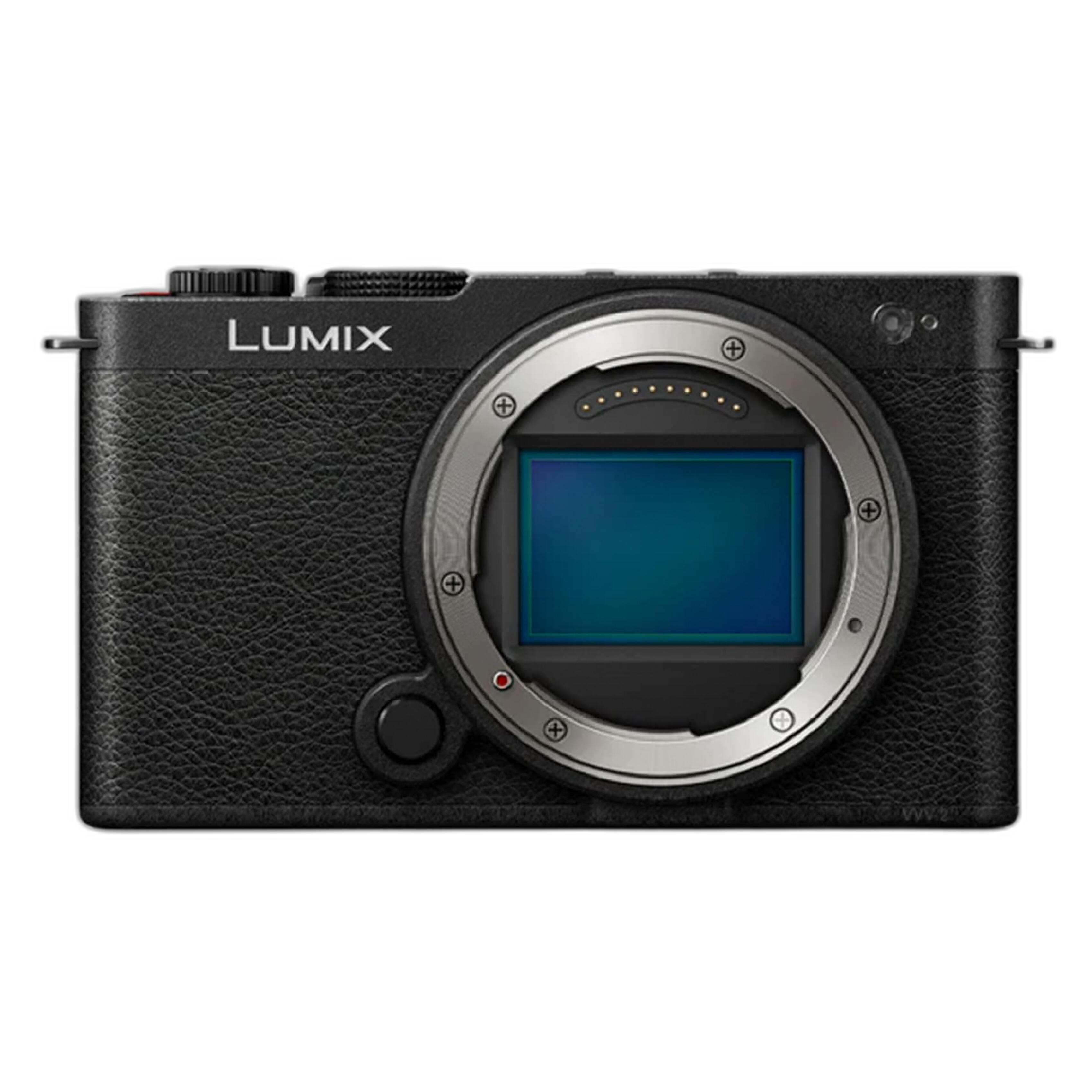
The Start of the Lumix S System in 2019
Panasonic’s full-frame story begins with the launch of the Lumix S1 and Lumix S1R in 2019. These were the first bodies in the line, and they set the tone immediately: substantial, professional-feeling cameras with weather-sealed construction, high-grade electronic viewfinders, strong handling, and a feature set that made it clear Panasonic was not simply adapting its Micro Four Thirds experience to a larger sensor. The company was building a new flagship-class platform.
The choice of the L-mount was central to that strategy. By joining the L-mount ecosystem, Panasonic placed the Lumix S line into a broader lens and camera alliance rather than creating a completely isolated mount from scratch. For buyers in 2019, that mattered. A new full-frame system can live or die by lens support, and Panasonic’s decision gave the S series a stronger starting foundation than many all-new mounts enjoyed at launch.
The two debut cameras were clearly differentiated. The Lumix S1 was positioned as the more versatile all-around body, while the Lumix S1R was aimed more directly at users who prioritized high-resolution still imaging. Even at launch, Panasonic was signaling that the Lumix S family would not be a one-size-fits-all proposition. Instead, it would be a platform with multiple branches: some bodies optimized for broad hybrid use, some for resolution, and later others for video-first creators.
Why the S1 and S1R Mattered
Historically, the significance of the S1 and S1R lies in how complete they felt as first-generation products. Many inaugural mirrorless systems launch with obvious compromises—limited ergonomics, a thin lens roadmap, or unclear market positioning. Panasonic avoided much of that. The S1/S1R generation arrived as mature tools, especially in terms of body design and operational confidence. They were large by mirrorless standards, but the size served a purpose: generous controls, strong battery life expectations, stability with larger lenses, and an overall handling experience that appealed to photographers accustomed to professional DSLRs.
At the same time, Panasonic carried forward the company’s established identity in video. Even for photographers evaluating the system primarily on still-image terms, it was impossible to ignore that Lumix had long been a respected name among filmmakers. The S line therefore launched with an expectation that video performance would be one of its defining themes—and over the next several years, Panasonic would continue to prove that point.
Establishing the Line: The Early Identity of Lumix S
In its earliest phase, the Lumix S system was defined by three key ideas. First, it was a full-frame expansion of Panasonic’s broader Lumix philosophy rather than a replacement for the company’s existing formats. Second, it was built around the L-mount, giving the system immediate relevance within a shared ecosystem. Third, it was designed from the outset to satisfy hybrid creators—users who did not want to choose between a serious stills camera and a serious video camera.
This last point is especially important in understanding the release history. Panasonic did not merely release successive cameras with incremental changes. Instead, it developed a family in which different bodies would speak to different types of photographers and videographers. That structure became more apparent as the line expanded beyond the S1 and S1R.
The Broadening of the System
After the initial 2019 launch, the Lumix S line began to take shape as a complete system rather than a pair of introductory bodies. In historical terms, this is when the line moved from announcement-stage promise to real market presence. Panasonic’s task was no longer just to prove it could make a full-frame mirrorless camera. It now had to show that the S system could grow, diversify, and remain competitive.
The broadening of the lineup followed a practical logic. Some users wanted a more accessible entry into full-frame Lumix. Others wanted a camera that leaned even more heavily into video production. Still others wanted Panasonic’s latest processing, autofocus development, and usability refinements in a body that felt more focused than the original launch models. The release history of Lumix S can therefore be read as a story of specialization within a shared platform.
The Rise of the Video-First S Models
One of the defining developments in the Lumix S lineage was Panasonic’s increasing emphasis on dedicated or semi-dedicated video-oriented bodies. This was not surprising. Panasonic already had strong credibility among filmmakers thanks to earlier Lumix lines, and the move to full-frame created an opportunity to translate that reputation into a new sensor format and market segment.
As the line evolved, Panasonic’s full-frame cameras became more clearly segmented. Some were designed as broad hybrid tools. Others were tuned to satisfy users whose priority was motion capture, professional codecs, production workflows, thermal management, and dependable on-set usability. This branch of the family helped make the Lumix S system distinctive. In a crowded full-frame mirrorless field, Panasonic could lean into what it knew especially well: building cameras that worked not only in photography but also in serious video production environments.
Historically, this specialization gave the Lumix S line a stronger identity. Rather than trying to imitate every competitor directly, Panasonic built a system that felt coherent with its own heritage. The line’s development reflected a company that understood its audience and knew that many modern creators expected one camera to play multiple roles—or expected a family of cameras to offer purpose-built options within a common mount.
How Each Generation Advanced the Lumix S Concept
Because this is a release-history hub, it is helpful to look at the line not simply as a list of bodies but as a sequence of refinements. Panasonic’s advancements across the Lumix S era can be grouped into several recurring themes.
1. Better Differentiation Within the Line
The S1 and S1R established the foundational split between a general-purpose model and a higher-resolution model. As the series matured, Panasonic became more confident about giving each body a clearer role. This benefited buyers. Instead of a lineup filled with nearly interchangeable cameras, the Lumix S family increasingly offered distinct tools for distinct workflows.
That differentiation also made the system easier to understand historically. The original launch pair introduced the platform. Later cameras expanded it into a more complete ecosystem, with stronger segmentation for hybrid shooters, still photographers, and dedicated video users.
2. Refinement of Hybrid Workflow
Panasonic’s full-frame strategy always involved hybrid capture, but over time the implementation became more polished. Successive Lumix S bodies generally improved how users moved between stills and video work, how settings could be managed, and how the camera integrated into a broader production workflow. This was important not only for solo creators but also for professionals who needed a camera to adapt to different assignments.
In archival hindsight, one of the most important achievements of the Lumix S line is that it helped normalize the idea that a professional full-frame camera could be designed around both still and motion needs without feeling compromised in either direction. Panasonic was hardly alone in pursuing that goal, but the company remained one of the clearest champions of it.
3. Operational Maturity
Another way the generations advanced was through overall usability. A camera system does not mature solely through headline features. Just as important are the small operational gains that make a camera more dependable in day-to-day use: menu organization, button layout, customization, display behavior, viewfinder experience, battery handling, media management, and the practical feel of the camera in the hand. Panasonic’s first-generation S bodies already felt serious in this regard, and the continuation of the line reinforced that sense of maturity.
For historical readers, this matters because it explains why the Lumix S line has often been appreciated not only for image-making capability but also for how thoughtfully the cameras are designed as tools. Panasonic’s releases have generally reflected a company that pays close attention to working use rather than chasing novelty alone.
4. Continued Commitment to the L-Mount Ecosystem
Every generation of the Lumix S story also reinforces the importance of the L-mount. The mount was not simply a launch detail in 2019; it remained fundamental to the line’s long-term relevance. In a system camera, bodies come and go, but the mount defines continuity. Panasonic’s commitment to the L-mount meant that Lumix S owners were buying into an ecosystem rather than a dead-end product cycle.
For historians of the digital camera market, this is one of the most notable aspects of the line. The full-frame mirrorless era has been marked by intense competition, and system security has been a major buying consideration. Panasonic’s use of the L-mount gave the Lumix S family a durable identity from the beginning.
The Lumix S1 and S1R in Context
To appreciate later generations, it is worth returning to the role of the original pair. The Lumix S1 and Lumix S1R were not merely first attempts. They were foundational statements about what Panasonic believed a premium full-frame mirrorless camera should be. In contrast to some rivals that emphasized compactness above all, Panasonic leaned into solidity, control, and confidence. These cameras announced that the company was willing to occupy a more robust end of the mirrorless spectrum.
That decision had long-term consequences for the release history. Once Panasonic defined the Lumix S line as a serious, high-performance platform, it gave itself room to branch in different directions. More accessible models could appear later without undermining the system’s flagship credibility, and more specialized video-focused models could emerge without seeming disconnected from the original vision.
The S1 and S1R therefore remain key reference points. They were the cameras that established the line’s physical and philosophical identity: full-frame, L-mount, professional-minded, and deeply conscious of hybrid use.
Who the Lumix S System Was For
Another useful way to understand the line historically is to ask whom Panasonic was speaking to at each stage. From the beginning, the Lumix S family appealed to several overlapping groups.
Photographers Moving Into Full-Frame Mirrorless
For photographers coming from DSLRs or from smaller-sensor systems, Lumix S represented Panasonic’s answer to the modern full-frame mirrorless question. The line offered a robust, premium-feeling platform that did not seem tentative. Buyers who wanted a substantial body, advanced electronic viewing, and a system designed for serious imaging could see immediately what Panasonic was trying to achieve.
Hybrid Creators
This may be the group most closely associated with the series. Many creators needed a camera that could shoot client portraits one day, capture commercial video the next, and handle personal travel or documentary work in between. The Lumix S line consistently aimed at that overlap. Even as Panasonic introduced more specialized bodies, the core appeal of the system remained hybrid flexibility.
Video Professionals and Filmmakers
As the line matured, Panasonic’s appeal to filmmakers became even more pronounced. The company’s full-frame bodies increasingly served users who cared about production reliability as much as sensor size or still-photography pedigree. That gave Lumix S a durable niche in a competitive market: it was a system where video was not an afterthought but part of the design brief from the start.
The Ongoing Historical Arc: 2019 to Present
From 2019 to the present, the history of Panasonic Lumix S can be summarized as a move from arrival to definition to maturity. The arrival came with the Lumix S1 / S1R in 2019, Panasonic’s first full-frame L-mount bodies. Definition came as the line expanded and Panasonic clarified which cameras were intended for resolution, which for all-around hybrid work, and which for more intensive video use. Maturity came as the system proved it could sustain that identity over time rather than serving as a one-off experiment.
That arc is worth emphasizing because the digital camera market is full of short-lived ambitions. Not every new line becomes a lasting system. Panasonic’s Lumix S did. Its continued development has confirmed that the 2019 launch was not just a headline-grabbing entrance into full-frame mirrorless, but the beginning of an enduring platform.
Why the Lumix S Release History Still Matters
For current buyers, release history is not merely trivia. It helps explain why the line feels the way it does today. The larger-bodied confidence of the early S series, the emphasis on hybrid capture, the serious treatment of video workflows, and the system-level importance of the L-mount all go back to choices Panasonic made at the start. Understanding those origins makes the present lineup easier to navigate.
It also highlights the consistency of Panasonic’s design philosophy. Across the years, the company has not constantly reinvented the Lumix S concept. Instead, it has refined and extended it. That gives the system a sense of continuity that many photographers and filmmakers value. When you buy into Lumix S, you are buying into a line with a recognizable character and a clear historical trajectory.
Final Thoughts
The Panasonic Lumix S story begins on March 31, 2019, with the introduction of the Lumix S1 and S1R as the first full-frame bodies in Panasonic’s L-mount system. From that moment forward, the company established itself as a serious contender in the full-frame mirrorless category. More importantly, it did so on its own terms: with substantial cameras, thoughtful controls, a hybrid-minded feature philosophy, and a clear commitment to users who expected strong video capability alongside still-image performance.
From those first bodies to the broader lineup that followed, the Lumix S family has developed into a mature and distinctive system. Its history is one of careful expansion, sharper differentiation, and growing confidence in what Panasonic does best. For photographers, filmmakers, and hybrid creators, that release history offers a useful roadmap to understanding the line today.
If you would like to explore Panasonic Lumix S cameras, lenses, and accessories—or learn more about the history of the L-mount system—Unique Photo is a great place to buy, compare, and get expert guidance.