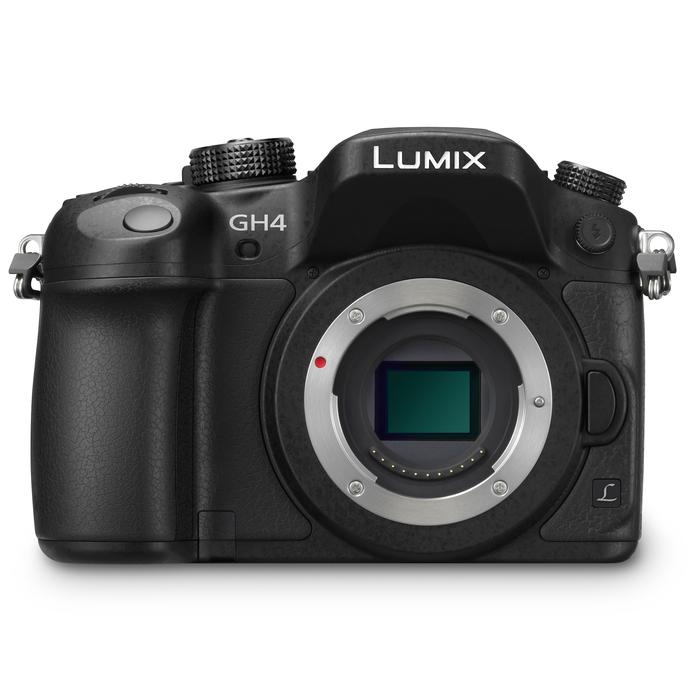
Panasonic has officially unveiled the Lumix GH4, a camera that immediately stands out as one of the most ambitious mirrorless announcements of 2014. For photographers and filmmakers who have watched the Lumix GH series evolve from a stills-first compact system into a serious multimedia platform, the GH4 feels like a major turning point. Most notably, Panasonic is bringing 4K video recording to a mirrorless interchangeable-lens camera in a way that directly targets hybrid shooters, small production teams, and independent creators who want high-end video capability without moving into the size and cost of traditional cinema systems.
Built around a 16MP Micro Four Thirds sensor and the versatile Micro Four Thirds mount, the GH4 arrives with a launch price of $1,699. That price places it in enthusiast and professional territory, but the feature set makes Panasonic's intent clear: this is not just an update for GH3 owners, but a statement camera for the future of compact video production.

A Landmark Mirrorless Announcement
What makes the GH4 such an important release is not simply that it is a new Lumix body. It is that Panasonic is pushing mirrorless technology into a category that, until now, has largely belonged to larger dedicated video cameras or more expensive professional systems. The headline feature is straightforward but historic: the GH4 is being introduced as the first hybrid mirrorless camera with 4K30 video.
That distinction matters. By 2014, the line between still photography and motion capture is becoming increasingly fluid. Wedding shooters, documentary filmmakers, journalists, multimedia creators, and commercial image-makers often need one camera that can do both jobs well. The GH series had already earned respect for video-friendly design, but the GH4 moves the conversation from "good video for a stills camera" to something much more consequential: a compact interchangeable-lens camera that places ultra-high-resolution recording at the center of its identity.
In practical terms, 4K acquisition offers more than just a larger frame. It opens up room for reframing, downsampling to highly detailed HD delivery, and future-proofing footage for evolving distribution standards. In 2014, 4K is still an emerging format for many shooters, but Panasonic is clearly betting that demand will grow quickly, and the GH4 is designed to meet that shift early.
The GH Series and Panasonic's Video Legacy
The significance of the GH4 also becomes clearer when viewed in the context of Panasonic's broader history. The company has long held a strong position in video, from broadcast and professional camcorders to consumer and prosumer products. The Lumix G line, introduced as part of the Micro Four Thirds system, gave Panasonic an ideal platform to explore what a compact interchangeable-lens camera could become when freed from the mechanical constraints of the DSLR mirror box.
The GH line, in particular, developed a reputation for doing more with video than many competing stills cameras. Earlier GH models attracted filmmakers because they combined interchangeable lenses, relatively compact bodies, and serious motion features in a package that could be rigged, adapted, and taken into a wide range of production environments. The GH4 now extends that trajectory in a way that feels less like an incremental revision and more like a defining generational leap.
That is why this announcement resonates beyond Panasonic's existing user base. The GH4 is not just for current Micro Four Thirds photographers; it is also a camera likely to attract users from DSLRs, camcorders, and even some cinema workflows that demand a smaller B-camera or travel-ready production tool.
16MP Micro Four Thirds Sensor and Hybrid Flexibility
At the core of the GH4 is a 16MP Micro Four Thirds sensor. That resolution keeps the camera comfortably in enthusiast and professional still-photo territory while also underscoring Panasonic's hybrid philosophy. Rather than chasing headline megapixel numbers for their own sake, the GH4 appears designed around balanced performance for both still imaging and advanced video capture.
The Micro Four Thirds mount remains one of the GH4's major advantages. By 2014, the system already offers a broad and growing lens ecosystem from Panasonic, Olympus, and third-party manufacturers. For buyers, that translates to real flexibility: compact primes for street and travel work, fast portrait lenses, ultra-wide options, telephoto zooms, and lenses tailored to video shooting styles. Because the mount has become one of mirrorless photography's most established standards, the GH4 enters the market not as an isolated body, but as a camera supported by a mature lens platform.
That system depth is especially important for hybrid shooters. A camera with strong video features only becomes truly versatile when users can choose from lenses suited to narrative work, event coverage, handheld documentary shooting, or lightweight gimbal setups. The GH4 benefits from arriving at a moment when Micro Four Thirds is no longer experimental; it is a proven system with clear practical advantages.
Why 4K30 Changes the Conversation
The GH4's defining feature, 4K30 video, is more than a specification for the brochure. It changes expectations for what a mirrorless camera can be. Until now, many photographers have viewed video on interchangeable-lens cameras as useful but secondary. Panasonic is arguing otherwise. With the GH4, video is central to the product's identity, and 4K recording becomes the reason many users will take a serious look at mirrorless for the first time.
For filmmakers, the appeal is easy to understand. A smaller camera body can fit into spaces that larger rigs cannot. It can be used more discreetly for documentary work, mounted more easily in cars or on stabilizers, and packed more efficiently for travel productions. If that same body can capture 4K internally while still functioning as a capable still camera, it becomes an unusually compelling tool.
For photographers, the GH4 also represents something broader: the arrival of a future-facing camera in a familiar photographic form factor. Even users who are not delivering in 4K today may recognize the value of recording at higher resolution for editing flexibility and long-term archival quality. Panasonic is effectively positioning the GH4 as a camera for the present and the near future at once.
Design, Market Position, and Intended Audience
With a $1,699 launch price, the GH4 is clearly aimed at serious users. This is not an entry-level mirrorless body meant to compete on compactness alone. Instead, Panasonic is targeting a segment that values performance, workflow flexibility, and professional ambition. The likely audience includes event shooters, multimedia journalists, commercial creators, wedding professionals, online video producers, and independent filmmakers looking for high-end results in a relatively compact package.
The camera's market positioning is especially notable because it arrives during a period when mirrorless is still fighting for recognition in some corners of the industry. DSLRs remain dominant in many professional circles, especially in North America, and yet the GH4 presents a strong argument that mirrorless is not merely a smaller alternative. In some areas, especially video, it may be the more forward-looking choice.
That could make the GH4 one of the most important bridge products of its era: a camera that persuades traditional still photographers to take mirrorless more seriously, while also giving filmmakers a reason to see a photographic camera as a credible production instrument.
An Early Historical Perspective
Seen from the vantage point of its announcement, the Panasonic Lumix GH4 feels like one of those releases that may define a category for years to come. Panasonic is not simply updating a popular model; it is making a strategic claim about where imaging is headed. By combining a 16MP Micro Four Thirds sensor, the Micro Four Thirds mount, and 4K30 video in a body priced at $1,699, the company is staking out a leadership role in the hybrid mirrorless market.
Historically, some cameras matter because they are best-in-class, while others matter because they alter expectations across the industry. The GH4 has every sign of being the latter. It enters 2014 not just as a new Lumix, but as a challenge to rival manufacturers and a signal that advanced video in compact interchangeable-lens cameras is no longer a niche concept. It is becoming the standard ambitious users will demand.
Final Thoughts
The Panasonic Lumix GH4 stands as one of the most consequential camera announcements of 2014, and potentially one of the most influential mirrorless models of its generation. As the first hybrid mirrorless camera with 4K30 video, it represents a genuine milestone in the convergence of stills and motion. For users invested in the Micro Four Thirds system, it is a bold new flagship. For everyone else, it is a compelling reason to pay close attention to what Panasonic is building.
If you want to follow the GH4's legacy, explore Panasonic gear, or learn more about the history of landmark camera releases, Unique Photo is a great place to buy, research, and stay connected to the evolving world of photography and video.