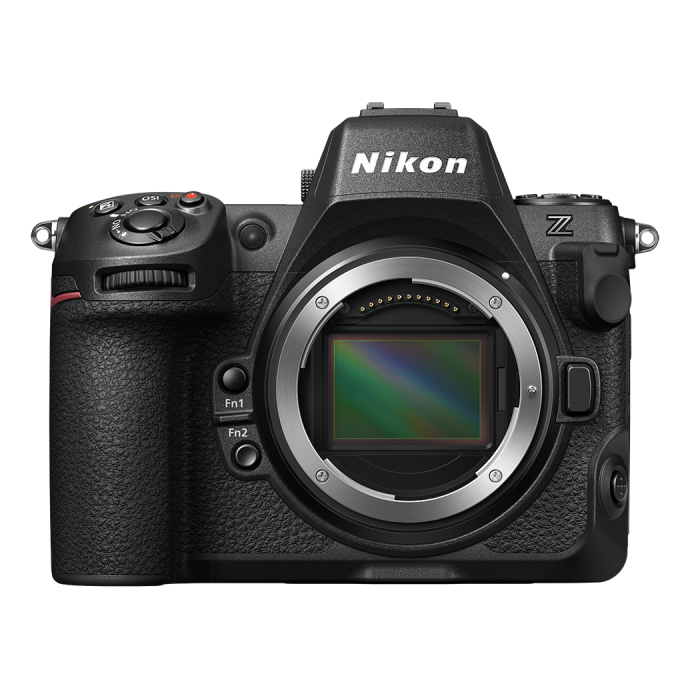
In May 2023, Nikon introduced the Z8, a camera that immediately drew attention for a simple reason: it brought much of the headline-making performance of the flagship Z9 into a smaller, more accessible body. For photographers and hybrid shooters who wanted top-tier speed, resolution, and video capability without the larger integrated-grip design of Nikon’s flagship, the Z8 arrived as one of the most important camera announcements of the year.
Positioned in Nikon’s Z mount mirrorless system, the Nikon Z8 was announced on 2023-05-10 with a launch price of $3,999 in the United States. At launch, its identity was clear. This was not merely a cut-down high-resolution camera, nor just a video-focused body. Instead, Nikon presented the Z8 as a serious all-around professional tool built around a 45.7MP stacked full-frame sensor and capable of 8K60 RAW video capture, giving it broad appeal across still photography, filmmaking, commercial work, events, wildlife, and sports.
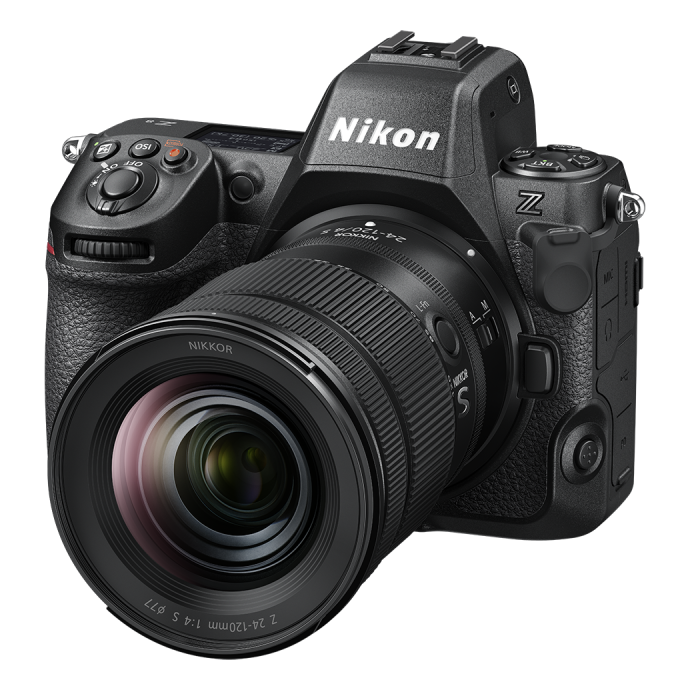
A Smaller Body With Big Expectations
The phrase most often associated with the Z8 at launch was straightforward: the Z9 in a smaller body. While every camera has its own handling and role, the comparison was natural from day one. Nikon’s Z9 had already established itself as a landmark camera for the company, and the Z8 was announced as a way to bring that level of sensor and processing ambition to users who preferred a more compact form factor.
That distinction mattered. The Z9’s integrated vertical grip made it a natural flagship for heavy-duty professional use, but not every photographer wanted or needed that size. The Z8 answered that demand directly. It offered a body style that was easier to pack, easier to carry over long days, and potentially more appealing to photographers moving between studio, location, travel, and handheld video work.
For Nikon, the Z8 also represented a deepening of the Z mount system’s maturity. By 2023, Nikon had already established the Z mount as the company’s mirrorless future, and the arrival of a body at this level signaled confidence not only in the mount itself, but in the growing ecosystem of lenses and accessories surrounding it.
The 45.7MP Stacked Full-Frame Sensor
At the center of the Nikon Z8 is its 45.7MP stacked full-frame sensor, one of the key reasons the camera generated such immediate excitement. Resolution at this level gave photographers room for large prints, commercial output, cropping flexibility, and detailed landscape or studio work. But what made the specification especially significant in 2023 was not just the megapixel count. It was the combination of high resolution with stacked sensor architecture.
Stacked sensors are associated with fast readout performance, and by the time of the Z8’s announcement, photographers had become increasingly aware of what that could mean in practical use. Faster readout benefits responsiveness and helps make high-end electronic shooting more viable for demanding subjects. In a market increasingly focused on hybrid performance, the Z8’s sensor put Nikon in a strong position.
Historically, this mattered because it reflected how much the mirrorless professional category had changed. A decade earlier, photographers often had to choose more starkly between speed, resolution, and advanced video capabilities. By 2023, cameras like the Z8 showed that manufacturers were working to collapse those categories into a single do-everything tool. Nikon’s announcement placed the Z8 firmly in that modern tradition.
8K60 RAW and the Hybrid Shooter Era
If the sensor was central to the Z8’s still-image appeal, its video specification made just as strong a statement. Nikon announced the Z8 with 8K60 RAW recording, a specification that instantly positioned it as a serious camera for advanced video creators as well as photographers.
That headline capability was notable not simply because 8K sounded impressive, but because it reflected a wider industry movement. High-end mirrorless cameras were no longer judged only by autofocus, burst rates, or image quality in stills. They were also measured by codec options, internal recording capabilities, thermal management, and professional workflow flexibility. By bringing 8K60 RAW to the Z8, Nikon made it clear that this was a camera intended for ambitious production environments, not just casual video capture.
For Nikon users already invested in the Z system, the Z8’s launch strengthened the case for staying within the ecosystem for both stills and motion. For photographers considering a move to mirrorless from DSLR systems, it underscored how far the category had progressed. The modern professional camera increasingly had to serve multiple disciplines, and the Z8 was announced as exactly that kind of machine.
The Nikon Z Mount Context
The Z8’s significance also has to be understood in the context of Nikon Z mount development. Nikon’s Z mount, introduced as the foundation for the company’s mirrorless future, had by 2023 become home to a growing range of lenses from compact primes to professional zooms and specialty optics. Every important body launch helped define what the mount stood for, and the Z8 helped sharpen that identity.
With a camera of this level, Nikon demonstrated that Z mount was not only for entry-level users, enthusiasts, or flagship buyers. It could support a broad professional lineup with distinct ergonomic options. The Z8 occupied a particularly strategic place in that lineup because it promised elite capability without requiring users to move to the largest pro body in the catalog.
That made the camera especially attractive to wedding photographers, editorial shooters, multimedia journalists, and travel-focused professionals who wanted premium output in a package easier to manage over long assignments. While buyers would naturally compare the Z8 to rival full-frame mirrorless cameras from other brands, Nikon’s strongest argument was internal: if you admired what the Z9 represented but wanted a smaller camera, the Z8 was the answer.
Launch Price and Market Position
At its $3,999 launch price in the U.S., the Nikon Z8 entered the market as a premium camera, but one that was clearly positioned below the flagship tier. In practical terms, that pricing made it one of the most closely watched announcements in the upper end of the mirrorless market in 2023.
The price told its own story. Nikon was not pitching the Z8 as a budget model or a compromise body. Instead, it was presented as a serious professional and enthusiast-grade camera for users who understood the value of a 45.7MP stacked full-frame sensor and advanced 8K60 RAW capability. It occupied the increasingly important space where many of the most exciting modern mirrorless cameras lived: expensive enough to be professional, but not out of reach in the same way as a flagship integrated-grip body.
From a historical standpoint, this was part of a larger trend in the camera market. As the interchangeable-lens camera segment narrowed and became more specialized, manufacturers focused more intensely on high-value, high-performance bodies. The Z8 fit that era perfectly. It was designed for users who were deeply invested in image-making and wanted one camera to handle a wide range of high-end demands.
Why the Z8 Announcement Mattered
The Nikon Z8 announcement mattered because it condensed many of the defining priorities of the early-2020s camera industry into one product. It offered high resolution, stacked-sensor speed, top-tier video ambition, and a mirrorless form factor that was more portable than a traditional flagship. It also showed Nikon confidently extending the strengths of its Z system rather than treating them as exclusive to a single top-of-the-line body.
For archival purposes, the Z8 stands as one of Nikon’s most significant announcements of 2023. It arrived at a moment when buyers increasingly expected hybrid performance without major compromises, and Nikon responded with a camera that looked designed to meet that expectation head-on. The shorthand description may have been “the Z9 in a smaller body,” but that phrase resonated because it captured a real market desire: flagship-class capability in a body more people would want to carry every day.
Final Thoughts
Seen from the perspective of its release period, the Nikon Z8 was one of the clearest statements Nikon could make about where its mirrorless system was headed. With its 45.7MP stacked full-frame sensor, Nikon Z mount, 8K60 RAW capability, and $3,999 launch price, it was announced as a camera built for serious creators who wanted fewer tradeoffs.
For photographers, filmmakers, and Nikon followers looking back at this important 2023 launch, the Z8 remains a landmark announcement in the Z mount timeline. To shop Nikon gear or learn more about cameras like the Z8, Unique Photo remains a trusted place to buy, compare, and stay connected to the history and future of photographic equipment.