Compare the Nikon Z5IIC, Fujifilm X-T50 and Sony Alpha a7 III on sensor resolution, burst speed, video options and kit pricing.
Prices: compare bodies with bodies, kits with kits
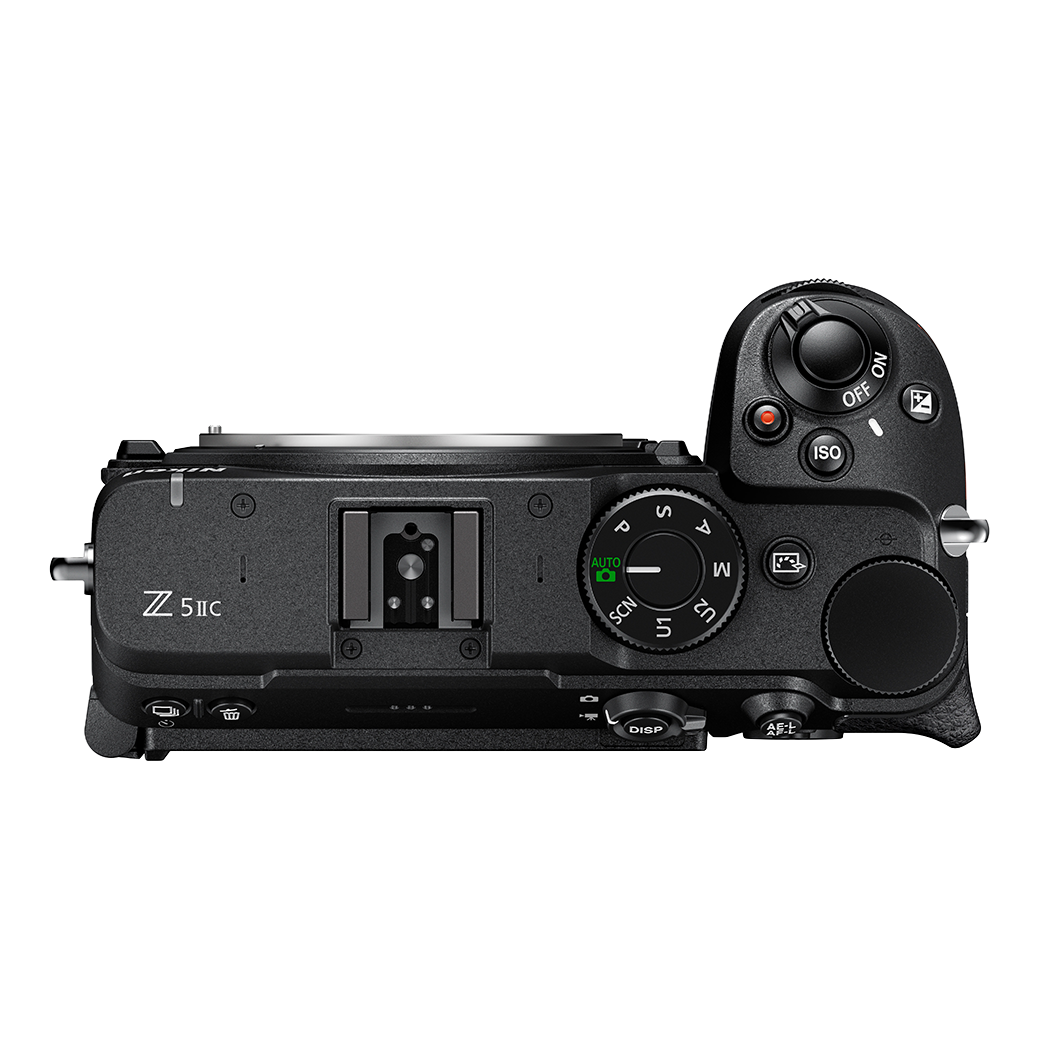
The Nikon Z5IIC Body - Black is $1,396.95. The Sony Alpha a7 III Mirrorless Digital Camera (Body Only) is $1,498, while the Fujifilm X-T50 Digital Camera (Silver) with XF 16-50mm Lens is $1,999. All three are in stock at Unique Photo.
The Fujifilm price includes a lens; those Nikon and Sony prices do not. A closer kit comparison is the Nikon Z5IIC with 24-50mm Kit - Black, in stock at $1,696.95 with a NIKKOR Z 24-50mm f/4-6.3 lens. Sony's body-only package includes a SanDisk Extreme Pro 64GB UHS-I SDXC card, a spare Sony NP-FZ100 battery and a Unique Photo camera bag.
Sensor resolution and specifications side by side
| Specification | Nikon Z5IIC | Fujifilm X-T50 | Sony Alpha a7 III |
|---|---|---|---|
| Resolution | 24.5MP | 40.2MP | 24.2MP |
| Sensor type | BSI-CMOS | APS-C X-Trans CMOS 5 HR | Exmor R BSI CMOS |
| Sensor dimensions | 35.9 × 23.9 mm | 23.5 × 15.7 mm | 35.6 × 23.8 mm |
| Lens mount | Nikon Z | Fujifilm X | Sony E |
| Continuous shooting | Up to 30 fps | Approx. 20 fps, electronic shutter, 1.29x crop | Up to 10 fps |
| Stabilization rating | Up to 7.5 stops | Up to 7.0 stops, CIPA standard, pitch/yaw shake only | Up to 5 stops, 5-axis sensor-shift |
| Rear screen | 3.2-inch vari-angle touchscreen | 3-inch tilt-type touchscreen | 3-inch tilting touchscreen LCD |
| 4K frame rate | 60p | 60p | 30p |
| Shared memory-card support | SD, SDHC, SDXC | SD, SDHC, SDXC | SD, SDHC, SDXC |
Nikon and Sony use similarly sized sensors with nearly identical pixel counts. The difference between 24.5MP and 24.2MP is not a useful reason to change lens systems. Fujifilm's smaller APS-C sensor carries 40.2MP, giving more pixels to work with for cropping or large output.
For someone who regularly trims a composition after shooting, that resolution difference deserves attention. It does not, by itself, establish better overall image quality. Sensor dimensions and pixel count answer different questions.
Burst rates and subject-detection autofocus
Nikon pairs EXPEED 7 processing with continuous shooting up to 30 fps. Fujifilm lists approximately 20 fps using the electronic shutter with a 1.29x crop, while Sony reaches 10 fps. Fujifilm's crop narrows the framing at that setting, so leaving room around a moving subject matters.
A higher burst rate provides more frames within a brief gesture or action sequence. It also provides more files to sort. The maximum rate alone does not establish how accurately a camera will focus throughout that sequence.
Nikon lists 10-type intelligent subject detection and autofocus down to -10EV. Fujifilm uses deep-learning AI-assisted subject detection. Sony's Fast Hybrid AF combines 693 phase-detection points with 425 contrast-detection points. Subject recognition and AF-point counts describe different parts of the focusing system, not interchangeable performance scores.
Stabilization and rear-screen movement
Nikon rates stabilization at up to 7.5 stops. Fujifilm lists up to 7.0 stops under the CIPA standard for pitch/yaw shake, and Sony rates its 5-axis system at up to 5 stops. These ratings concern camera shake, not subject movement. Stabilization can make a slower handheld exposure practical for a stationary interior; a person walking through it still needs an appropriate shutter speed.
The Nikon has a 3.2-inch vari-angle touchscreen. Fujifilm and Sony both use 3-inch tilting touchscreens. A vari-angle design offers more positioning freedom than a tilt-only screen, which matters when framing from awkward camera positions. For routine low-angle photography, a tilting screen may already provide the adjustment needed.
4K frame rates, N-RAW and 6.2K recording
Nikon records 4K/60p and offers 12-bit N-RAW video. Fujifilm also records 4K/60p, adding 6.2K/30p and 4:2:2 10-bit video. Sony records 4K at 30p. At Full HD resolution, Fujifilm offers 240p and Sony offers up to 120 fps.
For delivery in 4K, Nikon and Fujifilm offer the higher frame rate. Recording at 60p can provide smoother motion or allow footage to be slowed on a 30p timeline. Fujifilm's 6.2K option supplies extra recorded resolution for reframing a lower-resolution output.
Nikon's N-RAW option matters for buyers planning a raw-video workflow. Fujifilm's 4:2:2 10-bit recording is relevant to color work. Choose around the recording format the edit requires rather than treating resolution, frame rate and bit depth as one combined quality score.
Color controls and cloud connections
Nikon offers 31 Picture Controls and Film Grain Effects. Fujifilm provides 20 Film Simulations, including REALA ACE, with a dedicated Film Simulation dial for quick access. The preset count is not a quality ranking. Fujifilm's physical dial is the more useful detail for someone who frequently changes the selected look while shooting.
Nikon includes Nikon Imaging Cloud and SnapBridge. Fujifilm provides native Frame.io Camera to Cloud integration without accessory requirements. For a production already organized around Frame.io, that specific connection may carry more weight than either camera's color-preset count.
Who should choose each camera
Choose the Nikon Z5IIC if starting a Nikon Z setup and the 24-50mm kit covers the intended work. Its vari-angle screen and 4K/60p recording also make it a sensible choice for someone dividing time between still photography and video. The body-only option suits buyers who already have compatible lenses.
Choose the Fujifilm X-T50 if frequent cropping makes 40.2MP useful, or if direct access to Film Simulations is part of the appeal. Its package includes the XF 16-50mm lens, so judge the purchase as a camera-and-lens setup rather than comparing its price directly with a bare body.
Choose the Sony Alpha a7 III if compatible Sony E-mount lenses are already in the bag and 10 fps stills shooting with 4K/30p meets the job. The included spare battery and memory card are practical additions, but the lens-mount decision should come first.
Prices at Unique Photo
- Nikon Z5IIC Body - Black: $1,396.95
- Nikon Z5IIC with 24-50mm Kit - Black: $1,696.95
- Nikon Z5IIC with 24-50mm Kit - Silver: $1,696.95
- Nikon Z5IIC Body - Silver: $1,396.95
- Fujifilm X-T50 Digital Camera (Silver) with XF 16-50mm Lens: $1,999.00
- Sony Alpha a7 III Mirrorless Digital Camera (Body Only): $1,498.00
Prices as of October 21, 2026. Browse more: Nikon Z5IIC, Nikon at Unique Photo.
Related reading: Nikon Z5IIC Announced: Specs, Prices and Kits.
Frequently asked questions
Is the Nikon Z5IIC a full-frame camera?
Yes. The Nikon Z5IIC has a 24.5MP full-frame BSI-CMOS sensor measuring 35.9 × 23.9 mm.
Which has more megapixels, the Nikon Z5IIC or Fujifilm X-T50?
The Fujifilm X-T50 has 40.2MP, compared with 24.5MP for the Nikon Z5IIC.
Does the Sony Alpha a7 III have image stabilization?
Yes. It has 5-axis sensor-shift stabilization rated at up to 5 stops.
Which of these cameras records 4K at 60p?
The Nikon Z5IIC and Fujifilm X-T50 both record 4K/60p. The Sony Alpha a7 III records 4K at 30p.