Compare Nikon Z5IIC bodies and 24-50mm kits with five alternatives to see how lens coverage and video features affect the choice.
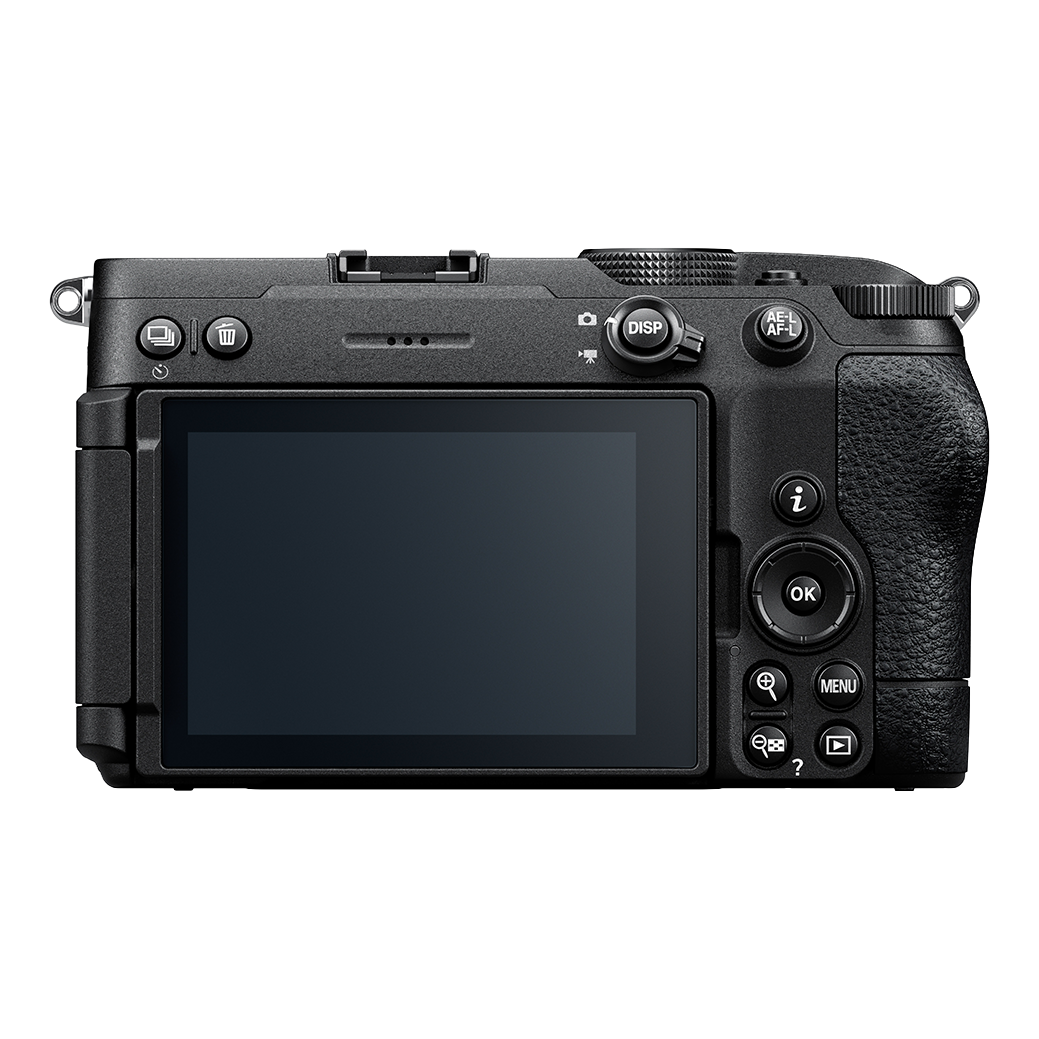
Nikon Z5IIC: body or 24-50mm kit?
The Nikon Z5IIC Body - Black and Nikon Z5IIC Body - Silver are $1,396.95 each. The Nikon Z5IIC with 24-50mm Kit - Black and Nikon Z5IIC with 24-50mm Kit - Silver are $1,696.95 each. All four are in stock at Unique Photo.
Choose the body if a Nikon Z lens is already accounted for. The kit makes more sense for someone starting without a lens, provided its 24-50mm f/4-6.3 range suits the job. That covers wide-angle through normal views on this full-frame camera, useful for everyday scenes but not a substitute for a long telephoto. Black and silver share the same sensor and recording features.
Every version has a 24.5MP full-frame BSI-CMOS sensor and EXPEED 7 processing, with continuous shooting up to 30 fps. Nikon lists autofocus down to -10 EV and intelligent detection of 10 subject types. The 3.2-inch vari-angle touchscreen gives more framing flexibility than a fixed screen when the camera is away from eye level.
The Z5IIC is a strong starting point for buyers who want full-frame stills with handheld stabilization and raw-video options. Nikon rates stabilization at up to 7.5 stops. It helps counter camera shake, not subject movement. Video features include 4K/60p and 12-bit N-RAW; the latter matters if raw video is part of the editing plan. For in-camera image styling, there are 31 Picture Controls and film grain effects.
Fujifilm X-E5: higher-resolution stills and a Film Simulation dial
The Fujifilm X-E5 Body Black is $1,699 and in stock. Its strongest argument against the Z5IIC is a 40.2MP sensor paired with a customizable Film Simulation dial that provides access to personal recipes. Choose it if high-resolution stills and direct control over image styling matter more than buying a full-frame body.
Those extra pixels provide more room to crop while retaining resolution. They do not make the sensor physically larger: the X-E5 uses a 23.5 × 15.6mm APS-C CMOS sensor and the Fujifilm X mount. This is a body purchase, so the lens needs its own budget.
The rangefinder-style layout includes an offset OLED viewfinder with 2.36 million dots and a machined aluminum top plate. Weight is approximately 445 g with battery and recording media. Fujifilm lists electronic-shutter shooting at approximately 20 fps with a 1.29x crop, an important qualification if burst speed is part of the decision.
Nikon Z5 with 24-200mm: prioritize one-lens coverage
The Nikon Z5 Mirrorless Digital Camera with 24-200mm Lens is $1,796.95 and in stock. This is the Nikon package to choose for broad coverage without changing lenses. Its included 24-200mm f/4-6.3 zoom reaches much farther into telephoto than the Z5IIC’s 24-50mm kit lens.
The camera has a 24.3MP full-frame CMOS sensor and EXPEED 6 processing. Continuous shooting tops out at 4.5 fps, versus the Z5IIC’s stated maximum of 30 fps. Video reaches 4K UHD/30p rather than 4K/60p. The buying argument is therefore the lens range, not matching the Z5IIC’s burst or video specifications.
The Z5 also provides five-axis sensor-shift stabilization and dual SD card slots supporting UHS-II. Its 3.6-million-dot OLED viewfinder is another concrete feature to weigh. For sightseeing with distant details mixed into wider scenes, the zoom range is useful. The lens alone weighs 570 g, so include that in the carrying decision rather than considering only the camera body.
Canon EOS R50 two-lens kit: the lowest entry price
The Canon EOS R50 Mirrorless Camera (Black) with RF-S 18-45mm and 55-210mm Lenses is $1,049 and in stock. It is the lowest-priced option here, and that price includes two zooms. Choose it when getting a camera with both everyday and telephoto coverage matters more than full-frame capture.
The R50 uses a 24.2MP APS-C CMOS sensor with DIGIC X processing. The 18-45mm lens provides a 35mm-equivalent range of 29-72mm; the 55-210mm supplies longer reach. Unlike the Z5’s 24-200mm package, moving between those ranges means changing lenses.
Canon lists Dual Pixel CMOS AF II with 651 AF zones and automatic detection of people, animals and vehicles. Electronic-shutter continuous shooting reaches approximately 15 fps. Video includes uncropped 4K at up to 30 fps, oversampled from 6K, plus Full HD at up to 120 fps. Movie for Close-up Demo Mode switches focus when a product is brought close to the camera, a useful distinction for someone filming demonstrations.
Canon EOS R8: full-frame video and framing guides
The Canon EOS R8 with Cropping Guide Firmware is $1,419 and in stock. It is the full-frame alternative to consider for Canon RF lenses and video work, with a 24.2MP CMOS sensor and Dual Pixel CMOS AF II.
Canon specifies uncropped 4K at up to 60 fps, oversampled from 6K. That makes it a more direct video comparison with the Z5IIC than the Z5’s 4K/30p specification. Canon lists a maximum movie recording time of two hours, while UVC/UAC compatibility supports webcam and streaming use.
This version comes with Cropping Guide firmware pre-installed. Its on-screen guidelines help position subjects consistently, which is useful for repeated compositions. The R8 also has a 3.0-inch vari-angle touchscreen and a 2.36-million-dot OLED viewfinder. Body weight is approximately 0.91 lb without the battery, memory card or body cap; do not mistake that figure for the weight of a complete shooting setup.
Fujifilm X-T50 kit: 40.2MP with a lens included
The Fujifilm X-T50 Digital Camera (Black) with XF 16-50mm Lens is $1,999 and in stock. It is the highest-priced package here, but it includes the 16-50mm lens rather than leaving the first lens purchase open. Choose it for high-resolution APS-C stills with a broader selection of video recording modes.
The 40.2MP X-Trans CMOS 5 HR sensor matches the X-E5’s pixel count. A dedicated Film Simulation dial provides access to 20 Film Simulations, including REALA ACE. Fujifilm rates in-body stabilization at up to seven stops under the CIPA standard for pitch and yaw shake.
Video specifications include 6.2K/30p, 4K/60p and Full HD/240p, along with 4:2:2 10-bit recording. The screen is a 3-inch tilt-type touchscreen, rather than the Z5IIC’s vari-angle design. The camera body weighs approximately 438 g including battery and memory card; that figure does not include the kit lens.
Choose the lens range before comparing body prices
Start with the lenses already owned and the framing needed most often. Nikon Z, Fujifilm X and Canon RF are different mounts, so settle lens compatibility before comparing camera prices. A body price and a kit price answer different budget questions.
For distant subjects, prioritize telephoto coverage over a faster burst number. For handheld static scenes, stabilization deserves attention; moving subjects still require an appropriate shutter speed. Video buyers should decide if 4K/30p covers the job or if 4K/60p is necessary. Raw-video capability matters only if the editing workflow will use it.
Prices at Unique Photo
- Nikon Z5IIC Body - Black: $1,396.95
- Nikon Z5IIC with 24-50mm Kit - Black: $1,696.95
- Nikon Z5IIC with 24-50mm Kit - Silver: $1,696.95
- Nikon Z5IIC Body - Silver: $1,396.95
- Fujifilm X-E5 Body Black: $1,699.00
- Nikon Z5 Mirrorless Digital Camera with 24-200mm Lens: $1,796.95
- Canon EOS R50 Mirrorless Camera (Black) with RF-S 18-45mm and 55-210mm Lenses: $1,049.00
- Canon EOS R8 with Cropping Guide Firmware: $1,419.00
- Fujifilm X-T50 Digital Camera (Black) with XF 16-50mm Lens: $1,999.00
Prices as of November 14, 2026. Browse more: Nikon Z5IIC, Nikon at Unique Photo.
Related reading: Nikon Z5IIC Announced: Specs, Prices and Kits.
Frequently asked questions
How much does the Nikon Z5IIC cost?
Black and silver bodies are $1,396.95 each. The black and silver 24-50mm kits are $1,696.95 each, and all four versions are in stock.
Is the Nikon Z5IIC a full-frame camera?
Yes. It has a 24.5MP BSI-CMOS full-frame sensor measuring 35.9 × 23.9mm.
What lens comes with the Nikon Z5IIC kit?
Both the black and silver kits include a NIKKOR Z 24-50mm f/4-6.3 lens.
Does the Nikon Z5IIC shoot 4K at 60p?
Yes, the Nikon Z5IIC supports 4K/60p recording. It also offers 12-bit N-RAW video.