When Nikon introduced the Nikkor Z 70-200mm f/2.8 VR S on January 7, 2020, it was more than just another fast telephoto zoom entering the catalog. It was a statement lens for the young Z system: a professional 70-200mm had arrived, and with it came a clearer picture of how seriously Nikon intended to push its mirrorless optics beyond the already high standards of its F-mount era. For working photographers, enthusiasts, and longtime Nikon users weighing the future of the system, this lens represented a familiar cornerstone reimagined for a new mount.
That familiarity matters. Few lens categories are as central to modern photography as the 70-200mm f/2.8. It is the do-everything telephoto zoom of weddings, sports, events, portraiture, journalism, and performance work. Every major camera maker is judged by how well it executes this formula. Nikon, of course, had deep history here in F-mount, where its professional 70-200mm zooms built a loyal following over multiple generations. The Nikkor Z 70-200mm f/2.8 VR S arrived with the difficult task of honoring that legacy while proving that the Z mount could do even better.
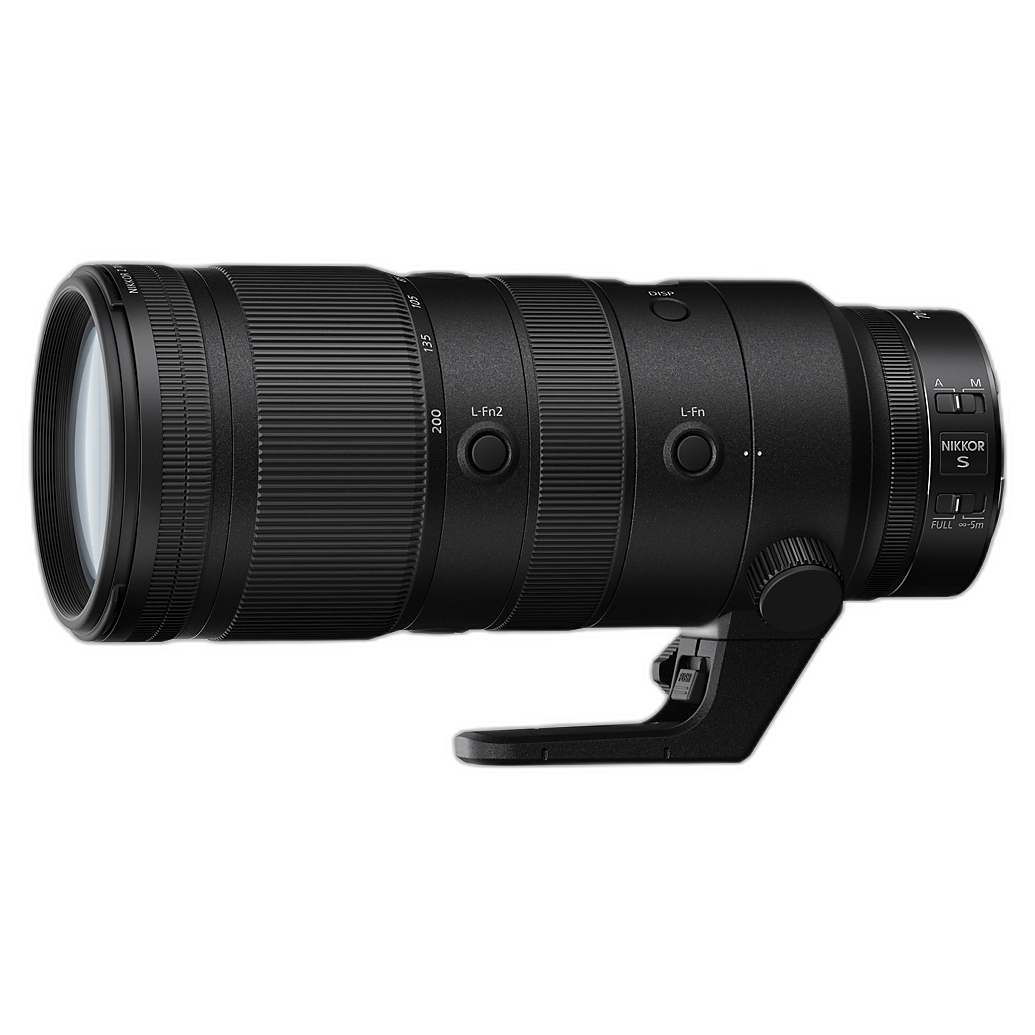
A Flagship Telephoto for the Z Era
On paper, the essentials were exactly what professionals expected: a 70-200mm focal range, a constant f/2.8 maximum aperture, built-in Vibration Reduction, and Nikon Z mount compatibility. Nikon launched the lens at $2,599 in the U.S., placing it squarely in the premium professional class. In practical terms, that positioned it not as a niche accessory but as one of the defining lenses of the system.
The timing was significant. By early 2020, Nikon had already established the broad intent of the Z system with fast primes and a growing lens roadmap, but a native 70-200mm f/2.8 is one of the lenses that many photographers wait for before fully committing to a mount. It is the kind of optic that signals maturity. For photojournalists covering live assignments, wedding photographers juggling ceremony and reception coverage, and portrait shooters who depend on compression and subject isolation, this was the lens that made the Z system feel complete in a more professional sense.
Why the 70-200mm f/2.8 Matters So Much
The category itself deserves a little historical context. The fast 70-200mm zoom became a modern standard because it combines range, speed, and versatility in a single package. At 70mm, it can frame environmental portraits and tighter event coverage; at 135mm and 200mm, it becomes a classic portrait and action focal length with pleasing compression. The constant f/2.8 aperture allows for relatively strong subject separation and dependable low-light use across the zoom range.
For decades, Nikon photographers relied on F-mount 70-200mm lenses as professional workhorses. Those lenses built Nikon’s reputation for reliability and image quality in real-world assignments. But mirrorless design opened new possibilities. A larger mount diameter and shorter flange distance gave optical designers more flexibility, especially at the edges of the frame and at closer focusing distances. As the Z system developed, Nikon repeatedly emphasized that its new mount was not just a convenience for mirrorless bodies; it was an optical opportunity. The Nikkor Z 70-200mm f/2.8 VR S became one of the clearest examples of that philosophy.
Outdoing the F-Mount Forebear
The title of this story is not casual praise. Around the lens’s introduction, much of the conversation centered on whether Nikon had merely translated its established F-mount formula into mirrorless form, or whether it had taken a meaningful step forward. The consensus among early observers and users was that Nikon had done more than adapt: it had refined. This lens quickly developed a reputation as one of the standout zooms in the Z lineup, with the sort of across-the-frame performance and close-range consistency that made even longtime DSLR users take notice.
That is where the phrase “outdid its F-mount forebear” becomes historically important. Nikon’s F-mount professional telephoto zooms were already highly respected, so surpassing them was no small feat. The Z version arrived in an era when mirrorless systems were under pressure to prove not only convenience and autofocus innovation, but also optical superiority. Nikon needed lenses that could make the case clearly. By early Z-system standards, this was one of them.
Part of the story is simply that the Z system was designed to let Nikon’s lens engineers work with fewer legacy constraints. Rather than building around the mechanical expectations of SLR design, the company could optimize a native mirrorless telephoto zoom for contemporary bodies and shooting methods. The result, in historical terms, was not merely a replacement for an existing 70-200mm but a benchmark lens that helped define Nikon’s second act in professional imaging.
Professional Use Cases at Launch
Seen from the release period, the Nikkor Z 70-200mm f/2.8 VR S was immediately legible as a lens for demanding assignments. Wedding photographers would have recognized it as an essential ceremony and reception tool, ideal for candid moments captured from a respectful distance and for portrait sessions that benefit from flattering perspective compression. Event shooters could rely on the 70-200mm range to isolate speakers, performers, and details without changing position constantly.
Sports and action photographers, too, had reason to pay attention. While a 70-200mm is not the longest lens in a field kit, it is often the first telephoto zoom professionals pack because of its flexibility. Indoor athletics, courtside work, sidelines coverage, and dynamic editorial assignments all live comfortably in this range. Add Vibration Reduction and a constant f/2.8 aperture, and the lens clearly addressed the practical needs of photographers working under varied and often less-than-ideal light.
Portrait photographers were another obvious audience. Nikon’s 70-200mm lineage has long been associated with elegant headshots and compressed outdoor portraits, and the Z version carried that tradition forward. At the same time, it signaled something broader: mirrorless did not mean compromising on the classic tools of professional portraiture. If anything, Nikon was making the case that the Z system could elevate them.
Where It Fit in Nikon’s Broader Z Strategy
Historically, every camera system needs a few hero products—gear that reassures existing users while attracting new ones. For Nikon’s Z mount, the 70-200mm f/2.8 VR S was precisely that sort of product. It complemented the system’s growing lineup of S-Line lenses and gave professionals confidence that Nikon was not treating mirrorless as an experiment or side branch. This was a native, premium, no-excuses telephoto zoom built for serious use.
Its January 2020 release also placed it at an interesting transitional moment in the camera industry. By then, mirrorless was no longer an emerging category but an increasingly dominant one, and manufacturers were expected to prove not just parity with DSLR systems but clear advantages. A high-performance 70-200mm f/2.8 is one of the most visible ways to make that argument. Nikon understood that, and the Nikkor Z 70-200mm f/2.8 VR S carried an outsized symbolic weight because of it.
Core Facts and Lasting Reputation
At a Glance
Lens: Nikkor Z 70-200mm f/2.8 VR S
Mount: Nikon Z
Focal Length: 70-200mm
Maximum Aperture: f/2.8
Vibration Reduction: Yes
U.S. Launch Price: $2,599
Release Date: January 7, 2020
Those facts tell the basic story, but the lens’s reputation has always depended on more than a checklist. What made it notable was how confidently it entered one of photography’s most competitive and scrutinized categories. It was a professional standard zoom with no ambiguity about its intended audience, and it arrived carrying the burden of Nikon history. By most accounts, it met that burden successfully.
A Milestone Lens for Nikon Mirrorless
Looking back, the Nikkor Z 70-200mm f/2.8 VR S stands as one of the lenses that helped legitimize Nikon’s mirrorless future in the eyes of demanding users. It took a classic professional focal range and translated it into the Z era with the kind of execution that encouraged comparison not just with rival brands, but with Nikon’s own best DSLR-era work. That is high praise, and in historical context, well-earned.
For photographers building a Nikon Z kit, this lens represented continuity and progress at once: continuity in its role as a dependable pro telephoto zoom, and progress in how convincingly it showed what the Z mount could deliver. To buy the Nikkor Z 70-200mm f/2.8 VR S or learn more about Nikon’s lens history and current lineup, visit Unique Photo.