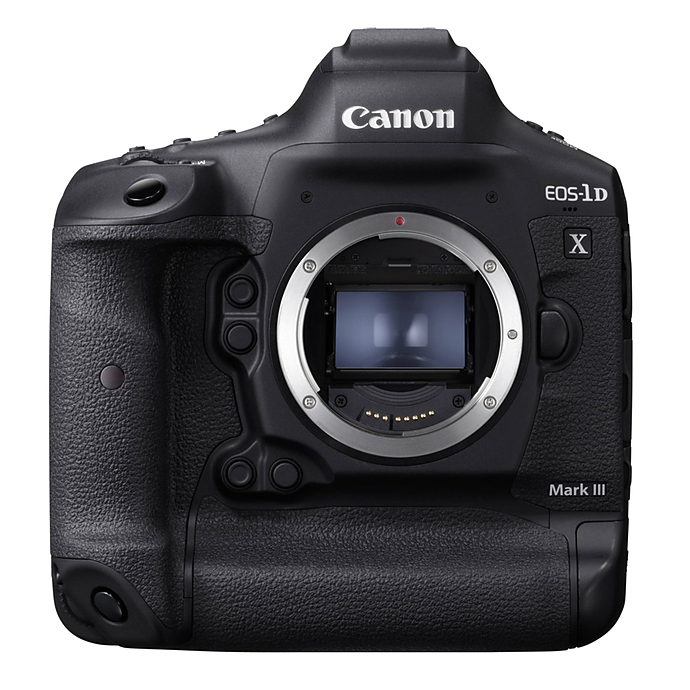
When Canon announced the EOS-1D X Mark III in early 2020, it arrived as both a statement of confidence and a fascinating turning point in camera history. For decades, Canon’s 1-series DSLRs had defined the professional standard for sports, wildlife, and news photography. They were the cameras seen on sidelines, at world events, and in the hands of photojournalists who needed speed, reliability, and durability above all else. With the EOS-1D X Mark III, Canon refined that formula to an extraordinary degree, producing what many immediately recognized as one of the most advanced DSLRs ever made.
Viewed from its release-era perspective, the EOS-1D X Mark III was not simply another flagship update. It was a camera designed to prove that the professional DSLR still had unmatched strengths in responsiveness, battery life, optical viewfinder shooting, and rugged dependability. At the same time, it showed just how much Canon had learned from the mirrorless era, especially in autofocus and video. In hindsight, that combination gives the 1D X Mark III a special place in Canon history: a late-era professional DSLR that fully embraced modern imaging expectations while staying true to the instincts of the press and sports photographers it was built to serve.
A Flagship Built for Working Professionals
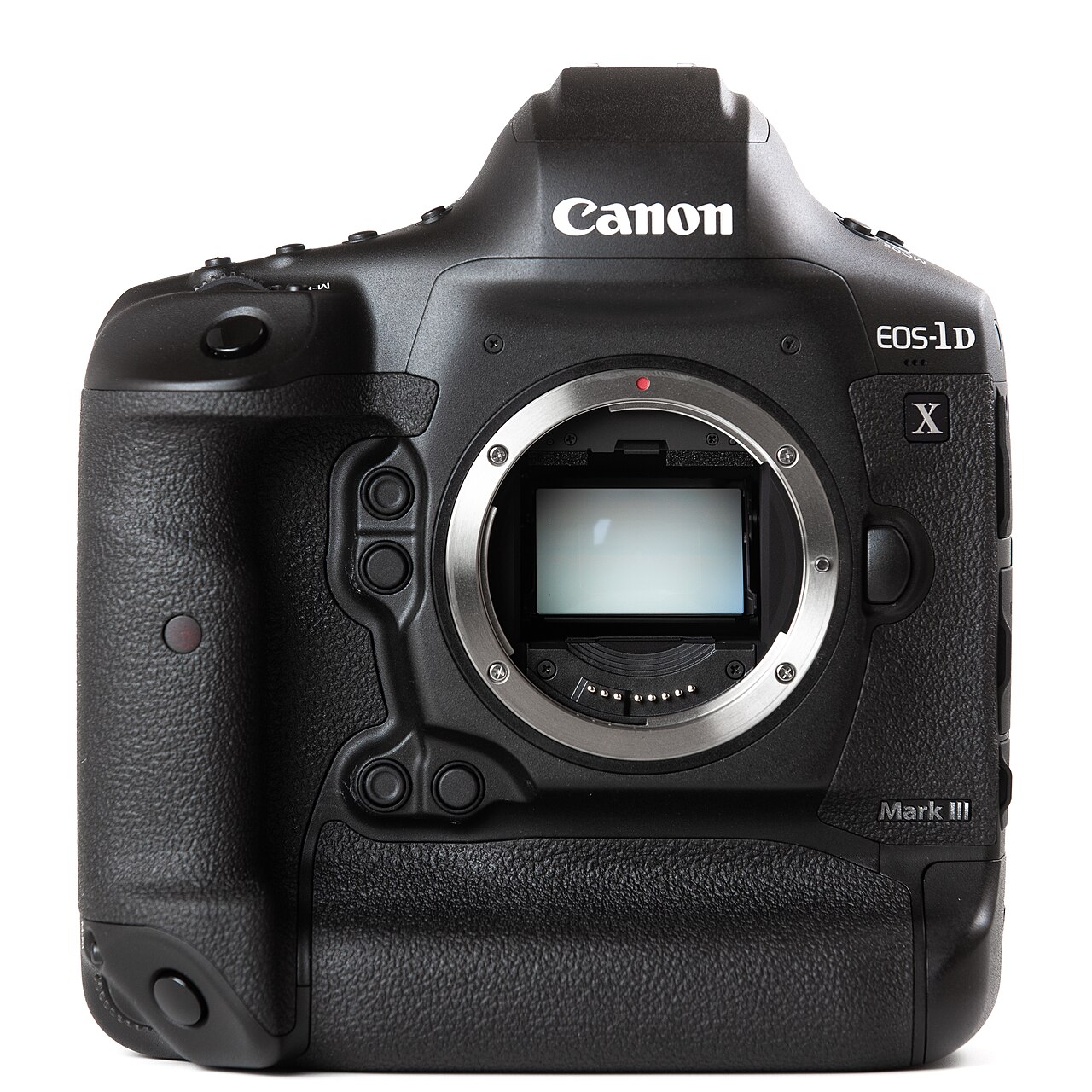
The Canon EOS-1D X Mark III was introduced on January 6, 2020, as the newest member of Canon’s long-running EOS-1 line. Its purpose was clear. This was a camera for photographers who make images under pressure, often in difficult conditions, and who cannot afford hesitation from their gear. The integrated-grip body, weather-sealed construction, and familiar 1-series ergonomics reflected Canon’s understanding of that audience.
Canon positioned the camera at a launch price of $6,499 in the United States, firmly in flagship territory. That price placed it among the most serious tools in the professional market, where buyers expected not novelty, but performance they could trust on assignment. In that context, the EOS-1D X Mark III was less about reinvention than about absolute refinement.
The Core Imaging Platform
20.1MP Full-Frame Sensor
At the heart of the EOS-1D X Mark III is a 20.1MP full-frame sensor. That resolution may have seemed modest beside higher-megapixel studio and landscape cameras of the era, but for Canon’s intended users it was a deliberate choice. Sports, action, and press photographers typically prioritize speed, low-light performance, workflow efficiency, and file handling over sheer pixel count. A 20.1MP full-frame sensor offered a strong balance: enough resolution for editorial and commercial use, while supporting the rapid readout and responsiveness demanded by fast-paced professional work.
This approach was entirely consistent with the 1-series philosophy. Canon was not chasing headline megapixel numbers here. Instead, it focused on building a camera that could deliver dependable image quality under real-world shooting conditions, whether from the stadium floor, the touchline, or a rain-soaked news event.
Speed as a Defining Feature
16 fps Through the Viewfinder, 20 fps in Live View
Perhaps the most immediately impressive specification at launch was the EOS-1D X Mark III’s shooting speed: up to 16 frames per second using the optical viewfinder, and up to 20 frames per second in Live View. Those figures placed it at the very top of DSLR performance and demonstrated how far Canon had pushed the format.
For sports and wildlife photographers, burst rate is not simply a bragging-rights number. It directly affects the odds of capturing the decisive moment: the split-second expression, the instant of impact, the exact wing position in flight, or the critical gesture in a political or breaking-news scene. In that sense, the EOS-1D X Mark III’s speed was central to its identity. It was designed to help professionals come back with the frame, not just a frame.
The distinction between 16 fps through the optical viewfinder and 20 fps in Live View also captured the camera’s transitional nature. It excelled in the traditional DSLR mode many professionals still preferred, while Live View performance hinted at Canon’s mirrorless future. This was a DSLR that had clearly absorbed lessons from a changing market.
Advanced Video in a DSLR Flagship
5.5K RAW Recording
One of the most striking release-period talking points was the EOS-1D X Mark III’s support for 5.5K RAW video. That feature underscored how much the expectations for professional still cameras had evolved by 2020. No longer was a flagship sports DSLR judged only on autofocus, frame rate, and durability. Hybrid capability mattered, and Canon ensured that the 1D X Mark III entered that conversation with serious intent.
5.5K RAW gave the camera an unusually ambitious video profile for a DSLR of its class. It suggested that Canon understood many working professionals were now expected to deliver both stills and high-end motion content, sometimes from the same assignment. For agencies, multimedia journalists, and commercial operators, this made the EOS-1D X Mark III more than a stills workhorse. It became a genuinely versatile production tool.
Historically, this is one of the reasons the camera remains so notable. It was one of the clearest examples of Canon bringing advanced video capability into a body whose heritage was grounded in still-photo journalism and sports coverage.
The Canon EF Mount at Full Maturity
A Peak-Era Professional EF Camera
The EOS-1D X Mark III uses the Canon EF mount, a system with one of the deepest lens ecosystems in photography. By 2020, the EF lineup was mature, extensive, and battle-tested. Professionals considering the 1D X Mark III were not just buying a camera body; they were investing in a platform supported by decades of lens development, accessories, and field experience.
That mattered enormously at launch. For long-time Canon professionals, the EOS-1D X Mark III represented continuity. Existing investments in super-telephoto EF lenses, fast zooms, and specialty optics transferred directly into the new flagship body. There was no adaptation question, no rebuilding of a kit from scratch, and no uncertainty about pro support around a widely used mount.
In retrospect, this also gives the camera a special place in Canon’s chronology. It stands as one of the final and finest expressions of the professional EF DSLR system before mirrorless bodies increasingly became the center of Canon’s high-end development.
Why the EOS-1D X Mark III Matters Historically
The phrase “the last great pro DSLR” resonates because the EOS-1D X Mark III arrived at a moment when mirrorless cameras were rapidly reshaping the industry. By early 2020, the debate was no longer whether mirrorless would matter at the professional level, but how quickly it would become dominant. Canon itself was already investing heavily in the RF ecosystem. Yet rather than treating the DSLR as obsolete, Canon delivered one final flagship that pushed the format to an extraordinary peak.
That is why the EOS-1D X Mark III deserves historical attention. It was not a compromised holdover. It was a fully serious, forward-looking professional machine that leveraged the classic DSLR strengths many photographers still valued: an optical viewfinder, robust battery endurance, familiar handling, and confidence under pressure. At the same time, it integrated advanced burst performance and headline-grabbing video capability in a way that made it feel contemporary, not nostalgic.
For some photographers, the EOS-1D X Mark III represented the ideal endpoint of the DSLR evolution. It took the design language and field logic of the 1-series and honed them with modern imaging technology. Even as mirrorless systems gained momentum, Canon’s message was unmistakable: the flagship DSLR still had something important to say.
An Archival View from the Release Era
Writing from around its release, the EOS-1D X Mark III felt like a camera made with complete clarity of purpose. It was not intended for every user, and Canon did not pretend otherwise. This was a flagship for professionals who needed speed, resilience, and a camera body built around real-world assignment demands. The 20.1MP full-frame sensor, 16 fps optical-viewfinder shooting, 20 fps Live View performance, 5.5K RAW video, and EF-mount compatibility all reinforced that mission.
At $6,499, it was a major investment, but one aligned with the expectations of photographers whose equipment is part of their livelihood. More importantly, it arrived as a definitive answer to a lingering industry question: if Canon were to build one of the ultimate professional DSLRs, what would it look like? The EOS-1D X Mark III was that answer.
Final Thoughts
The Canon EOS-1D X Mark III remains one of the most important late-era DSLRs ever released. It distilled decades of Canon professional camera design into a body that felt mature, purposeful, and remarkably advanced for its class. Whether remembered as the culmination of the EOS-1 lineage, a bridge between DSLR and mirrorless eras, or simply as a powerhouse for working shooters, it has earned its place in modern camera history.
If you want to learn more about landmark Canon cameras, explore professional camera systems, or shop Canon gear, Unique Photo is a great place to buy, compare, and discover the tools that have shaped photographic history.