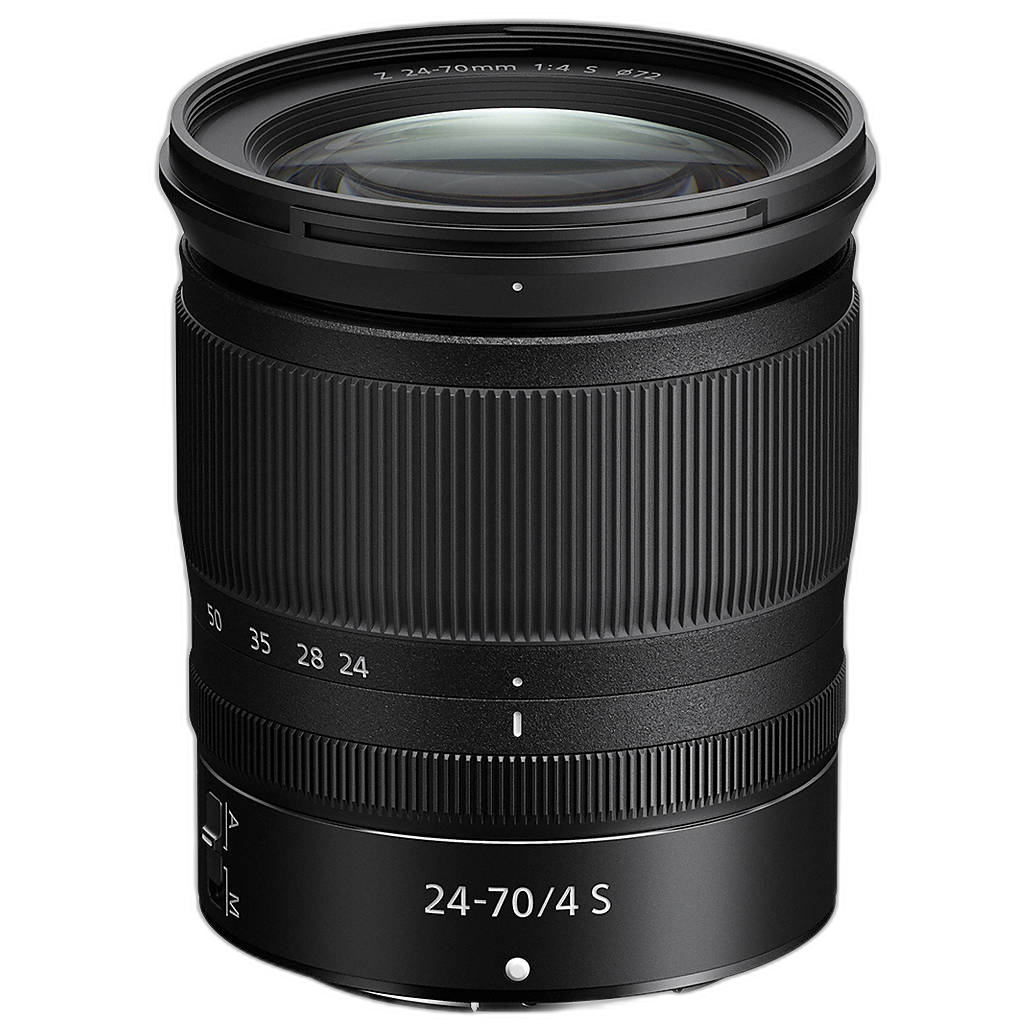
When Nikon introduced its full-frame Z system, one of the clearest questions from working photographers was how quickly the new mount would gain the professional lenses needed for daily assignments. A fast 24-70mm is the classic proving ground. It is the lens wedding photographers carry all day, the zoom photojournalists trust under pressure, and the all-purpose workhorse many professionals judge a system by. With the arrival of the Nikkor Z 24-70mm f/2.8 S on February 14, 2019, Nikon made an emphatic statement: the Z mount was not just about compact mirrorless bodies, but about delivering flagship optical performance in one of the most important categories in photography.
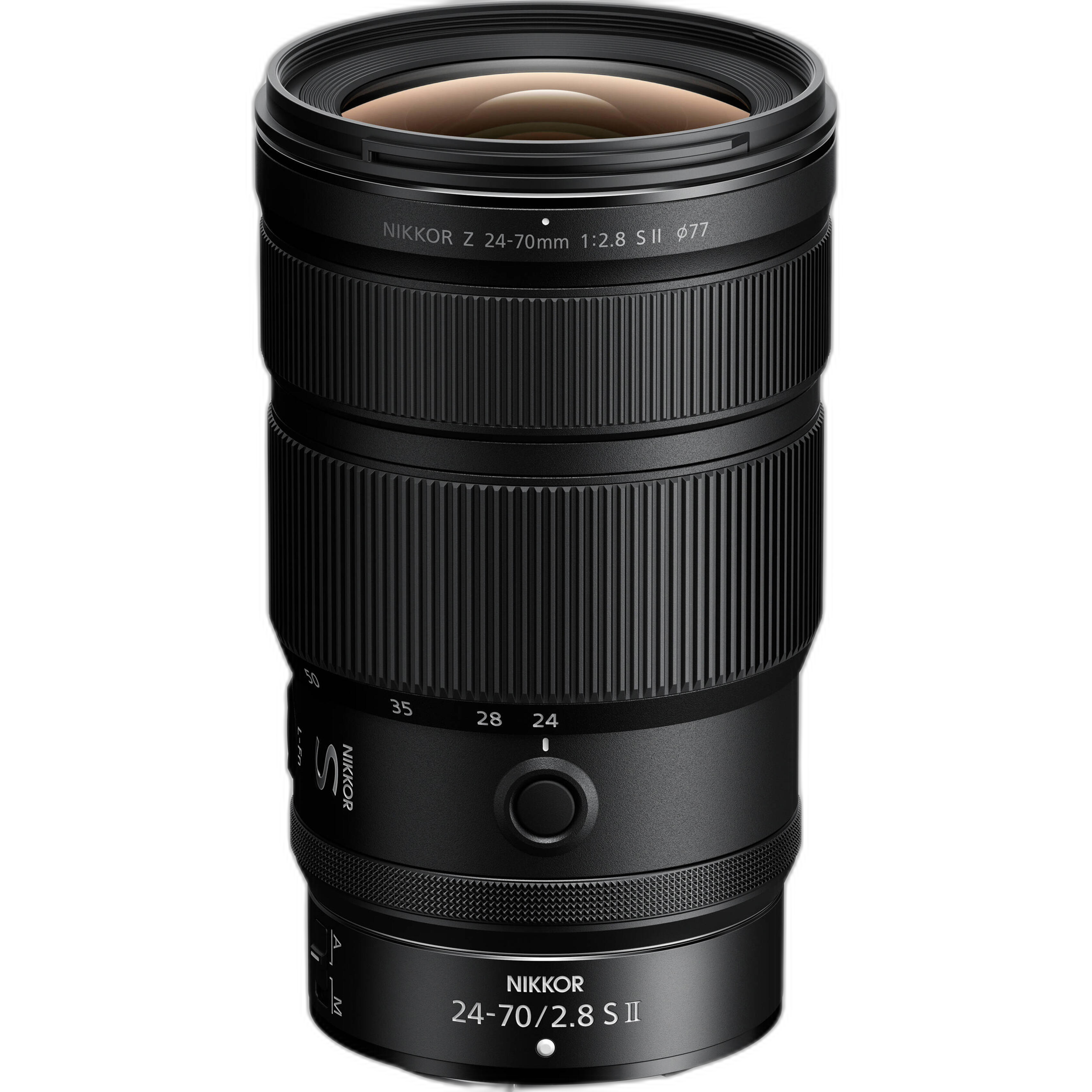
A Lens That Defines a System
Few lenses carry as much symbolic and practical weight as a 24-70mm f/2.8. The range spans wide environmental scenes, natural documentary perspectives, and short telephoto framing for portraits and details. Combined with a constant f/2.8 maximum aperture, it becomes the standard professional zoom: fast enough for available light, flexible enough for changing scenes, and versatile enough to stay mounted for most of the day.
In historical terms, Nikon users already understood the importance of this category through earlier F-mount generations. The Z-mount version, however, represented something more than a mirrorless translation of an established formula. It was an early opportunity for Nikon to show what the wider Z mount could do when paired with a premium standard zoom designed specifically for the system rather than adapted from DSLR assumptions.
At a launch price of $2,299, the Nikkor Z 24-70mm f/2.8 S was positioned squarely as a professional tool. Nikon was aiming this lens at serious enthusiasts and working photographers who expected durability, fast operation, and image quality that would justify the move into a new mount.
The Importance of 24-70mm in Real-World Photography
There is a reason nearly every serious camera system is judged by its fast standard zoom. A lens covering 24-70mm can handle architecture, travel, events, portraits, food, editorial work, and much more without the photographer needing to pause and swap optics. At 24mm, it can capture context and space. At 50mm, it gives a familiar, natural perspective. At 70mm, it compresses a scene just enough for flattering portraits and selective framing.
The constant f/2.8 aperture is just as central to its identity. Beyond low-light utility, f/2.8 offers consistency. Exposure remains stable as the lens zooms, and depth of field control is more predictable in fast-moving situations. For photographers shooting events, news, and commercial work, that consistency is not a luxury. It is a fundamental operational advantage.
What the S-Line Meant in the Early Z Era
Nikon's S-Line designation quickly became an important marker in the Z system. In the early mirrorless period, it signaled lenses intended to showcase the highest standards of optical and mechanical refinement within the mount. The Nikkor Z 24-70mm f/2.8 S was one of the most visible examples of that ambition, because its role was so central. If this lens performed at a truly top level, photographers could have confidence that the system itself was maturing rapidly.
Seen from the vantage point of its release period, the lens also helped reassure longtime Nikon shooters that the transition to mirrorless did not mean giving up the robust professional tools they depended on. Instead, Nikon was building a new foundation around a familiar but demanding category.
Designed for the Nikon Z Mount
The Nikon Z mount was one of the defining technical developments behind Nikon's mirrorless transition. Its larger diameter and short flange distance gave lens designers new flexibility, especially in pursuit of high image quality across the frame. While a standard zoom may not sound as glamorous as an exotic prime, it is one of the hardest designs to perfect because it must perform across a broad focal range and in a wide variety of subjects and working distances.
That is why the Nikkor Z 24-70mm f/2.8 S mattered so much. A premium standard zoom is where engineering promises meet real-world scrutiny. Edge-to-edge sharpness, control of aberrations, contrast, flare behavior, handling, focus confidence, and overall consistency all become highly visible in a lens of this type. From an archival perspective, this model stands as one of the key early tests of Nikon's Z-mount philosophy.
A Professional Lens for Professional Rhythm
Historically, the audience for a lens like this is easy to identify. Wedding photographers need a zoom that moves from establishing shots to candid moments and portrait coverage without hesitation. Photojournalists need responsiveness and reliability over a long day in changing conditions. Commercial shooters need a standard zoom that can produce polished files with minimal compromise. Advanced enthusiasts want one lens that can do nearly everything at a very high level.
The Nikkor Z 24-70mm f/2.8 S arrived to serve exactly that rhythm of use. It was not conceived as an entry-level convenience zoom, but as the kind of lens many photographers would build a working kit around. In practical terms, it complemented the broader idea of a professional Z kit in which a fast standard zoom would sit between wide-angle and telephoto companions.
Positioning Within Nikon's Legacy
Nikon has a long history with professional standard zooms, and that lineage gave this lens additional weight at launch. Nikkor 24-70mm f/2.8 lenses for the F mount had become staples in countless professional bags over the years. The Z version therefore entered the market with expectations shaped by years of Nikon professional use in journalism, sports sidelines, wedding coverage, and commercial production.
What made the Nikkor Z 24-70mm f/2.8 S especially interesting in 2019 was that it was both a continuation and a reset. It continued a familiar focal range and professional aperture specification, but it also represented a fresh optical path under the mirrorless-first design freedoms of the Z system. That combination made it one of the defining archival products of Nikon's early full-frame mirrorless era.
The Release Context in 2019
Early 2019 was an important time for Nikon. The company was in the process of demonstrating that the Z system would not remain a tentative first step, but would develop into a serious platform for professionals. The release of the Nikkor Z 24-70mm f/2.8 S on February 14, 2019 helped answer that concern directly. This was not a niche specialty lens; it was one of the most essential optics a system could offer.
Its launch also reflected a broader industry truth of the period: in mirrorless competition, lenses mattered as much as camera bodies. Professionals considering a system switch or expansion were looking closely at roadmaps and at the depth of native lens support. By bringing a flagship standard zoom to market early in the Z system's life, Nikon strengthened the case that its mirrorless lineup was being built with long-term seriousness.
Why This Lens Endures as a Benchmark
Even in a fast-moving digital era, certain products quickly become reference points. The Nikkor Z 24-70mm f/2.8 S earned that status because of what it represented at launch: confidence, maturity, and commitment in the Z system. It was the kind of lens photographers use not occasionally, but constantly. As a result, it became one of the clearest indicators of Nikon's mirrorless priorities.
From a historical perspective, this lens is significant not simply because it covered a familiar range at a professional aperture, but because it helped define expectations for Nikon's premium Z-mount optics going forward. In many systems, the standard zoom is the benchmark. In Nikon's Z system, the Nikkor Z 24-70mm f/2.8 S was among the earliest and most persuasive examples of that benchmark being set at a professional level.
Final Thoughts
The Nikkor Z 24-70mm f/2.8 S arrived at a pivotal moment for Nikon and for photographers evaluating the future of full-frame mirrorless. With its 24-70mm range, constant f/2.8 aperture, native Nikon Z mount, and premium $2,299 launch positioning, it stood as one of the foundational lenses of the early Z era. More than just a standard zoom, it was an early declaration that Nikon intended the Z system to compete at the highest level.
For photographers researching Nikon lens history or looking to build a serious Z-mount kit, the Nikkor Z 24-70mm f/2.8 S remains an essential chapter. To buy Nikon gear or learn more about landmark lenses like this one, visit Unique Photo.