When Fujifilm introduced the Instax Mini Evo in late 2021, it arrived at an interesting moment in the history of instant photography. Instax had already become far more than a novelty format; for many photographers, it was a genuine creative outlet that balanced the fun of analog prints with the spontaneity of modern image-making. The Mini Evo stood out because it was not simply another instant camera. Instead, Fujifilm positioned it as a hybrid digital camera with a built-in printer for Instax Mini film, blending the selective control of digital capture with the tactile appeal of real instant prints.
That combination made the Mini Evo one of the most intriguing Instax releases of its period. Rather than forcing users to print every frame they shot, as traditional instant cameras do, the Mini Evo let photographers choose what deserved to become a physical print. For users who loved the look and social experience of Instax Mini film but wanted more flexibility, that was a meaningful evolution.
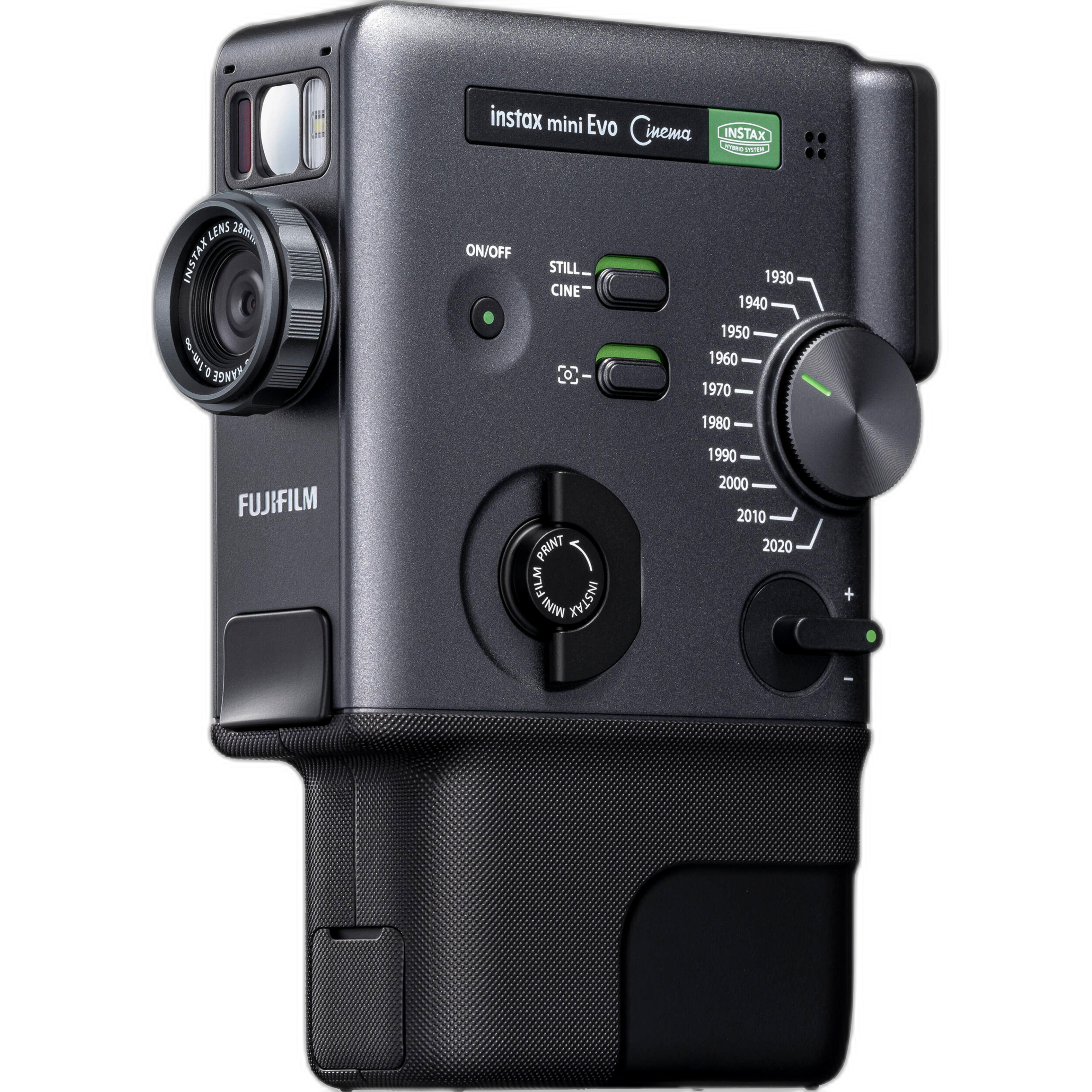
A New Direction for the Instax Line
By 2021, Fujifilm had already explored several approaches within the Instax system. There were straightforward analog instant cameras, more stylized lifestyle models, and earlier hybrid concepts that combined digital capture with instant output. The Instax Mini Evo felt like a refinement of that hybrid idea, presented in a body that leaned into a more classic camera-inspired design language.
That design mattered. The Mini Evo did not look like a toy, even though it was built for fun and accessibility. Its appearance suggested something more deliberate: a camera for users who wanted to engage with image-making choices, not just snap and print. In the broader story of Instax, the Mini Evo represented Fujifilm continuing to mature the format without losing its approachable character.
What the Instax Mini Evo Is
At its core, the Fujifilm Instax Mini Evo is a hybrid digital camera with a built-in printer that outputs onto Instax Mini film. It captures images digitally, stores them internally or on microSD media, and allows the user to select which images to print. It also adds smartphone printing through a companion app, extending its role beyond a standalone camera and into a broader personal printing device.
The use of Instax Mini film is significant. Mini was already the most recognizable and widely adopted Instax format by this time, known for its compact, credit-card-sized prints and broad appeal among casual users, scrapbookers, party shooters, and younger photographers entering instant photography for the first time. By building the Evo around the Mini format, Fujifilm ensured accessibility and familiarity while layering in more advanced creative options.
The Appeal of a Hybrid Instant Camera
Traditional instant photography has always carried a gamble. You compose, shoot, and commit to a print in one motion. That unpredictability is part of the charm, but it can also make users more cautious, especially given the cost of film. The Mini Evo responded directly to that tension.
Because it is a digital camera first and an instant printer second, users can preview, store, and decide. That means fewer wasted prints and more freedom to experiment. For many photographers in 2021, especially those accustomed to smartphone photography and digital review, this was one of the Mini Evo's strongest selling points. It preserved the excitement of an Instax print while removing some of the anxiety associated with every shutter press.
Historically, this is one of the key reasons the Mini Evo stands out within the Instax family. It reflects the way instant photography had adapted to a digital generation: keeping the print, keeping the ritual, but changing the workflow.
Creative Effects: 10 Lens Effects x 10 Film Effects
One of the Mini Evo's headline features at launch was its system of 10 lens effects paired with 10 film effects. Fujifilm emphasized this as a major part of the camera's personality, giving users a wide range of looks without making the process complicated. In practical terms, the 10 x 10 structure suggested a playful but intentional creative toolkit, encouraging experimentation with image rendering before the print was ever made.
This mattered because visual style has always been central to the appeal of instant photography. Instant prints are rarely about technical perfection alone; they are about mood, memory, atmosphere, and character. By offering combinations of lens and film effects, the Mini Evo acknowledged that users wanted more than documentation. They wanted expression.
From a historical perspective, this feature also places the camera firmly in its era. By the early 2020s, photographers had become deeply familiar with filters, app-based looks, and image stylization across social media. Fujifilm's approach with the Mini Evo translated that expectation into the Instax world in a more tactile, camera-centered way.
Storage and Practical Use
Another important difference between the Mini Evo and a conventional instant camera is storage. Fujifilm equipped the camera with both internal storage and microSD support. That may sound ordinary by digital camera standards, but in the context of Instax, it was a practical and significant feature. It meant the Mini Evo could function as an image archive as well as a print device, letting users save photographs beyond the physical film output.
For everyday use, this broadened the camera's value considerably. A photographer could shoot casually, keep favorite images, print selected frames, and carry more pictures without relying entirely on film packs as the record of the experience. In other words, the Mini Evo did not ask users to choose between digital convenience and instant-photo charm. It tried to offer both.
Smartphone Printing via App
Fujifilm also gave the Instax Mini Evo smartphone printing via app, which made the camera relevant even when it was not being used as a capture device. This feature aligned the Mini Evo with a growing expectation that instant printers should work with phone libraries as easily as with in-camera images.
That capability expanded the camera's audience. Some users would buy it primarily as an Instax camera; others would be drawn to it as a stylish compact printer for smartphone images. In either case, the app connection increased flexibility and made the product feel more integrated into modern photo habits.
Seen historically, this was a smart move. By 2021, the smartphone was the dominant everyday camera for most people. Any product in the personal-printing category had to acknowledge that reality. The Mini Evo did so while still maintaining a distinct photographic identity of its own.
Design, Experience, and Release-Era Reception
Around its release, the Instax Mini Evo was especially notable for how it balanced novelty and familiarity. It offered real Instax Mini film output, which remained the heart of the experience, but wrapped it in a package that felt more curated and contemporary. The classic-inspired styling helped the camera stand apart from brighter, more overtly playful Instax models, suggesting broader appeal to enthusiasts as well as newcomers.
The result was a camera that felt less disposable and more enduring than many instant models. It invited gifting, travel use, social shooting, and everyday carry, but it also appealed to photographers who appreciated the idea of controlling when and how an image became a print. That was, and remains, the Mini Evo's defining strength.
A Meaningful Step in Instax History
Looking back, the Fujifilm Instax Mini Evo represents an important moment in the evolution of instant photography. It did not reject the traditions of the format; rather, it adapted them. It kept the physical print, the compact Instax Mini format, and the pleasure of sharing tangible images, while introducing a digital workflow that made instant photography more economical, more flexible, and more in tune with contemporary habits.
Its hybrid digital-plus-printer concept, 10 lens effects and 10 film effects, support for internal and microSD storage, and smartphone printing via app all made it one of the more fully realized Instax products of its release period. For users who wanted the social fun of instant film without surrendering digital convenience, the Mini Evo was one of Fujifilm's clearest answers.
Final Thoughts
As an archival look back at its 2021 release, the Instax Mini Evo stands as more than a stylish instant camera. It is a hybrid device that captured where instant photography was heading: toward greater choice, broader connectivity, and creative control without sacrificing the pleasure of a real print. For many users, that balance made it one of the most compelling Instax Mini products of its era.
If you want to buy Instax gear or learn more about Fujifilm instant cameras and film, Unique Photo is a great place to shop, compare options, and explore the history and appeal of cameras like the Instax Mini Evo.