Compare the Fujifilm instax Pal 2 Digital at $169.95 with Lomography instant cameras, from $99 to $179, and choose digital or film.
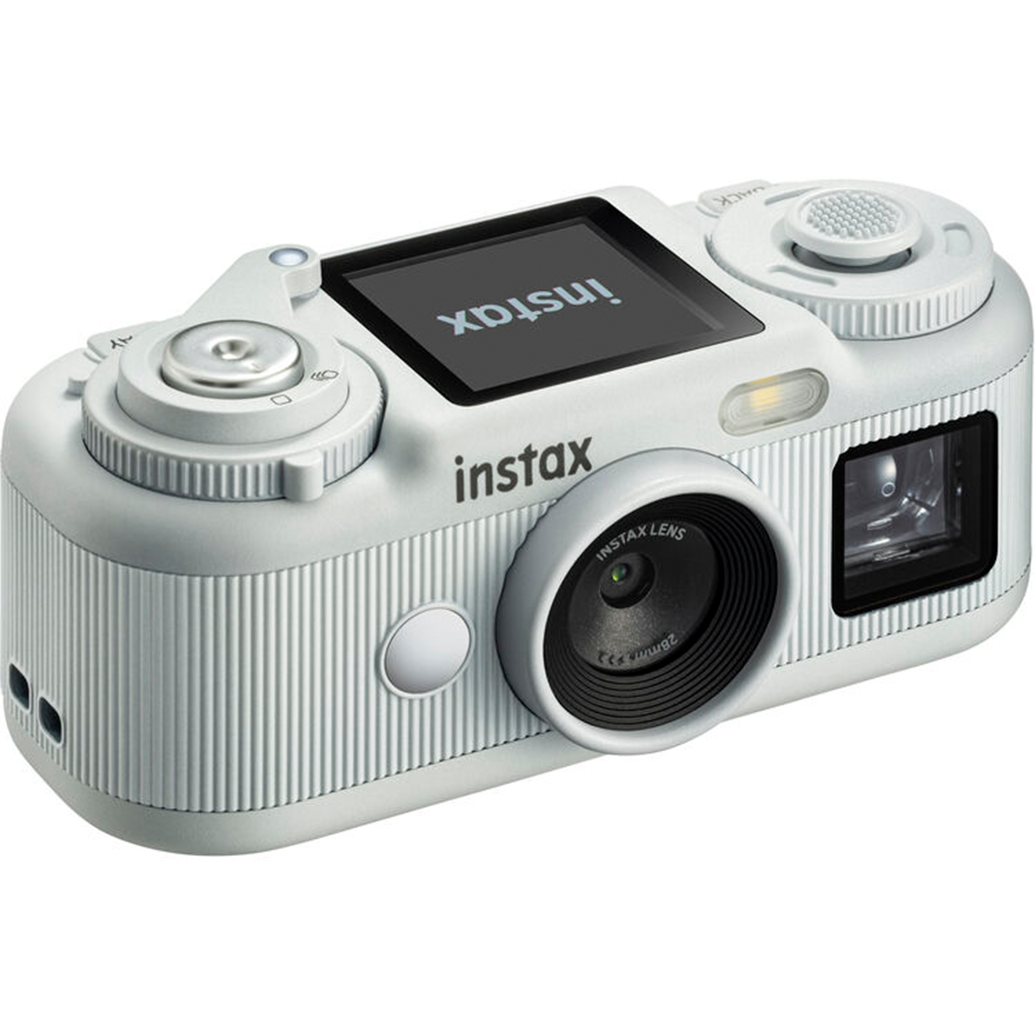
The digital option: two colors at $169.95
The FUJIFILM instax Pal 2 Digital Camera (White) and FUJIFILM instax Pal 2 Digital Camera (Black) both cost $169.95. Their specifications match, so the choice between them is color. This is the option for keeping digital photos and choosing which ones become physical prints later.
Fujifilm lists a 10-megapixel sensor and an integrated 28mm f/2.2 wide-angle lens. The body weighs 87g and measures 3.6 x 1.7 x 1.5 inches. An optical viewfinder provides a separate way to frame shots, while the fixed 1-inch LCD handles image playback. There is also a built-in flash.
Internal storage holds up to 100 digital photos. A microSD slot accepts microSD, microSDHC and microSDXC cards, with support up to 2 TB. Five filter themes and six effects provide ways to change the pictures, and instax Animation mode captures motion. Audio recording is not supported.
Printing takes a separate step: transfer pictures to the instax Pal app using Bluetooth or the integrated USB-C connector, then send selected images to a compatible mobile printer or hybrid instant camera. That separation is the main buying reason here. Taking a picture does not have to mean making a print.
Multiple exposures and lens attachments for $99
The Lomography Lomo Instant Songs Palette Edition Camera Combo costs $99, the lowest camera price in this group. Choose it for experimenting with instant photographs rather than collecting digital files. It supports unlimited multiple exposures, allowing repeated exposures to build up on one frame.
The combo includes three lens attachments. Color gels provide another way to change the result, and a built-in mirror helps with self-portraits. Lomography lists three shooting modes, a built-in flash and a direct optical viewfinder. Power comes from four AAA batteries.
Its 48mm lens has a listed 27mm-equivalent focal length. Focusing is by zones, with ranges of 0.4–0.9m and 1m to infinity, so estimating subject distance is part of taking the picture. The default aperture is f/16, with manual f/8, f/11, f/22 and f/32 control through exposure compensation. Shutter settings run from 8 seconds to 1/125 second, plus Bulb. Those controls make this the budget choice for someone who wants to alter the exposure, not just press the shutter.
Automatic exposure on Mini film for $119
The Lomography Lomo Instant Automat Bora Bora White, Camera Only costs $119 and uses Fujifilm instax Mini film. Its strongest reason to buy is automatic exposure without giving up multiple exposures or colored flash gels.
The camera has a fully automatic shutter and automatic electronic flash. In Auto Shooting Mode, shutter speeds range from 8 seconds to 1/250 second; Bulb mode allows exposures up to 30 seconds. Ambient exposure compensation provides +1 or -1 EV adjustment when a brighter or darker result is wanted. The built-in tripod mount is useful for those longer exposures.
Automatic exposure does not mean autofocus. The 60mm lens, listed as 35mm equivalent, uses focus zones of 0.6m, 1–2m and infinity. Set the zone to suit the subject distance before shooting. The maximum aperture is f/8, and framing uses a direct optical viewfinder. A digital exposure counter tracks the exposures, while two CR2 batteries supply power. This is the Mini-film choice for letting the camera handle exposure while retaining a few deliberate adjustments.
Wide film and remote release for $159
The Lomography Lomo Instant Wide Black costs $159. Choose it for Fujifilm instax Wide film and its 64 x 99mm image area. Its remote-control lens cap also gives it a practical advantage for photographs that include the person operating the camera.
The built-in 90mm lens has an aperture range of f/8–f/22. Zone focusing offers settings for 0.6m, 1–2m and infinity. Programmed automatic exposure handles the exposure settings, with +1 or -1 EV ambient exposure compensation available. The automatic electronic flash can be switched off.
Auto shutter speeds run from 8 seconds to 1/250 second. There is also Bulb mode and a fixed 1/30-second mode. A PC sync socket provides a connection for flash synchronization, and four colored flash gels are included. Power comes from four AA batteries. For someone choosing primarily by film format, this is the lower-priced of the two Wide cameras here; the remote release is a useful extra, not the main distinction.
Wide format with additional lenses for $179
The Lomography Lomo Instant Wide William Klein Edition costs $179. It is the Wide-format option to consider for its additional lens choices and edition-specific artwork, rather than choosing it solely for the camera's appearance.
Lomography lists an ultra-wide-angle lens and a close-up lens alongside the built-in 90mm lens. Those attachments offer different framing options from the standard lens alone. The camera also includes a Leporello containing words and original artwork from William Klein.
The built-in lens uses zone focusing at 0.6m, 1–2m and infinity, with f/8 and f/22 apertures listed. Automatic shutter speeds cover 8 seconds to 1/250 second, supplemented by Bulb and a fixed 1/30-second setting. A remote-control lens cap lets the photographer trigger the shutter from away from the camera. There is a PC sync socket, plus color gels and flash on/off control. It takes four AA-size batteries. Buy this version for the lens options and included artwork, not because its automatic shutter range differs from the black Wide model.
A wider Mini-film view for $169
The Lomography Lomo Instant Automat Glass Magellan costs $169 and uses Fujifilm instax Mini film. Its main distinction is the 38mm lens, listed as 21mm equivalent. That provides a wider view than the Bora Bora's listed 35mm-equivalent lens, useful for including more of a room or surrounding scene.
The lens uses six optical elements in four groups, with f/4.5 and f/22 apertures. At the same shutter speed, f/4.5 admits more light than f/8. Zone-focus settings are 0.3m, 0.6m and 1m to infinity, giving it a closer focusing option than the Bora Bora.
Programmed automatic exposure handles the exposure settings. Auto shutter speeds range from 8 seconds to 1/250 second, and Bulb extends to 30 seconds. The built-in flash has an off mode. Multiple exposures and colored gel filters add creative controls, while an included remote shutter release works from up to 5m away. An LED film counter tracks exposures. The camera uses two CR2 batteries, making lens coverage and close focusing the clearer reasons to choose it over the less expensive Mini-film Automat.
Choose the output before the camera
Start with what should happen after pressing the shutter. For digital files with optional printing later, choose the Pal 2 workflow and account for the separate compatible printing device. For film photographs from the camera, choose the film format before comparing exposure controls. Include ongoing film purchases in the budget.
Then check the focusing distances against the subjects that matter. Zone focusing requires a distance setting; automatic exposure does not remove that step. Power is another practical difference: the Pal 2 has a built-in rechargeable battery, while the Lomography options use the replaceable battery types listed above.
All cameras listed here are in stock at Unique Photo.
Prices at Unique Photo
- FUJIFILM instax Pal 2 Digital Camera (White): $169.95
- FUJIFILM instax Pal 2 Digital Camera (Black): $169.95
- Lomography Lomo Instant Songs Palette Edition Camera Combo: $99.00
- Lomography - Lomo Instant Automat Bora Bora - White - Camera Only: $119.00
- Lomography - Lomo Instant Wide Black: $159.00
- Lomography Lomo Instant Wide William Klein Edition: $179.00
- Lomography - Lomo Instant Automat Glass Magellan: $169.00
Prices as of November 24, 2026. Browse more: Instax Pal, Fujifilm at Unique Photo.
Related reading: Fujifilm instax Pal 2 Digital: Specs, Price and Availability.
Frequently asked questions
What is the difference between the white and black Fujifilm instax Pal 2 Digital cameras?
They have matching specifications and both cost $169.95. The difference is the body color.
How do you print photos from the Fujifilm instax Pal 2 Digital?
Transfer photos to the instax Pal app through Bluetooth or the integrated USB-C connector. From the app, send selected photos to a compatible mobile printer or hybrid instant camera.
Which cameras in this guide use instax Mini film?
The Lomo Instant Automat Bora Bora and Lomo Instant Automat Glass Magellan use Fujifilm instax Mini film. They cost $119 and $169, respectively.
How many photos can the Fujifilm instax Pal 2 Digital store?
Internal storage holds up to 100 digital photos. Its card slot supports microSD, microSDHC and microSDXC cards up to 2 TB.