Compare in-stock Fujifilm cameras for stills and video, with exact kit and body-only prices and guidance on which model to buy.
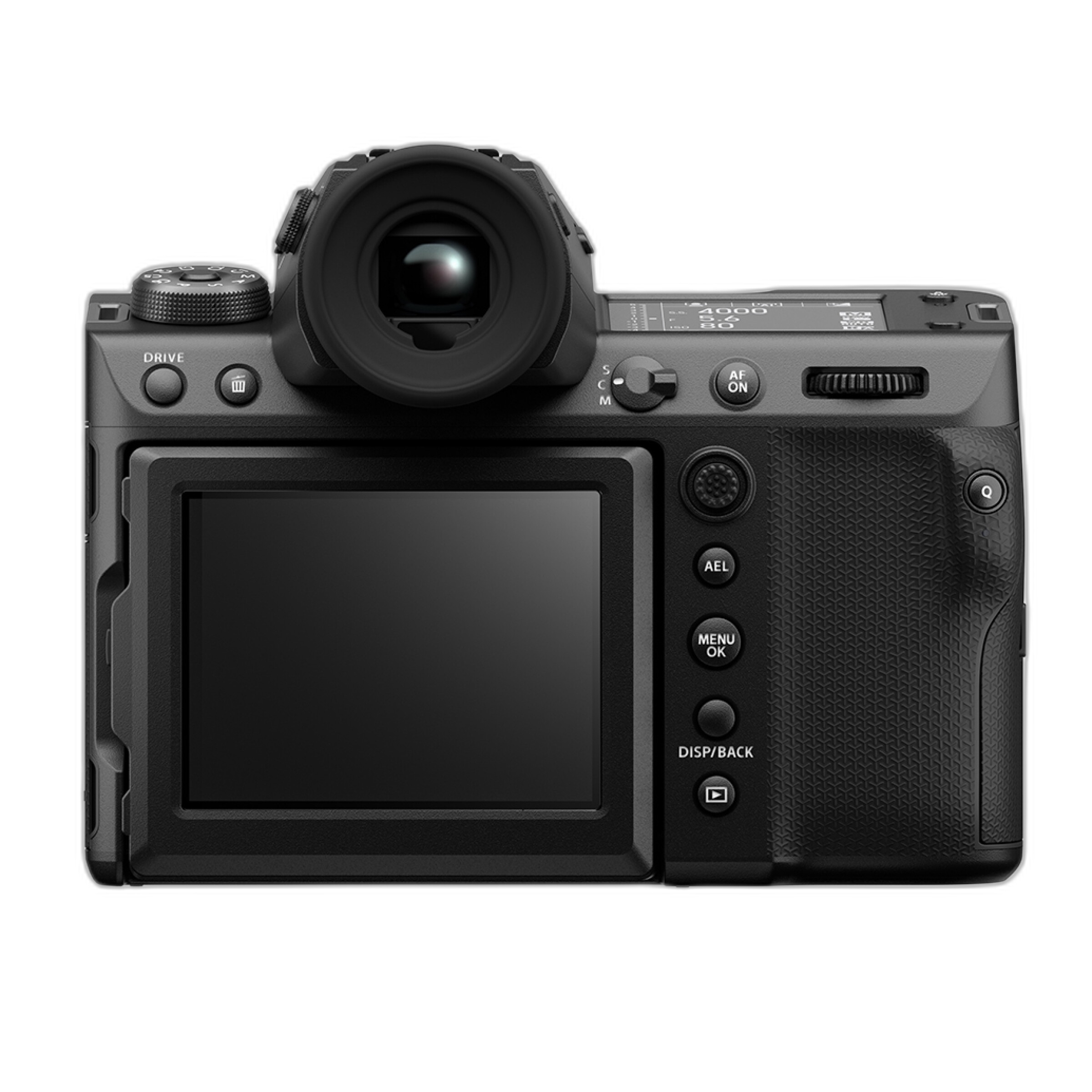
40.2MP kit with traditional stills controls
The Fujifilm X-T5 with 16-80mm Lens (Black) costs $2,499.95 and is in stock at Unique Photo. It is the least expensive package here, with a lens included. This is the starting point for photography-first buyers who prefer dedicated exposure controls. Its ISO and shutter-speed dials let photographers check those settings even with the camera switched off.
The 40.2MP APS-C sensor supplies room for cropping, while mechanical-shutter shooting reaches approximately 15fps at full resolution. Fujifilm rates the in-body stabilization at up to 7 stops. That helps compensate for camera shake; it does not freeze a moving subject. Subject-detection autofocus is also included.
The supplied 16-80mm lens has an f/4 maximum aperture, so the kit covers multiple focal lengths without an immediate lens purchase. A three-way tilting touchscreen helps with low-angle framing, and dual SD card slots support UHS-I and UHS-II media. Video includes 6.2K recording at up to 29.97p, but the dial-based operation is the main reason to choose this package.
40.2MP kit with 8K recording
The Fujifilm X-H2 with XF 16-80mm F4 OIS WR Lens is in stock at $2,799.95. Choose this kit when high-resolution video matters alongside still photography. Its 40.2MP APS-C sensor matches the X-T5's pixel count, so the purchase decision is not about getting more still-image megapixels.
The separation is clearer in video: the X-H2 offers 8K/30p with 10-bit 4:2:2 Apple ProRes recording. It also supports external ProRes RAW or Blackmagic RAW recording through HDMI. Those options matter when footage needs to fit a particular editing workflow. For ordinary stills, mechanical-shutter shooting reaches approximately 15fps at full resolution, and Fujifilm rates IBIS at up to 7 stops.
The 5.76-million-dot EVF has a higher dot count than the X-T5's 3.69-million-dot finder. There is also a 160MP pixel-shift multi-shot mode. That number comes from multiple exposures, not a single 160MP capture. The included zoom has an f/4 maximum aperture and takes 72mm front filters.
26.1MP body for action and slow-motion video
The Fujifilm X-H2S (Body Only, Black) costs $2,899.95 and is in stock. This is the action-oriented choice here. Its 26.1MP stacked BSI APS-C sensor trades the higher pixel count of the X-H2 and X-T5 for an electronic-shutter burst rate of up to 40fps.
Mechanical-shutter shooting reaches up to 15fps. The electronic burst rate gives more frames from which to select a precise moment, useful for sports or other fast-changing subjects. It also means more files to sort afterward. Fujifilm includes AI-powered autofocus and rates the in-body stabilization at up to 7 stops.
For video, the practical distinction is 4K/120p, which provides scope for slow-motion playback. The camera also records 6.2K/30p and supports internal 10-bit 4:2:2 Apple ProRes, plus external ProRes RAW and Blackmagic RAW. Storage consists of one CFexpress Type B slot and one UHS-II SD slot. Unlike the two kits above, this price does not include a lens.
102MP body for detail-focused photography
The Fujifilm GFX100S II Medium Format Mirrorless Digital Camera (Body Only) is in stock at $5,699.95. It suits photographers whose main reason for spending more is resolution, particularly for substantial crops or large prints. Its 102MP CMOS II sensor measures 43.8 × 32.9mm and is paired with X-Processor 5.
Fujifilm lists approximately 7fps mechanical-shutter shooting and AI-assisted subject-tracking autofocus down to -5.5EV. Those specifications give it a role beyond completely static subjects, although its burst rate is well below the X-H2S's. The body weighs approximately 883g with battery and memory card, before adding a lens.
A 5.76-million-dot electronic viewfinder and three-direction tilting touchscreen handle composition. Video reaches 4K/30p with 4:2:2 10-bit in-camera recording, and native Frame.io Camera to Cloud functionality is included. This is a sensible choice when 102MP still files are the priority and 4K/30p meets the video requirement, rather than paying for a faster video frame rate.
102MP body with 8fps and full-width 4K/60p
The Fujifilm GFX100 II Medium Format Mirrorless Digital Camera (Body Only) costs $8,499.95 and is in stock. It has a 102MP CMOS II HS sensor and X-Processor 5. Compared with the GFX100S II, the extra spending buys differences in shooting and recording capabilities, not additional megapixels.
Mechanical-shutter bursts reach approximately 8fps at full resolution. The electronic viewfinder has approximately 9.44 million dots, and Fujifilm rates IBIS at up to 8 stops. These are useful distinctions for photographers who want 102MP files with a higher-dot-count finder and a faster mechanical burst rate. Weight reaches 1,030g including the EVF, battery and card.
The stronger reason to choose it for mixed stills and video work is full-sensor-width 4K/60p in 4:2:2, alongside 10-bit Apple ProRes recording. Native Frame.io Camera-to-Cloud integration and jam-sync timecode with ATOMOS AirGlu BT address production workflow needs. One CFexpress Type B slot and one UHS-II SD slot provide storage. It remains a body-only purchase.
102MP fixed-lens camera for a smaller bag
The Fujifilm GFX100RF (Silver) is in stock at $5,599.95. It combines a 102MP, 43.8 × 32.9mm sensor with a fixed 35mm lens. This is the choice for someone who wants that resolution without building an interchangeable-lens setup. Fujifilm lists a weight of approximately 735g.
The fixed lens is both the attraction and the restriction. It removes lens selection from the packing process, but it cannot zoom or be exchanged for a different focal length. Choose it only if working around that single focal length sounds useful rather than limiting. Its 5.76-million-dot electronic viewfinder is offset in a rangefinder-style body.
An aspect-ratio dial makes frame proportions a direct control, while 20 Film Simulations provide in-camera rendering choices. The built-in ND filter reduces incoming light, useful when a slower shutter speed is wanted in bright conditions. Fujifilm specifies stabilization for movie mode only. For still photographs, shutter speed and camera support therefore deserve attention rather than assuming the stabilization support of the other GFX bodies here.
How to choose
- Stills-first kit with exposure dials: choose the X-T5 with 16-80mm lens. It combines 40.2MP capture with the lowest package price here.
- 8K video with a lens included: choose the X-H2 kit. Its recording formats are the reason to move beyond the X-T5.
- 40fps bursts or 4K/120p: choose the X-H2S, allowing separately for a lens.
- 102MP stills with 4K/30p: choose the GFX100S II if those specifications meet the job.
- 102MP with full-width 4K/60p: choose the GFX100 II when its recording workflow and higher-dot-count EVF justify the price.
- 102MP without interchangeable lenses: choose the GFX100RF, provided its fixed 35mm lens fits the intended photography.
Prices at Unique Photo
- Fujifilm GFX100 II Medium Format Mirrorless Digital Camera (Body Only): $8,499.95
- Fujifilm GFX100S II Medium Format Mirrorless Digital Camera (Body Only): $5,699.95
- Fujifilm GFX100RF Mirrorless Digital Camera - Silver: $5,599.95
- Fujifilm X-H2S Mirrorless Camera (Body only, Black): $2,899.95
- Fujifilm X-H2 Mirrorless Camera with XF 16-80mm F4 OIS WR Lens: $2,799.95
- FUJIFILM X-T5 Mirrorless Digital Camera (Black) with 16-80mm Lens: $2,499.95
Prices as of November 10, 2026. Browse more: Fujifilm, Fujifilm at Unique Photo.
Frequently asked questions
What is the cheapest Fujifilm camera in this selection?
The Fujifilm X-T5 with 16-80mm Lens (Black) is the lowest-priced option at $2,499.95. It is in stock and includes the lens.
Should I buy the Fujifilm X-H2 or X-H2S?
Choose the X-H2 for 40.2MP stills and 8K/30p recording; the $2,799.95 package includes a 16-80mm lens. Choose the X-H2S for up to 40fps electronic-shutter shooting and 4K/120p video; it costs $2,899.95 body only.
What is the difference between the GFX100 II and GFX100S II?
Both have 102MP sensors. The GFX100 II offers approximately 8fps mechanical shooting, a 9.44-million-dot EVF and full-width 4K/60p, compared with approximately 7fps, a 5.76-million-dot EVF and 4K/30p on the GFX100S II.
Can you change lenses on the Fujifilm GFX100RF?
No. The GFX100RF has a fixed 35mm lens rather than an interchangeable-lens mount.