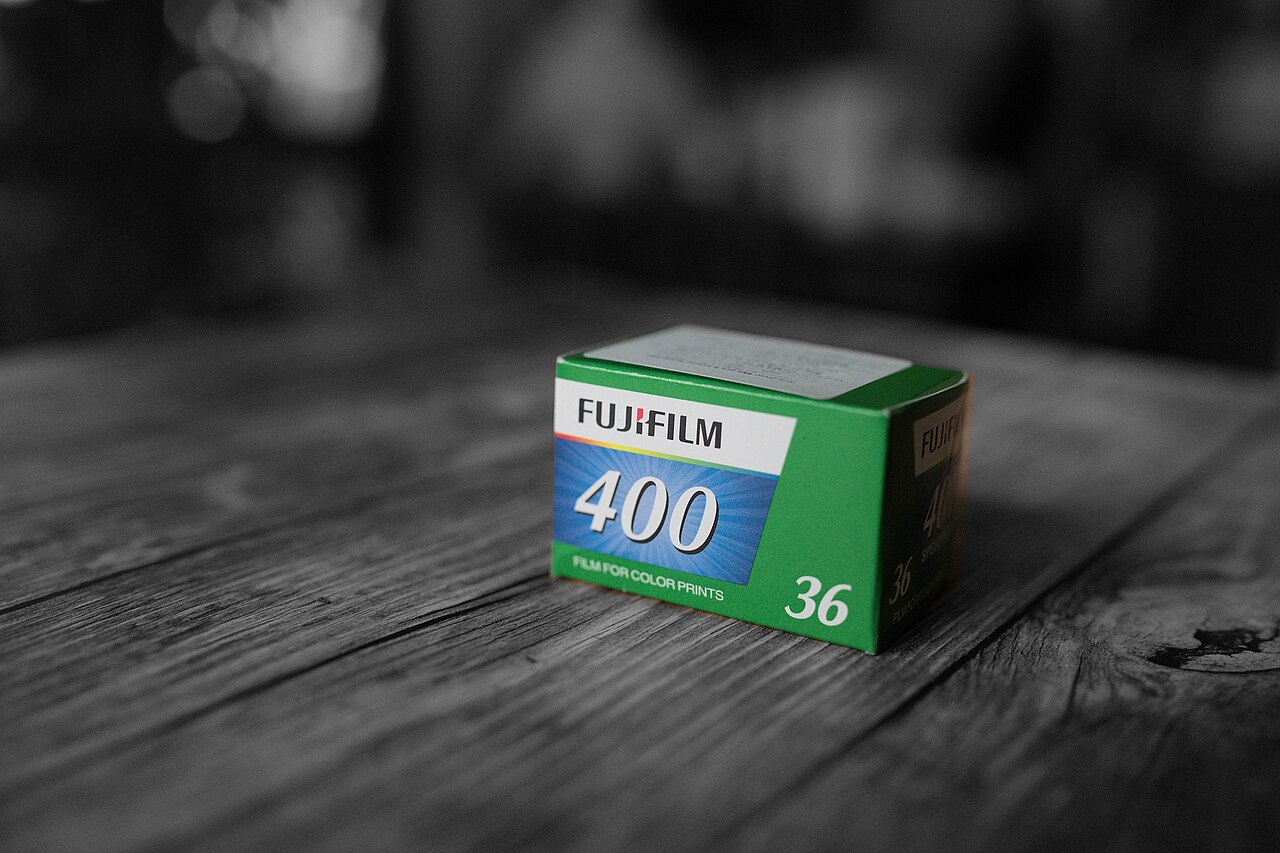
Fujifilm 400 arrives in 35mm as a straightforward, useful kind of color negative film: the speed many photographers reach for when the light is less than ideal, the weather turns gray, or the day moves from outdoors to interiors without warning. In the broad history of consumer color film, ISO 400 has long occupied a practical middle ground. It is fast enough to open up more shooting opportunities than ISO 100 or 200, yet still familiar and flexible for everyday photography. For photographers looking at Fujifilm 400 around its release period, that balance is the story.
This profile looks at Fujifilm 400 as a modern 35mm C-41 color negative stock, where it fits historically, and why faster consumer color film remains so relevant. Rather than treating it as a specialty emulsion, it makes more sense to understand Fujifilm 400 as part of a long lineage of general-purpose film designed to keep photographers working in changing light.
What Fujifilm 400 Is
At its core, Fujifilm 400 is a 35mm color negative film processed in the standard C-41 chemistry, with a rated speed of ISO 400. Those three facts tell experienced film photographers almost everything they need to know about its intended role.
As a color negative stock, it is designed for broad exposure latitude and easy scanning or printing, especially compared with slide film. As a C-41 film, it fits the most common color negative processing workflow used by labs around the world. And at ISO 400, it sits in the classic “faster everyday film” category: useful in overcast daylight, late afternoon, open shade, and many indoor situations where slower films become less convenient without flash or a tripod.
That practical identity matters. Film history is full of materials celebrated for exotic color palettes, razor-thin niche applications, or cult status. But the films that shape everyday photography are often the dependable ones photographers can load for a family outing, a city walk, travel, or casual portraits and trust across a wide range of conditions. Fujifilm 400 belongs to that tradition.
The Historical Importance of ISO 400 Consumer Color Film
To understand Fujifilm 400, it helps to step back and look at the larger role of ISO 400 color negative film. For decades, faster color print films represented freedom. They reduced dependence on bright noon sun. They made snapshots in variable weather easier. They helped compact cameras, fixed-lens point-and-shoots, and modest zooms remain usable in real life rather than only in ideal light.
In the consumer market especially, ISO 400 became one of the most important all-around speeds ever offered. It was quick enough for vacations, birthday parties, street scenes, and backyard portraits, and forgiving enough for the kinds of exposure inaccuracies common in everyday cameras. As camera automation spread in the late film era, 400-speed film became even more central because it paired so naturally with built-in meters, small flashes, and lenses that were not especially fast.
That legacy continued into the film revival. Even as photographers rediscovered slow fine-grain films for bright daylight and highly stylized work, ISO 400 remained one of the most useful choices for people who actually wanted to shoot often and in mixed conditions. Fujifilm 400 enters that revived market with exactly that appeal: speed, convenience, and broad usefulness.
Why Faster Film Matters for Cloudy Days and Indoors
Overcast Light
Cloudy conditions flatten brightness levels and often push shutter speeds downward, especially when photographers want to stop down a little for depth of field. An ISO 400 film gives more room than slower stocks, making handheld photography more comfortable when the sun disappears behind a uniform layer of cloud. For casual travel and day-to-day shooting, that extra speed is often the difference between easy shooting and compromise.
Open Shade and Late Day
Open shade can be beautiful for portraits and street work, but it is rarely bright. Likewise, the hours before sunset often produce attractive color and softer contrast while steadily reducing available light. In both cases, 400-speed color negative film is a natural fit. It lets photographers keep working without immediately resorting to flash, and that preserves a more natural rendering of ambient light.
Interiors
Indoor photography has always been one of the clearest arguments for faster consumer film. Home interiors, restaurants, shops, transit hubs, and public spaces can all challenge slower emulsions. ISO 400 does not turn every room into bright daylight, but it significantly expands what is practical handheld, especially with cameras that have modest maximum apertures or zoom lenses. For photographers who prefer available light and want the atmosphere of a space to remain visible, a 400-speed negative film is often the sensible choice.
How Fujifilm 400 Fits Into the Fujifilm Film Tradition
Fujifilm has a long and important place in the history of color photography, with films that have ranged from consumer staples to professional portrait and landscape favorites. Within that broader tradition, a film like Fujifilm 400 is best seen not as an outlier but as part of the company’s enduring engagement with practical color materials for everyday use.
Fujifilm’s name carries particular weight with photographers who remember the company’s past strengths in color science and negative film character. That history inevitably shapes expectations whenever a 35mm Fujifilm-branded color stock appears. Around the release period of Fujifilm 400, part of the conversation naturally centers on continuity: not necessarily whether every prior film has been replicated, but whether Fujifilm remains present in a category that has mattered to generations of photographers.
That matters culturally as much as technically. Film users do not simply buy sensitivity and chemistry; they buy into a lineage of handling, rendering, and trust. A Fujifilm 400 box on the shelf signals that a major historic brand still has a place in the current analog landscape.
Practical Shooting Uses
Travel and Walkaround Photography
For travel, ISO 400 color negative film is one of the easiest recommendations in all of analog photography. Weather changes. Indoor stops interrupt outdoor routes. Evening arrives before the roll is finished. A film like Fujifilm 400 is well suited to that uncertainty, particularly in 35mm cameras intended for portability and quick response.
Family and Social Photography
Historically, this is exactly the kind of film speed many photographers chose for family use. Gatherings move between kitchens, living rooms, porches, driveways, and backyards. Children rarely stay still. A 400-speed film helps maintain flexibility without making the process feel specialized or technical.
Student and Everyday Use
For photographers learning film, faster color negative stock can be forgiving in the ways that matter most. It supports handheld shooting in more places, works within standard lab processing, and aligns with the strengths of many affordable 35mm cameras. That makes Fujifilm 400 a reasonable everyday stock for students and returning film shooters alike.
C-41 Convenience and Lab Accessibility
Another key part of Fujifilm 400’s appeal is not aesthetic at all, but logistical. C-41 remains the standard process for mainstream color negative film, and that makes the film easier to integrate into regular shooting habits. A photographer does not need a special workflow to use it. Most labs familiar with contemporary color film can process C-41, and scanners and minilab systems are built around the assumptions of color negative material.
In historical terms, that convenience is one reason color negative film became the dominant everyday format in the first place. It lowered barriers between exposure, development, and prints. In the present day, when film users often depend on labs for processing and scanning, that standardization remains a major advantage.
A Film Defined by Utility
Not every film earns its place through rarity or extreme visual signature. Some earn it by being exactly what photographers need most often. Fujifilm 400’s identity is rooted in utility: 35mm, color negative, C-41, ISO 400. That formula has a deep history because it answers real photographic problems simply and effectively.
For cloudy days, mixed weather, and indoor scenes, faster consumer color film has long been one of the most useful tools in the medium. Around the 2025 release period, Fujifilm 400 stands as a reminder that analog photography still depends on these practical, flexible materials just as much as on collector favorites and boutique experiments. It is the kind of film photographers can load without overthinking, then keep shooting as conditions change.
Final Thoughts
Viewed historically, Fujifilm 400 is significant not because it reinvents the category, but because it continues one of the most important categories in film photography: the accessible, faster color negative film for everyday life. In 35mm and C-41, at ISO 400, it speaks the familiar language of convenience and versatility that made consumer film photography so durable in the first place.
If you want to explore Fujifilm 400, compare film options, or learn more about shooting and processing color negative film, Unique Photo is an excellent place to buy film and stay connected with the broader history and practice of photography.