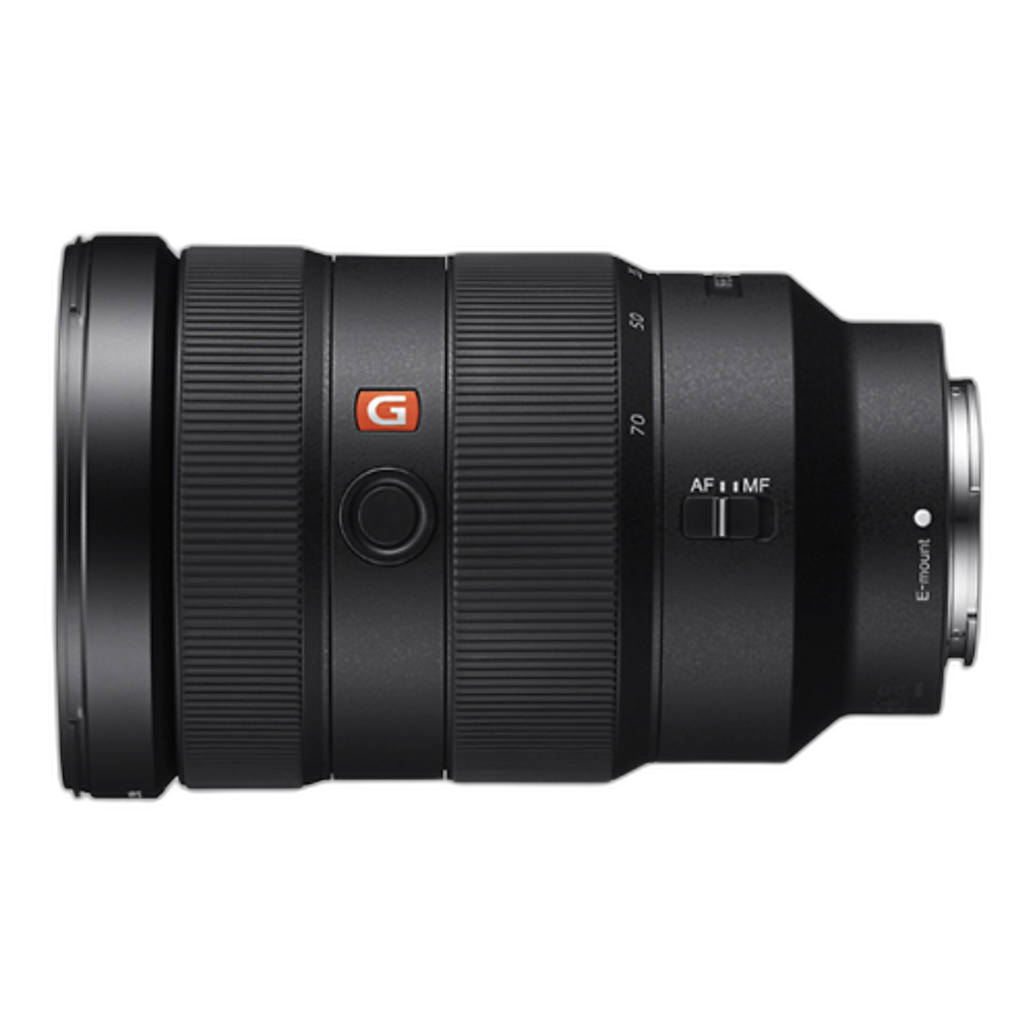
With the arrival of Sony’s first full-frame E-mount cameras in late 2013, the company did more than introduce a new body format. It set in motion one of the most important lens roadmaps in modern camera history. The FE designation—Sony’s name for full-frame lenses built for the Sony E mount—marked the beginning of a system intended to bring full-frame image quality to a much smaller mirrorless platform. For photographers watching the industry at the time, the question was not simply whether the cameras would be good. It was whether Sony could build a convincing native lens lineup around them.
This article is a historical hub for the Sony FE lens family: how it began, why it mattered, and how the lineup developed from a small launch set into a broad system covering nearly every major focal length and use case. Rather than treating the FE range as a simple product list, it helps to understand it as a progression—one that started with a few strategically chosen lenses and expanded into a mature ecosystem of primes, zooms, compact optics, fast professional glass, specialty lenses, and G Master flagships.
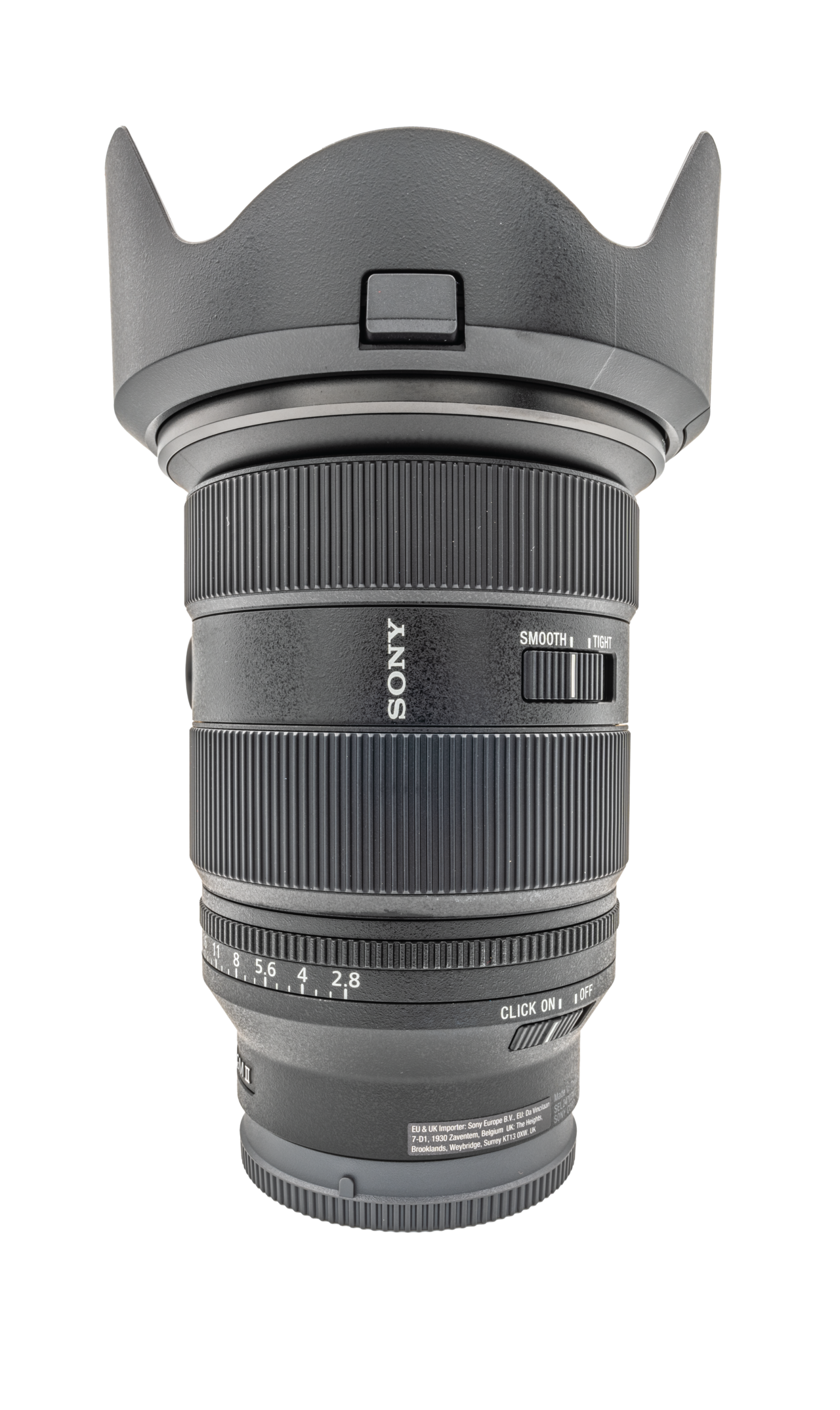
The Beginning of Sony FE: Full-Frame Comes to E-Mount
Sony announced its full-frame mirrorless ambitions in 2013 with the launch of the Alpha 7 and Alpha 7R, both built around the Sony E mount. That mount had already been established on APS-C mirrorless cameras, but adapting it to full-frame brought a different scale of expectation. Compact body size was one thing; a complete full-frame lens system was another.
The FE label mattered because it distinguished lenses designed to cover a full-frame sensor while remaining native to the E mount. Existing E-mount APS-C lenses could still be attached, but photographers investing in the new full-frame bodies needed optics that took full advantage of the format. Sony’s challenge was substantial: reassure early adopters that this was not a one-camera experiment, but the foundation of a durable system.
In historical context, Sony’s FE strategy was notable for its balance. At launch, the company did not attempt to flood the market with every conceivable lens type. Instead, it introduced a practical core set to prove the concept: a standard zoom, a compact prime, a premium normal prime, and an all-in-one zoom. These first FE lenses told photographers how Sony envisioned the system—portable, modern, and broad enough to attract travelers, enthusiasts, and serious image-makers alike.
The First FE Lenses: Establishing a Native Full-Frame System
FE 28-70mm F3.5-5.6 OSS
As a launch-era standard zoom, the FE 28-70mm F3.5-5.6 OSS played an essential role. Every new camera system needs an approachable everyday lens, and this was the optic that made the Alpha 7 feel complete for many buyers. Its range covered wide to short telephoto perspectives useful for general photography, travel, family images, and day-to-day shooting.
Historically, this lens represented practicality over spectacle. It was not designed to be the system’s prestige statement. Instead, it served the classic purpose of a kit zoom in a new format: to make the camera immediately usable while Sony built out more specialized options. Its importance in the FE lineage lies in accessibility. Without lenses like this, systems remain aspirational rather than adopted.
FE 35mm F2.8 ZA
The FE 35mm F2.8 ZA was among the clearest expressions of what full-frame mirrorless could be in 2013. Compact, straightforward, and associated with Zeiss, it signaled that image quality and portability did not have to live at opposite ends of the design spectrum. On an Alpha 7 body, a small 35mm prime created a package far more travel-friendly than many contemporary full-frame combinations.
In system terms, a 35mm lens is always revealing. It often becomes the optic that photographers leave on the camera most of the time. By launching FE with a compact 35mm prime, Sony demonstrated that it understood one of mirrorless photography’s central promises: reduced size without abandoning serious image quality.
Sonnar T* FE 55mm F1.8 ZA
If one lens from the launch period quickly became emblematic of FE’s photographic potential, it was the Sonnar T* FE 55mm F1.8 ZA. This was the lens that made many photographers stop and take the system seriously. A fast standard prime has always been a proving ground for optical quality, and Sony’s early FE roadmap benefited greatly from having a normal lens that was widely regarded as a strong performer.
Its place in FE history is larger than its modest size suggests. The 55mm F1.8 helped establish credibility. It showed that the new mount could support premium full-frame optics capable of satisfying demanding users, not just casual adopters. In many ways, it was the bridge between the FE system’s compact ideals and its professional aspirations.
FE 24-70mm F4 ZA OSS
The FE 24-70mm F4 ZA OSS rounded out the first wave with a more advanced standard zoom. Where the 28-70mm addressed entry-level and general-use needs, the 24-70mm F4 ZA OSS served as a more serious everyday option, adding the importance of a 24mm wide end and presenting itself as a more premium standard lens for photographers who wanted one zoom to cover a great deal of work.
This lens was historically important because no full-frame system can be judged solely by primes. The 24-70mm focal range is one of photography’s core professional standards, and even in F4 form, its early presence gave Sony credibility among event, travel, editorial, and documentary photographers evaluating whether mirrorless could become a main system rather than a secondary one.
Why the Early FE Roadmap Mattered
At release, the FE lineup was understandably small. That was not unusual for a new mount extension, but it meant every early lens carried extra symbolic weight. Collectively, the first FE optics established several themes that would continue through the lineup’s later growth.
- Compactness was central. Sony did not introduce full-frame mirrorless as a smaller DSLR in disguise; it emphasized a genuinely more portable shooting experience.
- Zeiss partnerships added prestige. The inclusion of ZA-branded lenses helped signal optical seriousness during the system’s fragile launch window.
- Practical focal lengths came first. Rather than niche optics, Sony started with lenses photographers actually use every day.
- The system was clearly intended to grow. Even if the opening lens map was limited, it pointed toward a broader strategy, not a dead end.
For early adopters, this mattered enormously. Cameras can generate launch excitement, but lenses determine whether a mount becomes a long-term home. Sony’s first FE lenses suggested a platform with enough thought behind it to justify investment.
The Next Phase: Filling in the Gaps
Once the FE system existed, Sony’s next challenge was obvious: range. A credible full-frame system needs more than a launch quartet. It needs wide-angle solutions, portrait lenses, longer zooms, faster professional options, and specialized tools. The development of FE after 2013 is best understood as a steady process of closing those gaps.
Chronologically, this is the stage when a lens family stops being a concept and starts becoming a system. Sony had to answer common photographer questions one by one. Where was the true wide-angle option? What about telephoto coverage? Would there be fast portrait primes? Could FE support professional event shooters, landscape specialists, and hybrid users as confidently as it served early enthusiasts?
The significance of this period is not just that more lenses appeared. It is that Sony expanded in a way that broadened the system’s identity. FE stopped being associated mainly with compact primes and standard zooms and began to show real depth. As more focal lengths arrived, the platform became easier to recommend not just to early adopters, but to working photographers considering a switch.
Wide-Angle Expansion
One of the first major needs in any full-frame ecosystem is convincing wide-angle coverage. Landscape, architecture, interiors, environmental portraiture, and travel photography all depend on it. FE’s growth in this area was crucial because full-frame users often expect both breadth and quality from wide-angle lenses.
As the lineup evolved, Sony’s approach to wide lenses reflected two goals: preserve some of the system’s compact mirrorless appeal where possible, while also making room for more ambitious optical designs. This became one of FE’s defining balancing acts. Some lenses emphasized portability; others embraced larger dimensions in pursuit of speed, edge-to-edge performance, or advanced correction.
Portrait and Fast Prime Development
No modern full-frame system can mature without strong portrait-oriented lenses. The evolution of FE into a serious lineup depended heavily on the arrival of faster short-telephoto and standard primes that could satisfy photographers looking for shallow depth of field, subject isolation, and high optical refinement.
This was also the point where FE’s identity began shifting from “impressively small full-frame” to “full-frame without many of the old compromises.” Early compact optics helped Sony establish a foothold, but the growth of fast primes helped prove the system could scale upward. That transition was essential. A mount that only does small lenses remains niche; a mount that can support both compact and premium fast optics becomes broadly competitive.
Telephoto and Event Coverage
As FE expanded, telephoto lenses became another turning point. Long lenses reveal whether a mount is prepared for sports, weddings, portraits, stage work, and wildlife. They also reveal how a manufacturer sees its future audience. Telephoto development signaled that Sony was no longer speaking only to travelers and early mirrorless enthusiasts. It was speaking increasingly to professionals.
This part of the FE story is historically significant because it paralleled broader confidence in the Alpha system itself. As bodies improved and autofocus expectations rose, the lens lineup had to keep pace. A strong camera family without corresponding telephoto glass can only advance so far in professional spaces.
The Rise of Lens Families Within FE
Over time, “Sony FE lens” stopped meaning one thing. Instead, FE developed internal tiers and design philosophies. Understanding these families helps explain how the system matured.
ZA Lenses and Early Premium Identity
In the launch and early expansion period, Zeiss-branded FE lenses played an outsized role in shaping public perception. They communicated quality, gave the system recognizable prestige, and helped reassure buyers that Sony was serious about optics, not just electronics and sensors.
Historically, this was a smart move. New systems often benefit from trusted partnerships, and Zeiss provided FE with immediate credibility at a time when the mount still needed to prove itself. Many early FE discussions were inseparable from these lenses because they represented the lineup’s premium aspirations.
Sony G and the Broadening Native Catalog
As the system matured, Sony’s own lens identity became more central. G-branded lenses helped broaden the native catalog with optics that filled practical and enthusiast-oriented roles, often balancing performance, features, and price in ways that made the system more approachable than a lineup built only around prestige glass.
This was important historically because no system can thrive solely on halo products. A real working catalog needs depth, and G lenses contributed to FE becoming a lens range people could build around step by step.
G Master and the Professional Era
If the first FE generation established possibility, the rise of G Master lenses marked FE’s arrival as a top-tier professional system. The G Master concept signaled Sony’s determination to compete at the highest level with lenses designed around demanding standards for resolution, rendering, and speed.
In hindsight, this was one of the major milestones in the release history. Once FE included a robust G Master presence, the conversation changed. Sony was no longer merely building an alternative full-frame mirrorless system; it was building a flagship one. The lineup now had clear top-end options for photographers who wanted the system’s best optical designs.
How Each Generation Advanced the Lineup
Looking back across the FE release history, the system’s development can be divided into a few broad generations of purpose rather than strict technical eras.
Generation One: Proof of Concept
The launch-period FE lenses had one job above all: make full-frame E-mount viable. These optics were about trust. They needed to show that Sony had more than a body announcement—it had the beginnings of a native ecosystem. Compactness, sensible focal lengths, and a mix of approachable and premium options defined this first stage.
Generation Two: System Completion
The next stage focused on filling obvious gaps. This was when FE began to feel less like a bold experiment and more like an increasingly complete system. Wide-angle, portrait, and telephoto options expanded. More photographers could imagine doing all of their work within E-mount rather than adapting legacy lenses or keeping another system alongside it.
Generation Three: Professional Confidence
As FE grew further, the emphasis shifted from coverage to excellence. It was no longer enough simply to have a lens at a given focal length. Sony had to offer class-leading options, faster apertures, and lenses that addressed the needs of high-end users. This is where premium families, especially G Master, became central to the story.
Generation Four: Breadth and Refinement
Once the lineup reached maturity, the story became less about basic availability and more about choice. Multiple standard zooms, different kinds of primes, compact alternatives, specialist lenses, and professional flagships could coexist. This is the stage at which FE became not just complete, but nuanced. Photographers could choose lenses based not only on focal length, but on size, speed, budget, and shooting style.
Why FE’s History Matters in the Broader Camera Industry
The Sony FE lineup is historically significant beyond Sony itself. Its rise tracks one of the camera industry’s most important transitions: the movement of full-frame photography from DSLR-centered systems into mirrorless-native ones. FE was among the earliest and most visible expressions of that shift.
At the time of the Alpha 7 and Alpha 7R introduction, the idea of a full-frame mirrorless system with a credible native lens roadmap was still fresh enough to feel disruptive. Sony’s success or failure would influence not only its own future, but the industry’s understanding of what photographers were willing to embrace. As the FE catalog expanded, it helped normalize the idea that a full-frame professional system could be built around a short-flange mirrorless mount from the ground up.
That matters because lens histories are never only about lenses. They are about confidence, market direction, and the practical choices photographers can make. FE’s growth gave buyers evidence that mirrorless was not just compact and innovative—it could also be comprehensive.
Reading the FE Lineup Today as a Historical Archive
For today’s reader, especially someone browsing older Sony gear or trying to understand the system’s origins, it helps to view FE lenses in context rather than isolation. Early FE optics were not simply “older lenses.” They were strategic building blocks in a new category. Some were designed to show portability. Others were meant to reassure quality-conscious users. Still others laid the groundwork for later professional expansion.
Seen chronologically, the FE release history also explains why the lineup can sometimes feel diverse in character. That diversity is not accidental. Different lenses were created at different moments to solve different strategic needs. A compact launch-era prime, a practical zoom, a later pro-level flagship, and a mature-era specialist lens may all wear the FE label, but they reflect different stages of Sony’s evolution.
That is why an FE hub is useful. It orients the reader not just to what exists, but to why each category exists. The lineup was built over time, with each wave answering specific demands from photographers and the market.
The Lasting Legacy of Sony FE
The lasting achievement of Sony FE is that it transformed from a daring new full-frame mirrorless lens family into one of the defining mount ecosystems of its era. Its earliest releases had to win cautious attention. Its later generations had to sustain momentum, answer criticism, and broaden professional trust. By doing so, FE helped establish full-frame mirrorless as a mainstream, lasting format rather than a speculative branch of camera design.
For historians of camera equipment, FE is a particularly revealing lineup because its chronology mirrors the wider story of mirrorless adoption. The first lenses are about possibility. The next are about legitimacy. The later ones are about leadership. That arc is what makes the FE release history so compelling.
If you are exploring the Sony FE lens lineup, researching the origins of full-frame E-mount, or looking to compare generations of Sony optics, understanding this release history is the best place to start. And if you are ready to buy Sony gear or simply learn more about the system’s evolution, Unique Photo remains a great place to shop, compare equipment, and dig deeper into the history behind today’s camera tools.