Canon’s introduction of the EOS R system in September 2018 marked one of the most important transitions in the company’s modern lens history. With the arrival of the Canon RF mount, Canon was not simply replacing one bayonet with another—it was establishing a new full-frame mirrorless platform designed to carry its interchangeable-lens system into the next era. For photographers who had spent decades with Canon EF lenses and EOS SLRs and DSLRs, the RF lineup arrived with both continuity and a clear technological shift: a new mount, new optical ambitions, new control concepts, and a roadmap that immediately signaled serious intent.
This archival hub looks at the Canon RF lens release history from the beginning, tracing how the lineup was introduced, what the first wave of lenses represented, and how Canon used the new mount to define the EOS R system. Rather than treating the RF family as a simple list of products, this guide follows the chronology of the lineup and explains what each release generation meant within the larger history of Canon lenses.
Because this is a historical hub, the emphasis here is on context and evolution: why Canon launched the RF mount when it did, how the first lenses framed the system’s identity, and how later releases broadened the lineup for professionals, enthusiasts, and everyday photographers. If you are trying to understand the Canon RF lens family as a whole—where it started, why certain lenses came first, and how the lineup expanded—this is the place to begin.
The Canon RF Mount: A New Foundation for Canon Full-Frame Mirrorless
Canon officially introduced the RF mount on September 5, 2018, alongside the original EOS R camera. The mount was created for Canon’s full-frame mirrorless system, and its launch was a pivotal moment in the company’s history. Canon had long been defined by the EF mount, introduced in 1987, which became one of the most successful lens ecosystems in photography. The RF mount did not erase that heritage; instead, it built on it while adapting Canon’s system design to a mirrorless body architecture.
At the practical level, the shift to mirrorless changed the geometry available to Canon’s optical and mechanical designers. Without the mirror box required by a DSLR, a full-frame mirrorless camera could use a different mount configuration and lens-to-sensor relationship. Canon made the RF mount the centerpiece of this redesign. The result was a system intended to support both compact lens designs and highly ambitious optics, depending on the needs of the lens in question.
From the start, Canon’s message around RF was clear: this was not meant to be a tentative side branch. It was a serious new mount with a professional future. Just as important, Canon preserved compatibility with the company’s extensive EF legacy by offering mount adapters, allowing existing EF and EF-S users to transition into the EOS R system without abandoning their established lens collections.
What Made the RF Introduction Different
One of the defining ideas behind the initial RF lens strategy was that Canon did not launch the system with only entry-level or compromise optics. Instead, the company introduced the mount with lenses that immediately demonstrated the kinds of optical possibilities and performance aspirations associated with the new platform. That decision mattered historically. It told photographers that RF was not simply a mirrorless version of what had come before—it was intended to showcase what Canon believed the new mount could do at a high level.
Another hallmark of the early RF lineup was the inclusion of the Control Ring concept. Several of the earliest RF lenses featured a customizable control ring, emphasizing direct tactile operation and reinforcing the idea that the EOS R system was being designed as a modern shooting platform, not just a repackaging of older conventions.
The First RF Lens Generation: The Founding Four of 2018
Canon launched the RF mount with four lenses that, taken together, established the lineup’s identity in striking fashion. These were not random focal lengths. Each served a strategic role in signaling who the EOS R system was for and what the mount could become.
RF 24-105mm F4L IS USM
If one lens represented the practical center of the original RF launch, it was the RF 24-105mm F4L IS USM. Historically, the 24-105mm F4 L-series zoom has been one of Canon’s most important all-purpose professional and enthusiast focal ranges. Bringing that concept into RF at launch was a way of giving the system an immediate everyday workhorse.
As a standard zoom with L-series branding, this lens occupied familiar territory for event photographers, travel shooters, documentary users, and general-purpose still photographers. In release-period terms, it reassured long-time Canon users that RF would support the kinds of versatile, dependable lenses photographers rely on every day. If the EOS R needed one lens to anchor the system commercially and practically, the 24-105mm was an obvious choice.
RF 28-70mm F2L USM
The RF 28-70mm F2L USM was arguably the statement piece of the initial launch. A standard zoom with a constant f/2 aperture, it immediately stood out as one of the boldest examples of what Canon wanted the RF mount to represent. Historically, this lens became one of the earliest symbols of the system’s optical ambition.
Canon’s decision to debut RF with a lens like this was highly significant. It was not primarily about compactness. Instead, it was about possibility. The 28-70mm F2L USM announced that RF would be a platform where Canon could pursue designs that would have seemed difficult, impractical, or at least highly specialized in previous eras. For portrait, wedding, and event photographers in particular, it embodied the promise of prime-like speed across a useful zoom range.
Within the history of the mount, this lens remains one of the defining launch-era products because it communicated confidence. Canon was telling the market that the RF system was not just ready—it was ready to lead with something extraordinary.
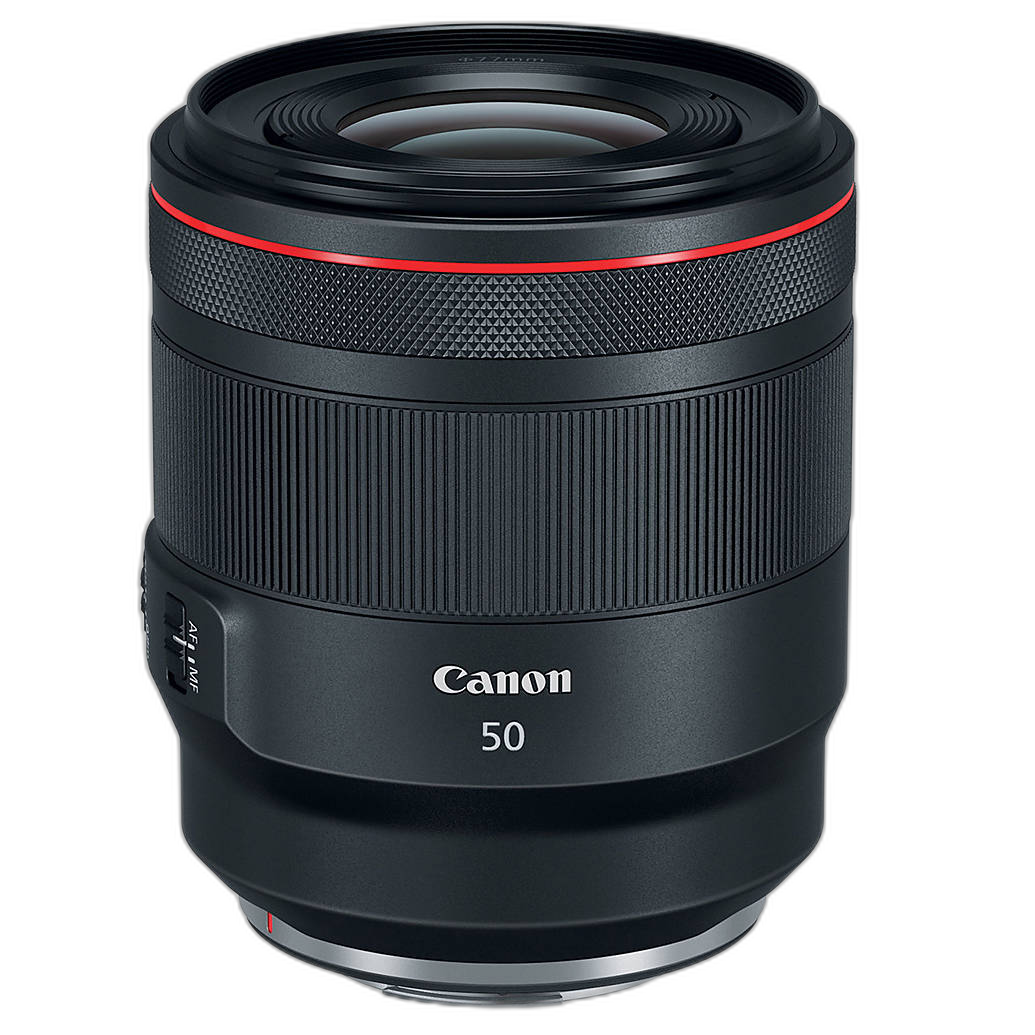
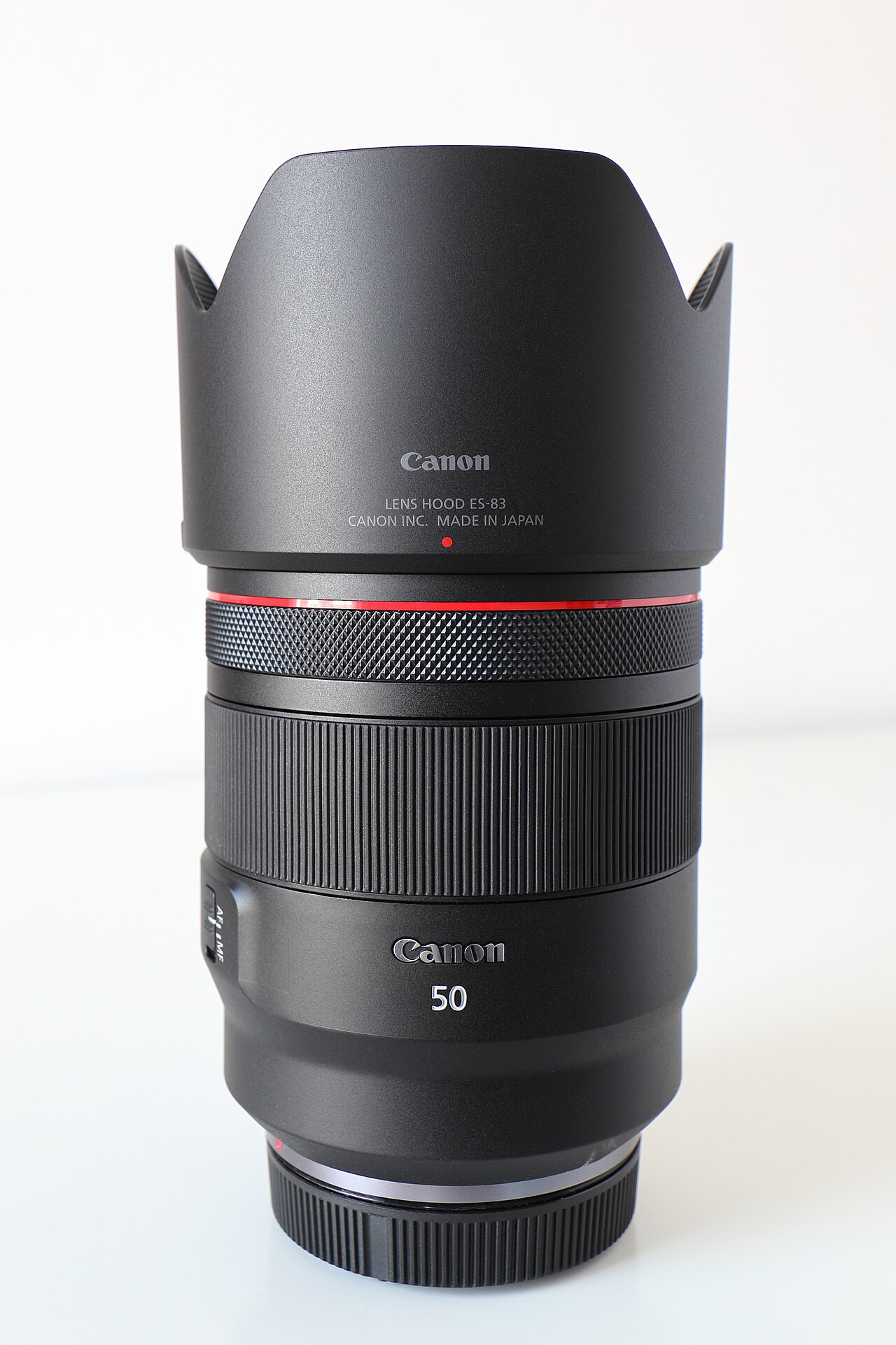
RF 50mm F1.2L USM
The 50mm focal length has always held special importance in lens history, and Canon’s launch-era RF 50mm F1.2L USM carried that tradition directly into the new mount. Fast normal primes often function as a kind of manifesto for a camera system: they reveal how a manufacturer approaches rendering, speed, autofocus intent, and optical priorities.
By bringing out an RF 50mm F1.2L from the start, Canon placed a premium flagship prime at the center of the new lineup. This was a lens aimed squarely at photographers who care deeply about shallow depth of field, low-light capability, and premium image quality. In historical context, it reinforced the idea that RF would be a serious mount for portraiture, wedding work, fashion, and fine-art use.
It also complemented the 28-70mm F2L USM beautifully in the launch story. Together, those two lenses suggested that the new system would not be shy about speed or image-character ambitions.
RF 35mm F1.8 MACRO IS STM
The fourth launch lens played a different, but equally important, role. The RF 35mm F1.8 MACRO IS STM brought the system down from flagship territory and into a more accessible, flexible everyday category. Historically, that mattered. A mount cannot live on premium halo optics alone. It needs practical lenses that invite photographers into regular, creative use.
With a moderate wide-angle field of view, bright aperture, macro capability, and image stabilization, this lens gave EOS R users a smaller, more approachable option from day one. It appealed to travel photographers, street shooters, close-up enthusiasts, and anyone looking for a carry-everywhere prime. In the context of the lineup’s history, it helped round out the launch by showing that RF would not be defined only by large L-series lenses.
The inclusion of this lens in the original set was smart system-building. It made the new mount feel more complete and more livable in everyday photography.
What the 2018 Launch Lineup Said About Canon’s Strategy
Viewed together, the first four RF lenses reveal a highly deliberate system strategy. Canon introduced:
- A dependable standard professional zoom
- An ambitious high-speed zoom unlike the usual launch lens
- A premium fast normal prime
- A practical, accessible prime with macro versatility
That combination balanced aspiration with usability. It told professionals that Canon was serious about top-tier optics, while also giving enthusiasts a reason to see the system as more than an expensive showcase. Just as importantly, the first generation covered key use cases immediately: general-purpose shooting, portraiture, low light, travel, and close-up work.
From a historical perspective, Canon’s launch approach differed from a more cautious mirrorless rollout. Rather than waiting years to prove the mount’s potential, Canon attempted to establish that potential at the moment of introduction.
The Expansion Phase: Building the RF System Beyond the Launch
After any major mount introduction, the next phase is crucial. A launch may create excitement, but the release cadence that follows determines whether photographers view the system as a long-term investment. Canon’s task after September 2018 was to expand the RF family in ways that made the mount feel increasingly complete.
In broad historical terms, RF expansion followed a familiar but important pattern: the lineup widened outward from its launch core into more specialized and more accessible territory. This is how mature lens ecosystems are built. First come the symbolic and foundational products, then the practical range-building lenses, and then the niche optics that serve advanced workflows and creative specialties.
As the Canon RF lineup grew, several themes became clear.
Theme One: L-Series Performance Remained Central
Canon’s early RF identity remained strongly tied to premium optics. This was consistent with the launch message and with Canon’s broader reputation in interchangeable lenses. High-performance L-series releases helped reinforce the idea that the RF mount was where Canon would push optical design forward.
For photographers reading the system’s trajectory in real time, this suggested that RF would become increasingly important not only for enthusiasts moving into mirrorless, but for established professionals considering a long-term shift away from DSLR-centered workflows.
Theme Two: The Lineup Needed Everyday Lenses Too
At the same time, no lens mount becomes truly successful through premium glass alone. For RF to thrive, Canon needed lenses that covered standard user needs at different price and size levels. Historically, this is one of the key transitions in any system’s development: moving from a statement lineup to a resident lineup, meaning a family of lenses photographers can actually live with day to day.
The release of additional standard zooms, primes, and more approachable options over time helped RF transition from an exciting new mount into a broad working ecosystem. This was essential for students, hobbyists, travel photographers, hybrid shooters, and those entering the full-frame Canon world for the first time.
Theme Three: The RF Mount Was Also About Future Headroom
The most historically interesting aspect of the RF family may be the way Canon positioned the mount for future headroom. Even in its earliest phase, the RF lineup suggested that Canon intended to use the mount not just to replicate EF categories, but to stretch them. The 28-70mm F2L USM was the clearest early example of that spirit, but it also set the tone for how the system would be understood going forward: as a platform where Canon could pursue both refinement and boldness.
How RF Fit Into Canon’s Longer Lens History
To understand the RF lineup properly, it helps to place it within the arc of Canon mount history. Canon has periodically used mount transitions to redefine its system philosophy. The move from FD to EF in 1987 was the most dramatic modern example, introducing a fully electronic mount that became foundational to the EOS era. The introduction of RF in 2018 was less disruptive in one sense—because EF adaptation remained part of the strategy—but still transformative in what it meant for the future.
The RF mount represented Canon’s full commitment to full-frame mirrorless at the lens level. Even though EF lenses remained highly relevant, RF became the arena where Canon could design with mirrorless assumptions from the start. That distinction is critical historically. Adapted EF lenses gave continuity; native RF lenses defined the future.
This duality shaped the release-period experience of the EOS R system. Early adopters could continue using EF lenses through adapters, preserving familiarity and protecting prior investments. At the same time, the native RF lenses hinted at what mirrorless-specific Canon optics could become when freed from the design constraints of DSLR-era assumptions.
Understanding the RF Lineup by Category
Although this hub is chronological at heart, another useful way to orient yourself is by the categories Canon established early in the RF era.
Standard Zooms
The standard zoom category was critical from the beginning, and the RF 24-105mm F4L IS USM gave the mount an immediate practical foundation. Standard zooms are often the most-used lenses in a system because they serve such a wide range of subjects and workflows. In RF history, this category helped turn the mount from a launch story into a working system.
High-Speed Flagship Zooms
This category became central to RF’s identity almost immediately because of the RF 28-70mm F2L USM. In historical terms, it was the lens that made many photographers pause and rethink what the new mount could enable. It remains one of the defining artifacts of the release era.
Fast Primes
The RF 50mm F1.2L USM represented Canon’s confidence in premium native primes from the outset. Fast primes have long been central to Canon’s professional lens identity, and RF continued that lineage while using the new mount to support a distinctly modern optical generation.
Compact and Versatile Primes
The RF 35mm F1.8 MACRO IS STM showed that Canon understood the need for lenses that were smaller, more affordable, and broadly useful. Historically, this category was important because it kept the system from becoming too narrowly identified with large premium optics alone.
Why the RF Release History Matters
Lens release histories are about more than dates. They reveal how a manufacturer thinks. In Canon’s case, the RF release history demonstrates a company balancing continuity with reinvention. Canon preserved the value of the EF ecosystem through adaptation while introducing native RF lenses that immediately made a case for the new mount’s unique strengths.
For historians of camera systems, the 2018 RF launch is especially revealing because of its confidence. Canon did not present the mount as an experiment. The original lineup suggested a mature long-term plan from the beginning, even though the family was only just getting started. That confidence mattered for retailers, working photographers, and enthusiasts trying to decide whether the EOS R system was a serious investment.
It also mattered symbolically. The first RF lenses gave photographers a vocabulary for understanding the mount: practical, premium, ambitious, and modern. Later expansions would broaden the lineup, but those original themes were present at the very start.
An Archival Reading of the Earliest RF Era
Seen from the perspective of the release period, Canon’s RF lineup had a distinctly two-part message. First, it respected the existing Canon user base by making adaptation part of the system story. Second, it insisted that native RF lenses would be where the most exciting developments happened next.
That tension—between continuity and forward momentum—is one of the defining characteristics of the early RF era. It made the system approachable to long-time Canon users while still creating genuine excitement around the new native optics.
For anyone studying the release history today, the significance of the founding lenses is hard to overstate. The RF 24-105mm F4L IS USM grounded the system. The RF 28-70mm F2L USM shocked the market in the best way. The RF 50mm F1.2L USM affirmed Canon’s premium prime tradition. The RF 35mm F1.8 MACRO IS STM made the system feel usable and inviting beyond flagship buyers.
That is a remarkably coherent launch set, and it explains why the RF mount immediately entered the conversation as a major new lens platform rather than a tentative first attempt.
Looking Back at the Start of Canon RF
In hindsight, the Canon RF lens lineup began with unusual clarity. The mount debuted on September 5, 2018, with a first generation of lenses that managed to be both strategic and expressive. Canon did not merely fill a checklist. It introduced a set of lenses that told photographers what the system was for, who it was meant to serve, and how boldly the company intended to pursue the mirrorless future.
As the RF family expanded beyond its initial four lenses, that foundation remained visible. The lineup’s later breadth only makes the historical logic of the launch easier to appreciate. Canon started with a dependable standard zoom, a groundbreaking fast zoom, a flagship fast prime, and a compact multi-purpose prime. In doing so, it established the RF mount as a platform with both everyday practicality and serious optical ambition.
For photographers researching Canon lens history or trying to understand the beginnings of the EOS R system, the earliest RF release period remains essential. It is where the vocabulary of the mount was formed—and where Canon made clear that RF was going to be central to its future.
If you are looking to explore Canon RF lenses, compare the current lineup, or learn more about Canon’s evolving camera systems, Unique Photo is a great place to buy gear, get expert guidance, and continue your research.