Compare DJI microphones for phone and camera recording, with in-stock kits and separate Mic 3 components priced from $84 to $169.
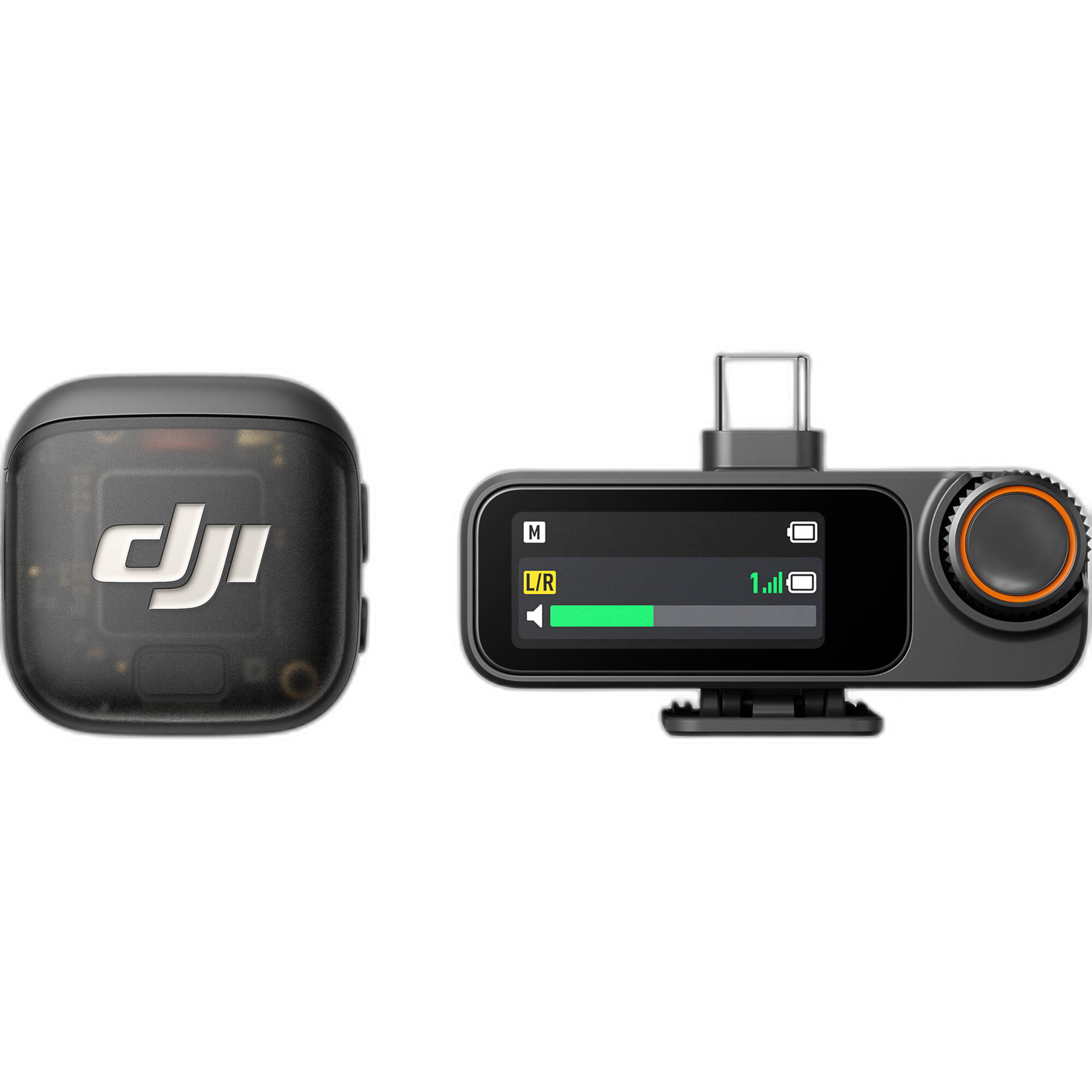
One-speaker camera recording for $169
The DJI Mic 3 (1TX + 1RX) costs $169 and suits a single presenter recording to a camera. Its receiver has a 3.5mm TRS audio output for a camera with a corresponding input, plus a separate 3.5mm headphone output. That allows monitoring at the receiver, rather than guessing from a level meter. Included hardware provides shoe mounting, and an included adapter supports USB-C plug-in use.
The transmitter weighs 16 g, while the receiver weighs 25.1 g. DJI rates their approximate battery life at eight and ten hours, respectively. Magnetic and clip-on transmitter attachment give some flexibility with clothing, and the detachable clip rotates to accommodate different mounting angles.
Adaptive gain control helps manage changing voice levels. There are also three voice tone presets and two-level noise cancelling. For editing, dual-file 32-bit float internal recording provides more flexibility when adjusting recorded levels, while integrated timecode helps synchronize recordings. Choose this kit over the lower-priced Mic 2 kit if the longer rated battery life and lighter transmitter matter to the job.
Two-transmitter USB-C mobile kits at $89 and $159
The DJI Mic 3 Compact Wireless Microphone System for Mobile Devices costs $89. The DJI Mic 3 2-Person Compact Wireless Microphone System for Mobile Devices costs $159. Both have two clip-on transmitters and a direct-plug USB-C receiver, making them options for a host-and-guest interview recorded to a USB-C-equipped iOS or Android phone.
These receivers differ substantially from the camera-mount receiver. Each weighs 6.5 g and measures 39.3 x 27.3 x 9 mm. They use USB bus power and have no 3.5mm audio connections. A secondary receiver port allows the phone to charge during use, which matters when a recording session also keeps the phone screen running.
Both kits provide onboard transmitter recording with 32-bit float and lossless audio modes. Dual-file recording saves raw and processed tracks, giving the editor a choice rather than committing only to the processed version. Embedded timecode helps with multi-camera synchronization. Each transmitter weighs 16 g, with an approximate eight-hour battery rating.
DJI lists up to 1,312 feet of wireless range for both mobile kits, along with dual-band operation and Bluetooth 5.4. Both also offer two-level background noise reduction. For a two-person phone interview on the lowest kit budget in this lineup, start with the $89 option: it already provides dual transmitters and those recording features.
A lower-priced camera kit at $129
The DJI Mic 2 (1 TX + 1 RX) costs $129. This one-transmitter, one-receiver kit suits a solo presenter who wants a camera-mount system at a lower price than the Mic 3 camera kit. It has a shoe mount and 3.5mm audio connectivity. DJI also lists support for USB-C and Lightning outputs.
Internal recording is the important feature here. Each transmitter has 8 GB of storage for up to 14 hours of uncompressed 48 kHz, 24-bit audio. That is storage capacity, not a battery-runtime claim. The transmitter also supports 32-bit float internal recording, giving more room to adjust levels afterward. The 14-hour figure specifically describes the uncompressed 24-bit recording format.
DJI rates both the transmitter and receiver for approximately six hours of operation, and each weighs 28 g. The listed maximum transmission range is 250 m, or 820 feet. Magnetic attachment helps position the transmitter without relying solely on a clip, while intelligent noise cancelling reduces environmental noise. A low-cut setting changes the listed frequency response from 50 Hz to 20 kHz to 100 Hz to 20 kHz, reducing the low-frequency content captured.
A separate four-channel receiver for $99
The DJI Mic 3 Receiver costs $99. Buy this to add a receiver to a Mic 3 setup, rather than as a complete microphone kit. It is particularly relevant when an existing transmitter setup needs to feed another recording device.
DJI Mic 3 supports simultaneous use of up to four transmitters and eight receivers. With select cameras or software, this receiver supports independent output of four audio tracks. That qualification matters: buying a four-channel receiver does not by itself establish four-track recording compatibility with every camera. Timecode input and output support synchronization across recording devices.
The receiver provides a 3.5mm line output and a separate 3.5mm headphone output. An AMOLED touchscreen and onboard controls handle adjustments at the receiver. It supports dual-band wireless operation and Bluetooth 5.4, weighs 25.1 g, and has an approximate ten-hour battery rating. Shoe-mount hardware and a USB-C plug-in adapter are included.
An extra transmitter for $84
The DJI Mic 3 Transmitter costs $84. It is the component to consider when an existing Mic 3 setup needs another person on mic. It is not the same purchase as a transmitter-and-receiver kit, even though it is the lowest-priced item here.
At 16 g and 28.8 x 28.3 x 16.4 mm, the transmitter keeps the on-person portion small. It supports magnetic and clip-on attachment, with a detachable, rotatable clip for sideways or inverted positioning. DJI gives it an approximate eight-hour battery rating. Its omnidirectional pickup captures sound from around the microphone rather than requiring a narrow aiming direction.
Adaptive gain control addresses changes in speaking volume, and two-level noise cancelling provides background-noise adjustment. Three voice tone presets offer further voice customization. Dual-file 32-bit float internal recording and integrated timecode carry the Mic 3 recording workflow onto the additional transmitter. This is an expansion purchase for another voice, not a substitute for the separate receiver needed at a recording device.
How to choose a DJI microphone
- Two people recording to a USB-C phone: Start with the $89 Mic 3 mobile kit. It includes two transmitters and supports phone charging through the receiver.
- One speaker recording to a camera on a smaller budget: Choose the $129 Mic 2 kit for its 3.5mm connectivity and internal recording.
- One speaker with longer battery requirements: Choose the $169 Mic 3 kit for its eight-hour transmitter and ten-hour receiver ratings.
- Another recording destination in a Mic 3 setup: Add the $99 receiver. Check the camera or software's four-track compatibility before planning independent four-channel recording.
- Another person in an existing Mic 3 setup: Add the $84 transmitter rather than buying a receiver you do not need.
All six products are in stock at Unique Photo.
Prices at Unique Photo
- DJI Mic 3 (1TX + 1RX): $169.00
- DJI Mic 3 2-Person Compact Wireless Microphone System for Mobile Devices: $159.00
- DJI Mic 2 (1 TX + 1 RX): $129.00
- DJI Mic 3 Receiver: $99.00
- DJI Mic 3 Compact Wireless Microphone System for Mobile Devices: $89.00
- DJI Mic 3 Transmitter: $84.00
Prices as of October 16, 2026. Browse more: Microphones, DJI at Unique Photo.
Frequently asked questions
What is the cheapest DJI microphone kit in this lineup?
The DJI Mic 3 Compact Wireless Microphone System for Mobile Devices costs $89 and includes two clip-on transmitters with a USB-C receiver. The $84 DJI Mic 3 Transmitter is a separate component, not a transmitter-and-receiver kit.
Does DJI Mic 2 record internally?
Yes. Its transmitter has 8 GB of storage for up to 14 hours of uncompressed 48 kHz, 24-bit audio, and it also supports 32-bit float internal recording.
Can the DJI Mic 3 Receiver output four separate audio tracks?
Yes, when paired with select cameras or software. DJI Mic 3 supports simultaneous use of up to four transmitters and eight receivers.
Can I charge my phone while using a DJI Mic 3 mobile kit?
Yes. Both listed Mic 3 mobile kits have a secondary receiver port that allows the phone to charge during use.