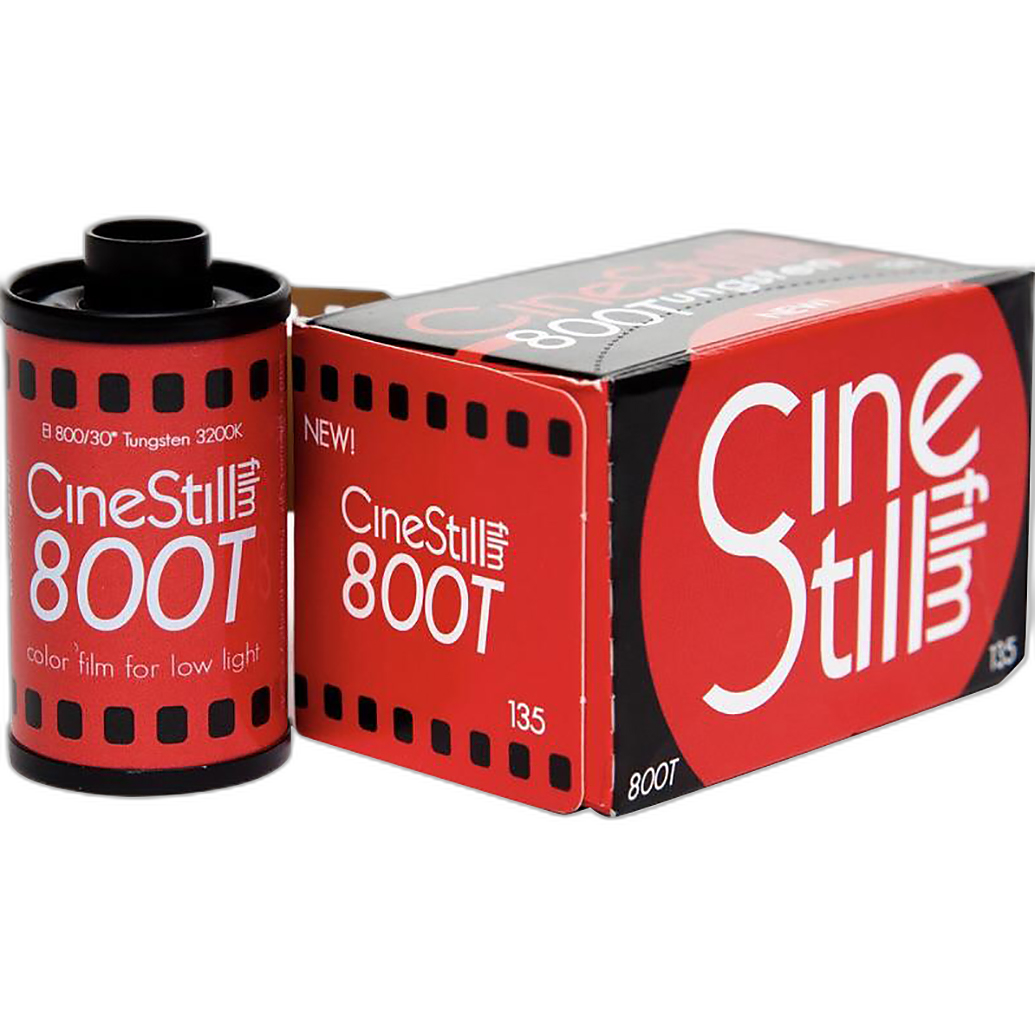
For film photographers chasing neon signs, dim interiors, street lamps, and after-dark portraits, few comparisons come up more often than CineStill 800T vs Kodak Portra 800. Both are ISO 800 color negative films with strong followings, but they are built around very different ideas of what low-light color should look like. One leinterprets city nights through a tungsten-balanced, cinematic palette with pronounced halation; the other offers a daylight-balanced, portrait-friendly rendering known for natural color and flexible skin tones.
From the perspective of the mid-2020s film resurgence, this comparison feels especially timely. As more photographers mix editorial portraiture, nightlife, travel, and personal documentary work on 35mm and 120, choosing the right fast color film often comes down to how you want night to feel. Do you want glow, atmosphere, and stylized color separation? Or do you want a more neutral, adaptable negative that can move from late afternoon into dusk and beyond?
This guide looks closely at the practical and aesthetic differences between CineStill 800T and Kodak Portra 800, with special attention to tungsten vs daylight balance, halation, skin tones, and pushing—the factors that most directly shape real-world night photography.
Why This Is Such a Popular Comparison
At a glance, CineStill 800T and Portra 800 seem like natural rivals because they share the same nominal speed. In practice, though, they often serve different photographers and different visual goals.
CineStill 800T is best known for its tungsten balance and the glowing red-orange halation that can appear around bright point light sources. It has become closely associated with urban night work, diner interiors, practical lighting, and cinematic color. Its look is often part of the reason people choose it.
Kodak Portra 800, by contrast, sits within Kodak’s long-established Portra family and is widely appreciated for smooth tonality, flattering skin tones, and broad usefulness across portrait, wedding, lifestyle, and location work. Though often discussed as a low-light stock, it is not exclusively a night film. It is more of an all-around fast color negative film that many photographers trust when light is changing quickly.
Tungsten vs Daylight Balance
CineStill 800T: Made for Tungsten Light
The defining trait of CineStill 800T is in the name: 800T is tungsten-balanced. That means it is designed to render scenes lit by tungsten sources more naturally, without the strong warm cast daylight-balanced film typically shows under those conditions.
For night photographers, this matters because many urban and interior environments include warm practical lighting, decorative bulbs, mixed street lighting, and other after-dark sources that can quickly skew color. When used in those settings, CineStill 800T can preserve cooler shadows and more neutral highlights in ways that create its distinctive nighttime palette.
Of course, modern city lighting is rarely simple. LEDs, fluorescents, sodium vapor remnants, signage, and mixed-color ambient light can all enter the frame. Even so, 800T is often chosen precisely because it embraces that complexity in a visually expressive way.
Portra 800: Daylight-Balanced Flexibility
Kodak Portra 800 is daylight-balanced, making it the more conventional choice for daylight and mixed natural-light shooting. If your session starts in late afternoon and continues into blue hour and then into ambient evening light, Portra 800 often feels easier to integrate into a broader workflow.
At night, however, daylight balance means warm artificial light sources will generally stay warm unless filtered or corrected in scanning/printing. Some photographers see this as a challenge; others see it as a strength. Portra 800 can preserve the warmth and atmosphere of night scenes while still keeping its color negative flexibility.
If your work centers on portraits that begin before sunset and continue after dark, Portra 800 may be the simpler all-purpose stock. If your work starts once artificial light dominates, CineStill 800T may be the more intentionally matched film.
Halation and the Look of Bright Lights
CineStill 800T and Its Signature Glow
No comparison between these films is complete without discussing halation. CineStill 800T is famous for the visible halo that can appear around bright highlights, especially headlights, neon, street lamps, practical bulbs, and illuminated signage. For many photographers, this is not a flaw but the entire point. It contributes to the film’s recognizable cinematic atmosphere and gives night scenes a dreamlike bloom.
This effect is especially dramatic when strong point light sources sit against darker backgrounds. If you want your night photography to feel stylized, moody, and unmistakably filmic, CineStill 800T has an immediately identifiable signature.
That said, halation is not always desirable. In scenes where clean edge definition matters, or where bright practicals sit close to faces, the glow can become visually dominant. It is best understood as a creative characteristic rather than a neutral rendering trait.
Portra 800: A More Controlled Highlight Response
Portra 800 does not carry the same signature halation look. Highlights generally appear more restrained and less attention-grabbing, which can make the film feel more naturalistic. For photographers who want night scenes to retain shape and separation without glowing halos around every bright source, Portra 800 can be the better fit.
This is one of the clearest dividing lines between the two films. CineStill 800T often turns light sources into subjects of their own. Portra 800 tends to keep them integrated into the overall scene.
Skin Tones: Stylized vs Natural
CineStill 800T for Atmosphere-Driven Portraits
Skin tones on CineStill 800T can be compelling, especially in environments lit by practical tungsten sources or in nightlife settings where ambient color is part of the image’s emotional effect. But they are rarely the main reason portrait photographers choose the stock. Instead, the appeal usually lies in the way subjects sit within the scene: under neon, by a diner window, beside a glowing sign, or in a moody interior.
Because the film is so tied to artificial light character, skin on 800T often feels interpretive rather than strictly neutral. That can be beautiful for editorial, music, fashion, and cinematic portrait work, especially when the color cast of the environment is meant to remain visible.
Portra 800 and the Portra Reputation
Portra 800 is widely favored for skin tones. Within the Kodak Portra line, the emphasis on pleasing, natural-looking portrait color is a major part of the film’s reputation. In practical terms, that means Portra 800 is often the safer choice when faces matter most and you want an image that scans well across a range of lighting conditions.
For weddings, events, family portraits, and low-light environmental portraiture, Portra 800 often wins on consistency. It can still convey warmth and atmosphere, but it generally keeps skin more grounded and familiar than CineStill 800T. If your night photography is really portrait photography after sunset, Portra 800 may be the more dependable stock.
Pushing: How Each Film Fits Low-Light Work
Both films are commonly discussed in the context of pushing, since night photography often demands extra exposure flexibility. Photographers frequently turn to fast color films because they need to work handheld, stop motion, or preserve ambient light without flash.
CineStill 800T has a strong reputation among photographers who like to lean into the look of underlit urban scenes and then push for additional speed. Its contrast and highlight behavior can become an expressive part of the result, especially in city environments where practical light sources dominate the frame.
Portra 800 is also valued for flexibility in difficult light and is often chosen by photographers who want a fast film that remains oriented toward balanced, usable negatives. When pushed, many shooters appreciate that they are still operating within the familiar Portra color world rather than shifting into a more overtly stylized rendering.
In short, if pushing is part of a broader atmospheric night aesthetic, CineStill 800T often feels purpose-built for that creative direction. If pushing is mainly a practical tool to keep shooting in fading or low light while retaining natural portrait color, Portra 800 often makes more sense.
Which Film Is Better for Night Photography?
Choose CineStill 800T If You Want:
- Tungsten-balanced color for artificial-light scenes
- Visible halation around bright light sources
- A cinematic, stylized night look
- Night cityscapes, neon, interiors, and mood-driven portraits
Choose Kodak Portra 800 If You Want:
- Daylight-balanced versatility
- More natural, dependable skin tones
- A cleaner, less halo-heavy highlight rendering
- One fast color negative film for portraits, events, travel, and dusk-to-night shooting
Final Thoughts
In the end, CineStill 800T vs Kodak Portra 800 is not just a speed comparison. It is a choice between two philosophies of color film shooting after dark. CineStill 800T is about embracing the drama of artificial light—its color shifts, its glow, and its emotional intensity. Portra 800 is about broad flexibility, flattering people, and maintaining a more natural visual language even as light levels fall.
Neither film is universally better. The better film is the one that matches your subject, your lighting, and the way you want night to feel on film. If you want your images to glow, CineStill 800T remains one of the most distinctive options in modern analog photography. If you want a fast, portrait-friendly negative with strong all-around usability, Kodak Portra 800 continues to earn its place.
To explore film stocks like CineStill 800T and Kodak Portra 800, or to learn more about analog photography gear and technique, visit Unique Photo—a trusted place to buy film and get expert guidance.