Introduced in 2022, CineStill 400D arrived as a notable addition to the company’s growing lineup of motion-picture-derived still films. For photographers who had come to associate CineStill with tungsten-balanced stocks and distinctive glowing highlights, 400D offered something both familiar and newly practical: a daylight-balanced ISO 400 color negative film, processed in standard C-41 chemistry, with the company’s signature remjet-free approach. In a market where fresh film releases were rare and every new emulsion drew close attention, 400D stood out as a versatile option aimed squarely at everyday shooting.
At its core, CineStill 400D combined several traits that appealed to contemporary film photographers: medium speed, daylight balance, warm color, broad exposure latitude, and the halation characteristics many shooters had come to expect from remjet-removed cinema-origin films. The result was a stock that felt at home in bright outdoor conditions, mixed natural light, travel photography, portraiture, and general-purpose use. Rather than being a niche specialty film, 400D positioned itself as an accessible color negative choice for photographers who wanted cinematic character without giving up convenience.
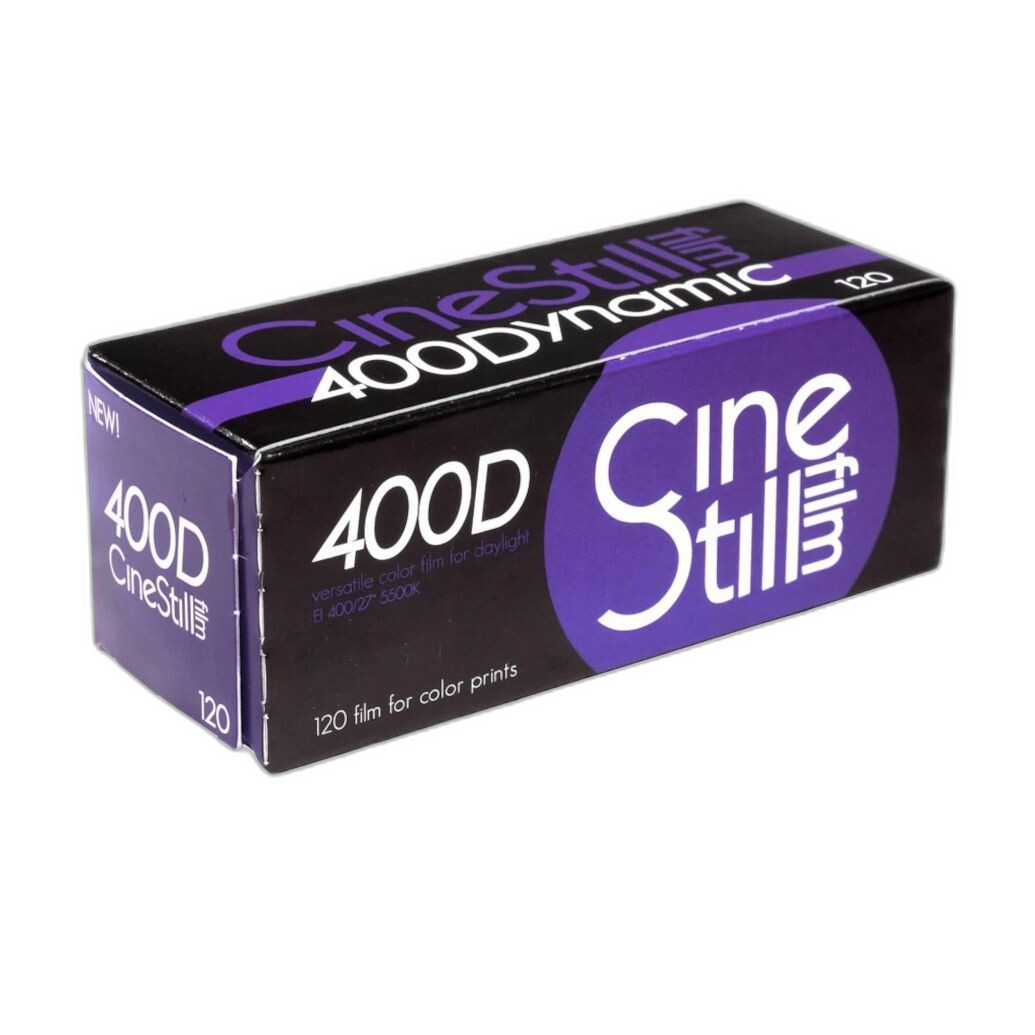
A New Daylight Option in the CineStill Line
By the time CineStill 400D was released, CineStill had already established a strong identity among film enthusiasts. The company’s remjet-removed films had become recognizable not only for compatibility with standard minilab C-41 processing, but also for a rendering style that differed from conventional consumer color negative stocks. CineStill 400D extended that formula into a speed and color balance that many photographers consider especially useful.
Its key characteristics were straightforward but compelling. CineStill 400D is a color negative film designed for C-41 processing, with remjet removed. It is rated at ISO 400 and balanced for daylight. Aesthetically, it is associated with a warm palette, visible halation under the right highlight conditions, and wide exposure latitude. Those qualities made it easy to view 400D as a practical film for regular use rather than a stock reserved only for stylized work.
The timing also mattered. In the early 2020s, renewed interest in film photography had increased demand for versatile color emulsions. Photographers wanted stocks that were easy to process, easy to meter, and distinctive enough to feel different from mass-market alternatives. CineStill 400D fit that moment well.
What Makes CineStill 400D Distinctive
Daylight Balance
The daylight balance of 400D was one of its most obvious selling points. Unlike tungsten-balanced motion picture stocks that often invite either correction filters or deliberate color shifts in daylight, 400D was intended for use under daylight conditions from the start. That made it more straightforward for outdoor photography, travel work, and daytime portraiture, while still retaining the visual identity many users associate with CineStill.
For photographers who shoot casually or frequently in changing natural light, this balance simplified the process. It reduced one layer of technical adaptation and helped position 400D as an all-purpose film rather than a highly specialized one.
ISO 400 Versatility
ISO 400 remains one of the most broadly useful speed ratings in film photography, and CineStill 400D benefited from that long-standing practicality. A 400-speed film offers enough flexibility for handheld shooting in many daytime and overcast conditions, while also remaining adaptable for interiors with brighter window light or for shooting later into the day. For many photographers, that means fewer compromises and less need to switch rolls as conditions change.
That versatility was central to 400D’s appeal. It was not simply about cinematic color; it was about making that character available in a speed that could genuinely serve as a daily carry film.
Remjet Removed and C-41 Processing
One of the most important practical features of CineStill 400D is its remjet-free design. Traditional motion picture films use a remjet backing, which is valuable in cinema workflows but unsuitable for standard C-41 still-photo processing. By removing the remjet layer, CineStill makes a cinema-origin style of film more accessible to still photographers, allowing development through ordinary C-41 labs.
This accessibility helped define the CineStill brand, and 400D continued that approach. For photographers without access to specialty motion picture processing, the ability to drop off a roll at a standard color lab remained a major advantage.
Warm Tones, Halation, and Latitude
Visually, CineStill 400D was associated with warmth, especially in sunlit scenes and skin tones. That warmth contributed to a pleasing, inviting look that many photographers found well suited to lifestyle imagery, portraits, travel, and street photography. It could convey a sense of softness and atmosphere without necessarily appearing exaggerated.
Then there is halation, a trait often discussed whenever CineStill films are mentioned. With the remjet layer absent, bright point highlights and strong backlighting can produce a glowing halo effect that many users regard as part of the film’s signature. On 400D, that can be a creative feature rather than a flaw, especially in scenes with reflective surfaces, direct sun, practical lights, or strong highlight contrast.
Wide latitude rounded out the profile. Color negative films are often prized for their forgiving nature, and 400D’s latitude made it attractive to shooters who value flexibility in metering and scanning. Whether photographing high-contrast daylight scenes or exposing for softer tones and shadow detail, the film offered room to work in a range of conditions.
How CineStill 400D Fits Real-World Shooting
CineStill 400D’s specification set naturally suggested broad use. For travel photographers, it offered enough speed for varied environments and enough character to keep images from feeling overly clinical. For portrait photographers, its warm rendering and smooth color-negative behavior made it attractive for natural-light sessions. For street and documentary-inspired work, its daylight balance and ISO 400 speed made it easy to keep loaded in a camera and trust across the course of a day.
It also appealed to photographers moving into film from digital systems. A stock like 400D had a clear identity, but it did not demand exotic handling or unusual processing. In that way, it bridged convenience and personality: standard C-41 development on one side, unmistakable rendering on the other.
Just as importantly, 400D was a film that rewarded attention to light. In flat, even illumination, it could produce pleasing warmth and a broad tonal range. In more dramatic lighting, it could lean into its halation and cinematic associations. That meant users could either treat it as a dependable everyday emulsion or deliberately use it to emphasize atmosphere.
Its Place in the 2022 Film Landscape
Seen from the perspective of its release period, CineStill 400D represented more than a new box on the shelf. It reflected the ongoing maturation of the modern film market, where photographers increasingly sought stocks with distinct visual personalities. In a period defined by renewed enthusiasm for analog tools, a daylight-balanced ISO 400 CineStill film felt like a logical and welcome expansion.
It also underscored a broader trend in contemporary film culture: photographers were no longer choosing films only by speed and grain, but by mood, highlight behavior, scan response, and overall rendering. CineStill 400D entered that conversation with a clear identity. It promised color negative ease, daylight practicality, and cinematic character in one package.
For archival purposes, that makes 400D an especially revealing release. It shows how film manufacturers and specialty brands in the 2020s were responding not just to technical demand, but to aesthetic demand. Photographers wanted a film that worked hard, but they also wanted one that looked unmistakably like itself.
Why CineStill 400D Matters
CineStill 400D matters because it brought together several desirable traits in a single, approachable film: ISO 400 flexibility, daylight balance, C-41 convenience, warm color, broad latitude, and the halation effect that has become central to the CineStill visual signature. It was not merely another color negative stock; it was a film intended to make cinematic color part of everyday photography.
That balance between usability and character is what gives 400D its place in recent film history. Released in 2022, it arrived at a moment when analog photography was expanding beyond nostalgia and into active creative practice for a new generation of shooters. For many of them, 400D offered exactly what the moment called for: a practical film with personality.
If you are interested in shooting CineStill 400D or exploring more about film photography history and current emulsions, Unique Photo is a great place to buy film, gear, and learn more from a knowledgeable photographic community.