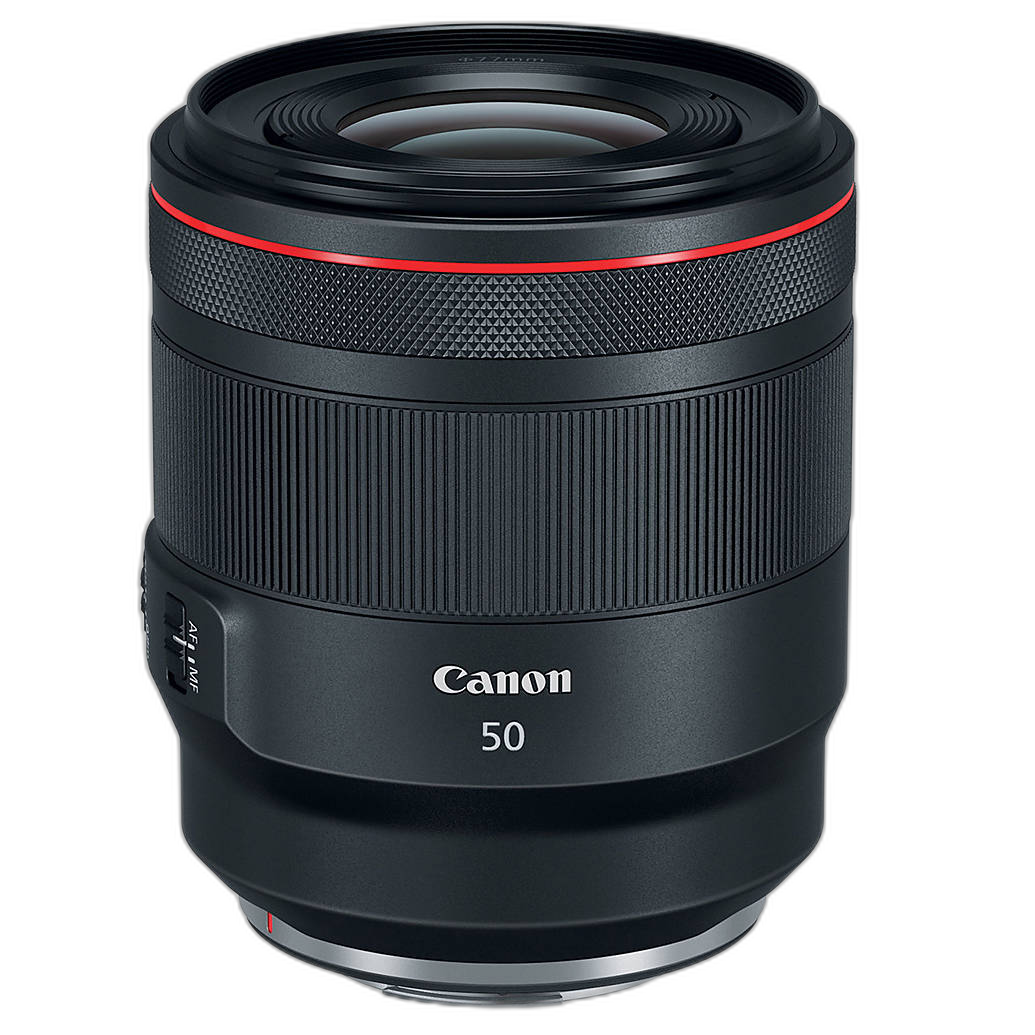
When Canon introduced the EOS R system in 2018, photographers immediately asked the question that follows every new mount: why does this one matter? Camera bodies can open the door, but lenses are what make a system feel inevitable. In the earliest days of RF, few optics answered that question more convincingly than the Canon RF 50mm f/1.2L USM. Launched on September 5, 2018, alongside the debut of Canon’s full-frame mirrorless platform, this premium standard prime arrived not as a cautious transition product, but as a bold statement of intent.
At 50mm and with a headline aperture of f/1.2, the lens occupies one of photography’s most familiar focal lengths. Yet in the context of Canon’s new RF mount, it represented something larger than a fast normal prime. It was a demonstration of what Canon believed a short flange distance and wider mount could do when optical engineers were given room to prioritize image quality and creative rendering at the highest level. For many early observers, this was the lens that made the case for RF.
A Defining Lens for a New System
The significance of the RF 50mm f/1.2L USM becomes clearer when viewed against Canon’s broader lens history. Canon has long treated the 50mm f/1.2 category as a showcase class: a lens family where speed, depth of field control, low-light utility, and optical character all intersect. In the EF era, 50mm f/1.2 already carried prestige, especially in Canon’s L-series lineup. But the RF version arrived with added pressure. It was not simply replacing an existing lens in spirit; it was helping justify the creation of an entirely new mount.
That made the RF 50mm f/1.2L USM more than a spec-sheet exercise. It needed to look and feel like a product only possible, or at least fully realized, in the RF era. Canon positioned it accordingly. As an L-series lens, it carried the expectations attached to the company’s professional grade optics: robust construction, premium handling, and performance aimed at demanding users. Just as importantly, it was introduced at a launch price of $2,299, firmly placing it among serious enthusiast and professional tools rather than mainstream standard primes.
Why 50mm Still Matters
There are few focal lengths in photography with the historical weight of 50mm. For decades, the 50mm lens has occupied a sweet spot between reportage, portraiture, documentary work, editorial assignments, weddings, and everyday shooting. It is wide enough to feel natural in many environments, yet narrow enough to isolate a subject without the stronger compression associated with short telephotos.
Because of that versatility, a flagship 50mm often serves as a kind of philosophical lens for a system. It reveals what a manufacturer wants images to look like. It also tells photographers how seriously a company takes core focal lengths. By opening the RF era with a premium 50mm f/1.2, Canon effectively said that the standard lens was not an afterthought. It was central to the identity of the new mount.
The f/1.2 maximum aperture amplified that message. In practical terms, it offered strong low-light capability and substantial control over depth of field. In aesthetic terms, it suggested confidence: Canon was not introducing RF with conservative compromises, but with a lens designed to appeal to photographers who care deeply about subject separation, tonal transitions, and the look of out-of-focus areas.
The RF Mount as an Optical Opportunity
In the release-period conversation around RF, one recurring theme was design freedom. Canon’s new full-frame mirrorless mount gave its lens designers a different set of physical constraints and opportunities compared with the long-established EF platform. That mattered most at the high end, where small gains in sharpness, correction, and rendering can define a lens’s reputation.
The RF 50mm f/1.2L USM quickly became a focal point in those discussions. Here was a lens that symbolized what the mount could do when Canon aimed high. Its very existence suggested that the company did not intend RF merely as a way to replicate EF capabilities on mirrorless bodies. Instead, Canon was using RF to reset expectations for premium optics. Even photographers who were not ready to switch systems often acknowledged that the lens made an argument on behalf of the mount itself.
That mattered strategically. New systems need ambition, and ambitious products need proof points. The RF 50mm f/1.2L USM was one of the strongest proof points available at launch.
L-Series Positioning and Professional Appeal
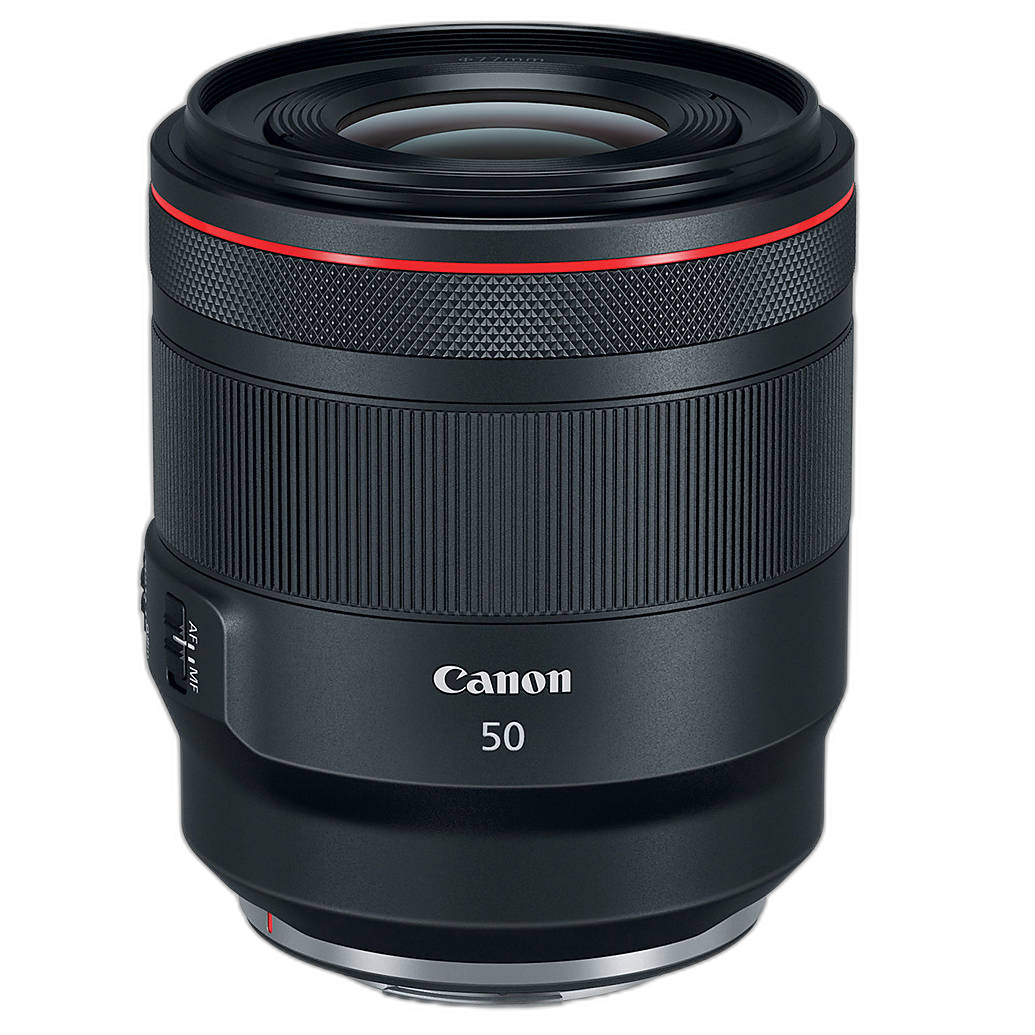
The red ring of Canon’s L-series has long carried meaning beyond branding. It signals a lens built for photographers who rely on their equipment under pressure and who expect a premium optical experience. In that tradition, the RF 50mm f/1.2L USM arrived as a lens for wedding photographers, portrait specialists, editorial shooters, and anyone whose work benefits from a fast normal prime with a refined look.
From a market standpoint, this was an important early move. New mirrorless systems often debut with smaller, safer, or more consumer-oriented lenses before moving into professional territory. Canon did the opposite here by giving RF a prestige optic from the outset. That told working photographers that the company was serious about attracting top-end users, not only enthusiasts curious about mirrorless technology.
There was also a symbolic component. A 50mm f/1.2 is not a lens purchased on convenience alone. It is a lens photographers choose because they care about what images look like, how a lens draws, and what creative possibilities become available at a very bright aperture. In that sense, the RF 50mm f/1.2L USM addressed the emotional side of system adoption as much as the technical one.
How the Lens Fit the 2018 Moment
Seen from the release period, the timing of the RF 50mm f/1.2L USM was especially meaningful. By 2018, the full-frame mirrorless market had become a serious competitive arena. Every major launch was being read not just as a product release, but as a statement about long-term direction. Canon needed to show both continuity and forward momentum: continuity for users invested in the Canon ecosystem, and forward momentum for those wondering whether the company’s mirrorless future would be compelling enough to demand attention.
The RF 50mm f/1.2L USM helped answer both concerns. It connected naturally to Canon’s long history of fast standard primes while also signaling a new chapter. It was familiar enough to be understood immediately and ambitious enough to feel new. That balance is one reason the lens became such a touchstone in early conversations about the EOS R system.
Importantly, it also served as a kind of reassurance to photographers who feared that mirrorless transitions might lead to compromise. Instead, Canon launched RF with a lens that suggested the opposite: that mirrorless could be the platform where the company pursued its most uncompising standard primes.
An Archival View of Its Legacy
Looking back, it is easy to see why the Canon RF 50mm f/1.2L USM has remained one of the defining early RF lenses. At 50mm, with an f/1.2 maximum aperture and Canon RF mount, it was a straightforward concept on paper. But historically, its importance lies in what it represented at launch. It distilled the promise of RF into a single object: premium design, professional intent, and a strong argument that Canon’s new mount was built to support lenses of real distinction.
Not every important lens changes the direction of a system. Some simply clarify it. The RF 50mm f/1.2L USM did exactly that in 2018. It told photographers that RF would not be defined only by adaptation from the DSLR era, but by native optics designed to make the most of a new platform. For a great many observers, that was the moment the case for RF stopped being theoretical.
Final Thoughts
As an archival piece from the launch era, the Canon RF 50mm f/1.2L USM stands as one of the clearest early expressions of Canon’s mirrorless ambitions. Released on September 5, 2018, with a launch price of $2,299, it arrived as a premium L-series prime meant to show what the RF mount could become. More than a fast 50mm, it was a confidence lens: the kind of product that gives photographers a reason to believe in a new system.
If you are exploring Canon lens history, researching the early RF era, or looking to buy Canon RF lenses today, Unique Photo is a great place to learn more, compare gear, and shop the system.