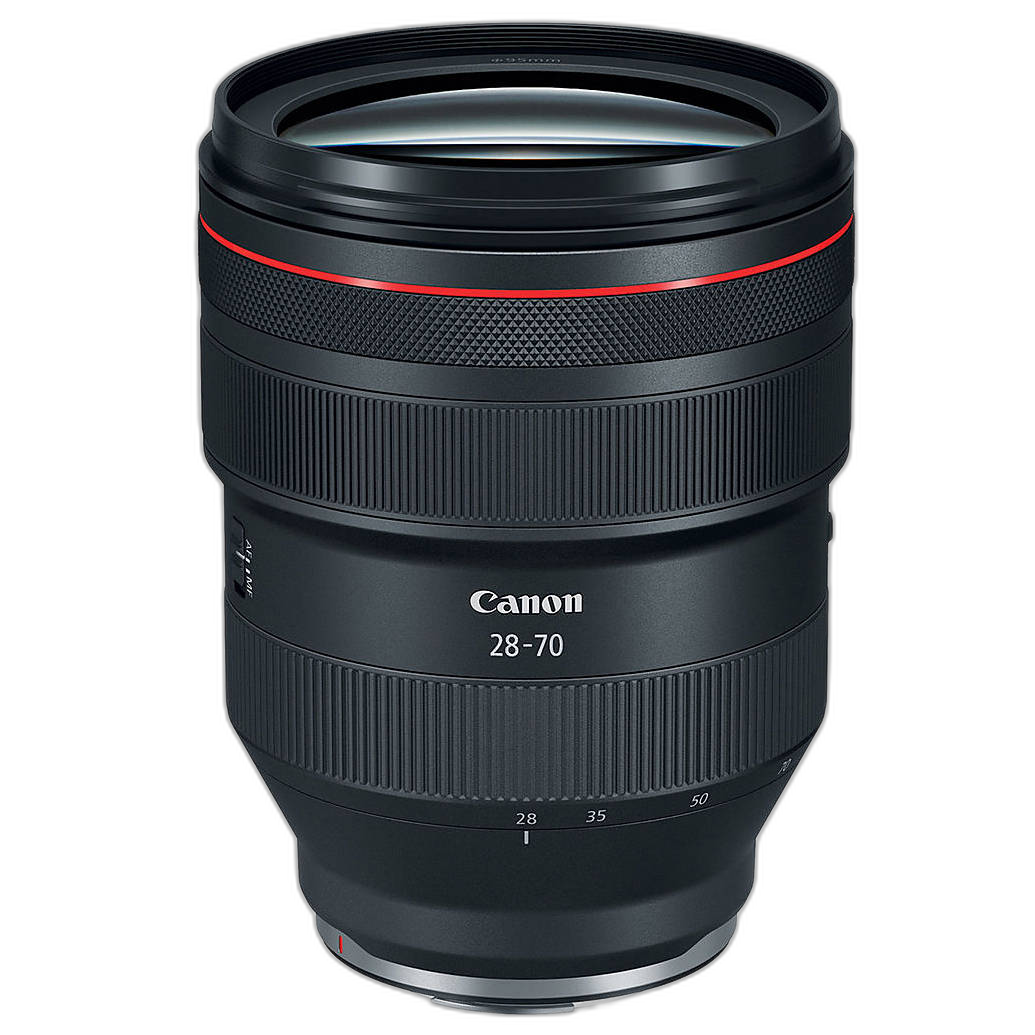
When Canon introduced the EOS R system in 2018, it was clear the company wanted to make a statement not just about mirrorless cameras, but about what a full-frame zoom lens could be. The Canon RF 28-70mm f/2L USM, announced alongside the new RF mount on September 5, 2018, was that statement in optical form. At a glance, its headline spec sounded almost improbable: a standard zoom covering 28-70mm with a constant f/2 maximum aperture. In practical terms, this was a lens designed to challenge assumptions. Zooms were supposed to be convenient; primes were supposed to be fast. Canon set out to blur that line.
For photographers following Canon's lens history, the significance was immediate. Canon had long been willing to push lens design in ambitious directions, particularly in its professional L-series. But the RF 28-70mm f/2L USM felt like a new kind of flagship: a lens made possible by a new mount, a new registration distance, and a modern mirrorless design philosophy that prioritized optical performance even when it required substantial size, weight, and cost. With a launch price of $2,999, this was clearly not an everyday kit zoom. It was a showcase optic aimed at professionals and serious enthusiasts who wanted prime-like speed without giving up the flexibility of a zoom.
A Landmark Lens for the RF Era
The debut of the RF mount gave Canon an opportunity to rethink lens design from the ground up. New mounts often arrive with safe, familiar products, but Canon chose to lead with something bolder. The RF 28-70mm f/2L USM was among the most attention-grabbing of the original RF lenses because it represented a genuine expansion of what photographers could expect from a standard zoom.
Historically, the 24-70mm f/2.8 category had become one of the most important workhorse formats in professional photography. Wedding photographers, photojournalists, portrait shooters, and commercial creators relied on that range as a dependable do-everything solution. Canon did not replace that formula outright with the RF 28-70mm f/2L USM, but it did offer a more specialized, more daring alternative. By giving up some width at the short end and accepting a much larger physical design, Canon delivered a full stop of additional light compared with the classic f/2.8 standard zoom.
That extra stop mattered. It promised lower ISO settings in available-light conditions, more control over depth of field, and a shooting experience closer to working with fast primes. For photographers who routinely moved between environmental views, half-length portraits, and tighter compositions, the idea of carrying one lens that could cover several prime-like looks was compelling.
Key Specifications at Launch
- Focal length: 28-70mm
- Maximum aperture: f/2
- Mount: Canon RF
- Launch date: September 5, 2018
- Launch price: $2,999
Even today, those specifications read as ambitious. In the context of 2018, they were a clear signal that Canon intended the RF system to compete not only on camera bodies, but on lenses that photographers could not easily find elsewhere.
Why the f/2 Zoom Was Such a Big Deal
To understand the excitement around the RF 28-70mm f/2L USM, it helps to think about how photographers typically built their kits. Fast prime users often favored lenses like a 28mm, 35mm, 50mm, or 85mm because of their wide apertures and rendering. Standard zoom users favored convenience, speed of framing, and reduced lens changes. Canon's RF 28-70mm f/2L USM attempted to merge those approaches in a single professional tool.
At 28mm, the lens could serve documentary, event, and environmental portrait work. Around 50mm, it moved naturally into classic normal-lens territory. At 70mm, it reached into flattering short-telephoto framing. Across that range, the constant f/2 aperture offered a visual signature uncommon for zooms: stronger subject separation and a more luminous viewfinder experience than photographers were used to in this class.
It is important, though, to note what this lens was not. It was not a compact travel zoom, and it was not a budget-minded entry point into the RF system. The lens was unapologetically premium. Canon was asking photographers to accept the tradeoffs that come with a lens built around speed and image quality first. For many professionals, that trade made perfect sense.
An L-Series Flagship in Spirit and Execution
The red ring matters in Canon's history. L-series lenses have long stood for the company's professional-grade optics, and the RF 28-70mm f/2L USM arrived with the expectations that badge carries. This was a lens meant to showcase the upper end of Canon's engineering ambitions in the early RF era.
From a historical standpoint, it also helped define what RF lenses were going to be. Rather than merely adapting EF-era ideas to a new mount, Canon used the transition to mirrorless to create products with a distinctly forward-looking character. The RF 28-70mm f/2L USM quickly became one of the signature examples cited whenever photographers discussed the advantages of designing lenses specifically for the RF mount.
That mattered because the early success of a camera system often depends on confidence. Buyers want to know whether a new mount is being treated as a side project or a serious long-term platform. In 2018, a lens like this helped answer that question. Canon was clearly serious.
Who This Lens Was Built For
A lens of this scale and price naturally targeted photographers with demanding real-world needs. Wedding and event photographers were among the most obvious audiences. The combination of versatile focal lengths and f/2 brightness made sense for dim receptions, fast-moving candid coverage, and portraits with dramatic background blur. Commercial portrait photographers could also see the appeal in having multiple useful framing options in one lens without stepping down to f/2.8.
Editorial and documentary shooters were another likely audience, particularly those who valued the ability to move quickly without changing lenses. For video creators working in the emerging RF ecosystem, the idea of a constant f/2 zoom also carried obvious creative appeal, especially when working with full-frame sensors where depth-of-field control becomes a strong part of the visual style.
At the same time, this was a lens for photographers who knew exactly what they wanted. Some users would still prefer the broader wide end and lighter handling of a more conventional 24-70mm f/2.8. Others would continue to favor the smaller size and distinctive rendering of individual primes. The RF 28-70mm f/2L USM did not eliminate those choices. Instead, it introduced a compelling new one.
A Historical Snapshot of Canon's Mirrorless Ambition
Looking back at its release period, the Canon RF 28-70mm f/2L USM stands as one of the clearest expressions of Canon's early mirrorless strategy. The company was not content to enter the full-frame mirrorless market cautiously. It wanted lenses that made photographers stop, look twice, and reconsider what was possible. This zoom did exactly that.
Its importance is not just in the numbers, though the numbers remain striking. It is in what the lens represented: a confidence-building flagship, a technological flex, and a practical tool for image-makers who wanted something that sat between a fast prime set and a conventional standard zoom. The phrase "a zoom that thinks it's a prime" captures the spirit well because the lens invited photographers to expect more from a zoom than they traditionally had.
Enduring Appeal
As an archival piece from the lens's launch era, the RF 28-70mm f/2L USM is easy to recognize as one of the defining products of Canon's 2018 RF debut. It combined professional ambition, a standout specification, and the prestige of the L-series in a way that gave the new mount instant credibility. Whether viewed as a specialized workhorse or a showcase of optical daring, it remains one of the most memorable standard zooms of its generation.
For photographers interested in Canon lens history, or for those considering the RF system and its standout optics, the RF 28-70mm f/2L USM remains a landmark worth knowing. To buy Canon RF lenses or learn more about legendary gear like this, visit Unique Photo.