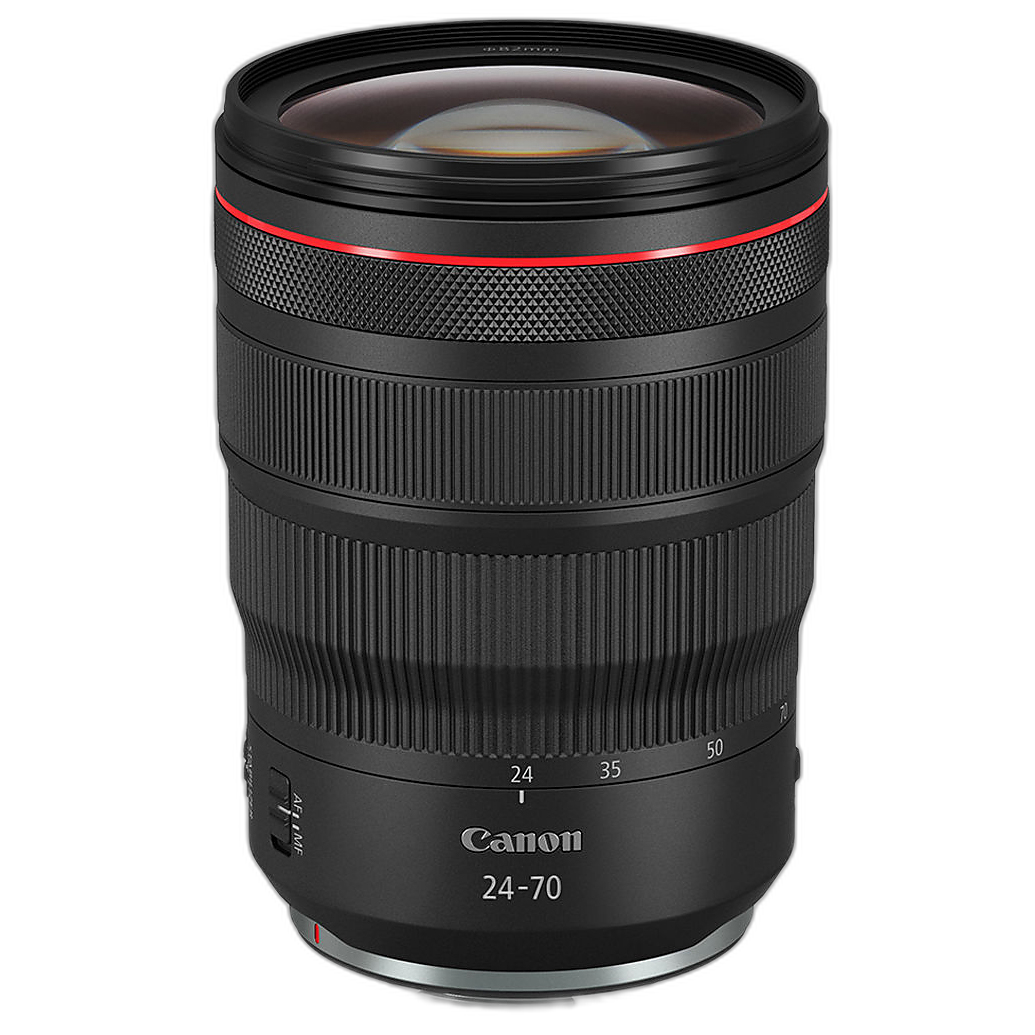
When Canon introduced the RF mount, one of the clearest questions from working photographers was how quickly the system would gain its core professional lenses. A fast 24-70mm has long been one of the most important tools in that conversation. With the Canon RF 24-70mm f/2.8L IS USM, announced in 2019, Canon delivered a lens that signaled serious intent for the EOS R system: this was not just a placeholder standard zoom, but a flagship everyday optic aimed at wedding photographers, photojournalists, event shooters, commercial creators, and hybrid image-makers who needed dependable performance across a broad range of assignments.
Historically, the 24-70mm f/2.8 format has been one of the defining professional zoom categories of the digital era. It covers wide-angle environmental scenes, natural-looking normal perspectives, and short telephoto framing for portraits and details, all while maintaining a constant f/2.8 maximum aperture. In the RF era, Canon’s version added another crucial feature to that established formula: image stabilization. That inclusion helped distinguish the lens at launch and made it especially attractive to photographers and videographers transitioning into the new mount.
A Foundational Lens for the RF System
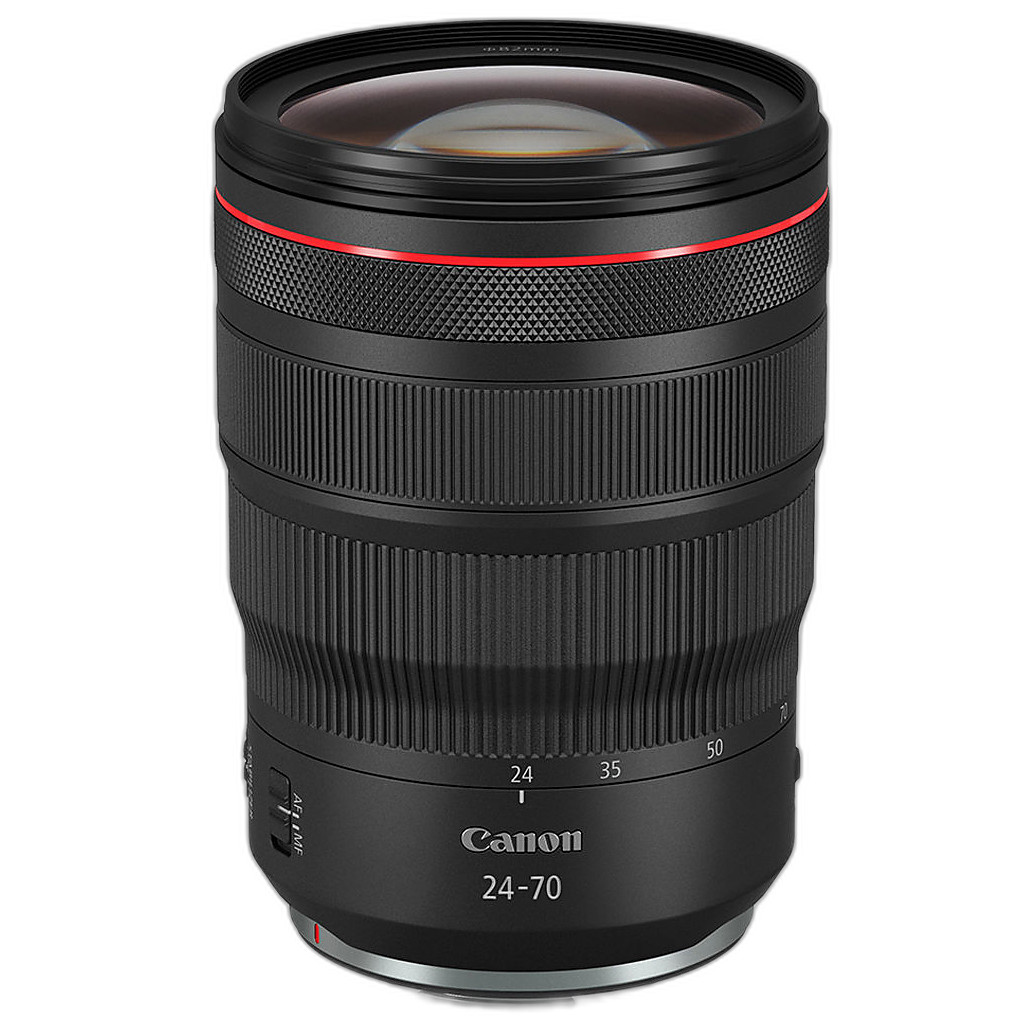
The Canon RF 24-70mm f/2.8L IS USM arrived on 2019-08-28, during a formative period for Canon’s full-frame mirrorless lineup. At that point, the EOS R system was still building out its identity, and lens strategy mattered as much as camera bodies. Canon had already shown that the RF mount could support ambitious optical designs, but a professional system also needs practical workhorse lenses that can stay on the camera for most of the day. This lens filled that role immediately.
Its specification reads like a checklist for pro use: 24-70mm focal range, a constant f/2.8 aperture, Canon RF mount compatibility, and built-in stabilization. Introduced at a launch price of $2,299, it was positioned squarely in the premium professional market, in line with expectations for Canon’s L-series glass. That price also reflected the lens’s status as one of the central pillars of the new system rather than a budget-oriented option.
Why 24-70mm Matters So Much
There are few zoom ranges more universally useful than 24-70mm. At 24mm, photographers can work in tight interiors, capture landscapes, or place subjects in context. Moving through the middle of the range provides natural documentary perspectives that suit street work, travel, and general assignment photography. At 70mm, the lens reaches into flattering portrait territory and allows tighter compositions without changing lenses.
For professionals, that flexibility is often the difference between getting the shot and missing it. Wedding photographers can move from venue overviews to candid moments to portraits. Editorial and corporate shooters can cover environmental portraits and event details. Commercial creators can handle product scenes, behind-the-scenes content, and interview setups with one lens. In that sense, the RF 24-70mm f/2.8L IS USM fit into a lineage of indispensable standard zooms—but it did so with mirrorless-era expectations for responsiveness, optical refinement, and stabilization.
The Significance of f/2.8 and Stabilization
Constant f/2.8 for Professional Control
A constant f/2.8 aperture remains one of the strongest indicators that a lens is meant for demanding use. It offers a practical balance of light-gathering ability, subject separation, and exposure consistency throughout the zoom range. For still photographers, that means confidence in dim churches, reception halls, backstage environments, and indoor venues. For portrait and event work, it also provides the familiar rendering and background control that many professionals expect from a flagship standard zoom.
Built-In IS as a Mirrorless-Era Advantage
The inclusion of IS was especially notable at release. Canon users coming from DSLR systems were familiar with excellent 24-70mm f/2.8 lenses, but stabilization in this category was a meaningful addition. In practical terms, it expanded handholdability in low light and improved general usability for video shooters, documentary creators, and photographers who wanted extra confidence at slower shutter speeds. During the early RF period, that stabilization helped reinforce the idea that Canon was not merely recreating its EF catalog in a new mount, but actively updating key lens categories for contemporary shooting needs.
L-Series Expectations in the RF Age
The red ring carries a specific historical weight in Canon’s system. An L-series lens is expected to be durable, optically serious, and dependable under professional workloads. The RF 24-70mm f/2.8L IS USM entered the market with exactly those expectations attached. While archival discussions should be careful not to overstate what is not documented here, it is entirely fair to place this lens within Canon’s long tradition of premium standard zooms built for sustained real-world use.
That legacy matters because many photographers evaluating the RF system in 2019 were comparing it not only to other mirrorless platforms, but also to Canon’s own EF history. The question was whether RF lenses would feel like true successors to the brand’s best-known professional tools. In the case of the RF 24-70mm f/2.8L IS USM, the answer was clearly yes. Its very existence gave current Canon shooters a compelling reason to believe the system would support professional workflows without compromise.
Who This Lens Was For at Launch
A lens like this is rarely aimed at casual experimentation alone. At launch, its natural audience included:
- Wedding and event photographers who need one lens to handle preparations, ceremonies, receptions, and portraits.
- Photojournalists and editorial shooters who work quickly and need versatility without changing lenses constantly.
- Commercial and corporate photographers producing a mix of environmental portraits, interiors, and detail images.
- Travel and documentary creators who value broad utility in a premium zoom.
- Hybrid shooters and videographers looking for the added benefit of stabilization in a fast standard zoom.
That broad appeal is exactly why the phrase “workhorse” fits so well. This is the kind of lens many photographers would expect to live on the camera body for the majority of a shoot.
An Early RF System Statement
Seen from the release period, the Canon RF 24-70mm f/2.8L IS USM was more than just another lens announcement. It was a statement about the maturity Canon wanted the RF system to project. Mirrorless success depends on confidence, and confidence in turn depends on lenses that working photographers can trust. By delivering a professional-grade 24-70mm f/2.8 with stabilization relatively early in the life of the mount, Canon addressed one of the most essential categories in any serious full-frame system.
It also helped frame the RF ecosystem as one built around both innovation and continuity. The lens followed a familiar professional formula, yet adapted it to the priorities of a newer platform. That balance was one of the defining stories of Canon’s transition into full-frame mirrorless.
Historical Perspective
In hindsight, lenses like the RF 24-70mm f/2.8L IS USM often tell us as much about a system’s ambitions as a camera body does. Camera bodies tend to arrive in faster cycles, but a standard professional zoom becomes part of the daily vocabulary of photographers for years. It shapes how a system is judged in the field. In 2019, this lens represented reliability, seriousness, and the practical side of innovation. It was the sort of release that reassured existing Canon users while making the RF mount more credible to those watching from outside the system.
As an archival piece, it stands as one of the key early RF lenses: not the most exotic, but arguably one of the most important. A system can be admired for unusual optics, but it is often the dependable standard zoom that proves whether the platform is ready for real professional adoption.
Closing Thoughts
The Canon RF 24-70mm f/2.8L IS USM arrived at a pivotal moment for Canon mirrorless, and it did exactly what a cornerstone lens should do. It covered the essential focal range, maintained the professional standard of a constant f/2.8 aperture, added the practical benefit of image stabilization, and gave the RF system one of its most important everyday tools at a $2,299 launch price. For many photographers, it was the lens that made the new mount feel fully viable as a working system.
If you want to learn more about Canon RF lenses or shop current Canon gear, Unique Photo is a trusted place to buy, compare, and explore the tools that define photographic history.