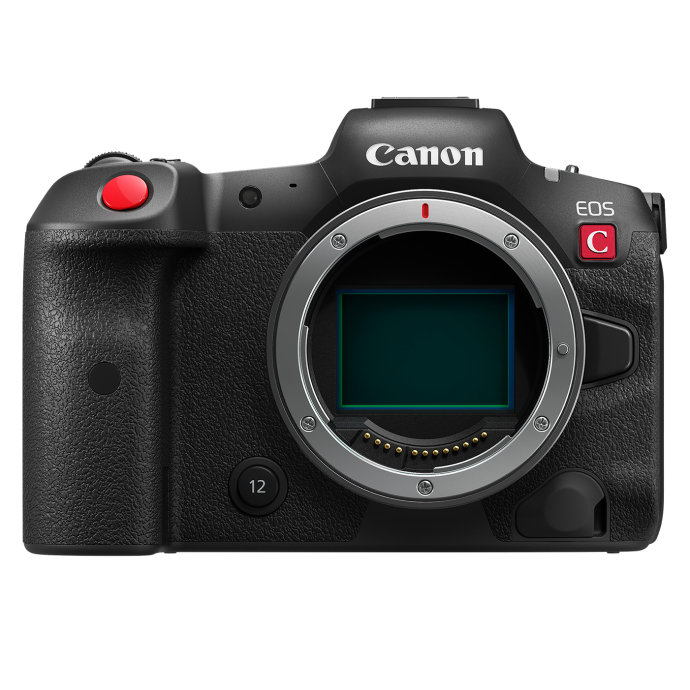
In July 2020, Canon formally unveiled the EOS R5, a camera that immediately signaled how seriously the company was approaching the full-frame mirrorless race. More than just another body in the EOS R system, the R5 arrived as a high-resolution, high-speed, high-end model designed to speak to working professionals and ambitious enthusiasts alike. Its headline features were impossible to ignore: a 45MP full-frame sensor, internal 8K30 RAW recording, 4K120 video, in-body image stabilization rated up to 8 stops, and the Canon RF mount at the center of the system.
At launch, the Canon EOS R5 carried a list price of $3,899 in the United States, placing it squarely in the premium enthusiast and professional tier. But price alone was not the story. The R5 represented Canon making a clear statement that its mirrorless future would not be defined by compromise. In both stills and video, it was presented as a flagship-level tool built for the next stage of the EOS R platform.
A Defining Camera for the EOS R System
When the EOS R system debuted in 2018, Canon's new RF mount generated immediate interest. The short flange distance and wide mount diameter gave Canon room to rethink lens design, and the company quickly followed with a number of ambitious RF optics. Still, the question many photographers had in the system's early years was straightforward: when would Canon deliver a mirrorless body that fully matched the expectations of demanding hybrid shooters and top-end still photographers?
The EOS R5 was Canon's answer. By mid-2020, the mirrorless market had become intensely competitive, and expectations had risen sharply. Professionals wanted robust autofocus, high image quality, reliable stabilization, and serious video performance in one body. The R5 was announced as a camera that aimed to combine those priorities rather than forcing photographers to choose between them.
Historically, that made the EOS R5 one of the most important early Canon mirrorless launches. It helped define the upper tier of the RF ecosystem and showed that Canon intended the EOS R line to be a long-term professional platform, not merely an alternative to its DSLR heritage.
45MP Full-Frame Resolution with Broad Appeal
At the center of the EOS R5 was a 45MP full-frame sensor, a specification that immediately positioned it in an appealing middle ground for many advanced users. It offered substantially more resolution than cameras aimed primarily at speed and event coverage, while avoiding the niche specialization of extremely high-megapixel bodies designed almost exclusively for studio or landscape work.
That 45MP figure made the R5 attractive to a broad range of photographers. Wedding and portrait photographers could benefit from detailed files and cropping flexibility. Commercial shooters could appreciate the extra resolution for client deliverables. Wildlife and sports photographers, while often focused on speed, could also see clear value in the ability to crop deeply and still retain usable image quality. In that sense, Canon was not just building a camera around a headline number; it was choosing a sensor specification that could plausibly serve many genres at once.
As an announcement-period product, the EOS R5 stood out because it suggested Canon no longer viewed mirrorless bodies as needing to be segmented into overly narrow roles. The sensor choice was part of that broader message.
8K30 RAW and 4K120: Video That Changed the Conversation
If the stills specifications made the EOS R5 significant, the video specifications made it impossible to ignore. Canon announced the camera with internal 8K30 RAW recording and 4K120 capture, two features that instantly made the R5 one of the most discussed cameras of 2020. For Canon, a company with deep roots in both still photography and digital cinema, this was a highly visible convergence of its imaging strengths.
8K30 RAW was especially striking in the context of the time. Internal RAW recording at that resolution represented a major technical and marketing statement, and it positioned the EOS R5 as more than a conventional stills camera that happened to shoot respectable video. Meanwhile, 4K120 gave creators access to high-quality slow-motion capture in a body that still prioritized full-frame photography.
For hybrid shooters, this was a meaningful shift. A single compact mirrorless camera now promised the kind of video feature set that would once have seemed improbable at this class and size. Even for photographers who had no immediate plans to deliver 8K projects, the presence of 8K recording suggested ample oversampling and workflow flexibility, while 4K120 expanded creative options for sports, weddings, documentaries, and commercial productions.
Just as importantly, these features reinforced the EOS R5's role as a statement product. Canon was not merely matching market trends; it was helping set the tone of the conversation around what a flagship mirrorless hybrid camera could be.
In-Body Image Stabilization Arrives in a Big Way
Another major milestone was the inclusion of in-body image stabilization, rated up to 8 stops. For Canon users, this was a landmark development. Canon had long been associated with optical stabilization in lenses, but IBIS had become an increasingly important expectation in the mirrorless market. With the EOS R5, Canon introduced stabilization in a way that was not subtle or tentative. The up-to-8-stop claim underscored the company's confidence in the system and its cooperation with RF lenses.
In practical terms, stabilization matters because it broadens what photographers and filmmakers can do handheld. It can help reduce blur in low light, support steadier framing with non-stabilized lenses, and contribute to more flexible real-world shooting. In announcement terms, though, IBIS in the R5 was also symbolic. It closed one of the most discussed feature gaps in Canon's mirrorless lineup and made the EOS R system feel more mature overnight.
The RF Mount as the Foundation
The Canon RF mount was central to the EOS R5's identity. By 2020, Canon had already used the mount to showcase a number of optically ambitious lenses, and the R5 strengthened the argument that the RF system was where Canon intended to innovate most aggressively. The camera's features were not floating in isolation; they were tied to a mount designed for modern autofocus, advanced communication between lens and body, and new optical possibilities.
For existing Canon users, this was an important moment of reassurance. The EOS R5 made clear that the transition to RF was not only about adapting established workflows but also about unlocking capabilities that fit the mirrorless era. For new buyers, the camera suggested that Canon's system had matured enough to compete at the highest levels.
A Mirrorless Statement from Canon
It is worth emphasizing that the EOS R5 was important not just because of its specification sheet, but because of what that sheet represented in 2020. Canon was one of the dominant names of the DSLR era, and every major mirrorless release from the company was scrutinized as a clue to its long-term strategy. The R5 answered that scrutiny with unusual confidence.
This was a camera that appeared designed to make several points at once. It said Canon could deliver high resolution without abandoning speed-oriented users. It said Canon could bring serious video features into a mainstream professional stills body. It said Canon understood stabilization was now essential. And it said the RF mount was not an experiment, but the basis of a modern flagship system.
In archival terms, the launch of the EOS R5 stands as one of the most consequential Canon announcements of the early mirrorless transition. It was the kind of release that shifted expectations, generated broad discussion across photography and filmmaking communities, and marked a turning point in how the EOS R family was perceived.
Launch Price and Market Position
At a launch price of $3,899, the Canon EOS R5 entered the market as a premium body, but one aimed at a very wide professional audience. The pricing aligned with its role as a high-performance full-frame camera rather than an entry point into the RF system. Buyers were being asked to invest in a body that promised top-tier capability across stills and video, and Canon's messaging made it clear that the R5 was built to justify that level of attention.
For many observers at the time, the R5's significance went beyond whether any single user needed 8K RAW or 45MP. The larger point was that Canon had produced a mirrorless body with very few obvious concessions. That helped elevate the perceived credibility of the entire EOS R lineup.
Looking Back at the Announcement
Seen from the perspective of its 2020 introduction, the Canon EOS R5 was one of the defining camera announcements of its generation. Its combination of a 45MP full-frame sensor, 8K30 RAW, 4K120, up to 8 stops of IBIS, and the Canon RF mount made it one of the most ambitious mirrorless products Canon had ever launched. More than a specification showcase, it was a declaration that Canon intended to compete aggressively in the professional mirrorless space.
For photographers and filmmakers following the evolution of Canon's system, the EOS R5 remains an important historical release: a camera that helped establish the RF mount as a serious professional platform and showed how far the company's mirrorless ambitions had advanced in a short period of time. To explore Canon cameras, RF lenses, and the ongoing story of the EOS system, Unique Photo is a great place to buy, compare gear, or learn more.