
Canon has announced the EOS R10, a compact APS-C mirrorless camera that brings the RF mount further into the entry and enthusiast market. Introduced on May 24, 2022, the R10 arrives as one of the clearest signals yet that Canon is building the EOS R system not only for full-frame users, but also for photographers and creators looking for a smaller, more affordable starting point. With a 24.2MP APS-C sensor, 4K60 video with a crop, and a launch price of $979, the EOS R10 is positioned as a lightweight gateway into the RF ecosystem.
For Canon followers, this announcement is historically significant. The company had already established the EOS R mount in the full-frame mirrorless space, but the EOS R10 helped define what the system could mean for hobbyists, students, family photographers, and first-time interchangeable-lens camera buyers. In that sense, the R10 was not just another body release. It was an important expansion of the EOS R idea.
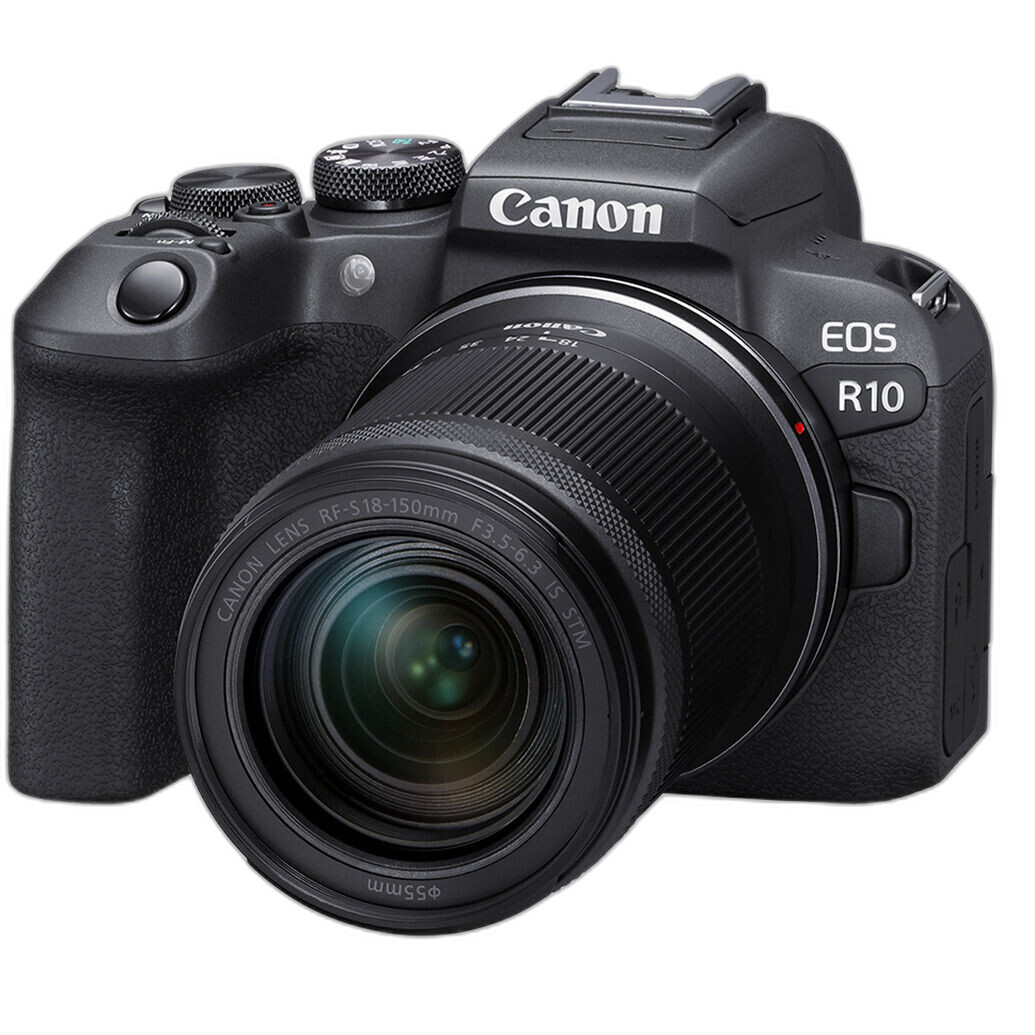
A Key APS-C Expansion for the EOS R System
When Canon launched the RF mount, much of the early attention centered on higher-end full-frame models and premium lenses. That made sense for establishing a new system, but it also left a practical question hanging in the air: where would APS-C users fit into the lineup? The EOS R10 answered that question in a very direct way.
By pairing an APS-C sensor with the Canon RF mount, Canon effectively created a more approachable on-ramp into its mirrorless platform. The EOS R10 brought the familiar appeal of APS-C to the RF family: lower cost, reduced size, and a natural fit for users who do not need a full-frame body for everyday photography and video. Historically, this mattered because Canon had long been successful in the DSLR era with beginner and midrange APS-C cameras. The R10 represented a continuation of that strategy in mirrorless form.
The 24.2MP APS-C sensor also fit the role well. Resolution at this level has long been a sweet spot for enthusiast photography, providing enough detail for prints, online sharing, school and travel use, and general creative work without pushing the camera into a more specialized or expensive category. Canon clearly aimed for balance rather than headline-chasing excess.
Lightweight Design and Starter-Friendly Positioning
The phrase "starter camera" can sometimes sound dismissive, but in the case of the EOS R10, it is better understood as strategic. Canon announced a camera meant to welcome users into the RF system with fewer barriers. Its lightweight build and relatively modest launch price of $979 made that message easy to understand. This was not positioned as an elite body. It was designed to be accessible.
That accessibility is historically important in any camera system. A mount does not thrive on flagship models alone. It needs cameras that invite people to begin building lenses, accessories, and experience around it. The EOS R10 filled that role for RF in a way that suggested Canon was serious about broadening the system beyond its early adopters.
For many buyers in 2022, the R10 would likely have been attractive for practical reasons: portability, everyday usability, and a price that kept it within reach compared to more advanced bodies. Students moving up from smartphones, families wanting a dedicated camera, and content creators seeking a simple interchangeable-lens setup all fit naturally into the audience Canon seemed to have in mind.
24.2MP APS-C: A Sensible Resolution for Everyday Photography
The EOS R10's 24.2MP APS-C sensor places it squarely in a familiar and useful class. Canon did not use the announcement to reinvent APS-C imaging so much as to package a proven format in a new mount and body concept. That approach often makes sense at launch. Rather than overwhelm first-time buyers with niche specifications, Canon emphasized a specification set that aligned with real-world photography.
APS-C remains a practical format for a wide range of users. It supports strong image quality for travel, portraits, casual sports, pets, family gatherings, and day-to-day creative work, while helping keep bodies and lenses more manageable. For users entering the RF system in 2022, the EOS R10 likely looked like a camera that could do a little bit of everything without demanding too much in size, cost, or complexity.
Historically speaking, Canon has often done well when it delivers balanced cameras that fit broad photographic needs rather than narrow technical extremes. The EOS R10 follows that tradition. Its 24.2MP resolution is not about spectacle; it is about utility.
4K60 Video With Crop: A Modern Feature With a Practical Caveat
Video capability was an essential part of any 2022 camera announcement, and Canon made sure the EOS R10 kept pace with contemporary expectations by offering 4K60 recording, albeit with a crop. That detail matters. The inclusion of 4K60 gave the R10 stronger appeal to hybrid shooters and creators who wanted smoother motion or more flexibility for editing and playback. At the same time, the crop indicated the camera's tier and kept expectations appropriately grounded.
In historical context, this is typical of how manufacturers often differentiate enthusiast and entry-level models from more advanced cameras. A feature can be present, but implemented with a limitation that reflects processing, thermal, or product-positioning boundaries. For the EOS R10, 4K60 with a crop still represented a meaningful capability at its price point, especially for newcomers to serious video.
For buyers around launch, this likely made the camera attractive for short-form content, travel clips, family videos, and general hybrid use. It was not marketed as a cinema tool, nor did it need to be. Its role was to offer modern video usefulness within a lightweight and affordable package.
The Meaning of RF Mount on an Entry-Oriented Body
The most important long-term story around the EOS R10 may be its mount. By bringing Canon RF to an APS-C starter body, Canon was signaling system continuity. Buyers no longer had to view RF strictly as a premium full-frame path. Instead, they could begin with an APS-C body and still enter the same broader lens family.
That kind of continuity is powerful in camera history. Systems endure when users can start modestly and grow over time. The EOS R10 suggested exactly that kind of journey. A photographer could begin with a lightweight APS-C body, learn the system, add lenses gradually, and potentially move up later without leaving the mount behind.
This also made the EOS R10 symbolically important. It was part of Canon's effort to make EOS R feel complete, not exclusive. In the early development of any mount, that is a crucial step.
How the EOS R10 Fit the 2022 Market
By mid-2022, the mirrorless market had become increasingly mature, and manufacturers were under pressure to make their systems appealing at multiple price levels. The EOS R10 fit that environment well. It addressed customers who wanted more than a smartphone, but who might not be ready to invest in a larger full-frame kit. It also served users who valued portability and affordability more than top-tier specifications.
The $979 launch price positioned the camera as an approachable entry in the RF family. That number alone helped define the camera's identity. It was a price designed to invite consideration from upgraders and newcomers rather than only established enthusiasts. In archival terms, that launch pricing is one of the clearest clues to Canon's intent with the model.
Seen from today's historical perspective, the EOS R10 stands as one of the meaningful democratizing releases in the EOS R line. It helped move the system from aspirational to accessible.
Early Takeaway
At announcement, the Canon EOS R10 looked like a carefully judged camera: a 24.2MP APS-C RF-mount body with modern video credentials, a compact footprint, and a price that made the EOS R system easier to enter. Its 4K60 crop reminded buyers that this was not intended to displace higher-end models, but its overall concept was strong and timely. More than anything, the R10 represented Canon's recognition that a successful mirrorless system needs an inviting front door.
For photographers and creators looking back at this 2022 release, the EOS R10 remains an important chapter in Canon mirrorless history. It marked the moment when the RF system became more clearly beginner-friendly without losing its broader ambitions. To explore Canon cameras, lenses, and accessories, or to learn more about where models like the EOS R10 fit in the larger history of the system, visit Unique Photo.