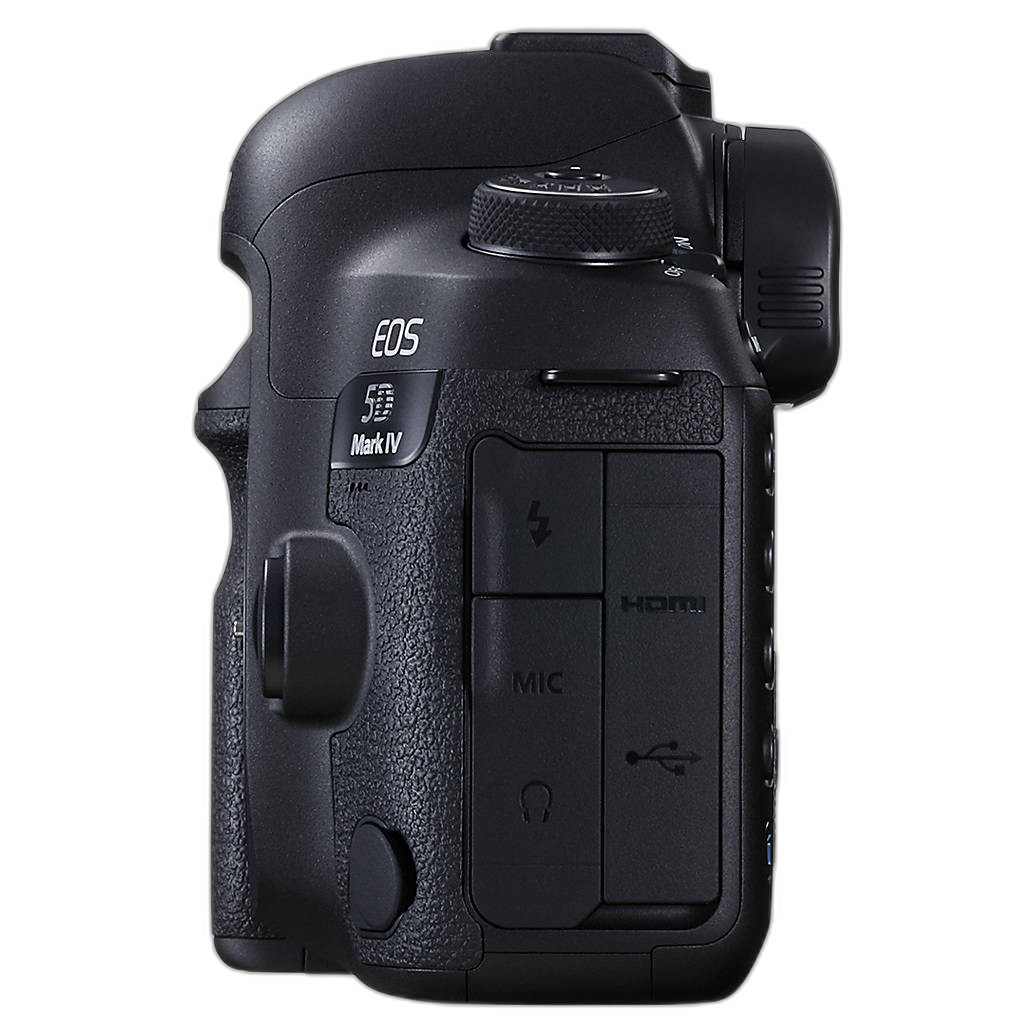
When Canon introduced the EOS 5D Mark III in early 2012, it arrived with the weight of enormous expectations. The original 5D had helped make full-frame photography more attainable for working shooters, and the 5D Mark II had become a landmark camera in both still photography and DSLR video. Into that lineage stepped the EOS 5D Mark III, a camera that did not chase novelty for its own sake, but instead focused on refinement, reliability, and the practical needs of photographers who earned their living with a camera in hand.
Seen from the perspective of its release period, the 5D Mark III felt less like a radical departure and more like a decisive maturation of the EOS system. It combined a 22.3MP full-frame sensor, a sophisticated 61-point autofocus system, and Canon's established EF mount into a body aimed squarely at wedding photographers, photojournalists, portrait specialists, and advanced enthusiasts who wanted a dependable, all-around tool. At a launch price of $3,499 in the U.S., it entered the market as a serious investment, but one positioned clearly as a professional workhorse rather than a niche specialty machine.
A Defining Camera in the EOS Line
By 2012, the EOS 5D line had already established a reputation for bringing full-frame image quality to a broader segment of photographers than flagship bodies traditionally served. The appeal of the 5D series was never just about resolution or sensor size in isolation. It was about balance. These cameras typically offered a meaningful blend of image quality, portability, lens compatibility, and real-world versatility.
The EOS 5D Mark III continued that tradition. Rather than positioning itself as a studio-only camera or a sports-first specialist, it emerged as a camera for nearly everything. In a period when professionals increasingly needed one body that could cover ceremonies, editorial assignments, corporate portraits, travel work, and multimedia production, the Mark III made a compelling argument for itself. It was the sort of camera that could stay mounted to a favorite EF zoom or prime and tackle assignment after assignment without drama.
22.3MP Full-Frame: Practical Resolution, Professional Results
At the center of the EOS 5D Mark III is its 22.3MP full-frame sensor. In 2012, that specification landed in a notably useful sweet spot. It provided enough resolution for detailed commercial and editorial work, generous print sizes, and cropping flexibility, while avoiding the excessive file burdens that some photographers worried might slow down their workflows.
That practicality mattered. Wedding photographers needed files that could move smoothly through high-volume editing pipelines. Event photographers wanted image quality that held up under mixed lighting and long shooting days. Portrait shooters wanted the visual depth and field-of-view characteristics that had made full-frame cameras so appealing in the first place. The 22.3MP count made the 5D Mark III feel substantial without becoming unwieldy, and that balance became a major part of its long-term appeal.
Just as importantly, the full-frame format kept the EOS 5D Mark III firmly in conversation with Canon's extensive EF lens catalog. For photographers already invested in Canon glass, this camera represented continuity as much as progress. Familiar lenses retained their expected angles of view, and established optical favorites could be used to their full character.
The 61-Point Autofocus System: A Major Step Forward
If there was one specification that immediately signaled how serious Canon was about the EOS 5D Mark III, it was the 61-point autofocus system. In historical context, this was one of the camera's most significant advances. For photographers coming from earlier 5D bodies, autofocus performance was a major area of attention, and Canon clearly understood that the audience for this camera needed more than image quality alone.
The 61-point system brought the 5D Mark III much closer to Canon's higher-end professional autofocus philosophy. In practical terms, this meant a camera better equipped for moving subjects, challenging event coverage, and compositions that did not always place the subject near the center of the frame. Wedding photographers tracking a bride's entrance, editorial shooters covering live moments, and portrait photographers working with shallow depth of field all stood to benefit.
This improvement was about confidence. A camera body can have excellent image quality, but if photographers do not trust its autofocus under pressure, it can never truly become a workhorse. The 5D Mark III helped change that conversation. It gave many EOS users a more complete full-frame tool, one that was not merely admired for its files but respected for its keeper rate.
Built Around the Canon EF Mount
The Canon EF mount was, by 2012, one of the most mature and extensive lens ecosystems in photography. That alone made the EOS 5D Mark III especially attractive. Buyers were not just purchasing a camera body; they were buying into a system with a broad range of lenses spanning ultra-wide to super-telephoto, along with specialized optics for portraiture, macro, architecture, sports, and documentary work.
For professionals and dedicated enthusiasts, that ecosystem was central to the Mark III's identity. A camera of this class had to work seamlessly with trusted lenses already in the field. The EF mount allowed the 5D Mark III to slide naturally into existing kits, whether paired with classic L-series zooms for event coverage or fast primes for portrait and low-light work. In historical retrospect, this easy compatibility helped cement the camera's status as a long-serving body rather than a temporary stopgap.
Why the Launch Price Made Sense
At a launch price of $3,499, the EOS 5D Mark III was clearly aimed at serious users. Yet for many in 2012, that price aligned with the camera's intended role. This was not an entry-level path into full-frame photography. It was a professional instrument designed to deliver consistency across a broad range of assignments.
Pricing always tells part of the story of how a camera is meant to be used. In the case of the 5D Mark III, Canon was signaling that the body belonged in the hands of photographers who valued durability, autofocus capability, and the all-around confidence that comes from using a camera built for demanding work. For those shooters, cost was weighed against reliability, system continuity, and the ability to produce under pressure.
A Camera for the Real World
One reason the EOS 5D Mark III remains so important in camera history is that it excelled in the real world, not just on specification sheets. It was the sort of camera that became familiar quickly and then stayed out of the way. That quality is easy to undervalue in the abstract, but it is often what separates beloved tools from merely impressive ones.
The Mark III arrived during a period when photographers were being asked to do more with less time and fewer compromises. Clients expected polished stills, efficient turnaround, and often a degree of multimedia fluency. The 5D Mark III fit this era because it was flexible. It could move from controlled portrait sessions to unpredictable event spaces with little friction. It was not defined by one headline feature alone; rather, it was shaped by the coherence of its design.
That is why the phrase workhorse so often attaches itself to this model. The term is not glamorous, but in professional photography it is one of the highest compliments a camera can receive. A workhorse is trusted, adaptable, and repeatedly chosen even when newer options exist. The EOS 5D Mark III earned that reputation through use, assignment after assignment.
Its Place in Canon History
Within the broader history of Canon cameras, the EOS 5D Mark III stands as one of the clearest examples of evolutionary design done well. It did not need to reinvent the EOS identity. Instead, it strengthened the qualities that had already made the 5D series influential: full-frame imaging, broad accessibility for serious users, and compatibility with a world-class lens system.
It also reflected Canon's understanding of what many professionals actually wanted in 2012. They wanted a camera that felt complete. They wanted robust autofocus, proven ergonomics, and dependable full-frame performance in a package that could serve multiple genres. The 5D Mark III answered that need with unusual clarity, and that is a large part of why it would go on to define so much of the decade that followed.
Looking Back
Revisiting the Canon EOS 5D Mark III today, it is easy to see why it made such a lasting impression. The 22.3MP full-frame sensor gave it broad photographic utility. The 61-point autofocus system addressed one of the most important needs of working shooters. The Canon EF mount connected it to an enormous and respected lens family. And its $3,499 launch price placed it firmly in the professional conversation from day one.
More than a decade later, the EOS 5D Mark III still represents a pivotal chapter in DSLR history: a camera defined not by excess, but by confidence, competence, and range. For photographers interested in Canon's heritage, or for anyone looking to understand how a camera earns the title of workhorse, it remains one of the key models to study. To explore Canon cameras, lenses, and the history behind them, Unique Photo remains a trusted place to buy gear or learn more.